The Book of the Templar Knights
 71
71

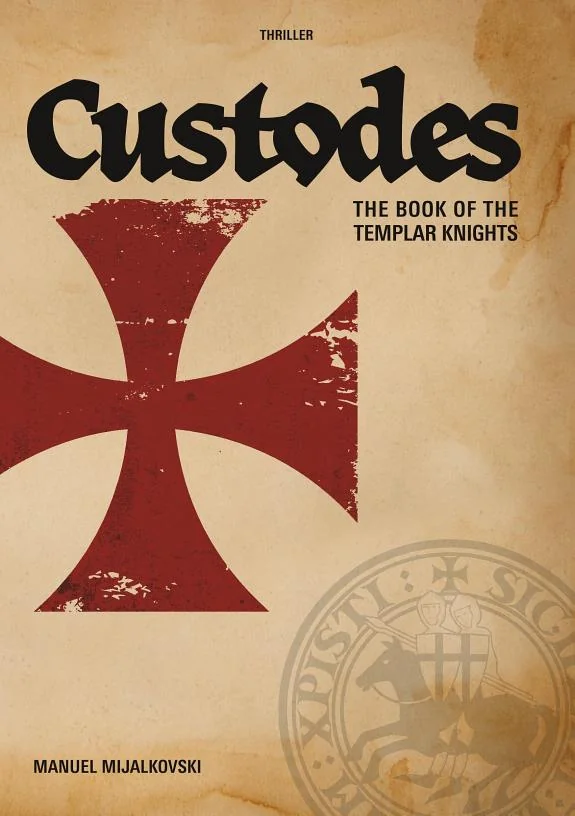
The Book of the Templar Knights
Mijalkovski's "The Book of the Templar Knights" presents a compelling premise: a cursed tome that writes its own history, tied to a comatose owner. The narrative’s strength lies in this meta-fictional conceit, where the book itself becomes an active character. However, the plot, revolving around William Carmichael's race against time to identify the owner before the ten days expire, feels somewhat underdeveloped. The tension relies heavily on the daily revelations, which, while intriguing, occasionally lack the deeper esoteric resonance one might expect from a title invoking the Templars. A particular passage detailing the owner's childhood encounter with a spectral raven near the Château de Gisors, while evocative, could have been expanded to anchor the supernatural elements more firmly. Ultimately, the book offers an imaginative, if somewhat uneven, exploration of cursed artifacts and hidden legacies.
📝 Description
71
In 2023, Manuel Mijalkovski's novel centered on a cursed book that writes its own story.
Manuel Mijalkovski's "The Book of the Templar Knights" is a work of supernatural fiction, not historical fact. The story begins when William Carmichael opens a mysterious book, inadvertently activating a curse that has lasted a thousand years. This act causes Carmichael to fall into a coma. For the next ten days, the book itself generates new entries each day, chronicling Carmichael's life and the unfolding consequences of his actions.
The narrative draws on the popular mystique surrounding the Knights Templar, a historical military order from the 12th century. While the book is fictional, it plays with the public fascination for the Templars' supposed secret knowledge and their eventual downfall. This premise connects with themes common in historical fiction and occult literature, which often reimagine the past through the lens of secret societies and lost wisdom.
The core concept is a 'living book,' an artifact that shapes its own narrative and is tied to the fate of its owner. This idea touches upon magical pacts, karmic consequences, and the power of ancient texts to alter reality. The 'millennium-old curse' suggests a long-standing spiritual or energetic debt linked to the book's origins and its possession. The ten-day progression acts as a symbolic clock, marking a period of reckoning or revelation.
This novel taps into the enduring fascination with the Knights Templar, a historical order often associated with esoteric traditions and hidden knowledge in occult lore. The 'living book' concept echoes themes found in grimoires and magical texts, where books themselves are depicted as conduits of power or instruments of fate. The narrative explores the idea of ancient curses and their long-term energetic or spiritual impact, a common trope in supernatural and occult fiction that posits a reality shaped by forces beyond the mundane.
💡 Why Read This Book?
• Understand the concept of a 'living book' as a narrative device, mirroring how ancient texts were believed to hold active power, as seen in the book's daily unfolding story. • Explore the symbolic weight of a 'millennium-old curse' and its connection to historical figures like the Knights Templar, offering a fictional lens on enduring legends. • Experience a countdown narrative structure where William Carmichael has precisely ten days to uncover the owner's identity, creating a sense of urgency tied to the book's magical mechanics.
⭐ Reader Reviews
Honest opinions from readers who have explored this book.
❓ Frequently Asked Questions
What is the central conflict in 'The Book of the Templar Knights'?
The central conflict involves William Carmichael attempting to break a millennium-old curse by identifying the owner of a magical book within ten days, while the book itself generates daily narratives of the owner's life.
When was 'The Book of the Templar Knights' first published?
The book was first published on January 21, 2021.
Who is the author of 'The Book of the Templar Knights'?
The author is Manuel Mijalkovski.
What historical group is referenced in the book's title?
The book's title references the Knights Templar, a historical military order active in the Middle Ages.
What happens when William Carmichael opens the book?
Upon opening the book, William Carmichael triggers a curse, causing the book's owner to fall into a coma and initiating the book's self-writing narrative.
What is the narrative structure of the book?
The book follows a ten-day structure, with a new story from the owner's life appearing daily, creating a countdown to the resolution of the curse.
🔮 Key Themes & Symbolism
The Cursed Artifact
The narrative centers on a powerful, cursed artifact—the book itself. This object is not merely a vessel of knowledge but an active agent, capable of influencing reality and imposing consequences. Its curse, established over a millennium, suggests a deep, historical entanglement with esoteric forces. The book's ability to generate daily narratives from the owner's life highlights its supernatural connection and its role in a protracted spiritual or karmic drama.
Identity and Revelation
A core theme is the quest to uncover the identity of the book's owner. This pursuit is driven by the urgency of breaking the curse within a strict ten-day timeframe. The daily revelations serve as clues, piecing together the owner's life story to reveal a hidden truth or connection that might be the key to liberation. This exploration touches upon the nature of identity and how one's past can hold the solution to present predicaments.
Legacy of the Templars
While fictional, the title invokes the mystique of the Knights Templar, suggesting the book's origins or powers are linked to this historical order. This taps into popular occult interpretations of the Templars as guardians of secret knowledge or possessors of powerful relics. The narrative uses this association to lend an air of ancient mystery and conspiracy to the cursed book and its unfolding saga.
The Living Narrative
The unique concept of the book writing itself daily transforms the narrative into a dynamic, unfolding entity. This 'living' aspect suggests that stories and history are not static but can manifest and evolve. The ten-day cycle becomes a microcosm of this process, where a complete story arc is revealed incrementally, mirroring ancient oral traditions or prophetic visions that unfold over time.
💬 Memorable Quotes
Direct passages from the work, attributed to the author.
“The book fell open, and a millennium of silence shattered.”
— This phrase captures the important moment the curse is activated. It suggests that the book contains ancient secrets or power that were dormant until William Carmichael's action, unleashing a long-dormant force.
“Each sunrise brought a new page, a life recounted.”
— This highlights the book's supernatural mechanism: it continuously generates content tied to the owner's existence. It emphasizes the daily progression and the intimate, biographical nature of the revelations.
“He had ten days to know the soul bound to the parchment.”
— This concisely states the protagonist's objective and the ticking clock. It frames the task not just as identifying a person, but understanding their spiritual essence connected to the cursed object.
“The Templar's shadow stretched across centuries, now held within these leaves.”
— This interpretation links the book's power directly to the Knights Templar, suggesting their influence or legacy is imprinted upon the artifact, giving it historical and esoteric weight.
“A coma's depth mirrored the book's ancient slumber.”
— This metaphorical connection draws a parallel between the physical state of the owner and the book's own dormant power. It implies the owner's unconsciousness is directly linked to the book's awakening.
🌙 Esoteric Significance
Tradition
This work engages with modern esoteric traditions that romanticize the Knights Templar, often linking them to Gnosticism, Kabbalah, or Rosicrucianism. It departs from strict historical inquiry to embrace speculative fiction rooted in occult interpretations of medieval orders. The narrative functions as a modern grimoire, where an artifact's curse dictates events, aligning with magical traditions that believe texts can hold potent spiritual energy.
Symbolism
The primary symbol is the 'living book' itself, representing knowledge as a potent, potentially dangerous force that can directly influence reality. The 'millennium-old curse' symbolizes unresolved historical karma or spiritual debt. The ten-day narrative structure can be seen as a symbolic period of initiation or purification, a countdown to revelation akin to alchemical processes or spiritual trials.
Modern Relevance
Contemporary creators of alternate history fiction, urban fantasy, and conspiracy thrillers draw inspiration from narratives like this. It appeals to online communities dedicated to Templar mysteries and esoteric history, offering a fictional exploration of themes debated in forums and speculative texts. The idea of a cursed artifact influencing the present echoes in various forms of contemporary magical practice and occult storytelling.
👥 Who Should Read This Book
• Readers interested in Templar mythology and esoteric fiction who seek narratives blending historical intrigue with supernatural elements. • Fans of mystery stories with a supernatural twist, particularly those who enjoy countdown plots and cursed object tropes. • Individuals exploring the concept of 'living texts' or magical artifacts in fiction, who appreciate how ancient legends are reimagined for contemporary audiences.
📜 Historical Context
Published in 2021, Manuel Mijalkovski's "The Book of the Templar Knights" emerges in an era saturated with renewed interest in Templar lore, crypto-history, and esoteric fiction. While the Knights Templar were officially suppressed by Pope Clement V in 1312, their legacy has been continuously reinterpreted, particularly from the 19th century onwards, fueling theories of hidden knowledge and secret societies. This work enters a field populated by authors like Umberto Eco, whose "Foucault's Pendulum" (1988) similarly explored conspiracy theories and secret orders. Mijalkovski's narrative taps into this vein, presenting a fictional artifact that embodies the enduring mystique surrounding the Templars, a mystique often contrasted with more academic historical accounts that focus on the order's military and financial roles.
📔 Journal Prompts
William Carmichael's ten-day deadline.
The nature of the 'millennium-old curse'.
The owner's life story as revealed daily.
The book as a 'living' entity.
Connections between the book's power and the Templar legacy.
🗂️ Glossary
Templar Knights
A historical Catholic military order founded in the early 12th century, known for its role in the Crusades and its eventual suppression. In esoteric lore, they are often associated with secret knowledge and hidden treasures.
Millennium-old curse
A curse believed to have originated a thousand years ago, implying a deep historical root and significant spiritual weight. In the narrative, it is directly tied to the book and its owner.
Living book
A fictional concept where a book actively generates its own content, reflecting or influencing reality. In this story, it writes daily entries from the owner's life.
Coma
A state of prolonged unconsciousness. In the book, the owner falls into a coma as a direct result of the artifact's activation.
Ten-day narrative
The specific timeframe within which the story unfolds, with new revelations appearing each day. This structure creates narrative tension and a sense of urgency.
Artifact
An object made by a human being, typically an item of cultural or historical interest. In this context, the book is treated as a magical artifact with potent influence.
Parchment
A material prepared from animal skin for writing or painting on. Often associated with ancient documents and historical texts.
This book appears in 1 collection
🔮 Readers Also Liked
Browse all →








From the “Templar Knights” Collection
View all →

![EBOOK COLLECTION ( PART 8) [ CSI][h 33t]](/img/thumb/ebook-collection-part-8-csi-h-33t.webp)

More Free Occult Philosophy Books
View all →