The tao of love and sex
 71
71

The tao of love and sex
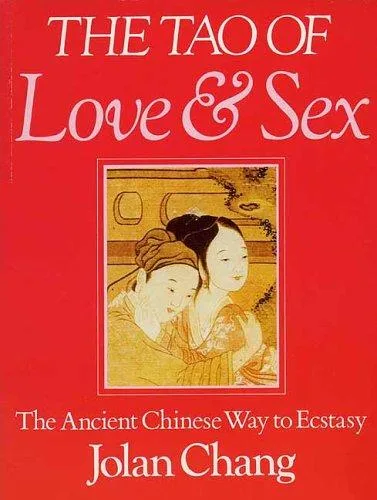
Jolan Chang's "The Tao of Love and Sex" offers a rare and detailed exposition of Taoist sexual arts, a subject often shrouded in mystery or misinterpretation. Unlike many Western appropriations, Chang’s text grounds its discussion firmly in classical Taoist principles, emphasizing the cultivation of vital energy, or Jing, through sexual practice. The strength of the book lies in its systematic approach, detailing specific techniques and physiological understandings that are both intricate and profound. However, the prose, while informative, can occasionally feel dense, requiring sustained attention from the reader. A particularly illuminating section discusses the transformation of Jing into Qi and Shen (spirit), illustrating the alchemical potential of sexual union. For those seeking a rigorous, traditional Taoist perspective on eroticism as spiritual technology, this work provides an indispensable, albeit demanding, resource.
📝 Description
71
Jolan Chang's 2000 book examines sexual energy as a vital component of spiritual cultivation in Taoism.
Published in 2000, "The Tao of Love and Sex" details sexual energy's role in Taoist spiritual practice. Chang draws on classical Chinese texts and the principles of Yin and Yang. The book views sexual union as more than biology; it is a powerful means to achieve harmony, longevity, and spiritual awareness. It explains the connection between physical intimacy, focused thought, and personal development. Readers receive practical advice for using sexual energy to enhance their growth.
This work is for those seriously interested in the spiritual dimensions of sexuality and its use in practice. It suits readers of comparative religion, especially Eastern traditions, and those wanting to understand Taoist or Tantric energy concepts. Students of Eastern philosophy, meditation, and qi gong practitioners seeking to incorporate sexual energy, and individuals interested in the links between psychology and spirituality will find value. It is aimed at the committed student, not the casual reader.
Chang's book connects to centuries of Taoist sexual arts literature, a tradition that particularly developed during the Han Dynasty and later periods. This tradition often differed from more ascetic Taoist paths by using the body as a tool for spiritual transcendence. The book appeared as Western interest in Eastern spirituality grew, including less common aspects. It entered a time when discussions of sexuality were becoming more open, yet this specific tradition remained less explored in the West.
💡 Why Read This Book?
• Gain a sophisticated understanding of Jing, the vital sexual essence central to Taoist longevity practices, as detailed in Chang's exploration of its conservation and transformation. • Learn the Taoist perspective on harmonizing Yin and Yang energies during sexual union, moving beyond mere physical pleasure to spiritual cultivation, as presented in its distinct chapters. • Explore the principles of Nei Dan, or Internal Alchemy, specifically how sexual energy can be refined and circulated within the body for spiritual development, a core theme throughout the book.
⭐ Reader Reviews
Honest opinions from readers who have explored this book.
❓ Frequently Asked Questions
What is the primary focus of Jolan Chang's "The Tao of Love and Sex"?
The book's primary focus is the Taoist perspective on sexual energy, viewing it as a vital force for spiritual cultivation, health, and longevity, rather than solely for procreation or pleasure.
When was "The Tao of Love and Sex" first published?
"The Tao of Love and Sex" by Jolan Chang was first published in the year 2000.
What is "Jing" in the context of Taoist sexual practices?
Jing, or vital essence, is a fundamental energy in Taoism closely associated with sexual vitality and reproduction. The book explains its conservation and cultivation are key to health and spiritual attainment.
Does the book discuss specific techniques for sexual cultivation?
Yes, the work elaborates on various techniques derived from classical Taoist sexual arts, including methods for circulating and transforming sexual energy within the body for higher purposes.
Is this book suitable for beginners in esoteric studies?
While accessible to dedicated readers, the book's depth and reliance on classical Taoist concepts suggest it is best suited for those with a serious interest in esoteric traditions and Eastern philosophy.
What is the role of Yin and Yang in the book's teachings?
The book emphasizes the dynamic interplay of Yin and Yang energies, both within individuals and during sexual union, as essential for achieving balance, harmony, and enhanced vital force.
🔮 Key Themes & Symbolism
Jing Cultivation
Central to Chang's work is the concept of Jing, or vital essence, which is intrinsically linked to sexual energy. The book details how this essence, often depleted through excessive sexual activity, can be conserved, refined, and transformed into higher forms of energy like Qi and Shen. This process is presented as fundamental for achieving robust health, extended longevity, and ultimately, spiritual liberation within the Taoist framework. The text outlines specific practices for managing and cultivating Jing, highlighting its a central role in the alchemical transformation of the body and spirit.
Yin-Yang Harmony
The book extensively explores the Taoist principle of Yin and Yang as applied to sexual relationships and internal energy dynamics. Chang explains how the balanced interaction between masculine (Yang) and feminine (Yin) energies, both within oneself and between partners, is essential for generating potent vital force. This harmonious exchange is not merely about pleasure but about creating a powerful energetic synergy that can be harnessed for spiritual advancement. The text provides insights into fostering this balance, emphasizing mutual energetic exchange and understanding.
Internal Alchemy (Nei Dan)
"The Tao of Love and Sex" introduces readers to the esoteric practice of Nei Dan, or Internal Alchemy, where sexual energy is the primary catalyst. Chang elucidates how this primal energy can be transmuted through specific meditative and energetic techniques, circulating it through the body's subtle channels. This alchemical process is depicted as a means to purify the mind, strengthen the spirit, and achieve states of useful insights and union with the Tao. The book offers a glimpse into these advanced practices, positioning sexual energy as a direct pathway to spiritual realization.
Eroticism as Spiritual Path
Departing from many ascetical spiritual traditions, Chang posits that sexual union, when approached with awareness and intention, can be a powerful vehicle for spiritual growth. The book reframes sexual activity not as an impediment to enlightenment but as a sacred technology. By understanding the energetic principles at play, individuals can utilize the intensity and connection of intimacy to deepen their spiritual practice, foster self-awareness, and achieve a more integrated, embodied form of spiritual realization. This perspective elevates the physical act to a profound meditative and transformative discipline.
💬 Memorable Quotes
Direct passages from the work, attributed to the author.
“The sexual act is not merely an act of procreation or a means of pleasure, but a powerful method for cultivating life energy.”
— This highlights the core thesis of the book: that sexual energy, often viewed hedonistically or pragmatically, possesses profound spiritual and energetic potential within the Taoist system.
“To conserve Jing is to preserve the root of life; to cultivate it is to nourish the spirit.”
— This statement emphasizes the dual importance of sexual essence (Jing) – its conservation for physical vitality and its cultivation for spiritual development, linking the physical to the metaphysical.
“Through the practice of Nei Dan, sexual energy can be refined and ascended, purifying the body and mind.”
— This interpretation underscores the alchemical aspect of Taoist sexual practices, suggesting a process of energetic refinement leading to higher states of consciousness and physical well-being.
“True mastery lies not in suppression, but in the intelligent transformation of primal energies.”
— This concept suggests that Taoist practice advocates for working with, rather than against, natural human energies, particularly sexual ones, through skillful application and understanding.
💡 Key Ideas
Editorial paraphrase of the work's core concepts — not direct quotes.
The union of Yin and Yang creates a dynamic force that can be consciously guided for transformation.
This paraphrase points to the active role partners play in directing the energetic currents generated during intercourse, channeling them for personal and spiritual evolution.
🌙 Esoteric Significance
Tradition
This work is firmly rooted in the Taoist tradition, specifically the branch concerned with sexual alchemy and longevity practices. It draws upon ancient Chinese texts and philosophies that view the body as a microcosm of the universe, capable of transformation. Unlike some ascetic spiritual paths, Taoism, as presented by Chang, embraces the body's vital energies, including sexual energy, as a powerful resource for spiritual development. It fits within the broader spectrum of esoteric traditions that explore the body-mind-spirit continuum, but its specific focus on sexual cultivation aligns it uniquely with Taoist internal alchemy.
Symbolism
Key symbols within the book revolve around the concepts of Jing (essence), Qi (vital energy), and Shen (spirit), representing a fundamental energetic hierarchy. The interplay of Yin (feminine) and Yang (masculine) is a pervasive symbolic motif, representing the dynamic forces whose balance is sought in all aspects of life and particularly in sexual union. The concept of the 'Microcosmic Orbit' (circulation of Qi) is another significant symbolic representation of internal energetic pathways that are activated and refined through sexual practices.
Modern Relevance
Contemporary practitioners of Qigong, Tai Chi, and various forms of somatic therapy often draw upon the principles of energy cultivation discussed in Chang's work. Thinkers and practitioners in the fields of conscious sexuality, tantric studies (though distinct from Indian Tantra), and integral spirituality may find its detailed exposition of sexual energy transformation highly relevant. The book continues to inform those seeking to integrate spiritual depth with embodied experience, offering a classical framework for understanding sexual vitality as a sacred force.
👥 Who Should Read This Book
• Students of Taoism and Chinese philosophy seeking an in-depth understanding of sexual arts beyond popular interpretations. • Practitioners of meditation, Qigong, or energy work interested in exploring the integration of sexual energy into their disciplines. • Individuals researching comparative religion and esoteric traditions focused on the spiritual dimensions of human sexuality.
📜 Historical Context
Jolan Chang's "The Tao of Love and Sex" (2000) emerged from a long lineage of Taoist sexual arts literature, a tradition that saw significant development during China's Imperial era, particularly from the Han Dynasty (206 BCE – 220 CE) onwards. This corpus of knowledge, often transmitted orally or through esoteric texts, emphasized sexual practices as a means of achieving longevity and spiritual cultivation, standing in contrast to purely ascetic or monastic traditions. Chang’s work arrived in the West at a time when interest in Eastern spirituality, including its more embodied aspects, was on the rise, spurred by earlier popularizers like Lin Yutang. While the 20th century saw increased Western engagement with Eastern philosophy, the detailed, systematic approach to sexual energy found in Chang's book offered a distinct perspective compared to broader, often generalized, discussions of Yoga or Tantra. The book’s publication predates the widespread internet dissemination of such esoteric information, making its textual presentation a significant resource for serious students.
📔 Journal Prompts
The conservation of Jing: How might understanding its depletion impact daily choices?
Reflect on the dynamic between Yin and Yang energies within a personal relationship.
Analyze the concept of Nei Dan and its potential for personal spiritual refinement.
Consider the book's reframing of sexual energy as a sacred, transformative force.
Explore the symbolic representation of Jing, Qi, and Shen in personal experience.
🗂️ Glossary
Jing
Vital essence or sexual energy in Taoism, considered a fundamental life force crucial for health, reproduction, and spiritual cultivation.
Qi
Vital energy or life force that animates all living things; often cultivated through breathing exercises and movement.
Shen
Spirit or consciousness; considered the highest form of energy, refined from Qi and Jing through spiritual practices.
Yin
The feminine, passive, receptive, dark, and cool principle in Taoist philosophy.
Yang
The masculine, active, creative, light, and warm principle in Taoist philosophy.
Nei Dan
Internal Alchemy; Taoist practices focused on transforming the body's vital energies (Jing, Qi) into spiritual essence (Shen).
Microcosmic Orbit
A Taoist meditation practice involving the circulation of Qi along specific energy pathways in the body, often including the Governing and Conception Vessels.
🔮 Readers Also Liked
Browse all →






More by Jolan Chang
All books →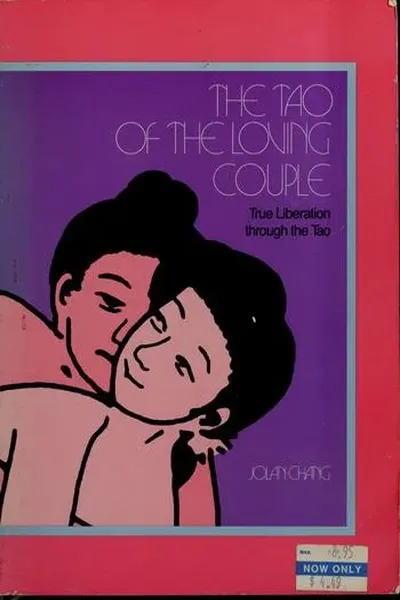
More Free Occult Philosophy Books
View all →