Cult Fictions
 84
84

Cult Fictions
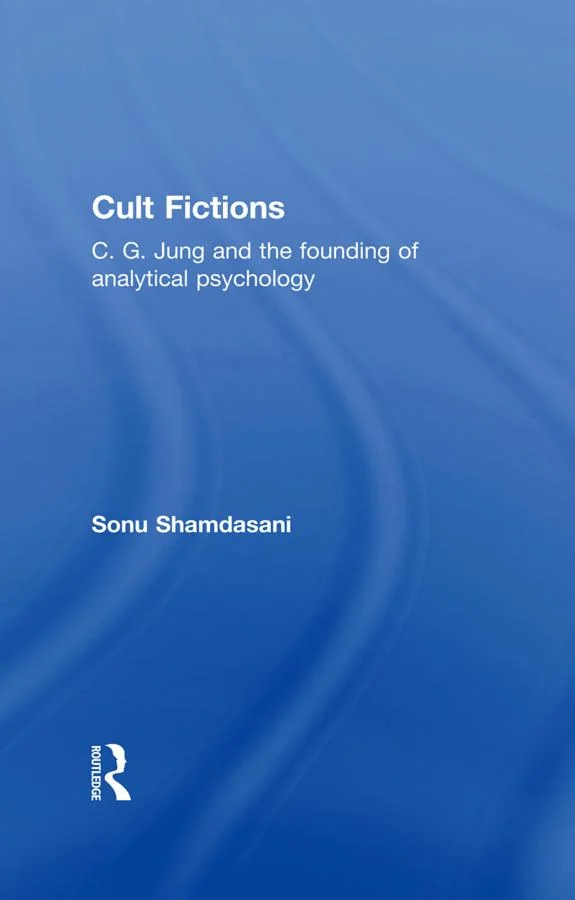
Sonu Shamdasani’s *Cult Fictions* approaches the figure of Carl Jung not as an oracle, but as a historical subject whose early reception has been subject to considerable embellishment. The author’s meticulous examination of documentary evidence is commendable, particularly in challenging the widespread notion of Jung as a prophet around whom a hero cult formed. Shamdasani systematically dismantles this narrative by returning to the archives, demonstrating a critical historian’s discipline. A significant strength lies in its refusal to accept received wisdom, instead demanding empirical substantiation for claims about Jung's followers. However, for readers unacquainted with the dense archival material or the specific academic debates surrounding Jungian studies, the book might feel overly specialized, lacking broader accessibility. The core argument, that Jung was not a prophetic figure in the manner often depicted, is convincingly made through rigorous scholarship. It stands as a crucial corrective to mythologizing, offering a grounded perspective on the origins of analytical psychology.
📝 Description
84
Sonu Shamdasani’s 2003 book questions the notion of Carl Jung as a prophet figure.
Cult Fictions scrutinizes the historical claims surrounding Carl Jung's inner circle, particularly the idea that he fostered a "hero cult" and acted as a prophet. Shamdasani examines documentary evidence, challenging the conventional accounts of Jung's followers and their reverence for him. The study prioritizes the factual historical record over subsequent interpretations or mythologizing.
This work builds an argument rooted in archival research. Its goal is to correct a persistent misinterpretation of Jung's impact and the dynamics within the early analytical psychology movement. It addresses how Jung was perceived and the social realities of his immediate associates, moving beyond later romanticized portrayals.
Published in 2003, this work engages with the historical reception of Carl Jung's work, particularly during a time of increased archival access. It arose amidst scholarly interest in the formation of psychological traditions and the influence of post-structuralist thought on understanding authority. Shamdasani's book offers a critical perspective on Jung's perceived role as a mystical or prophetic figure, situating his influence within the specific intellectual currents of early 20th-century psychology and philosophy.
💡 Why Read This Book?
• Learn how to critically evaluate historical claims about influential figures by examining Sonu Shamdasani's method of scrutinizing "documentary evidence" concerning Carl Jung's early followers, differentiating it from later mythologizing. • Understand the specific intellectual context of analytical psychology's genesis, particularly the dynamics within the movement around 1910-1930, by analyzing the book's focus on the actual historical record. • Gain a nuanced perspective on the concept of "hero cults" in intellectual history, as *Cult Fictions* questions common interpretations of Jung's reception and his role within his own movement.
⭐ Reader Reviews
Honest opinions from readers who have explored this book.
❓ Frequently Asked Questions
What is the main argument of Sonu Shamdasani's Cult Fictions?
The book's central argument is that claims of Carl Jung being a prophet figure around whom a 'hero cult' formed are not well-supported by documentary evidence. Shamdasani scrutinizes the historical record to challenge these popular interpretations.
What kind of evidence does Shamdasani examine in Cult Fictions?
Shamdasani focuses on "documentary evidence," meaning archival materials, letters, and records from the period, rather than later anecdotal accounts or interpretations. He prioritizes verifiable historical documentation.
Who was Carl Jung and why is his reception debated?
Carl Jung (1875-1961) was a Swiss psychiatrist and psychoanalyst, founder of analytical psychology. Debates around his reception often involve whether he was a scientific innovator, a mystic, or a prophetic figure, with interpretations evolving significantly over time.
When was Cult Fictions first published?
Cult Fictions by Sonu Shamdasani was first published on September 2, 2003. This timing is significant as it followed increased access to Jung's personal archives.
What does Shamdasani mean by 'hero cult' in relation to Jung?
Shamdasani uses 'hero cult' to describe the notion that Jung's followers venerated him as a prophetic or messianic figure. He investigates the historical basis for such claims, finding them largely unsubstantiated by direct evidence.
What is analytical psychology?
Analytical psychology is the school of psychology founded by Carl Jung. It focuses on the integration of the conscious and unconscious aspects of the psyche, including concepts like archetypes, the collective unconscious, and individuation.
🔮 Key Themes & Symbolism
Mythologizing Jung
The work directly confronts the tendency to mythologize Carl Jung, particularly the persistent narrative of him as a prophet figure. Shamdasani argues that this 'hero cult' framing is not supported by the available "documentary evidence." He distinguishes between Jung's actual intellectual influence and the later construction of his persona, suggesting that popular accounts often prioritize compelling stories over historical accuracy. This theme challenges readers to critically assess how influential figures, especially in esoteric and psychological fields, are remembered and represented long after their time.
Documentary Evidence vs. Interpretation
A core tenet of Cult Fictions is the primacy of "documentary evidence." Shamdasani emphasizes the need to ground historical understanding in verifiable records, such as letters, manuscripts, and institutional archives, rather than relying on hearsay, later interpretations, or the romanticized accounts that often emerge around significant thinkers. The book serves as a case study in rigorous historical methodology, advocating for a critical approach to the sources and highlighting the dangers of accepting narratives without empirical substantiation. This contrasts with more speculative or hagiographic approaches to intellectual history.
Formation of Intellectual Movements
The book examines the dynamics of how intellectual movements coalesce around a central figure. By examining the early analytical psychology movement, Shamdasani explores the relationship between founder and followers, and how certain narratives about that relationship can become entrenched. It questions the nature of discipleship and the potential for the founder's own work or persona to be subject to idealization or misinterpretation by those who follow. This theme is relevant to understanding the sociology of knowledge and the evolution of schools of thought.
Critique of Jungian Reception
Cult Fictions offers a critical perspective on how Carl Jung's work and life have been received and interpreted, particularly concerning the claims of his prophetic status. Shamdasani’s analysis of the "hero cult" narrative aims to correct what he sees as a distortion of Jung's historical significance. The work encourages a re-evaluation of Jungian scholarship, urging a return to the factual basis of his psychological theories and personal history, rather than perpetuating potentially unfounded myths about his role or influence in the early 20th century.
💬 Memorable Quotes
Direct passages from the work, attributed to the author.
“The documentary evidence does not support claims that Jung was a prophet.”
— This is a core assertion of the book, framing its entire argument. It signifies a rejection of hagiography in favor of empirical historical analysis regarding Jung's role and the nature of his followers' devotion.
“The work focuses on the "documentary evidence" of Jung's early circle.”
— This highlights the methodological approach. It emphasizes that the book relies on tangible, verifiable historical records, rather than speculation, to understand the dynamics within Jung's analytical psychology movement.
“Jung's followers and their veneration are examined critically.”
— This points to the specific aspect of Jung's legacy that Shamdasani scrutinizes – the relationship between Jung and his early adherents, questioning the depth and nature of their supposed 'hero worship'.
💡 Key Ideas
Editorial paraphrase of the work's core concepts — not direct quotes.
Claims of a hero cult around Jung are not well founded.
This paraphrased concept directly addresses the central thesis. It indicates that the author finds the available historical records insufficient to validate the notion of Jung being elevated to a near-divine status by his disciples.
Distinguishing historical fact from later mythologizing is crucial.
This paraphrased concept underscores the book's purpose: to provide a critical historical account that separates verifiable events and relationships from the narratives that have accreted around Jung over time.
🌙 Esoteric Significance
Tradition
While not strictly an esoteric text itself, *Cult Fictions* operates within the scholarly study of figures often associated with esoteric traditions, like Carl Jung. Jung's work, particularly his exploration of archetypes, the collective unconscious, and alchemy, has profoundly influenced modern esoteric thought. Shamdasani's book fits into a lineage of critical historical analysis that seeks to understand the factual basis of the psychological theories that, in turn, informed or were adopted by various esoteric schools, such as Jungian psychology itself and its offshoots.
Symbolism
The book's primary focus is not on esoteric symbolism itself, but on the historical context of the figures who explored it. However, the concept of the "hero" implicitly carries symbolic weight, representing an idealized or archetypal figure. Shamdasani's critique of the "hero cult" is a deconstruction of the symbolic elevation of Jung. The "documentary evidence" itself can be seen as a symbol of truth and verifiable reality, contrasting with the mythic narratives the book seeks to debunk.
Modern Relevance
Contemporary thinkers engaged with critical psychology, the history of ideas, and the study of intellectual movements continue to draw on Shamdasani's rigorous approach. His methodology, emphasizing "documentary evidence" over mythologizing, is relevant to anyone dissecting the origins of influential schools of thought, including those that have esoteric dimensions. Scholars and practitioners seeking to understand the historical grounding of Jungian psychology, or to avoid the pitfalls of creating cults of personality around contemporary thinkers, find value in this critical historical lens.
👥 Who Should Read This Book
• Scholars of Carl Jung and the history of psychology seeking to critically assess the formation of analytical psychology and challenge popular myths about Jung's status. • Students of intellectual history interested in the sociology of knowledge and how influential figures and movements are historically constructed and received. • Readers of esoteric literature who wish to understand the factual underpinnings of psychological theories that have significantly impacted modern esoteric thought, ensuring a grounded perspective.
📜 Historical Context
Published in 2003, Sonu Shamdasani's *Cult Fictions* emerged at a key moment for Jungian studies. The early 21st century saw growing academic interest in the historical context of psychoanalysis and a greater willingness to critically examine its founders. Shamdasani's work directly engaged with prevailing interpretations of Carl Jung, particularly the persistent idea that he cultivated a 'prophet' status or was the center of a 'hero cult.' This period was also marked by increased accessibility to Jung's personal archives, enabling more granular historical research. The book offered a counter-narrative to more romanticized accounts, placing it in dialogue with scholarly trends that favored archival rigor over biographical mythologizing. Contemporaries like Antoinette M. Smith were also exploring the historical nuances of Jung's work, though Shamdasani's focus remained squarely on the documentary evidence of Jung's immediate circle.
📔 Journal Prompts
The "documentary evidence" regarding Jung's prophetic status.
The dynamics of "hero cult" formation in intellectual circles.
Distinguishing between historical fact and later mythologizing of thinkers.
The role of discipleship in the early analytical psychology movement.
Critical evaluation of the reception of Carl Jung's life and work.
🗂️ Glossary
Documentary evidence
Historical records, such as letters, manuscripts, official documents, and archival materials, used as a basis for factual claims about past events or individuals.
Hero cult
A veneration or worship of an individual perceived as heroic, often to the extent of attributing prophetic or messianic qualities, a concept critically examined in relation to Carl Jung.
Analytical psychology
The school of psychology founded by Carl Jung, which focuses on concepts like archetypes, the collective unconscious, and individuation, and whose early development is discussed in the book.
Mythologizing
The process of creating or perpetuating myths, often involving the embellishment or idealization of historical figures and events beyond factual verification.
Prophet figure
An individual believed to have divine inspiration or to be a messenger of a deity, a status critically assessed by Shamdasani in relation to Carl Jung.
Intellectual history
The study of how ideas and concepts have developed and spread over time, including the context of their creation and reception by thinkers and movements.
Reception theory
A theoretical approach in literary and cultural studies that focuses on how texts or figures are interpreted and understood by their audiences over time.
This book appears in 1 collection
🔮 Readers Also Liked
Browse all →









From the “Jungian Psychology” Collection
View all →






More Free Occult Philosophy Books
View all →