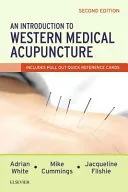
An Introduction to Western Medical Acupuncture
 74
74

An Introduction to Western Medical Acupuncture
Cummings and Filshie's second edition of An Introduction to Western Medical Acupuncture offers a refreshingly pragmatic approach to a discipline often shrouded in esoteric language. The text’s strength lies in its unwavering commitment to an evidence-based methodology, presenting acupuncture as a clinical tool grounded in anatomy and physiology rather than mystical energy flows. The detailed illustrations, particularly those mapping trigger points and their referral patterns, are invaluable for practical application. However, the book’s rigor occasionally leads to a clinical dryness that might alienate readers seeking a more holistic exploration of the practice. A passage detailing the neurophysiological mechanisms of endorphin release following specific point stimulation, for instance, is scientifically sound but lacks the evocative quality found in some other texts. Despite this, it remains an indispensable guide for practitioners prioritizing empirical validation and safe, effective patient care.
📝 Description
74
The second edition of An Introduction to Western Medical Acupuncture presents a scientific framework for its use in modern healthcare.
This text builds a case for integrating acupuncture into contemporary medical practice by focusing on physiological mechanisms and clinical outcomes. It moves away from traditional energetic models to detail the scientific rationale behind specific needle placements and techniques. The goal is to maximize treatment efficacy while minimizing potential adverse effects, serving as a practical guide for healthcare professionals. The book is intended for physicians, physiotherapists, nurses, osteopaths, and researchers who need a strong understanding of acupuncture's anatomical and physiological underpinnings. It also appeals to students of manual therapies and practitioners looking to expand their treatment options with evidence-supported methods. A particular emphasis is placed on safety and risk avoidance in acupuncture administration.
While Western medical acupuncture is often framed through neurophysiology, its roots touch upon broader traditions of bodywork and energy modulation. The integration into Western practice, starting in the late 20th century, sought to reconcile ancient healing concepts with scientific inquiry. This book emerges from that lineage, bridging the gap between historical practice and modern understanding. It acknowledges the historical context of concepts like Qi and meridians, even as it prioritizes explanations grounded in endorphin release and autonomic nervous system modulation.
💡 Why Read This Book?
• Understand the neurophysiological mechanisms behind acupuncture's pain relief, as detailed in discussions of endorphin release and autonomic nervous system modulation, offering a scientifically grounded perspective distinct from traditional energetic models. • Learn precise techniques for needle placement and stimulation based on anatomical landmarks and myofascial trigger points, as illustrated in the book's extensive diagrams, ensuring a focus on tangible physiological effects. • Develop strategies for risk management and patient safety specific to Western medical acupuncture, as outlined in dedicated sections on contraindications and adverse event avoidance, providing practical skills for safe clinical practice.
⭐ Reader Reviews
Honest opinions from readers who have explored this book.
❓ Frequently Asked Questions
What is the primary difference between Western Medical Acupuncture and Traditional Chinese Medicine (TCM) acupuncture?
Western Medical Acupuncture focuses on the neurophysiological and biomechanical effects of needling, often targeting trigger points and muscle groups. TCM acupuncture, conversely, operates within a framework of meridians and Qi (vital energy) to restore balance.
Who are the authors of An Introduction to Western Medical Acupuncture?
The book is authored by Mike Cummings and Jacqueline Filshie. Its first edition was published in 2018.
What kind of evidence base does this book rely on?
The book emphasizes an evidence-based approach, drawing on scientific research and clinical studies to support its diagnostic and treatment protocols, focusing on physiological mechanisms rather than solely traditional energetic concepts.
Are there specific illustrations in the book to guide practitioners?
Yes, the book is illustrated throughout, providing visual guidance for practitioners on where and how to treat conditions with acupuncture, including anatomical references and needle placement.
What is the main goal of An Introduction to Western Medical Acupuncture for practitioners?
The primary goal is to equip practitioners with the knowledge and tools to develop a safe and effective practice of acupuncture within modern medicine, focusing on evidence-based techniques and risk mitigation.
Is this book suitable for beginners in acupuncture?
The book provides an introduction and essential guide, making it suitable for those new to Western medical acupuncture, provided they have a foundational understanding of anatomy and physiology. It stresses safety and evidence.
🔮 Key Themes & Symbolism
Evidence-Based Practice
This work champions the integration of acupuncture into modern medicine by grounding its techniques in empirical research and scientific understanding. It moves away from purely traditional explanations, focusing instead on verifiable physiological responses such as neuromodulation and the effects on myofascial tissues. The book meticulously details how clinical decisions should be informed by scientific data and patient outcomes, ensuring that practitioners can confidently apply acupuncture with a clear rationale for its efficacy and safety.
Anatomical and Physiological Basis
Central to the book's approach is a deep dive into the anatomical structures and physiological systems that acupuncture influences. It meticulously maps out the connections between specific points, trigger zones, and the nervous and muscular systems. Understanding these relationships is presented as crucial for practitioners to predict treatment effects and optimize therapeutic outcomes, offering a systematic way to approach pain management and rehabilitation through needling.
Risk Management and Safety Protocols
A significant emphasis is placed on the safe application of acupuncture. The book provides clear guidelines on identifying contraindications, avoiding known risks, and managing potential adverse events. This includes detailed information on patient assessment, hygiene, and appropriate needling techniques to minimize harm. The focus on safety ensures that practitioners can offer acupuncture treatments with confidence, prioritizing patient well-being alongside therapeutic goals.
Clinical Application and Integration
The text serves as a practical manual for integrating acupuncture into a broad range of clinical settings. It offers guidance on selecting appropriate points, stimulation methods, and treatment durations based on specific conditions and patient presentations. By providing a structured, evidence-informed framework, the book empowers healthcare professionals to confidently incorporate acupuncture as a complementary or primary therapeutic modality within their existing practice.
💬 Memorable Quotes
Direct passages from the work, attributed to the author.
“An evidence-based approach to acupuncture when used as part of modern medicine.”
— This core statement from the book's blurb expresses its primary objective: to bridge the gap between ancient practice and contemporary scientific understanding, making acupuncture a reliable tool within the medical mainstream.
“Deciding where and how to treat conditions with acupuncture.”
— This highlights the practical, decision-making focus of the text. It aims to provide practitioners with clear, actionable guidance rather than abstract theoretical frameworks, emphasizing precision in application.
“How to avoid known risks associated with it.”
— This underscores the book's commitment to safety. By detailing potential hazards and preventative measures, it equips practitioners to administer acupuncture responsibly and ethically, minimizing patient harm.
“Develop safe and effective practice.”
— This expresses the ultimate aim for the reader: not just to learn techniques, but to build a sustainable, reliable, and beneficial acupuncture practice grounded in scientific principles and patient care.
“Revised, updated and extended text.”
— This indicates the book's commitment to remaining current. The updates reflect the evolving research and understanding within medical acupuncture, ensuring the information provided is relevant and comprehensive.
🌙 Esoteric Significance
Tradition
While ostensibly a Western medical text, the systematic approach to point selection and the focus on physiological pathways can be seen as a modern, secularized interpretation of energetic mapping. It mirrors, in a scientific guise, the ancient Hermetic principle of 'As Above, So Below,' by seeking correlations between external stimuli (needles) and internal systemic responses, albeit framed in neurological and muscular terms rather than elemental or spiritual ones.
Symbolism
The concept of the 'trigger point' itself can be viewed as a modern symbolic representation of the ancient 'Acupoint.' Like the traditional points believed to be conduits for Qi, trigger points are localized areas of hypersensitivity with predictable referral patterns, suggesting a shared underlying principle of bodily interconnectedness and specific somatic vulnerabilities that can be addressed therapeutically.
Modern Relevance
Contemporary practitioners of manual therapies, sports medicine specialists, and pain management clinicians increasingly draw upon the principles outlined in works like this. The book's emphasis on neuro-musculoskeletal integration aligns with current trends in somatic psychology and embodied cognition, where physical states are recognized as integral to mental and emotional well-being. Thinkers in pain neuroscience education and integrative medicine often cite such research-focused texts.
👥 Who Should Read This Book
• Healthcare professionals seeking to integrate evidence-based acupuncture into their practice, such as physiotherapists, chiropractors, and osteopaths looking for clear anatomical and physiological rationale. • Medical researchers investigating the efficacy and mechanisms of acupuncture, who require a text that bridges traditional concepts with modern scientific methodology. • Advanced students of manual therapies or pain management, aiming to build a robust understanding of acupuncture as a clinical intervention supported by empirical data.
📜 Historical Context
The late 20th and early 21st centuries witnessed a significant surge in the Western scientific investigation of acupuncture, moving it from the periphery towards mainstream acceptance. This period saw the establishment of research institutions and the publication of numerous studies aiming to elucidate acupuncture's mechanisms of action beyond traditional Chinese medicine concepts. Figures like David Eisenberg, whose 1998 JAMA article reported on acupuncture use in the US, helped popularize the modality. An Introduction to Western Medical Acupuncture, first published in 2018, emerged within this context, aiming to consolidate and present the burgeoning evidence for acupuncture's efficacy, particularly in pain management and rehabilitation. It directly engages with the scientific community's skepticism by offering a physiologically grounded explanation, contrasting with purely energetic interpretations that dominated earlier discourse. The book’s emphasis on evidence directly addresses the need for integration within conventional medical frameworks, responding to a growing demand from practitioners and patients alike for scientifically validated therapies.
📔 Journal Prompts
The neurophysiological mechanisms of acupuncture's analgesic effects.
Mapping trigger points and their referral patterns in clinical practice.
Assessing patient suitability for Western medical acupuncture.
Integrating evidence-based acupuncture into an existing therapeutic repertoire.
Strategies for avoiding adverse events during acupuncture treatment.
🗂️ Glossary
Trigger Point
A hyperirritable spot in skeletal muscle associated with a palpable nodule in a taut band of the muscle. Palpation of the spot elicits pain and may elicit a referred pain or other sensory phenomena.
Myofascial Pain Syndrome
A condition characterized by chronic pain arising from myofascial trigger points. Pain is often dull, aching, and deep, with characteristic referred pain patterns.
Neurophysiological Mechanisms
The biological processes within the nervous system that explain how a treatment, like acupuncture, produces its effects, such as the release of endorphins or modulation of nerve signals.
Autonomic Nervous System
The part of the nervous system that controls involuntary bodily functions, such as heart rate, digestion, and respiratory rate. Acupuncture may influence its balance.
Endorphins
Endogenous opioid neuropeptides produced by the pituitary gland and hypothalamus that act as neurotransmitters. They are known for their pain-relieving and euphoric effects.
Contraindications
Specific situations or conditions in which a particular treatment, procedure, or drug should not be used because it may be harmful to the patient.
Evidence-Based Practice
An approach to clinical decision-making that integrates the best available research evidence with clinical expertise and patient values.