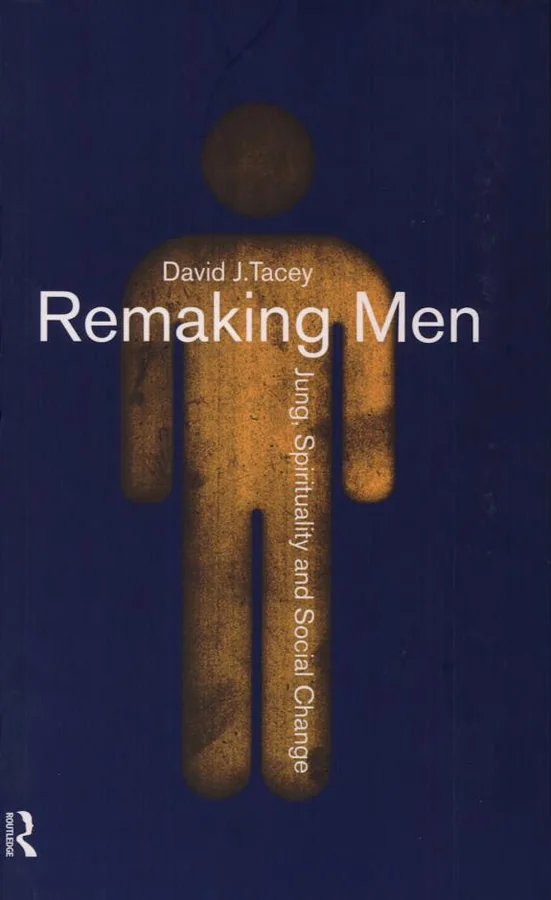
Remaking Men
 78
78

Remaking Men
David Tacey’s "Remaking Men" offers a valuable, if sometimes dense, critique of late 20th-century discussions on masculinity. Tacey’s central argument—that we must integrate sociological, psychological, and spiritual perspectives rather than treat them in isolation—is compelling. He rightly points out the limitations of both purely academic analyses and the more mystical leanings of the men’s movement, which he critiques for potentially becoming "a new kind of fundamentalism." A particular strength lies in his examination of the "spiritual materialism" that can infect such movements. However, the book’s academic tone can occasionally obscure its practical implications for the average reader. The chapter discussing the "anima" concept, while insightful, might require prior familiarity with Jungian thought. Despite this, the work provides a robust framework for understanding the contested terrain of modern manhood. "Remaking Men" is an important scholarly intervention for those willing to engage with its intricate arguments.
📝 Description
78
David John Tacey's 1997 book, Remaking Men, argues for an integrated approach to understanding masculinity.
First published in 1997, David John Tacey's Remaking Men challenges the common division between sociological critiques and spiritual explorations of masculinity. Tacey advocates for a unified perspective, urging readers to connect these different traditions. The book examines how contemporary ideas about manhood are influenced by social and political forces, psychological theories, and spiritual movements, including the men's movement prominent in the late 20th century. It scrutinizes the cultural construction of male identity. Tacey's analysis provides a framework for understanding individual experiences within wider societal and psychological contexts. The work is intended for academics in gender studies, psychology, and sociology, as well as individuals involved in men's groups, spiritual exploration, and anyone interested in masculinity. It seeks to move beyond simple oppositions to offer a more complete picture.
In 1997, the discourse on masculinity was active, often split between analyses of patriarchal structures and the men's movement's focus on primal masculinity, influenced by Jungian psychology. Tacey's work aimed to bridge these fields, engaging with academic scholarship and popular spiritual trends. He sought to connect empirical observation with symbolic interpretation, positioning Remaking Men within a tradition that integrates psychological depth with cultural critique.
⭐ Reader Reviews
Honest opinions from readers who have explored this book.
❓ Frequently Asked Questions
When was David John Tacey's 'Remaking Men' first published?
David John Tacey's 'Remaking Men' was first published in 1997, placing it within a significant period of discourse surrounding masculinity.
What is the main argument of 'Remaking Men'?
The book argues for an integrated approach to understanding masculinity, bridging sociological, psychological, and spiritual perspectives, rather than treating them separately.
Which intellectual traditions does Tacey critique or engage with?
Tacey critiques the sociological approach and the spiritual, Jung-influenced men's movement, advocating for their synthesis.
Who influenced the men's movement discussed in the book?
The book notes the influence of Jungian psychology and figures associated with the men's movement of the late 20th century, such as Robert Bly.
What does Tacey mean by 'spiritual materialism'?
Tacey uses 'spiritual materialism' to describe the tendency within some spiritual movements to focus on external signs or commodified aspects of spirituality rather than genuine inner transformation.
What year was David John Tacey's 'Remaking Men' published?
David John Tacey's 'Remaking Men' was first published in 1997.
🔮 Key Themes & Symbolism
Critique of the Men's Movement
Tacey critically examines the spiritual and psychological trends within the men's movement prevalent in the 1990s, particularly its Jungian influences. He cautions against the movement becoming a form of 'spiritual materialism,' where outward expressions or archetypal ideals overshadow genuine personal growth and societal engagement. The work interrogates how rituals and archetypes, while potent, can be misapplied or become ends in themselves, divorced from lived experience.
Integration of Discourses
A central theme is the necessity of integrating disparate fields of study concerning masculinity. Tacey argues against viewing sociology, psychology, and spirituality as mutually exclusive domains. He proposes that a comprehensive understanding of manhood requires acknowledging the interplay between socio-political structures, individual psyche, and the search for meaning or spiritual connection.
The Nature of Modern Masculinity
The book explores the evolving and often contested nature of contemporary masculinity. It moves beyond essentialist definitions, presenting masculinity as a dynamic construct shaped by cultural forces, personal experiences, and the individual's relationship with archetypal energies. Tacey suggests that a mature masculinity involves acknowledging both its shadow aspects and its potential for profound self-discovery.
Psychological and Spiritual Interplay
Tacey studies the psychological underpinnings of male identity, particularly through a Jungian lens, but insists on grounding these insights in lived reality. He discusses archetypes not as abstract concepts but as forces that manifest in personal lives and societal structures. The work seeks to illuminate how psychological integration and spiritual seeking are intertwined for men.
💬 Memorable Quotes
Direct passages from the work, attributed to the author.
“The men’s movement can become a new kind of fundamentalism.”
— Tacey expresses concern that the fervent adoption of certain spiritual or archetypal ideas within the men's movement could lead to rigid dogma, hindering true exploration.
“We must strive to bridge the gap between these separate traditions.”
— This highlights the book's primary objective: to foster dialogue and integration between academic/sociological approaches and the more intuitive, spiritual explorations of masculinity.
“Examining his own and other men's experience.”
— This suggests Tacey's methodology involves personal reflection and anecdotal evidence alongside theoretical analysis, grounding abstract ideas in lived reality.
“The anima must not be treated as a mere psychological concept, but as a spiritual force.”
— This interpretation reflects Tacey's view that psychological concepts, like the anima, have profound spiritual dimensions that must be recognized for a complete understanding.
💡 Key Ideas
Editorial paraphrase of the work's core concepts — not direct quotes.
Masculinity should neither be hijacked by the spiritual, Jung-influenced men's movement, nor discussed merely as a product of socio-political forces.
This quote expresses Tacey's core thesis: the need for a balanced perspective that avoids the extremes of purely spiritual or purely materialist analyses of manhood.
🌙 Esoteric Significance
Tradition
Tacey's work engages with the Western esoteric tradition, particularly its Jungian psychological branch, which itself draws heavily on Gnostic and Hermetic ideas about archetypes and the soul's journey. While not strictly adhering to any single lineage, "Remaking Men" fits within the broader framework of modern depth psychology that seeks to understand the spiritual and symbolic dimensions of human experience, often finding parallels in ancient mythologies and esoteric symbolism.
Symbolism
The book likely explores archetypal symbolism, such as the 'father,' 'son,' and 'hero,' not merely as psychological constructs but as potent forces within the collective unconscious. It may also touch upon the concept of the 'anima' as a bridge between the conscious and unconscious, and potentially the 'shadow' as the repressed aspects of the masculine psyche that require integration for wholeness.
Modern Relevance
Contemporary thinkers in men's development, depth psychology, and even certain strands of neo-paganism and integral spirituality can draw from Tacey's foundational arguments. His emphasis on integrating psychological depth with social awareness remains pertinent for modern discussions on identity, mental health, and the search for meaning in a complex world.
👥 Who Should Read This Book
['• Students of Jungian psychology and archetypal studies seeking to understand the application of these theories to contemporary male identity formation.', '• Scholars and readers in gender studies and sociology interested in critiques of masculinity that move beyond purely socio-political frameworks.', '• Individuals involved in personal development or spiritual exploration who question simplistic notions of masculinity and seek a more integrated understanding of self.']
📜 Historical Context
Published in 1997, David Tacey's "Remaking Men" emerged during a vibrant period of academic and popular engagement with masculinity. The late 20th century saw a surge in men's movements, heavily influenced by Jungian psychology and figures like Robert Bly, who advocated for a return to primal archetypes. Simultaneously, feminist and sociological critiques continued to deconstruct patriarchal structures. Tacey's work represented a critical intervention, seeking to reconcile these seemingly opposing forces. He directly addressed the limitations of both purely sociological analyses, which could reduce men to social constructs, and the spiritualized, archetypal focus of the men's movement, which he warned could become "a new kind of fundamentalism." His book aimed to forge a more holistic understanding, acknowledging the spiritual dimensions of male identity without succumbing to what he termed "spiritual materialism," a critique that distinguished his approach from many contemporaries.
📔 Journal Prompts
The integration of sociological and spiritual perspectives on masculinity.
Critique of the men's movement's potential for fundamentalism.
Personal experience of archetypal influences.
The concept of spiritual materialism in self-development.
Bridging the gap between psychological theory and lived experience.
🗂️ Glossary
Spiritual Materialism
A critique leveled by Tacey against spiritual movements that focus on external signs, commodified spiritual practices, or rigid adherence to dogma, potentially hindering genuine inner transformation.
Jungian Psychology
A school of psychology founded by Carl Jung, emphasizing the collective unconscious, archetypes, and individuation as key to psychological development. Tacey engages with its concepts regarding masculinity.
Archetypes
Universal, archaic patterns and images that derive from the collective unconscious and are the psychic counterpart of instinct. In 'Remaking Men,' they are explored in relation to male identity.
Anima
In Jungian psychology, the unconscious feminine side of a man. Tacey suggests this concept holds spiritual as well as psychological significance.
Socio-political Forces
The various social structures, political ideologies, and power dynamics that shape individual behavior and societal norms, including those related to gender.
Men's Movement
A range of social movements and personal development initiatives focused on men's issues, often exploring masculinity, fatherhood, and male psychology, popular in the late 20th century.
Individuation
A central concept in Jungian psychology referring to the process of integrating the conscious and unconscious aspects of the psyche to become a whole, unique individual.
This book appears in 1 collection
🔮 Readers Also Liked
Browse all →









From the “Jungian Psychology” Collection
View all →







More Free Occult Philosophy Books
View all →