Zen-Weg
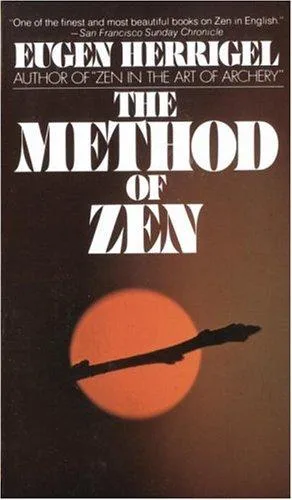
 83
83

Zen-Weg
Eugen Herrigel's Zen-Weg offers a stark, unvarnished account of his years under Kyozan Joshu Sasaki Roshi. What distinguishes this work is its relentless focus on the lived experience of practice, eschewing the common tendency towards abstract spiritual theorizing. Herrigel’s description of the sheer, often baffling, discipline required—the seemingly endless repetitions and the frustration of intellectual resistance—is particularly compelling. He captures the essence of the master-disciple relationship, where progress is measured not in understanding but in the gradual erosion of the self. A limitation, however, is the book's singular focus; those seeking comparative insights into different Zen lineages or a broader historical perspective might find it narrow. The passage detailing the frustration of trying to intellectually grasp 'no-mind' before finally experiencing its effects is a powerful illustration of the book's core message. Zen-Weg succeeds as a personal testament to the efficacy of rigorous, embodied spiritual training.
📝 Description
83
Eugen Herrigel's Zen-Weg, published in 1989, details his rigorous Zen training under Joshu Sasaki Roshi.
Zen-Weg chronicles Eugen Herrigel's personal experience with Zen Buddhism, beginning with his training in the 1920s under master Kyozan Joshu Sasaki Roshi. The book does not focus on abstract philosophy but on the direct, experiential path to enlightenment through disciplined practice. Herrigel describes the demanding exercises he undertook, particularly in martial arts like archery and sword fighting, as means to dissolve the ego and achieve a state of spontaneous action.
This work is for individuals interested in the practical application of Eastern spiritual disciplines within a Western context. It will appeal to those who favor disciplined self-examination and rigorous practice over purely academic study. Readers seeking an account of intense personal transformation, rather than scholarly analysis, will find its straightforward narrative valuable. It offers a look at how individuals can engage with demanding spiritual paths.
Published in 1989, Zen-Weg arrived as Western interest in Eastern religions grew. Herrigel's account offered a firsthand look at the practical training required for Zen, following earlier introductions by figures like D.T. Suzuki. It spoke to those seeking alternatives to purely materialist or intellectual frameworks, presenting a path focused on embodied experience and mental discipline rather than theoretical understanding. The book became a reference for Westerners engaging with the demands of Zen practice.
💡 Why Read This Book?
• Gain insight into the demanding practice of Zen Buddhism, moving beyond theory to the embodied experience described in Herrigel's training under Kyozan Joshu Sasaki Roshi. • Understand the concept of 'mushin' (no-mind) not as an abstract idea, but as a state of being cultivated through disciplines like archery, as detailed in the book's narrative. • Experience a firsthand account of ego dissolution and the development of spontaneous action, learning how rigorous practice can lead to intuitive understanding, a core theme from Herrigel's 1920s training.
⭐ Reader Reviews
Honest opinions from readers who have explored this book.
❓ Frequently Asked Questions
What does 'Zen-Weg' mean?
'Zen-Weg' translates from German to 'Zen Way,' signifying the path or journey into Zen practice that Eugen Herrigel undertook.
When was Eugen Herrigel's Zen-Weg first published?
The book 'Zen-Weg' by Eugen Herrigel was first published in 1989, years after his formative experiences in Japan.
Who was Herrigel's Zen master?
Eugen Herrigel's primary Zen master was Kyozan Joshu Sasaki Roshi, under whom he studied and trained rigorously.
What disciplines did Herrigel practice?
Herrigel practiced several disciplines, notably archery (Kyudo) and sword fighting (Kendo), as part of his Zen training.
Is Zen-Weg a philosophical treatise or a personal account?
Zen-Weg is primarily a personal account detailing Eugen Herrigel's experiential journey into Zen practice, rather than a purely philosophical analysis.
What is the core concept explored in Zen-Weg?
The core concept explored is 'mushin' or 'no-mind,' a state of uninhibited, spontaneous action achieved through intense spiritual discipline.
🔮 Key Themes & Symbolism
The Practice of Mushin
Zen-Weg meticulously documents Eugen Herrigel's pursuit of 'mushin,' or 'no-mind.' This isn't merely a state of mental quietude but a dynamic condition of unhindered, spontaneous action that transcends conscious thought. Herrigel illustrates how disciplines like Kyudo (archery) and Kendo served as the rigorous training grounds for cultivating this state, stripping away the ego's analytical interference to allow for intuitive, direct engagement with the world. The book emphasizes that mushin is not attained through intellectual understanding alone, but through persistent, embodied practice.
Master-Disciple Relationship
The dynamic between Eugen Herrigel and his Zen master, Kyozan Joshu Sasaki Roshi, is central to Zen-Weg. The narrative highlights the profound, often inscrutable nature of this relationship, where guidance comes not through conventional instruction but through demanding practice and subtle correction. Herrigel's struggle to reconcile his rational Western mind with the seemingly paradoxical teachings of his master underscores the transformative power inherent in surrendering to a guide who embodies the Way. This section explores the necessary trust and perseverance required from the disciple.
Ego Dissolution Through Discipline
A primary theme in Zen-Weg is the deliberate dismantling of the individual ego. Herrigel recounts how the intense physical and mental demands of his Zen training, particularly in archery and swordplay, were designed to erode self-consciousness. By focusing intensely on the execution of movements and the present moment, the practitioner gradually relinquishes the habit of self-observation and self-judgment. This process of ego dissolution is presented as essential for achieving a state of spiritual openness and direct experience of reality.
Bridging East and West
Zen-Weg stands as a significant bridge between Eastern spiritual traditions and Western philosophical inquiry. Eugen Herrigel, a German philosopher, brought a distinctly Western intellectual framework to his study of Zen Buddhism in Japan. The book chronicles his struggle and eventual breakthroughs in reconciling these seemingly disparate worldviews. It demonstrates how ancient Eastern practices, when undertaken with sincerity and rigor, can offer useful insights and transformative experiences that resonate with individuals from any cultural background.
💬 Memorable Quotes
Direct passages from the work, attributed to the author.
“I learned that the bow shoots itself.”
— This statement signifies the attainment of spontaneous action, where the practitioner acts without conscious deliberation or ego-driven intention. It represents the culmination of the 'mushin' state.
“The Master insisted on practice over theory.”
— This reflects Herrigel's core experience: that true understanding in Zen comes not from intellectual study but from direct, embodied engagement with the discipline.
“The greatest effort is needed to achieve effortlessness.”
— This paradox highlights the nature of advanced practice. It suggests that reaching a state of natural, effortless flow requires immense initial exertion and dedication to overcome ingrained patterns.
💡 Key Ideas
Editorial paraphrase of the work's core concepts — not direct quotes.
The Master would not let me rest until I had attained the state of 'no-mind'.
This quote captures the relentless nature of Herrigel's training. It highlights that achieving 'mushin' required persistent effort and overcoming ingrained intellectual habits, guided by the unwavering intention of his Zen master.
The spiritual meaning of archery is to become one with the bow, arrow, and target.
This paraphrase emphasizes the non-dualistic goal of Herrigel's practice. It suggests transcending the separation between the practitioner and their tools, merging into a single, unified action.
🌙 Esoteric Significance
Tradition
Zen-Weg primarily draws from the Mahayana Buddhist tradition, specifically Zen (Chan) Buddhism. While not strictly a Western esoteric tradition like Hermeticism or Kabbalah, its emphasis on direct experience, mind training, and the attainment of non-dualistic awareness aligns with perennialist philosophies often explored within esoteric circles. Herrigel's work provides a practical, experiential counterpoint to more theoretical esoteric systems, demonstrating a path to enlightenment through disciplined practice rather than solely through arcane knowledge or ritual.
Symbolism
The primary symbolic elements in Zen-Weg are the disciplines themselves: Kyudo (the Way of the Bow) and Kendo (the Way of the Sword). The bow and arrow symbolize the practitioner's focused intent and the action that follows, aiming for a perfect shot that arises spontaneously. The sword represents discipline, clarity, and the cutting away of illusion or egoic attachment. These practices serve as metaphors for the spiritual path, where precision, mindfulness, and the eradication of self-consciousness are paramount.
Modern Relevance
Modern practitioners of mindfulness, martial arts, and contemplative practices often reference Eugen Herrigel's work. His clear articulation of the 'no-mind' state and the necessity of rigorous, embodied practice continues to influence teachers and students in fields ranging from performance psychology to therapeutic interventions focused on presence and ego reduction. Thinkers exploring embodied cognition and the application of Eastern contemplative methods in secular contexts find resonance in Herrigel's journey.
👥 Who Should Read This Book
• Martial artists and practitioners of disciplines like Kyudo or Kendo seeking a deeper philosophical and spiritual understanding of their practice. • Individuals interested in non-dualistic philosophies and contemplative traditions, particularly those who favor experiential learning over purely academic study. • Seekers of personal transformation who are drawn to rigorous self-discipline and the challenge of overcoming intellectual limitations to achieve direct insight.
📜 Historical Context
Eugen Herrigel's Zen-Weg, published in 1989, entered the Western intellectual landscape at a time when Eastern spirituality, particularly Zen Buddhism, had already gained significant traction. Following the influential works of D.T. Suzuki in the mid-20th century, which introduced Zen concepts to Western readers, Herrigel’s book offered a more personal and practical account of rigorous training. Herrigel himself was a German philosopher who studied under Kyozan Joshu Sasaki Roshi in Japan during the 1920s. His work contrasts with the more academic or purely philosophical explorations of religion prevalent at the time, focusing instead on the embodied experience of discipline. While not engaging directly with a specific competing school of thought within Buddhism, his approach implicitly challenged purely intellectual or devotional paths to spiritual realization, emphasizing instead the transformative power of martial arts-like discipline. The book’s reception was significant, resonating with individuals seeking tangible spiritual development beyond abstract theorizing.
📔 Journal Prompts
The concept of 'mushin' and its potential application outside of formal Zen training.
Reflecting on the role of discipline in achieving states of spontaneous action.
The perceived paradoxes presented by Kyozan Joshu Sasaki Roshi's teachings.
The process of ego dissolution and its challenges as described by Herrigel.
The balance between intellectual understanding and direct experience in spiritual growth.
🗂️ Glossary
Zen-Weg
The German title for Eugen Herrigel's book, translating to 'Zen Way,' signifying the path of Zen practice.
Mushin
A fundamental concept in Zen Buddhism, meaning 'no-mind' or 'mind without mind.' It refers to a state of unhindered, spontaneous action free from conscious thought or ego-attachment.
Kyozan Joshu Sasaki Roshi
The influential Zen master under whom Eugen Herrigel studied and trained in Japan during the 1920s.
Kyudo
The Japanese martial art of archery, which emphasizes discipline, concentration, and spiritual development alongside physical technique.
Kendo
The Japanese martial art of sword fighting, focusing on discipline, etiquette, and the cultivation of a strong spirit.
Ego
In this context, the self-centered consciousness, the analytical intellect, and the sense of personal identity that Herrigel sought to transcend through practice.
Spontaneous Action
Action that arises naturally and directly from a situation, without conscious deliberation, inhibition, or self-consciousness, characteristic of the 'mushin' state.
🔮 Readers Also Liked
Browse all →









More by Eugen Herrigel
All books →



More Free Occult Philosophy Books
View all →