The Bible code
 75
75

The Bible code
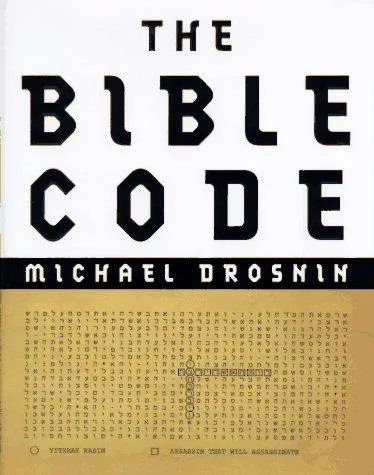
Michael Drosnin’s "The Bible Code" presents a provocative thesis: that the Hebrew Bible, specifically the Torah, is a sophisticated computer program, a repository of prescient information. Drosnin’s methodology, which involves identifying words and phrases through equidistant letter sequences (ELS) in the original Hebrew text, is certainly intriguing. He details numerous alleged predictions, from the assassination of Yitzhak Rabin to the rise of Adolf Hitler, found through this method. The sheer volume of claimed discoveries lends an air of persuasive authority to his initial arguments. However, the work falters significantly in its statistical rigor and its susceptibility to confirmation bias. Critics, including mathematicians and statisticians, have pointed out that with enough searching and flexible interpretation, patterns can be found in almost any large dataset, a phenomenon known as the "apophenia" effect. The book’s limitation lies in its failure to adequately address these statistical objections, presenting the findings as definitive rather than as potential algorithmic artifacts. While the idea of a hidden layer of meaning in scripture is compelling, "The Bible Code" offers more suggestive speculation than conclusive proof. It’s a fascinating exploration of possibility, but not a definitive decipherment.
📝 Description
75
Michael Drosnin's 1998 book claims the Torah contains hidden predictions discoverable by computer.
Michael Drosnin's book, "The Bible Code," published in 1998, presents the idea that the Hebrew text of the Torah holds secret messages. The author suggests that ancient prophets embedded predictions and historical accounts within the original wording. These hidden communications are supposedly accessible through computer analysis, using a method that skips letters at fixed intervals to form new words or phrases. The book appeals to those interested in cryptography, biblical studies, and the intersection of faith and computation.
It is for readers who question conventional religious interpretations and are open to the possibility of encoded divine knowledge. Those interested in numerology, Gematria, and historical prophecy will find specific connections. The work also draws the attention of skeptics looking for unconventional evidence of order in sacred texts. The method, known as equidistant letter sequencing, relies on selecting letters at predetermined intervals within the scripture.
The concept of hidden meanings within scripture is not new, with traditions like Gematria in Jewish mysticism having long explored the numerical values of Hebrew letters. Drosnin's approach in "The Bible Code" brought this practice into the digital age during the late 1990s. It emerged during a period of increased interest in alternative interpretations of religious texts, coinciding with significant advancements in computing power that enabled complex algorithmic analysis of texts.
💡 Why Read This Book?
• You will learn about the specific methodology of Equidistant Letter Sequences (ELS) as applied by Michael Drosnin to the Hebrew Bible, understanding how letter intervals are calculated to uncover alleged hidden messages. • You will encounter Drosnin's cited predictions of historical events, such as the assassination of Yitzhak Rabin in 1995, gaining concrete examples of the "Bible Code's" alleged capabilities. • You will be introduced to the historical context of biblical cryptography, recognizing how "The Bible Code" builds upon ancient traditions like Gematria while leveraging modern computational power.
⭐ Reader Reviews
Honest opinions from readers who have explored this book.
❓ Frequently Asked Questions
What is the core concept of Michael Drosnin's "The Bible Code"?
The core concept is that the Hebrew text of the Torah contains hidden messages and predictions discoverable through a mathematical process called equidistant letter sequences (ELS), essentially a form of biblical cryptography.
When was "The Bible Code" first published?
Michael Drosnin's "The Bible Code" was first published in 1998, with subsequent editions appearing in 2001 and later, popularizing the idea of hidden codes within the Bible.
What kind of predictions does "The Bible Code" claim to reveal?
The book claims to reveal predictions of major historical events, including assassinations, wars, and the actions of significant political figures, alongside prophecies about future occurrences.
What is the primary method used to find these codes?
The primary method is Equidistant Letter Sequences (ELS), where letters in the Hebrew Bible are selected at fixed intervals to form words or phrases, revealing hidden meanings.
Has the "Bible Code" theory been widely accepted by scholars?
No, the theory has been largely rejected by mainstream biblical scholars, mathematicians, and statisticians, who cite issues with methodology, statistical validity, and the potential for finding patterns through chance.
What is the Hebrew text of the Bible that Drosnin used?
Drosnin primarily used the Masoretic Text of the Hebrew Bible, specifically the Torah (the first five books), which is considered the most authoritative version by many Jewish traditions.
🔮 Key Themes & Symbolism
Equidistant Letter Sequences
This theme centers on the core cryptographic technique Drosnin employed. Equidistant Letter Sequences (ELS) involve selecting letters from the Hebrew Bible at fixed intervals. For instance, a sequence might skip 7 letters, then 14, then 21, and so on. Drosnin argues that when these selected letters form meaningful words or phrases, it indicates an intentional, hidden message. The precision and alleged prescience of these discovered phrases are presented as evidence of a divine or prophetic intelligence embedded within the text since its creation.
Prophetic Revelation
The book posits that the Bible is not merely a religious text but a divinely encoded repository of future events. Drosnin presents a series of alleged prophecies discovered through the ELS method, which he claims accurately foretold significant historical occurrences, such as the assassination of Yitzhak Rabin. This theme challenges the traditional understanding of prophecy, suggesting it was not merely foretelling but was actively embedded in the scripture's very structure for later discovery.
The Torah as a Computer Program
Drosnin frames the Hebrew Torah as an ancient, sophisticated computer program. This metaphor suggests that the text was meticulously designed with underlying algorithms and data, meant to be decoded by future generations with advanced technology. The implication is that the creators of the Torah possessed knowledge far beyond their time, embedding information that could only be accessed and understood through computational analysis, positioning the Bible as a uniquely structured informational artifact.
Statistical Significance and Chance
A crucial, albeit controversial, aspect of the book involves the statistical analysis of the discovered codes. Drosnin asserts that the patterns found are too improbable to be mere chance occurrences. He contrasts the likelihood of finding these specific words and phrases through random letter selection with their alleged significance. This theme invites readers to consider the mathematical underpinnings of the claims, even as critics question the validity of his statistical models and interpretations.
💬 Memorable Quotes
Direct passages from the work, attributed to the author.
“The Bible itself contains a secret code.”
— This is the foundational assertion of the book, suggesting that the traditional interpretation of the Bible is incomplete, and a deeper layer of coded information exists within its original Hebrew text.
“The code was placed in the Bible by the men who wrote it. The Bible is a book of law, and it is also a book of prophecy.”
— This interpretation highlights Drosnin's belief that the code was deliberately embedded by the biblical authors, serving a dual purpose of establishing divine law and foretelling future events.
“The code predicted the assassination of Prime Minister Yitzhak Rabin.”
— This is a specific claim used to validate the existence and accuracy of the Bible code, presenting a concrete example of a predicted historical event that Drosnin's methodology allegedly uncovered.
“With the help of a computer, we can break the code.”
— This signifies the crucial role of modern technology in Drosnin's research, suggesting that the code was designed to be inaccessible until advanced computational power became available for its decipherment.
💡 Key Ideas
Editorial paraphrase of the work's core concepts — not direct quotes.
The code revealed the name of the man who would try to assassinate Rabin, Yigal Amir, and the date of the assassination.
This quote emphasizes the specific and detailed nature of the alleged prophecies found within the Bible code, suggesting an uncanny level of foreknowledge embedded in the text.
🌙 Esoteric Significance
Tradition
The work draws implicitly from Jewish mystical traditions, particularly Gematria and Kabbalah, which explore the numerical and symbolic relationships within Hebrew letters and words. However, Drosnin's methodology, heavily reliant on computer algorithms and equidistant letter sequences (ELS), departs significantly from traditional interpretive methods. It attempts to bridge ancient scriptural interpretation with modern computational science, presenting a form of applied cryptography to sacred texts rather than a purely spiritual or philosophical exegesis.
Symbolism
The primary symbolic element is the Hebrew alphabet itself, viewed not just as letters but as carriers of hidden data. The concept of equidistant letter sequences (ELS) functions as a symbolic key, representing a structured, almost mechanical, method for unlocking divine or prophetic knowledge. The Torah, as the vessel of this code, becomes a symbolic representation of divinely ordered information, predating human technology.
Modern Relevance
Contemporary interest in "The Bible Code" persists among fringe theological circles, independent researchers exploring biblical cryptography, and those fascinated by predictive algorithms applied to ancient texts. It speaks to modern audiences seeking evidence of underlying order in the universe or divine intervention in historical events, particularly within communities that explore esoteric interpretations of scripture or the potential for hidden knowledge within historical documents.
👥 Who Should Read This Book
• Individuals interested in biblical cryptography and the application of mathematical algorithms to sacred texts will find Drosnin's methodology of Equidistant Letter Sequences (ELS) a focal point. • Readers fascinated by historical predictions and the potential for foreknowledge embedded in ancient scriptures will be drawn to the claimed discoveries, such as prophecies of major political events. • Those exploring the intersection of technology, spirituality, and textual analysis, particularly skeptics and open-minded believers, will find the book a compelling, albeit controversial, case study.
📜 Historical Context
Michael Drosnin's "The Bible Code" emerged in the late 1990s, a period marked by burgeoning interest in numerology, conspiracy theories, and the intersection of technology with ancient texts. The book, first published in 1998 and gaining significant traction by 2001, capitalized on the widespread availability of personal computers and sophisticated algorithms. This era saw a public fascination with hidden meanings and secret knowledge, fueled by popular culture and a growing distrust of established institutions. While the concept of finding hidden messages in scripture echoes ancient Kabbalistic practices like Gematria, Drosnin’s method, employing equidistant letter sequences (ELS) and computer analysis, was a distinctly modern interpretation. The work sparked considerable debate, drawing fire from mathematicians and biblical scholars alike. For instance, prominent mathematician Doron Witztum and his colleagues had published research on ELS in the Hebrew Journal of Statistics in 1994, which Drosnin built upon, but the broader scientific community remained skeptical, often citing the work of statistician Persi Diaconis regarding the potential for finding patterns in any large text given sufficient effort.
📔 Journal Prompts
The principle of equidistant letter sequences (ELS) applied to the Hebrew Torah.
The claim that the Bible contains specific predictions of historical events.
The comparison of the Torah to a sophisticated computer program.
The role of technological advancement in uncovering hidden biblical meanings.
The statistical probability versus deliberate design in biblical codes.
🗂️ Glossary
Bible Code
The alleged hidden messages and predictions contained within the Hebrew text of the Bible, discoverable through mathematical and algorithmic analysis.
Equidistant Letter Sequences (ELS)
A method of cryptography where letters are selected from a text at fixed intervals to form new words or phrases, used by Drosnin to find hidden meanings in the Bible.
Torah
The first five books of the Hebrew Bible (Genesis, Exodus, Leviticus, Numbers, Deuteronomy), considered by Drosnin to be the primary source of the Bible Code.
Masoretic Text
The authoritative medieval Hebrew text of the Jewish Bible, which Drosnin used as the basis for his Bible Code analysis.
Gematria
A traditional Jewish system of assigning numerical values to Hebrew letters to find hidden meanings or connections within words and phrases.
Apophenia
The tendency to perceive meaningful connections between unrelated things; a criticism often leveled against Bible Code claims.
Confirmation Bias
The tendency to search for, interpret, favor, and recall information in a way that confirms one's preexisting beliefs or hypotheses.
🔮 Readers Also Liked
Browse all →









More by Michael Drosnin
All books →

More Free Occult Philosophy Books
View all →