Tecnicas del Yoga
 76
76

Tecnicas del Yoga
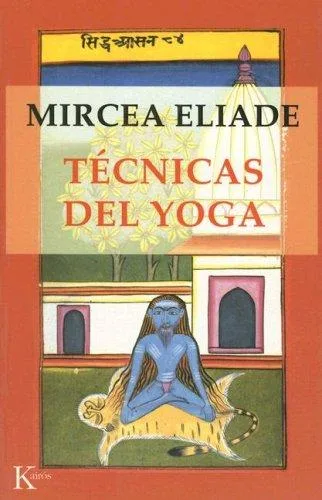
Mircea Eliade's "Tecnicas del Yoga" offers a meticulously researched account of yogic techniques, distinguishing itself from popular, often simplified, interpretations. Its strength lies in its comprehensive historical and comparative religious perspective, treating yoga as a complex spiritual technology rather than solely a physical discipline. Eliade's analysis of the *siddhi*—supernormal powers attainable through rigorous practice—provides a fascinating, albeit sometimes challenging, look at the ultimate aims of these ancient methods. However, the book's academic density can be a hurdle for readers seeking practical guidance; it demands close attention to its scholarly apparatus. A particularly striking aspect is Eliade's exploration of how yogic practices were understood and integrated within various Indian religious cosmologies, revealing a depth often missed in contemporary discussions. This is a foundational text for understanding yoga's esoteric dimensions.
📝 Description
76
Mircea Eliade's 1994 "Tecnicas del Yoga" analyzes yoga's philosophical and spiritual dimensions, not just postures.
Mircea Eliade's "Tecnicas del Yoga," published in 1994, is a scholarly examination of yogic practices. Eliade approaches yoga from a historical and religious studies perspective, viewing it not as a unified system but as a collection of techniques aimed at spiritual transformation. He traces the historical development of yoga and its varied forms across different Indian traditions. The book is for readers interested in comparative religion, Eastern philosophies, and esoteric traditions who seek a deeper understanding of yoga's roots and its place within broader spiritual contexts. It emphasizes academic rigor over superficial instruction on physical postures.
Eliade situates yogic practices within the extensive history of Indian religions, drawing on historical and textual evidence. The 1994 publication date reflects an ongoing academic interest in understanding traditional religious systems from an internal viewpoint while upholding scholarly standards, a characteristic of Eliade's broad body of work. This approach allows for a detailed analysis of yoga's evolution and its integration into various spiritual frameworks.
This work places yogic practices within the broader study of religious phenomena and mysticism, a field Eliade significantly shaped. It moves beyond popular interpretations of yoga to examine its role as a system for achieving altered states of consciousness and spiritual liberation. The book engages with concepts like *siddhi* and *samadhi*, understanding them as integral to the yogic path within historical Indian religious frameworks. Eliade's analysis connects these practices to larger cosmological understandings, situating them within traditions focused on profound inner transformation.
💡 Why Read This Book?
• Understand yoga as a sophisticated spiritual technology by examining Eliade's analysis of *samadhi* and its role in spiritual liberation, a concept explored deeply within the text. • Grasp the historical development of yogic practices through its 1994 publication context and Eliade's scholarly engagement with Indian religious history. • Explore the esoteric concept of *siddhi* and its place within yogic aims, as detailed in Eliade's academic framework, offering a unique perspective beyond physical postures.
⭐ Reader Reviews
Honest opinions from readers who have explored this book.
❓ Frequently Asked Questions
What is the primary focus of Mircea Eliade's "Tecnicas del Yoga"?
The book's primary focus is on the spiritual and philosophical dimensions of yogic techniques, examining them as methods for spiritual transformation and consciousness expansion within their historical and religious contexts, rather than just physical exercises.
When was "Tecnicas del Yoga" first published?
The book "Tecnicas del Yoga" by Mircea Eliade was first published in 1994, reflecting a scholarly engagement with the subject matter in the late 20th century.
What is the significance of the concept of *siddhi* in the book?
*Siddhi* refers to supernatural powers or perfections attained through yogic discipline. Eliade explores how these were understood and integrated within various Indian religious traditions as a potential outcome of advanced yogic practice.
Is this book suitable for beginners looking to learn yoga poses?
No, "Tecnicas del Yoga" is an academic text for scholars and advanced students of religion and philosophy. It focuses on the theoretical and historical aspects of yoga, not practical instruction on asanas.
What is *samadhi* according to Eliade's exploration?
In the context of Eliade's work, *samadhi* represents profound states of meditative absorption or trance, viewed as a goal within the yogic path towards spiritual liberation or enlightenment.
What historical period does Eliade reference in relation to yoga?
Eliade references a broad sweep of Indian religious history, situating yogic practices within ancient Indian philosophical thought and their evolution over centuries, connecting them to major religious movements.
🔮 Key Themes & Symbolism
Yogic Techniques as Spiritual Technology
Eliade frames yogic practices not merely as physical exercises but as sophisticated techniques designed for spiritual transformation. He examines how methods aimed at controlling the body and mind, such as breath control (*pranayama*) and meditation (*dhyana*), are integral to achieving higher states of consciousness and ultimately, liberation. The book traces these techniques through their historical development, highlighting their role in achieving states like *samadhi* and potentially unlocking esoteric abilities known as *siddhi*.
The Concept of Siddhi
A significant theme is the yogic pursuit of *siddhi*, or supernatural powers. Eliade meticulously details the various powers described in classical yogic texts and their place within the broader spiritual cosmology of India. He discusses how the attainment of *siddhi* was viewed by some traditions as a sign of spiritual progress, while others cautioned against becoming attached to them, seeing them as potential distractions from true liberation.
Samadhi and Liberation
The ultimate goal of many yogic paths, *samadhi*, is a central concept. Eliade explores its different interpretations, from states of profound meditative absorption to complete spiritual emancipation. The book elucidates the yogic journey as a structured process aimed at transcending ordinary consciousness and achieving a state of existential freedom, often understood as union with the divine or ultimate reality.
Historical and Religious Context
Eliade grounds his analysis firmly in the historical and religious field of India. He situates yogic practices within the wider spectrum of Indian philosophical schools, including Hinduism, Buddhism, and Jainism. Understanding yoga's evolution from ancient Vedic traditions to its more formalized systems is crucial to grasping its many-sided nature and its role in diverse spiritual movements that emerged over centuries.
💬 Memorable Quotes
Direct passages from the work, attributed to the author.
“The yogic techniques aim at the transformation of the spiritual existence of the man who practices them.”
— This highlights Eliade's view of yoga as a profound spiritual technology, not just a physical discipline, focused on fundamentally altering the practitioner's existential state and consciousness.
“The attainment of siddhi is often presented as a consequence of perfected yoga.”
— This points to the concept of supernatural abilities (*siddhi*) as a potential, though not always primary, outcome of dedicated and advanced yogic practice, as described in traditional texts.
“Samadhi represents the culmination of the yogic path towards spiritual freedom.”
— This emphasizes *samadhi* not merely as deep meditation, but as the ultimate state of spiritual liberation and transcendence sought through the systematic application of yogic methods.
“Yoga is understood as a means to abolish the profane temporal existence.”
— This interpretation suggests yoga's function is to move the practitioner beyond ordinary, time-bound experience towards a sacred, eternal state of being.
“The body is the temple for spiritual realization.”
— This reflects the yogic perspective that the physical body is not an obstacle but a crucial vehicle and even a sacred space for achieving profound spiritual insights and transformation.
🌙 Esoteric Significance
Tradition
Eliade's work on yoga aligns with the esoteric study of Indian traditions, particularly within the broader umbrella of comparative religion and the history of spirituality. While not strictly Hermetic or Gnostic, it engages with themes of spiritual transformation, transcendence, and the acquisition of hidden knowledge or powers that are common across many esoteric lineages. His approach emphasizes yoga as a 'technology of the sacred,' a system designed to alter consciousness and reality, fitting within esoteric frameworks that seek direct experience of the divine or ultimate truth.
Symbolism
Key symbols explored include the cosmos as a reflection of the human microcosm, and the yogic path itself as a journey of ascent or return. The concept of *kundalini* energy, often depicted as a coiled serpent at the base of the spine, symbolizes dormant spiritual potential waiting to be awakened and rise through the central channel (*sushumna*) to achieve union. Eliade also analyzes the symbolic language of chakras and nadis as energetic centers and pathways within the subtle body, integral to yogic practice.
Modern Relevance
Contemporary thinkers and practitioners in fields ranging from transpersonal psychology to advanced meditation studies draw upon Eliade's historical and philosophical analyses. His work informs modern interpretations of yoga that seek to integrate its spiritual depth with contemporary understanding, influencing scholars and practitioners interested in the psychological and existential dimensions of yogic disciplines. Schools exploring non-dual philosophies and consciousness studies often reference Eliade's foundational research.
👥 Who Should Read This Book
• Scholars of comparative religion and Indology seeking a comprehensive historical and philosophical analysis of yogic techniques beyond popular interpretations. • Advanced practitioners of yoga and meditation interested in understanding the esoteric aims and historical context of their disciplines, including concepts like *siddhi* and *samadhi*. • Students of mysticism and spirituality looking for academic rigor in exploring the transformative potential and spiritual technologies found within Indian religious traditions.
📜 Historical Context
Mircea Eliade's "Tecnicas del Yoga," published in 1994, emerged from a rich academic tradition of studying religion and its practices. Eliade himself was a leading figure in the mid-20th century's academic study of religions, known for his phenomenological approach. This book builds upon scholarship that sought to understand religious phenomena from an 'insider' perspective while maintaining critical distance. It situates yogic practices within the vast intellectual currents of Indian philosophy and religion, a field heavily influenced by scholars like Surendranath Dasgupta and, later, Wendy Doniger. While yoga was becoming increasingly popularized in the West for its physical aspects, Eliade's work provided a rigorous, historical, and comparative religious analysis, challenging more superficial interpretations and underscoring its esoteric and spiritual dimensions within its original Indian context.
📔 Journal Prompts
The yogic aim of abolishing profane temporal existence: How does this contrast with contemporary life goals?
Reflect on the concept of *siddhi* and its potential role in spiritual development versus ego inflation.
Analyze the yogic understanding of the body as a 'temple' for spiritual realization.
Consider the implications of *samadhi* as a state of spiritual freedom.
Explore how Mircea Eliade's historical context of 1994 shapes his interpretation of ancient yogic practices.
🗂️ Glossary
Siddhi
Supernatural powers or perfections attained through rigorous yogic practice, often described in classical Indian texts as potential byproducts of spiritual advancement.
Samadhi
A state of profound meditative absorption, trance, or spiritual ecstasy, considered a goal in yogic and other Indian contemplative traditions, leading to liberation.
Pranayama
The practice of breath control, a core component of yoga, believed to regulate vital energy (*prana*) and influence mental states.
Dhyana
Meditation; the sustained, unbroken concentration on an object or idea, a key stage in the yogic path.
Chakras
Energy centers within the subtle body, typically depicted as spinning wheels of light, through which *prana* flows.
Nadis
Channels or pathways within the subtle body through which vital energy (*prana*) circulates, analogous to a spiritual nervous system.
Kundalini
A dormant spiritual energy, often depicted as a coiled serpent, believed to reside at the base of the spine and capable of ascending through the subtle body to achieve enlightenment.
🔮 Readers Also Liked
Browse all →








More by Mircea Eliade
All books →





More Free Occult Philosophy Books
View all →