Confucianism
 72
72

Confucianism
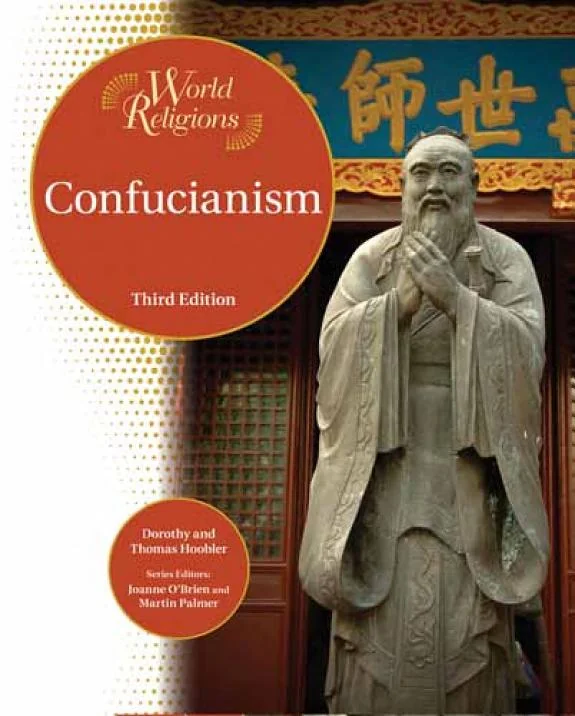
The Hooblers and O'Brien offer a clear, if somewhat standard, introduction to Confucianism, focusing on its historical trajectory and core tenets. Its strength lies in connecting the ancient philosophy to its modern re-emergence, particularly in China. However, the presentation sometimes feels like a textbook summary, lacking the deeper, more critical engagement one might expect from an esoteric library. The section on *ren* (benevolence) is well-handled, explaining its multifaceted nature as empathy and humaneness, but it could benefit from more comparative analysis with other ethical systems. Ultimately, this book serves as a competent primer for those new to the subject, though it may not satisfy readers seeking esoteric depths or radical interpretations.
📝 Description
72
This 1994 book traces the development of Confucianism from its origins to its resurgence.
The Hooblers and O'Brien examine Confucianism, a philosophical and ethical system that has shaped East Asian culture. They present Confucius's teachings not as fixed dogma, but as a living tradition that developed over centuries of Chinese history. The text places Confucianism within its historical setting, detailing its emergence during the Spring and Autumn period and its later adoption as state ideology. It shows how the system adapted to dynastic changes, the arrival of Buddhism, and Westernization.
Central ideas like *ren* (benevolence), *li* (propriety), and *xiao* (filial piety) are explained. The authors illustrate how later thinkers interpreted these concepts and how they still influence social and political structures, especially with Confucianism's recent revival. The book is useful for students of philosophy, world religions, and East Asian studies, as well as general readers interested in the intellectual foundations of societies and the impact of older thought on today's world.
While often studied as a major world philosophy, Confucianism also contains elements that resonate with esoteric traditions. Its focus on self cultivation, the rectification of names, and the pursuit of harmony between humanity and the cosmos can be seen as a path toward inner transformation. The detailed rituals and social hierarchies, when viewed through a less conventional lens, hint at a deeper, ordered universe accessible through disciplined practice and understanding. This book, by detailing these aspects, allows for a consideration of these less public dimensions of Confucian thought.
💡 Why Read This Book?
• Gain a foundational understanding of *ren* (benevolence) and *li* (propriety), exploring how these core Confucian concepts have been interpreted across dynasties, offering a unique lens on ethical governance. • Understand the historical context of Confucianism's resurgence in China following the Cultural Revolution, providing insight into how ancient philosophies adapt to modern political and social landscapes. • Learn about the Five Relationships, a key structural element of Confucian social order, and analyze its influence on societal norms and individual conduct in East Asian cultures.
⭐ Reader Reviews
Honest opinions from readers who have explored this book.
❓ Frequently Asked Questions
When did Confucianism first emerge as a significant philosophical system?
Confucianism began to take shape with the teachings of Confucius during the Spring and Autumn period in China, roughly from 771 to 476 BCE, though its widespread influence solidified later.
What is the concept of 'Mandate of Heaven' in relation to Confucianism?
The Mandate of Heaven was a concept used to legitimize the rule of emperors, suggesting their right to govern was granted by Heaven. Confucianism later integrated and elaborated on this idea, emphasizing the ruler's moral responsibility.
How did Confucianism respond to the rise of Buddhism in China?
Confucian scholars engaged with Buddhist philosophy, sometimes adopting and adapting Buddhist concepts while also critiquing it. This intellectual exchange led to Neo-Confucianism, which incorporated metaphysical elements.
What historical events significantly impacted the evolution of Confucianism?
Major events include the Han Dynasty's adoption of Confucianism as state ideology, the Tang Dynasty's flourishing of Buddhism, the Song Dynasty's development of Neo-Confucianism, and the 20th-century challenges from Communism and subsequent revival.
What does *xiao* (filial piety) entail within Confucian ethics?
*Xiao* refers to the virtue of respect for one's parents, elders, and ancestors. It is a cornerstone of Confucian morality, extending beyond the family to broader social relationships.
Is Confucianism considered a religion or a philosophy?
It is often described as both. While it focuses on ethics, social order, and governance, it also involves rituals, veneration of ancestors, and a concept of Heaven, leading to its classification as a philosophy or a religion.
🔮 Key Themes & Symbolism
The Five Relationships
This theme centers on the structured social order promoted by Confucianism, emphasizing hierarchical relationships: ruler-subject, father-son, husband-wife, elder brother-younger brother, and friend-friend. The book explains how each dynamic requires specific virtues and reciprocal duties, aiming for societal harmony. Understanding these relationships is crucial to grasping Confucianism's practical application in governance and personal conduct, highlighting its focus on social roles and responsibilities over individualistic pursuits.
Ren: Benevolence and Humaneness
Central to Confucian thought, *ren* is explored as the virtue of humaneness, benevolence, and compassion. It represents the ideal inner moral quality that Confucius sought to cultivate. The text illustrates how *ren* is practiced through empathy and consideration for others, forming the ethical bedrock of Confucianism. Its application extends from familial love to the ideal conduct of a ruler, suggesting that true leadership stems from a profound concern for the well-being of the people.
Li: Ritual and Propriety
The concept of *li* encompasses rites, rituals, propriety, and etiquette. This theme examines how *li* provides the outward expression of inner virtue and social order. The book details how adherence to established customs and proper conduct facilitates harmonious social interactions and reinforces moral cultivation. *Li* is presented as the mechanism through which *ren* is externalized, ensuring that ethical principles are translated into tangible actions and societal norms.
Confucianism's Modern Resurgence
This theme addresses the re-evaluation and re-emergence of Confucian thought in contemporary China and globally. Following periods of suppression, the book highlights how Confucian ideals are being reconsidered for their potential to provide ethical frameworks for modern society. It discusses the adaptation of Confucian principles to address contemporary challenges, reflecting a renewed interest in its contributions to social cohesion, personal development, and governance.
💬 Memorable Quotes
Direct passages from the work, attributed to the author.
“To know what you know and what you do not know, that is true knowledge.”
— This highlights the importance of intellectual honesty and self-awareness in Confucianism. It underscores the value of recognizing the limits of one's understanding as a fundamental step towards genuine learning and wisdom.
“Our greatest glory is not in never falling, but in rising every time we fall.”
— This sentiment, often attributed to Confucius, speaks to the resilience and perseverance valued in Confucian ethics. It emphasizes the importance of learning from setbacks and maintaining moral fortitude through adversity.
“Study without thought is labor lost; thought without study is dangerous.”
— This aphorism stresses the interconnectedness of theoretical learning and practical application. It warns against passive accumulation of knowledge without critical reflection and against speculative thinking devoid of empirical grounding.
“Do not do to others what you do not want done to yourself.”
— This is a foundational principle of reciprocity, often referred to as the 'Silver Rule'. It serves as a simple yet profound ethical guideline for interpersonal conduct, promoting empathy and mutual respect.
💡 Key Ideas
Editorial paraphrase of the work's core concepts — not direct quotes.
The superior man is modest in his speech, but exceeds in his actions.
This quote captures the Confucian ideal of prioritizing substantive deeds over mere words. It suggests that true character and leadership are demonstrated through consistent, impactful actions rather than eloquent pronouncements, emphasizing integrity and efficacy.
🌙 Esoteric Significance
Tradition
While primarily a philosophical and ethical system, Confucianism contains elements that resonate with esoteric traditions through its emphasis on self-cultivation, cosmic harmony, and the moral order of the universe. Its focus on aligning human conduct with the principles of Heaven (*Tian*) can be seen as a form of practical metaphysics. Within Esoteric Library's purview, it complements traditions like Hermeticism or Taoism by offering a structured, socio-ethical path to achieving balance and virtue, albeit with less emphasis on mystical experience and more on social responsibility.
Symbolism
Key symbols include the sage-king (an enlightened ruler embodying virtue), the square and compass (representing order and measurement in conduct and governance), and the concept of the Mandate of Heaven (*Tianming*). The sage-king symbolizes the ideal of achieved human potential and benevolent leadership. The square and compass represent the disciplined application of *li* (propriety) and *ren* (benevolence) to shape society. *Tianming* symbolizes the cosmic endorsement of virtuous rule, linking the human ethical realm to universal order.
Modern Relevance
Contemporary thinkers and movements interested in virtue ethics, applied ethics, and communitarian philosophies often draw upon Confucian principles. Its emphasis on filial piety, respect for elders, and social harmony offers frameworks for understanding and addressing issues of social fragmentation and intergenerational conflict. Furthermore, its resurgence in East Asia demonstrates its adaptability as a source of cultural identity and ethical guidance in a rapidly changing global landscape, influencing discussions on education, family values, and leadership.
👥 Who Should Read This Book
• Students of comparative religion and philosophy seeking to understand the foundational ethical and social structures of East Asian civilizations. • Researchers interested in the historical evolution of major world thought systems and their adaptation to modernity. • General readers curious about the enduring influence of ancient thinkers on contemporary global societies and ethical discourse.
📜 Historical Context
Published in 2009, this work emerged during a period of significant global interest in China and its philosophical traditions. Confucianism, which had been largely sidelined during the Maoist era, was experiencing a notable revival in mainland China. This resurgence was partly driven by the government's efforts to find indigenous sources of social cohesion and cultural identity, and partly by popular interest in traditional values. The Hooblers and O'Brien's book arrived in a landscape where scholars like Tu Weiming were actively promoting Confucianism as a vital ethical resource for the 21st century, engaging with global modernization theories. While not explicitly engaging with competing schools like Taoism or Legalism within its narrative, the book implicitly positions Confucianism as a distinct and enduring force in Chinese intellectual history, contrasting with the more transient political ideologies it has historically influenced and been influenced by.
📔 Journal Prompts
The Five Relationships: reflecting on reciprocal duties.
Confucius's concept of *ren*: its personal and social implications.
The role of *li* in maintaining social harmony.
Comparing the historical challenges to Confucianism with modern ethical dilemmas.
The meaning of filial piety (*xiao*) in contemporary contexts.
🗂️ Glossary
Ren (仁)
The core Confucian virtue of benevolence, humaneness, goodness, and compassion. It represents the ideal inner moral quality and the foundation of ethical conduct.
Li (禮)
Encompasses rites, rituals, propriety, etiquette, and social norms. It provides the outward expression of virtue and guides social interactions to ensure harmony.
Xiao (孝)
Filial piety; the virtue of respect, obedience, and care for one's parents, elders, and ancestors. It is a core part of Confucian morality and social order.
Tian (天)
Literally 'Heaven'; a concept representing the natural order, cosmic principle, and ultimate moral authority. It is not typically conceived as a personal deity.
Junzi (君子)
The 'superior man' or 'noble person'; the ideal individual cultivated through moral education and adherence to Confucian principles. Embodies virtues like *ren* and *li*.
Spring and Autumn period
An era in Chinese history (c. 771–476 BCE) characterized by political fragmentation and intellectual ferment, during which Confucius lived and developed his philosophy.
Mandate of Heaven (Tianming, 天命)
A concept justifying the rule of the emperor based on divine approval, which could be revoked if the ruler became unjust or ineffective.
This book appears in 1 collection
🔮 Readers Also Liked
Browse all →








From the “Confucianism” Collection
View all →


More Free Occult Philosophy Books
View all →