Sacred Sites. the Library of Esoterica
 77
77

Sacred Sites. the Library of Esoterica
Jessica Hundley's "Sacred Sites" offers a compelling visual survey of places that have inspired devotion and awe. The strength lies in its extensive photographic collection, which vividly captures the atmospheric power of locations from the pyramids of Giza to the Chartres Cathedral. Hundley’s curation effectively highlights the diversity of human approaches to sacred space. However, the textual components, while informative, sometimes feel less cohesive than the visual narrative. The exploration of how ritual transforms spaces, a central theme, could benefit from deeper engagement with specific ritualistic practices rather than broader statements. A particularly striking element is the juxtaposition of ancient temples with modern land art, illustrating the continuous human drive to imbue landscapes with meaning. While not a scholarly deep-dive, "Sacred Sites" serves as an inspiring visual compendium for those interested in the phenomenology of sacred places.
📝 Description
77
Published in 2023, Sacred Sites maps over 400 images of spiritually significant locations.
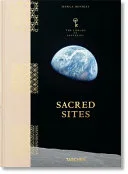
Sacred Sites, curated by Jessica Hundley, is a survey of places recognized for their spiritual weight across different cultures and time periods. The book features over 400 images, detailing locations that span from ancient megalithic formations and Egyptian pyramids to Gothic cathedrals and modern land art. Contributors offer varied perspectives on how people interact with sacred geography.
This volume is for anyone interested in the links between geography, spirituality, art, and ritual. It speaks to those wanting to grasp how human consciousness affects and is affected by physical environments. Readers of comparative religion, architectural history, anthropology, and the study of sacred traditions will find relevant material. Artists and creative individuals may also find inspiration in these global sites of worship and contemplation.
This book engages with the perennial human practice of designating and consecrating specific locations. From prehistoric stone circles to medieval pilgrimage paths, people have consistently identified or constructed spaces for ritual and a connection to the divine. Sacred Sites places these actions within a historical context, showing the continuity of transforming landscapes through belief and creative expression from ancient times to the present.
💡 Why Read This Book?
• Gain a visual understanding of how sites like the Great Pyramids of Giza became focal points for ritual and belief, offering concrete examples of sacred geography. • Explore the connection between artistic creation and spiritual expression, as seen in the book's depiction of land art alongside ancient temples. • Comprehend the enduring human impulse to consecrate spaces, illustrated through examples spanning from megalithic structures to soaring cathedrals, providing context for contemporary spiritual practices.
⭐ Reader Reviews
Honest opinions from readers who have explored this book.
❓ Frequently Asked Questions
What types of sacred sites are featured in Jessica Hundley's "Sacred Sites"?
The book showcases a wide array of sacred sites, including ancient temples, great pyramids, soaring cathedrals, and modern works of land art, illustrating diverse forms of human worship and creativity.
When was "Sacred Sites. the Library of Esoterica" first published?
Jessica Hundley's "Sacred Sites" was first published on April 12, 2024.
What is the main focus of the essays and interviews within "Sacred Sites"?
The essays and interviews explore how humans transform the world through ritual, creativity, and worship, focusing on the spiritual and symbolic significance of various sacred spaces.
How many images are included in "Sacred Sites"?
The book features more than 400 images, providing a rich visual journey through the world's holy mountains, pyramids, and cathedrals of light.
What distinguishes "Sacred Sites" from other books on holy places?
It distinguishes itself by bridging ancient sacred sites with contemporary land art and exploring the underlying human impulses of ritual and creativity that connect them.
Is "Sacred Sites" a scholarly text or a visual exploration?
It functions as both, combining visual exploration with essays and interviews that examine the cultural and spiritual significance of sacred spaces.
🔮 Key Themes & Symbolism
Sacred Geography
This theme examines the concept that specific locations possess inherent spiritual power or become charged through human devotion and ritual. The book illustrates how places like Machu Picchu or Stonehenge are not merely geographical points but centers of cosmic or earthly energy, shaped by belief systems. It studies how these sites serve as conduits between the mundane and the transcendent, fostering collective identity and individual spiritual quests across diverse cultures and historical periods.
Ritual and Transformation
Central to the book is the understanding that ritual acts as a powerful tool for transforming ordinary spaces into sacred ones. Whether through ancient ceremonies at Angkor Wat or pilgrimage practices at Lourdes, these actions imbue sites with layers of meaning and spiritual potency. The book highlights how repetitive actions, focused intention, and communal participation create energetic fields, reinforcing the sacredness of a place and its role in spiritual development.
Creativity as Worship
The volume explores how artistic and architectural creation itself can be a form of worship. The construction of a soaring cathedral or the deliberate placement of stones in a land art installation are presented as acts of devotion. This theme connects the impulse to build and create with the desire to honor the divine or express profound spiritual experiences, demonstrating that human ingenuity in shaping the material world is intrinsically linked to our spiritual lives.
The Enduring Impulse
Sacred Sites underscores the persistent human need to seek, create, and venerate sacred spaces across millennia. From Paleolithic burial sites to contemporary performance art in natural settings, the book traces this fundamental drive through history. It suggests that this impulse reflects a deep-seated quest for meaning, connection, and transcendence, manifesting differently across cultures but remaining a constant in the human experience of working through the world.
💬 Memorable Quotes
Direct passages from the work, attributed to the author.
“Sacred Sites celebrates the ways we transform the world around us through ritual, creativity, and worship.”
— This core statement captures the book's thesis: that human spiritual and artistic endeavors actively shape our perception and experience of place, turning mere locations into meaningful landscapes.
“Explore spaces ranging from ancient temples to modern works of land art.”
— This highlights the book's broad scope, emphasizing its intention to connect disparate historical and artistic expressions of sacredness, from millennia-old structures to contemporary artistic interventions.
“A visual pilgrimage through holy mountains, great pyramids, and soaring cathedrals of light.”
— This evocative phrase frames the book's content as a journey, inviting the reader to experience the spiritual essence of diverse sites through compelling imagery and thematic exploration.
“Essays, interviews and more than 400 images explore spaces...”
— This points to the multi-modal approach of the book, combining scholarly and personal perspectives with extensive visual documentation to create a comprehensive study of sacred locations.
“The book explores spaces ranging from ancient temples to modern works of land art.”
— This signifies the book's unique approach in bridging historical sacred sites with contemporary artistic expressions, revealing a continuous thread in humanity's relationship with consecrated environments.
🌙 Esoteric Significance
Tradition
While not strictly adhering to a single esoteric lineage, "Sacred Sites" draws from the broader Hermetic and Gnostic impulses that emphasize the divine immanence within the material world and the transformative power of sacred geography. It aligns with traditions that view the Earth itself as a living entity, imbued with spiritual energy that can be accessed through specific locations and practices. The book’s focus on the subjective experience of sacredness echoes neoplatonic ideas about the soul's ascent through contemplation of divine forms in the world.
Symbolism
Key symbols explored include the mountain, representing ascent and proximity to the divine (e.g., Mount Kailash, Mount Sinai), and the pyramid, symbolizing cosmic order, eternal return, and the connection between the earthly and celestial realms (e.g., Giza). Cathedrals, with their soaring architecture and stained glass, represent microcosms of the divine cosmos, guiding the worshipper's gaze upwards. These symbols function as focal points for spiritual energy and conceptual frameworks for understanding the universe.
Modern Relevance
Contemporary practitioners of geomancy, landscape spirituality, and eco-mysticism find resonance in "Sacred Sites." Thinkers exploring place attachment, the psychology of pilgrimage, and the integration of nature-based spirituality into urban life can draw inspiration from its examples. The book's approach also informs contemporary artists and designers who seek to imbue their work with deeper meaning, reflecting a modern resurgence of interest in the numinous aspects of physical environments and human experience.
👥 Who Should Read This Book
• Aspiring pilgrims and spiritual travelers seeking to understand the deeper significance of sacred locations beyond tourism. • Art historians and architectural students interested in the evolution of sacred structures and the role of symbolism in design. • Anthropologists and comparative religion scholars examining the cross-cultural expressions of ritual, belief, and the construction of sacred space. • Creatives and artists looking for inspiration and a deeper connection to the spiritual dimensions of landscape and built environments.
📜 Historical Context
Published in 2024, Jessica Hundley's "Sacred Sites" enters a discourse on sacred geography and built environment that has evolved significantly since the mid-20th century. Post-war scholarship saw a rise in phenomenological approaches to place, influenced by thinkers like Yi-Fu Tuan, who explored the human experience of space and environment. This work also engages with the growing interest in comparative religion and the anthropology of ritual, fields that began to seriously analyze the social and symbolic functions of sacred sites from the 1960s onwards. Unlike earlier, purely architectural or historical surveys, "Sacred Sites" emphasizes the subjective experience and the active role of ritual and creativity, aligning with contemporary theories that view sacredness as a dynamic, human-constructed phenomenon. Its inclusion of land art alongside ancient monuments reflects a modern tendency to broaden the definition of what constitutes a 'sacred site' beyond traditional religious structures.
📔 Journal Prompts
The pyramids of Giza and their role in ancient Egyptian cosmology.
The symbolic architecture of soaring cathedrals and their spiritual intent.
Transforming spaces through ritual and creativity.
The concept of sacred geography across diverse cultures.
Land art as a modern expression of devotion.
🗂️ Glossary
Sacred Geography
The study of places that are considered holy, sacred, or imbued with spiritual significance, and how these places influence human beliefs, rituals, and cultural practices.
Land Art
Art created in or with the landscape, often monumental in scale and using natural materials, where the site itself is an integral part of the artwork.
Ritual
A set of actions, performed usually in a prescribed order, often for symbolic, religious, or superstitious purposes; a ceremony.
Cosmology
The study of the origin, evolution, and eventual fate of the universe; often includes the structure and relationship of its components.
Megalithic Structures
Large prehistoric structures made of stone, such as Stonehenge or dolmens, often associated with religious or ceremonial purposes.
Numinous
Describing an experience of awe, mystery, and spiritual dread, often associated with the divine or supernatural.
Pilgrimage
A journey or search of moral or spiritual significance, typically to a sacred place or shrine.