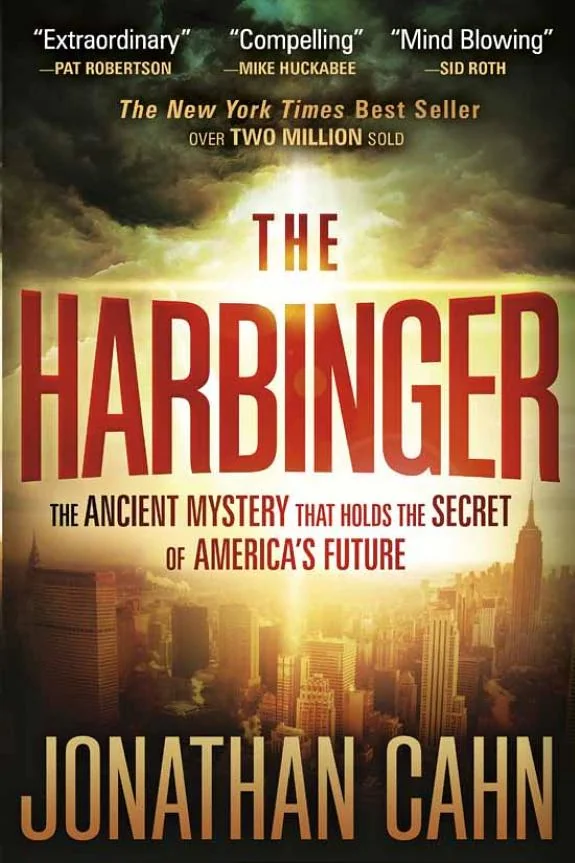
The Harbinger
 73
73

The Harbinger
Jonathan Cahn's "The Harbinger" constructs a compelling, albeit controversial, framework for understanding American history through a prophetic lens. The narrative device of the nine seals, each unlocking further layers of Isaiah's prophecies applied to national events, is undeniably effective in drawing the reader forward. The author's skill in linking biblical passages to specific historical moments, such as the founding of the nation or periods of societal upheaval, creates a sense of urgent revelation. However, the work's reliance on a singular, deterministic interpretation of prophecy can feel restrictive, leaving little room for alternative readings or secular analyses of historical causality. The strength lies in its narrative momentum and its ability to make ancient texts feel immediately relevant to contemporary concerns, but its limitation is a potential oversimplification of complex historical and theological issues. The exploration of the "asherah pole" as a symbol of national apostasy is a particularly striking, if debated, element.
"The Harbinger" offers a potent, albeit singular, vision of prophetic history.
📝 Description
73
Jonathan Cahn's 2011 book, The Harbinger, uses nine prophetic seals to interpret American history.
The Harbinger is structured around an anonymous narrator who receives nine "seals" from a prophetic figure. Each seal contains prophecies derived from the Book of Isaiah. Cahn presents these pronouncements as keys to understanding America's recent past and potential future crises.
The book appeals to readers interested in prophetic literature, especially those who examine biblical texts for contemporary relevance and eschatological meaning. It connects ancient prophecies to modern national events and explores divine judgment or guidance within secular history. Published in 2011, it appeared during a time of national anxiety following the 2008 financial crisis.
Cahn taps into a tradition of interpreting biblical prophecy for national destiny, a practice seen in Puritanical writings and later evangelical movements. The central concept revolves around the "nine seals," each set of prophetic utterances linked to specific American events or trends, suggesting a divinely orchestrated pattern. The work also features "The Prophet," a mysterious messenger, and "The Prophet's," a group of interpreters.
The Harbinger fits within a tradition of biblical literalism that seeks direct correspondence between ancient prophecies and contemporary national events. This approach often views secular history as a stage for divine action, echoing themes found in earlier Puritan interpretations of scripture and later evangelical eschatology. The book employs a narrative structure that presents these interpretations as a revelation, connecting specific historical occurrences to prophetic pronouncements, thereby imbuing them with a sense of predestined or divinely managed significance.
💡 Why Read This Book?
• Gain a unique interpretive framework for understanding national events through the lens of specific biblical prophecies, as Cahn meticulously applies passages from Isaiah. • Explore the concept of "The Prophet" and the "nine seals" as narrative devices that connect ancient warnings to modern American history, offering a specific approach to prophetic exegesis. • Examine the book's engagement with historical American milestones and its argument for a pattern of divine judgment, providing a distinct perspective on national destiny not found in secular historical accounts.
⭐ Reader Reviews
Honest opinions from readers who have explored this book.
❓ Frequently Asked Questions
What biblical book is primarily referenced in The Harbinger?
The Harbinger heavily draws upon the Book of Isaiah. The prophecies and pronouncements within Isaiah are presented as the source material for the 'nine seals' and the overarching message of the book.
Who is 'The Prophet' in Jonathan Cahn's The Harbinger?
'The Prophet' is an anonymous, mysterious figure who delivers the nine seals and their associated prophecies to the narrator. This character serves as a conduit for divine revelation within the narrative.
What is the significance of the 'nine seals' in The Harbinger?
The nine seals are central to the book's structure, each containing specific prophetic sayings and interpretations of historical events in America. They are presented as keys to understanding a divine pattern or judgment.
Does The Harbinger offer a specific interpretation of American history?
Yes, the book presents a specific interpretation that connects key moments in American history to prophecies found in the Book of Isaiah, suggesting a pattern of national sin and potential divine consequence.
When was The Harbinger first published?
The Harbinger was first published in 2011, positioning it within a contemporary context of national discourse and reflection.
What is the 'asherah pole' mentioned in The Harbinger?
The 'asherah pole' is a symbol discussed in The Harbinger, interpreted as representing national apostasy and idolatry, drawing parallels between ancient Israelite practices and modern societal trends.
🔮 Key Themes & Symbolism
Prophetic Revelation
The work centers on the concept of prophetic revelation, specifically how ancient prophecies, primarily from the Book of Isaiah, are presented as directly applicable to the unfolding narrative of American history. The 'nine seals' serve as discrete units of this revelation, each unlocking a deeper layer of meaning and warning for the nation. This theme explores the idea of divine communication through scripture to guide or judge earthly kingdoms.
National Apostasy and Judgment
A core theme is the notion of national apostasy, wherein a nation turns away from its founding principles or divine covenant, leading to potential judgment. The Harbinger uses historical events and societal trends in America as evidence of such apostasy, linking them to biblical precedents. The 'asherah pole' is employed as a potent symbol for this spiritual deviation and its perceived consequences.
The Pattern of History
The book posits that history, particularly national history, follows discernible patterns, often divinely ordained. It suggests that by understanding these patterns, particularly through prophetic texts, one can discern the underlying forces shaping events and anticipate future trajectories. This theme challenges purely secular or random interpretations of historical progression.
Mysterious Messengers
The presence of 'The Prophet' and the 'Prophet's' introduces an element of mystery and esoteric transmission of knowledge. These figures act as intermediaries, conveying prophetic messages that are not readily apparent to the general populace. This highlights a theme of hidden wisdom accessible to those attuned to spiritual or prophetic signals.
💬 Memorable Quotes
Direct passages from the work, attributed to the author.
“The words of Isaiah are a wake-up call to America.”
— This statement expresses the book's central thesis: that the ancient prophecies of Isaiah are not merely historical texts but possess immediate and critical relevance to the contemporary state of the United States, serving as a call to awareness.
“Each seal contained a mystery, a warning, and a revelation.”
— This describes the tripartite nature of the 'nine seals.' They are presented as enigmatic pronouncements that unveil hidden truths about America's past and future, carrying a tone of solemn warning.
“The Prophet spoke of the harbingers of destruction.”
— This refers to the core narrative device, where the prophetic figure identifies signs or precursors ('harbingers') that indicate impending calamity for the nation, linking specific events to a larger prophetic framework.
“The nation’s foundations are being shaken.”
— This expresses a sentiment of national crisis and instability, implying that fundamental aspects of the country—its principles, societal structures, or spiritual underpinnings—are under severe threat, as revealed through the prophetic narrative.
💡 Key Ideas
Editorial paraphrase of the work's core concepts — not direct quotes.
America is repeating the ancient patterns of judgment.
This paraphrased concept suggests that the book argues for a cyclical view of history, where the nation's actions mirror those of ancient civilizations that faced divine retribution, implying a similar fate if patterns are not broken.
🌙 Esoteric Significance
Tradition
The Harbinger engages with a specific vein of prophetic interpretation that, while rooted in Abrahamic scripture, functions esoterically by seeking hidden patterns and divine blueprints within secular history. It aligns with traditions that view historical events not as random occurrences but as expressions of a cosmic or divine plan, accessible through specific textual keys like the Book of Isaiah.
Symbolism
Key symbols include the 'nine seals,' representing stages of revelation or judgment, and the 'asherah pole,' a potent icon of national idolatry and deviation from a perceived divine order. These symbols function as esoteric keys, unlocking deeper meanings behind historical events and societal trends, bridging the gap between ancient prophecy and modern national experience.
Modern Relevance
Contemporary thinkers and movements focused on 'Christian Reconstructionism' or 'Dominionism,' which advocate for applying biblical law to civil government, may find resonance with The Harbinger's thematic concerns. It also speaks to broader contemporary interests in eschatology and the search for overarching narratives that explain societal shifts and potential crises through a spiritual lens.
👥 Who Should Read This Book
• Students of biblical prophecy seeking to understand contemporary applications of ancient texts, particularly those interested in how scripture might interpret national events. • Readers interested in comparative religious studies who wish to explore the phenomenon of national eschatology and prophetic messaging in modern literature. • Individuals drawn to narratives that connect historical milestones with spiritual or divine oversight, offering a framework for understanding societal trends through a prophetic lens.
📜 Historical Context
Published in 2011, The Harbinger emerged in the wake of the 2008 global financial crisis and amidst ongoing debates about America's role and destiny. It taps into a long-standing tradition of Christian prophetic interpretation applied to national events, a practice evident since the Puritan era. This approach often contrasts with secular historical analysis that emphasizes socio-economic and political factors. The book's reception was significant, particularly within evangelical Christian circles, sparking widespread discussion about its theological and historical claims. While not directly engaging with academic historical scholarship in its narrative, its themes echo earlier works that sought divine patterns in national trajectories. Contemporary authors like Tim LaHaye, known for his Left Behind series, also explored eschatological themes, though with a different narrative focus. The Harbinger's success highlights a persistent cultural interest in finding prophetic meaning in national events.
📔 Journal Prompts
The nine seals as a framework for historical analysis.
Reflecting on the prophetic warnings presented in Isaiah.
America's perceived national trajectory through a prophetic lens.
The role of 'The Prophet' in dispensing divine messages.
Interpreting national events using biblical prophecy.
🗂️ Glossary
The Harbinger
The title of the book and also refers to the concept of a sign or omen that foretells future events, particularly those of a calamitous nature, as revealed through prophetic interpretation.
The Prophet
A mysterious, anonymous figure in the book who delivers the 'nine seals' and their prophecies to the narrator, serving as a conduit for divine revelation concerning national events.
Nine Seals
A central narrative device comprising nine distinct sets of prophetic sayings and interpretations drawn from the Book of Isaiah, presented as keys to understanding America's past and potential future.
Book of Isaiah
An Old Testament prophetic book whose passages are central to The Harbinger, interpreted by the author as directly applicable to contemporary American history and destiny.
Asherah Pole
A symbol discussed in the book, interpreted as representing national apostasy and idolatry, drawing parallels between ancient Israelite practices and perceived modern societal deviations.
Harbingers
Signs or portents that precede and announce future events, specifically the 'harbingers of destruction' that 'The Prophet' identifies within American history according to the book's narrative.
Prophetic Interpretation
The method of reading and applying biblical prophecies, particularly those from Isaiah, to contemporary historical events and national circumstances, as practiced within the book.
This book appears in 1 collection
🔮 Readers Also Liked
Browse all →









From the “Prophecy” Collection
View all →


More Free Occult Philosophy Books
View all →