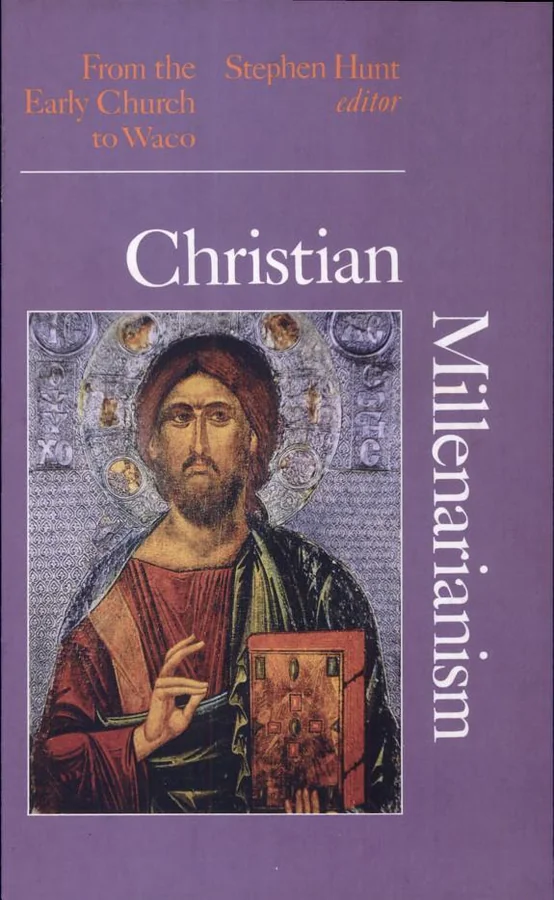
Christian Millenarianism
 78
78

Christian Millenarianism
Stephen Hunt's Christian Millenarianism provides a solid, if somewhat dry, academic survey of a persistent and often misunderstood phenomenon. The strength lies in its comparative historical approach, effectively linking ancient eschatological frameworks to contemporary manifestations. Hunt’s analysis of the theological underpinnings, particularly in relation to new religious movements, offers valuable clarity. However, the work occasionally feels overly focused on theological minutiae, potentially leaving readers seeking a more visceral understanding of the lived experience of millenarians wanting. The discussion of the 1970s and 1980s emergence of certain Christian fundamentalist groups, as a manifestation of these ideas, is particularly well-articulated. While not a narrative, it serves as a critical reference for understanding the intellectual currents behind enduring millennial expectations.
📝 Description
78
Stephen Hunt's 2001 book traces Christian end-times beliefs from their origins to the late 20th century.
Published in 2001, Christian Millenarianism by Stephen Hunt examines the historical development and theological foundations of Christian beliefs about the end times. The book charts the evolution of these ideas, showing how they have appeared in various religious groups, especially those prominent in the late twentieth century. Hunt places these beliefs within larger historical trends, noting their presence from early Christian groups through later revivals and divisions. He specifically discusses their renewal and adjustment in modern times, often as a reaction to societal shifts and anxieties. The work looks at how these historical expectations are reinterpreted and applied to current situations, shaping both religious thought and social engagement.
The volume is for scholars of religion, especially those focused on Christian eschatology, new religious movements, and fundamentalism. Students of comparative religion will find its historical and theological research useful. It also serves readers who want to grasp the ideological bases behind certain current religious and political groups, offering a more considered view than sensationalized reports.
Christian millenarianism, as examined by Hunt, taps into a long tradition of interpreting biblical prophecy to foresee a coming divine intervention and transformation of the world. This tradition often involves distinct communities focused on shared expectations of an imminent spiritual or physical renewal. The book's exploration of immanent versus transcendent messianism and the role of apocalyptic texts connects to broader esoteric currents that seek hidden meanings in scripture and divine patterns governing history. It situates these specific Christian expressions within a wider human impulse to find ultimate meaning and order in cosmic and historical events.
💡 Why Read This Book?
• Learn how specific apocalyptic prophecies, like those found in the Book of Revelation, have been historically interpreted and reinterpreted by different Christian factions, influencing their social and political actions. • Understand the theological distinctions between immanent and transcendent messianism, and how these differing views shape the eschatological expectations and practices of various millenarian groups. • Gain insight into the emergence and characteristics of specific contemporary religious movements, such as certain fundamentalist sects discussed in the book, and their connection to historical millenarian traditions.
⭐ Reader Reviews
Honest opinions from readers who have explored this book.
❓ Frequently Asked Questions
What is the historical scope of Christian millenarianism discussed in Stephen Hunt's book?
Stephen Hunt's book covers the historical scope of Christian millenarianism from early Christian communities through various revivals and into contemporary religious movements, particularly those prominent in the late 20th century.
What is the difference between immanent and transcendent messianism as explored in Christian Millenarianism?
Immanent messianism anticipates a worldly transformation brought about by divine intervention, while transcendent messianism focuses on an otherworldly salvation. Hunt's work examines how these concepts shape different millenarian beliefs.
Does Christian Millenarianism by Stephen Hunt analyze modern-day religious groups?
Yes, the book places a special emphasis on contemporary religious movements inspired by Christian millenarian ideas, analyzing their theological roots and contemporary manifestations.
What theological areas does Stephen Hunt's Christian Millenarianism cover?
The volume covers theology, new religious movements, and fundamentalism, examining the impact of Christian millenarian ideas across these distinct but interconnected fields of study.
When was Christian Millenarianism by Stephen Hunt first published?
Christian Millenarianism by Stephen Hunt was first published in 2001, offering a comparative and historical perspective on end-times beliefs within Christianity.
What kind of perspective does the book offer on millenarian ideas?
The book offers a comparative and historical perspective, analyzing the development and impact of Christian millenarian ideas across different eras and within various religious movements.
🔮 Key Themes & Symbolism
Apocalyptic Expectation
The book scrutinizes the enduring Christian expectation of a coming divine intervention and transformation of the world. It traces how interpretations of apocalyptic texts, such as those in the Book of Daniel and Revelation, have shaped specific theological doctrines and fueled the formation of distinct religious movements across history. Hunt highlights how these expectations are not static but are continually reinterpreted to address contemporary societal anxieties and perceived signs of the times.
New Religious Movements
A significant focus is placed on the emergence and characteristics of New Religious Movements (NRMs) that are heavily influenced by millenarian thought. The work examines how these groups adapt and operationalize end-times prophecies, often leading to distinct community structures, belief systems, and social behaviors. Hunt analyzes the theological frameworks that underpin these movements, distinguishing them from mainstream Christianity and offering insights into their appeal and dynamics.
Theology and Fundamentalism
Hunt examines the theological underpinnings of millenarianism, exploring its place within orthodox Christian theology and its particular resonance within fundamentalist circles. The study dissects the doctrinal positions, scriptural interpretations, and eschatological timelines that define these movements. It also considers the intersection of millenarian beliefs with political and social agendas, particularly as they manifested in late 20th-century fundamentalist resurgence.
Historical Trajectories
The book charts the historical trajectory of Christian millenarianism, demonstrating its persistent presence from the early church through medieval movements, the Reformation, and into the modern era. By examining various historical revivals and schisms, Hunt illustrates how the core tenets of millenarianism adapt to different socio-historical contexts. This provides a crucial diachronic perspective for understanding the phenomenon's longevity and adaptability.
💬 Memorable Quotes
Direct passages from the work, attributed to the author.
“Christian millenarianism has historically been a potent force in shaping religious belief and practice.”
— This statement underscores the central thesis of Hunt's work: that end-times expectations within Christianity are not merely fringe theological curiosities but have profoundly influenced the trajectory of religious movements and the lives of adherents.
“Contemporary millenarian movements often reinterpret ancient prophecies to address modern anxieties.”
— This highlights the dynamic nature of millenarianism. It suggests that the appeal of these beliefs lies in their ability to provide a framework for understanding current events and offering hope or a call to action in times of perceived crisis.
“The study of millenarianism requires attention to both theological doctrine and social manifestation.”
— This points to the interdisciplinary nature of Hunt's approach. It emphasizes that understanding millenarianism necessitates examining its abstract theological foundations alongside its concrete impact on the formation and behavior of religious groups.
“Fundamentalism often draws heavily upon specific interpretations of biblical eschatology.”
— This observation connects the broader phenomenon of Christian millenarianism directly to the rise and characteristics of modern fundamentalism, identifying a key ideological link that the book explores in detail.
“Comparative analysis reveals diverse expressions of the millennium across Christian traditions.”
— This suggests that the book moves beyond a singular understanding of millenarianism, instead exploring the varied ways different Christian denominations and sects have conceived of and anticipated the millennium.
🌙 Esoteric Significance
Tradition
While rooted in Christian theology, Christian Millenarianism engages with themes that resonate within broader esoteric traditions, particularly those concerned with cyclical time, divine intervention, and societal transformation. It examines how specific interpretations of prophecy and eschatology can function as a form of hidden knowledge, guiding adherents toward a perceived ultimate destiny. The work's focus on the formation of distinct communities driven by shared apocalyptic visions touches upon Gnostic impulses towards separation from the mundane world.
Symbolism
The symbolism within Christian millenarianism, as explored in the book, often involves apocalyptic imagery like the Beast, the Millennium, and the New Jerusalem. These symbols function not merely as narrative elements but as potent signifiers of cosmic struggle and ultimate redemption. The 'thousand-year reign' (Millennium) itself is a powerful symbol of a divinely ordained golden age, representing a perfected state of existence following terrestrial upheaval. The interpretation of these symbols is crucial for understanding the practical application of millenarian beliefs.
Modern Relevance
Contemporary thinkers and movements continue to draw upon the historical and theological analyses presented in Christian Millenarianism. Especially relevant are discussions surrounding the influence of millenarian beliefs on political discourse and the formation of identity within certain religious-political blocs. Scholars studying the sociology of religion and the psychology of belief systems find Hunt's examination of NRMs and fundamentalism particularly pertinent for understanding contemporary religious phenomena and their engagement with eschatological narratives.
👥 Who Should Read This Book
• Scholars of theology and religious studies seeking a comprehensive historical and comparative analysis of Christian end-times beliefs. • Researchers of New Religious Movements (NRMs) interested in understanding the theological drivers and historical trajectories of groups focused on apocalyptic scenarios. • Students and practitioners of comparative religion who wish to grasp the nuances of Christian millenarianism within a broader global religious context.
📜 Historical Context
Published in 2001, Stephen Hunt's Christian Millenarianism emerged during a period of significant interest in new religious movements and the resurgence of Christian fundamentalism. The intellectual climate was shaped by post-millennial hopes of the late 20th century alongside anxieties about globalization and societal change, which often fueled apocalyptic thinking. Contemporaries like J. G. D. Dunn were publishing significant works on Christian origins, while scholars such as Martin Marty were analyzing American religious pluralism. Hunt's work distinguished itself by offering a focused, comparative historical analysis of millenarianism, moving beyond simplistic categorizations. While not facing overt censorship, the academic reception likely engaged with its structured approach to a topic often sensationalized in popular media. The book contributed to scholarly discourse by providing a systematic framework for understanding the persistent appeal and diverse manifestations of Christian end-times beliefs.
📔 Journal Prompts
The concept of immanent vs. transcendent messianism and its practical implications for believers.
The historical adaptation of apocalyptic prophecies to contemporary societal anxieties.
The role of specific biblical texts, like Revelation, in shaping millenarian group identity.
How the belief in an imminent transformation influences the social organization of religious movements.
The theological distinctions between various Christian millenarian factions discussed in the work.
🗂️ Glossary
Millenarianism
A religious belief system characterized by the expectation of an imminent, divine, and transformative intervention in worldly affairs, often involving a future golden age or apocalypse followed by a new era.
Eschatology
The branch of theology concerned with death, judgment, and the final destiny of the soul and of humankind; the study of 'end times'.
Apocalyptic Literature
A genre of literature that deals with the revelation of hidden knowledge, typically concerning the divine plan for the end of the world and the establishment of a new order.
New Religious Movements (NRMs)
Relatively new religious or spiritual groups that often deviate from established religious traditions, sometimes characterized by charismatic leadership and distinct eschatological beliefs.
Fundamentalism
A form of Protestant Christianity that upholds strict, literal interpretations of the Bible, often emphasizing doctrines such as biblical inerrancy and the imminent return of Christ.
Immanent Messianism
A belief system anticipating a messianic age or divine intervention that will transform the present world and create a perfected earthly kingdom.
Transcendent Messianism
A belief system focused on salvation and a messianic era that occurs primarily in an afterlife or a spiritual realm, separate from the material world.
This book appears in 1 collection
🔮 Readers Also Liked
Browse all →








From the “Millenarianism” Collection
View all →


![ERIC ED476541: Animals of the Chinese Zodiac. [Lesson Plan].](/img/thumb/eric-ed476541-animals-of-the-chinese-zodiac-lesson-plan-eric.webp)

More Free Sacred Texts & Gnosticism Books
View all →