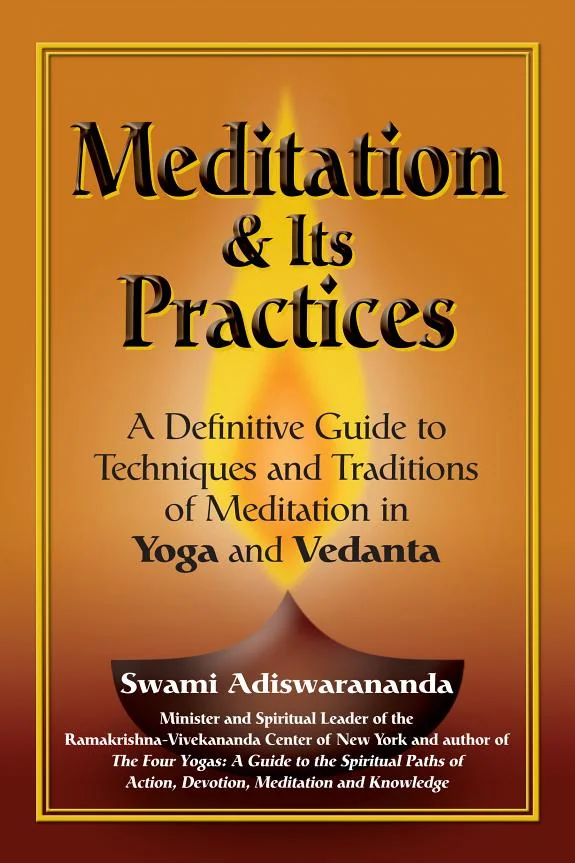
Meditation & Its Practices
 79
79

Meditation & Its Practices
Swami Adiswarananda’s 2007 publication, "Meditation & Its Practices," sidesteps the usual New Age platitudes to offer a grounded exploration of contemplative methods. The book’s strength lies in its clear articulation of meditation’s purpose: not as an escape, but as a direct line to one's spiritual core. Its structured approach, moving from basic techniques to broader implications, is commendable. However, the text occasionally feels overly didactic, particularly in sections detailing specific practices, which might benefit from more anecdotal illustration. A particularly effective passage discusses how even brief moments of focused breathing during a busy day can serve as a form of centering, a concept clearly communicated without resorting to hyperbole. "Meditation & Its Practices" serves as a reliable, no-nonsense manual for those seeking to integrate contemplative discipline into their lives.
📝 Description
79
Swami Adiswarananda's 2007 book clarifies meditation as a practical method for spiritual connection.
Published in 2007, Swami Adiswarananda's "Meditation & Its Practices" presents meditation not as an abstract idea but as a usable technique for achieving spiritual connection. The book details various methods, from simple breathing exercises and focused listening to chanting and visualization. Adiswarananda stresses that the main goal is self-centering and direct access to the spiritual self.
This work is for the contemporary spiritual seeker who wants a grounded connection to their inner being despite modern life's demands. It suits individuals at any stage of spiritual practice, from newcomers learning basic methods to experienced practitioners aiming to enhance their grasp and use. The text addresses the universal need for personal centering techniques that can fit into daily routines.
Adiswarananda places meditation within a wide historical and cross-cultural context, recognizing its practice in diverse traditions. His approach draws from many contemplative disciplines, giving context to the techniques and showing meditation's lasting role in spiritual development across time and cultures.
This book situates meditation within the broader context of spiritual development traditions, particularly those emphasizing inner experience and direct perception of the divine or ultimate reality. Adiswarananda's approach aligns with Vedanta philosophy's aim to realize the unity of the individual self with the universal consciousness. It acknowledges meditation's use across various spiritual paths, connecting the specific practices to a universal human quest for inner peace and self-understanding, a common thread in esoteric thought.
💡 Why Read This Book?
• Gain practical techniques for spiritual centering, directly applicable to daily life, as exemplified by the book's detailed explanations of methods like deep breathing and visualization exercises, first published in 2007. • Understand meditation's role as a personal method of spiritual access, moving beyond generic advice to explore how specific practices facilitate a connection to the spiritual self. • Explore the historical utility of meditation as a tool for spiritual development, learning how diverse communities have employed contemplative practices over centuries.
⭐ Reader Reviews
Honest opinions from readers who have explored this book.
❓ Frequently Asked Questions
What is Swami Adiswarananda's definition of meditation?
Swami Adiswarananda defines meditation as a personal method for centering the spiritual self, providing direct access to the spiritual realm. It encompasses various techniques, from breathing exercises to chanting and visualization.
When was "Meditation & Its Practices" first published?
"Meditation & Its Practices" by Swami Adiswarananda was first published in 2007, making its teachings relevant to contemporary spiritual seekers.
Does the book focus on a specific religious tradition?
While the original blurb mentions its practice in Jewish communities, the book offers a broader perspective, presenting meditation as a universal tool applicable across various spiritual paths and backgrounds.
What types of meditation techniques are covered?
The book covers a range of techniques, including deep breathing exercises, focused listening, chanting, and visualization, emphasizing their role in self-centering and spiritual connection.
Is this book suitable for beginners?
Yes, the book is designed for today's spiritual seeker, offering practical methods that can be adopted by individuals at any stage of their practice, from beginners to experienced practitioners.
What is the primary goal of the practices described?
The primary goal is to provide direct access to the spiritual self and to achieve a state of inner centering, enabling a more profound connection with one's spiritual dimension.
🔮 Key Themes & Symbolism
Personal Spiritual Access
The core tenet of "Meditation & Its Practices" is that meditation serves as a personal pathway to the spiritual. Adiswarananda emphasizes that techniques like focused breathing or visualization are not ends in themselves but tools designed to grant the individual direct access to their spiritual core. This approach empowers the seeker, suggesting that the ultimate spiritual experience is not found in external dogma but through internal cultivation and self-awareness. The 2007 publication date places this exploration within a context of growing interest in accessible, personalized spirituality.
Centering in Daily Life
A significant theme is the integration of meditative practices into the fabric of everyday existence. Adiswarananda argues against the notion that spiritual discipline requires a complete withdrawal from the world. Instead, the book illustrates how simple actions—listening attentively, mindful breathing during a commute—can function as powerful centering exercises. This practical application is crucial for the modern spiritual seeker, making the pursuit of inner peace achievable even amidst a demanding schedule.
Diverse Meditative Forms
The work meticulously details a variety of meditative forms, demonstrating the breadth of practices available for spiritual seekers. From the quietude of deep breathing to the sonic focus of chanting and the mental construct of visualization, Adiswarananda presents these as distinct yet complementary methods. This comprehensive overview acknowledges that different approaches may resonate with different individuals, validating a personalized journey toward spiritual realization.
The Spiritual Self
Underpinning all practices is the concept of the 'spiritual self.' Adiswarananda's work posits that meditation is the means by which one can locate, connect with, and nurture this inner essence. It is presented as the stable, true core of an individual, often obscured by the distractions of the external world. The book guides the reader toward recognizing and strengthening this connection, facilitating a more authentic and grounded spiritual life.
💬 Memorable Quotes
Direct passages from the work, attributed to the author.
“Meditation is always a personal method of centering our spiritual self.”
— This statement expresses the book's core philosophy: meditation is not a one-size-fits-all ritual but a tailored practice designed to align the individual with their inner spiritual essence, promoting stability and self-awareness.
“Whether it's through deep breathing during a busy day, listening to the quiet after turning off the car radio, chanting in prayer, or ten minutes of visualization exercises each morning, meditation takes many forms.”
— This highlights the accessibility and adaptability of meditation, suggesting that spiritual practice can be woven into the mundane activities of daily life, rather than requiring strict seclusion or specific times.
“But it is always a personal method of centering our spiritual self.”
— Reinforcing the central theme, this emphasizes that the ultimate goal of any meditative technique is the cultivation of inner balance and a stronger connection to one's authentic spiritual identity.
“Meditation is designed to give you direct access to the spiritual.”
— This concise assertion frames meditation as a functional tool for spiritual exploration, promising a direct, unmediated experience of the divine or transcendent, bypassing intermediaries.
“The work explores techniques explained by the masters--for today's spiritual seeker.”
— This indicates that Adiswarananda draws upon established wisdom, making ancient contemplative methods relevant and applicable to the challenges and context of contemporary spiritual life.
🌙 Esoteric Significance
Tradition
While not explicitly aligning with a single esoteric lineage like Hermeticism or Kabbalah, "Meditation & Its Practices" draws from the universal contemplative traditions found across major world religions and spiritual philosophies. Its emphasis on direct spiritual access and self-centering aligns with core principles found in Yoga, Vedanta, and various mystical paths that prioritize inner experience over external ritual. The work serves as a bridge, presenting these ancient insights in a manner accessible to the contemporary seeker, regardless of their specific traditional affiliation.
Symbolism
The book's symbolism is primarily functional rather than overtly mystical. For instance, the 'breath' is presented not just as a biological process but as a primary symbol of life force (prana) and a tangible anchor for the mind, connecting the physical to the subtle. The concept of 'centering' itself acts as a powerful symbol of inner stability and alignment, the point of balance from which one can perceive spiritual realities. The 'quiet' after external stimuli cease symbolizes the potential for inner stillness and receptivity.
Modern Relevance
Contemporary thinkers and practitioners in fields ranging from positive psychology to secular mindfulness movements, such as those influenced by Jon Kabat-Zinn's MBSR (Mindfulness-Based Stress Reduction), often echo Adiswarananda's emphasis on practical, accessible techniques for well-being. Furthermore, spiritual teachers and authors who advocate for personalized spiritual paths, integrating wisdom from multiple traditions, find resonance in Adiswarananda's approach to direct spiritual access and self-cultivation.
👥 Who Should Read This Book
• Individuals new to contemplative practices seeking clear, actionable guidance on how to begin meditating and understand its purpose, as detailed in the book's foundational sections. • Established spiritual practitioners looking to deepen their existing meditation routines and explore diverse techniques for enhanced self-centering and spiritual connection, drawing from the broad overview provided. • Readers interested in the practical application of spiritual disciplines within a modern, secular context, who desire methods that can be integrated into daily life without requiring significant lifestyle changes.
📜 Historical Context
Published in 2007, Swami Adiswarananda's "Meditation & Its Practices" emerged during a period of widespread secular interest in mindfulness and contemplative techniques, often divorced from their original religious or philosophical contexts. While Transcendental Meditation (TM) had gained significant traction in the latter half of the 20th century, and various Buddhist meditation forms were becoming increasingly accessible in the West, Adiswarananda's work positions itself within a broader, more inclusive spiritual framework. The book implicitly engages with the discourse surrounding the commodification of spiritual practices by emphasizing the personal and authentic nature of meditation. It sought to provide a grounded, accessible guide that drew from a deep well of tradition, making it relevant to individuals seeking genuine spiritual connection rather than mere stress reduction, a common critique of some popular meditation trends of the era.
📔 Journal Prompts
The personal method of centering your spiritual self: how does this concept apply to your current life?
Reflect on the practice of focused listening as described in the text; what did you notice?
Consider the different forms of meditation presented; which technique feels most accessible to you now?
How can the concept of direct access to the spiritual be integrated into your daily activities?
Explore the idea of the 'spiritual self'; what qualities define it for you?
🗂️ Glossary
Meditation
A practice of focused attention and mental stillness designed to achieve a state of calm awareness, spiritual connection, or insight. It encompasses a variety of techniques aimed at centering the mind and spirit.
Centering
The process of bringing one's awareness to a stable, inner core or point of balance. It is fundamental to meditation, helping to quiet mental chatter and connect with one's spiritual self.
Spiritual Self
The inner essence or true nature of an individual, considered to be divine, eternal, or transcendent. Meditation aims to connect the individual consciousness with this deeper reality.
Deep Breathing
A meditative technique involving slow, deliberate inhalation and exhalation. It is used to calm the nervous system, increase oxygen intake, and serve as an anchor for focused attention.
Chanting
The recitation of specific sounds, words, or phrases, often in a rhythmic or melodic manner. It is used in meditation to focus the mind, invoke spiritual states, or create a vibrational atmosphere.
Visualization
A mental technique involving the creation of vivid mental images. In meditation, it is used to focus attention, explore inner states, or cultivate specific feelings or intentions.
Spiritual Seeker
An individual actively engaged in a personal quest for meaning, purpose, and spiritual understanding, often exploring various paths and practices.
This book appears in 1 collection
🔮 Readers Also Liked
Browse all →









From the “Vedanta” Collection
View all →



More Free Occult Philosophy Books
View all →