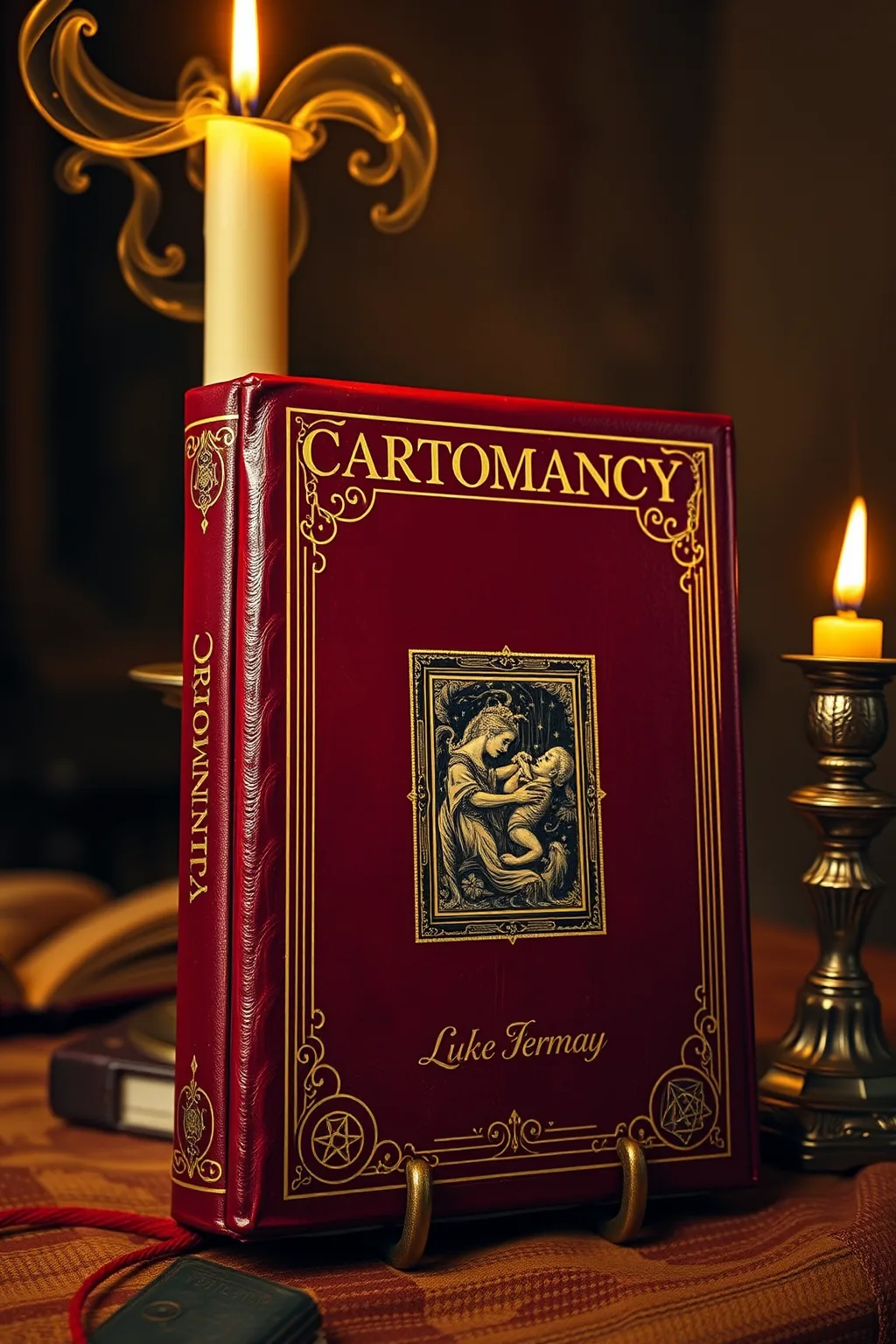
Cartomancy
 61
61

Cartomancy



Luke Jermay's 'Cartomancy' is a seminal work, offering a refreshingly sophisticated and deeply insightful approach to card divination. Jermay moves beyond simplistic interpretations, grounding the practice in robust psychological principles and an understanding of esoteric symbolism. He masterfully connects the archetypes within the cards to the universal human experience, providing practitioners with tools for both predictive and introspective work. This book is an indispensable resource for serious students of divination, offering clarity, depth, and a pathway to truly mastering the language of the cards. It’s a testament to Jermay’s erudition and his ability to demystify complex metaphysical concepts for the modern practitioner.
📝 Description
61
Luke Jermay's 2014 book examines cartomancy as a system of symbolic language and divination.
This book approaches cartomancy not as a simple fortune-telling tool, but as a method for understanding psychological and spiritual dynamics. Jermay connects the symbolic language of cards to broader archetypal patterns and karmic influences that he believes shape human experience. He traces historical aspects of divination and integrates them with modern psychological perspectives.
The text aims to show how a deck of cards can serve as a reflective tool, mirroring inner states and external circumstances. It is written for individuals interested in deeper divination practices beyond superficial prediction. The author guides readers to engage with the system for personal insight and transformation, viewing the cards as symbols that offer a unique lens through which to understand the world and oneself.
Cartomancy has a long history within esoteric traditions, often linked to Tarot and other forms of oracle systems. It is seen as a method to access hidden knowledge or divine guidance. This practice frequently intersects with psychology, hermeticism, and various forms of folk magic. Jermay's work places cartomancy within this lineage, suggesting it is more than a predictive art; it is a symbolic map for understanding the self and the cosmos.
💡 Why Read This Book?
Embark on a profound journey into the symbolic language of the cards. 'Cartomancy' offers a unique blend of psychological insight and esoteric wisdom, revealing the deeper currents of fate and self. Ideal for seekers of hidden knowledge, practitioners looking to deepen their practice, and scholars interested in the rich history of divination. Unlock potent tools for introspection and understanding life's intricate patterns.
⭐ Reader Reviews
Honest opinions from readers who have explored this book.
❓ Frequently Asked Questions
What is Cartomancy and how does it differ from Tarot?
Cartomancy is the practice of divination using ordinary playing cards. While sharing roots with Tarot, it often utilizes a more streamlined system, focusing on the inherent symbolism and numerological aspects of the 52-card deck for predictive and introspective insights.
Is this book suitable for complete beginners?
Absolutely. Luke Jermay's clear prose and structured approach make 'Cartomancy' accessible to newcomers while offering layers of depth that will continue to reward experienced practitioners.
Does the book cover different types of card spreads?
Yes, the book systematically guides readers through various spreads, explaining their construction, interpretation, and application for different types of inquiries, from simple daily readings to complex life path analyses.
What are the core philosophical underpinnings of Jermay's approach?
Jermay emphasizes the psychological resonance of the cards, viewing them as mirrors reflecting our inner landscape and the energetic patterns influencing our lives. He bridges the esoteric with the practical, advocating for a conscious engagement with the symbolic language.
Can I use any deck of playing cards for this practice?
While any standard 52-card deck can be used, the book encourages a mindful selection process. Some practitioners find decks with specific artistic interpretations or historical connections enhance their connection to the divination system.
🔮 Key Themes & Symbolism
The Oracle of the Ordinary Deck
This theme explores the profound mystical potential embedded within everyday playing cards. Luke Jermay reveals how the seemingly simple structure of a 52-card deck, rich with numerology, suits, and court cards, acts as a potent oracle. It’s a evidence of the idea that sacred knowledge can be found in the mundane, transforming familiar objects into conduits of cosmic insight. The emphasis is on uncovering the inherent symbolism and archetypal energies that lie dormant, awaiting the practitioner's awareness to awaken them into a powerful system of divination and self-understanding.
Psychological Resonance and Archetypal Mirroring
Jermay masterfully connects the practice of cartomancy to the depths of the human psyche. This theme studies how the cards serve as archetypal mirrors, reflecting our inner states, subconscious patterns, and the universal forces that shape our experiences. It moves beyond fortune-telling to explore the cards as tools for introspection, self-awareness, and personal transformation. By understanding the psychological resonance of each card and spread, readers are empowered to navigate their inner worlds with greater clarity and to manifest conscious change in their external realities.
The Esoteric Language of Symbolism
Fundamentally, cartomancy is an exercise in deciphering a profound symbolic language. This theme unpacks the body of meanings woven into each card, from the elemental associations of the suits to the nuanced interpretations of the numbered and court cards. Jermay guides readers to understand these symbols not as static definitions, but as dynamic keys that unlock deeper layers of understanding about life, destiny, and the interconnectedness of all things. It’s an exploration of how to read the universe through its most accessible and enigmatic visual lexicon.
💬 Memorable Quotes
Direct passages from the work, attributed to the author.
“Every shuffle is a prayer, every spread a map.”
— This evocative phrase emphasizes the sacred nature of the divination process and the insightful guidance that can be gleaned from a well-interpreted card spread.
“The truth is already within you; the cards simply help you see it.”
— This points to cartomancy as an intuitive tool that externalizes inner knowledge, facilitating self-discovery and confirming latent wisdom.
“A symbol is a door, not a wall.”
— This suggests that interpreting symbols should open up possibilities and understanding, rather than creating rigid barriers or limitations.
“To read the cards is to read the soul.”
— This profound statement links the practice of cartomancy directly to the deepest aspects of human consciousness and personal identity.
💡 Key Ideas
Editorial paraphrase of the work's core concepts — not direct quotes.
The cards do not tell the future, they reveal the present.
This quote highlights the core philosophy that cartomancy is less about fixed prophecy and more about understanding current energies and potentials, empowering the reader to shape their path.
🌙 Esoteric Significance
Tradition
Cartomancy draws heavily from the Western esoteric traditions, particularly those that have explored the symbolic language of numbers, elements, and archetypes. It shares lineage with Hermeticism, Kabbalah, and Renaissance occultism, which sought to find divine order and hidden correspondences within the natural world and human consciousness. The practice can be seen as a practical application of these principles, using a readily accessible medium to access deeper truths.
Symbolism
The symbolism in cartomancy is many-sided, encompassing numerology (the value of each card), elemental associations (hearts for water, diamonds for earth, clubs for air, spades for fire), and the archetypal representations of the court cards (King, Queen, Jack). The Aces often represent pure potential, while the numbered cards depict the unfolding of these potentials in various life circumstances. The Pip cards (2-10) carry specific meanings related to their numerical value and suit, offering a body of predictive and introspective insights.
Modern Relevance
In an age often characterized by rapid change and information overload, cartomancy offers a grounding practice that encourages introspection and the development of intuition. Its modern relevance lies in its ability to provide a framework for understanding personal challenges, decision-making, and life transitions. By engaging with the symbolic language of cards, individuals can cultivate a deeper connection to their inner wisdom, fostering resilience, clarity, and a more conscious approach to working through the complexities of contemporary life.
👥 Who Should Read This Book
This profound exploration of cartomancy is a treasure for a wide spectrum of seekers. For the **beginner**, it provides a clear, accessible pathway into the world of card divination, explaining the process with practical guidance. **Scholars** of esotericism will appreciate the historical depth and philosophical rigor with which Luke Jermay approaches the subject, offering new perspectives on established traditions. **Spiritual seekers** and those on a path of self-discovery will find the cards to be powerful mirrors, reflecting inner truths and guiding personal growth. **Practitioners** of Tarot or other divination systems will benefit from Jermay's unique insights, enriching their understanding and expanding their repertoire of interpretative skills.
📜 Historical Context
The practice of cartomancy, the divination using playing cards, emerged from the historical evolution of card games, which themselves have a rich and often shrouded past, believed to have originated in Asia before their widespread adoption in Europe by the 14th century. Initially used for games of chance and skill, playing cards soon began to be imbued with esoteric significance. The 18th and 19th centuries, particularly during the height of occult revival movements, saw a surge in formalized systems of cartomancy, often paralleling and drawing inspiration from Tarot traditions. Figures like Etteilla (Jean-Baptiste Alliette) in France were pioneers in developing structured methods for card divination, aiming to unlock hidden knowledge and societal secrets. This era was characterized by a fervent interest in spiritualism, mesmerism, and ancient wisdom, making the symbolic language of cards a fertile ground for exploration by secret societies and independent practitioners alike. Luke Jermay’s work stands as a modern evidence of this enduring legacy, reinterpreting and refining these historical practices for contemporary understanding.
📔 Journal Prompts
How does the energy of the current day's 'spread' (even if just one card) resonate with your personal feelings or challenges?
Reflect on a recurring symbol or card you encounter in your readings. What deeper message might it be trying to convey about your life path?
If a card represents an obstacle, brainstorm three proactive steps you can take to transform that challenge into an opportunity for growth.
Consider the court cards as archetypes. Which court card's energy do you feel you embody most strongly right now, and why?
How can the principles of cartomancy be applied to enhance your decision-making process in your daily life, beyond formal readings?
🗂️ Glossary
Cartomancy
The practice of divination using ordinary playing cards, distinct from Tarot, though sharing similar roots in symbolic interpretation and predictive arts.
Pip Cards
The numbered cards in a playing card deck (2 through 10), each carrying specific meanings tied to their numerical value and suit.
Court Cards
The King, Queen, and Jack (or Knave) cards in a playing card deck, often representing people, personalities, or archetypal energies within a reading.
Suit
One of the four divisions of a playing card deck: Hearts, Diamonds, Clubs, and Spades, each associated with specific elemental and thematic energies.
Spread
A specific arrangement of cards laid out in a pattern during a divination session, designed to answer a particular question or explore a given situation.
This book appears in 1 collection
🔮 Readers Also Liked
Browse all →








From the “Tarot Reading” Collection
View all →





More Free Divination & Tarot Books
View all →