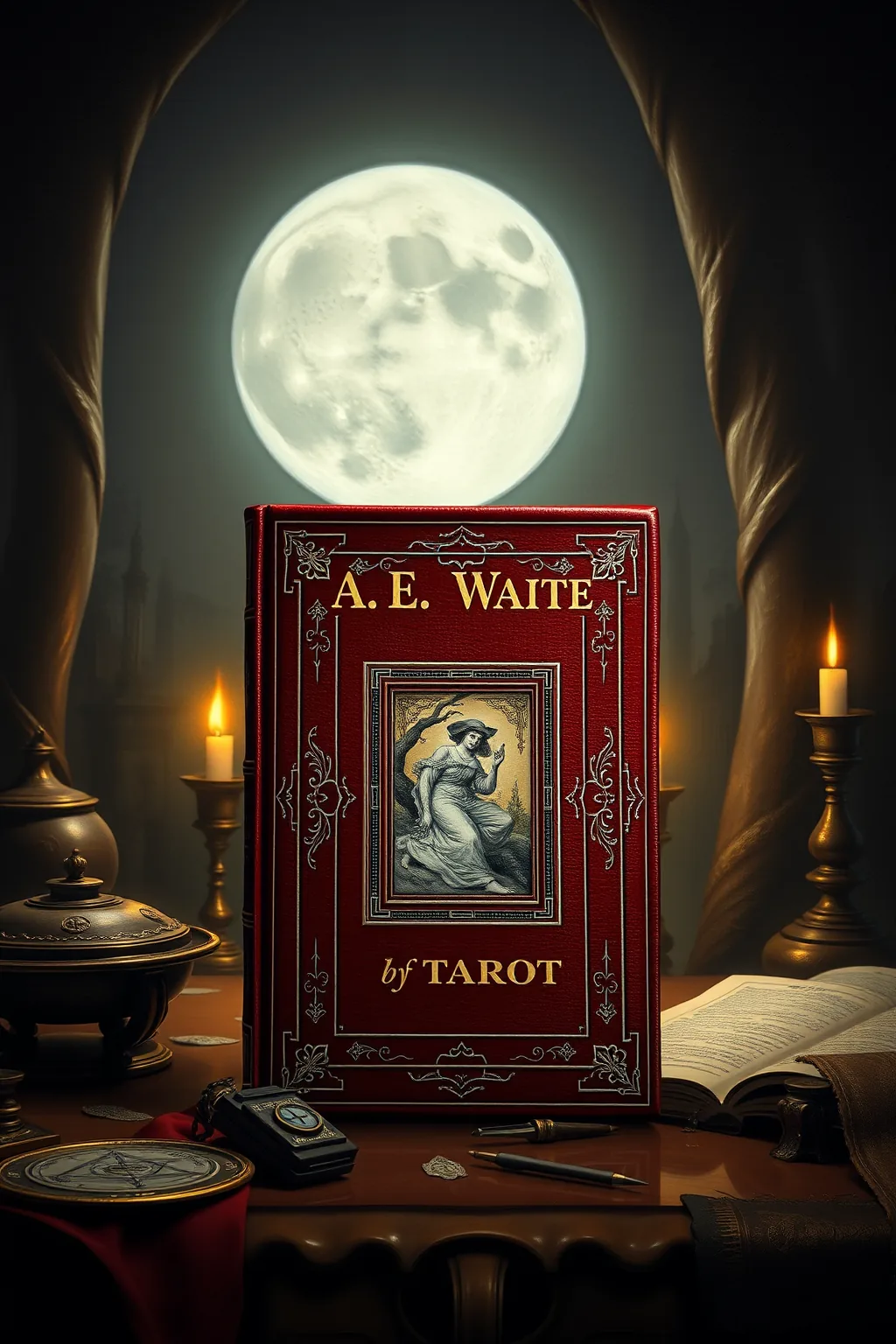
A. E. Waite Great Symbols Of Tarot
 72
72

A. E. Waite Great Symbols Of Tarot



A.E. Waite's Great Symbols Of Tarot is a timeless classic that continues to be a cornerstone of esoteric literature. Waite's deep knowledge of the occult and his ability to convey complex ideas in an accessible manner make this book an essential read for anyone interested in tarot and divination. The book's historical context and detailed analysis of tarot symbolism provide a solid foundation for modern esoteric seekers. Waite's insights into the mystical significance of the tarot cards are particularly valuable, offering readers a deeper understanding of the spiritual and divinatory potential of the tarot. The book's enduring relevance is a testament to Waite's expertise and the timeless nature of the tarot. For those looking to explore the esoteric dimensions of the tarot, A.E. Waite's Great Symbols Of Tarot is an indispensable guide.
📝 Description
72
First published in 1927, A. E. Waite's 'Great Symbols of Tarot' dissects the imagery of the Rider-Waite deck.
A. E. Waite's 'Great Symbols of Tarot', published in 1927, examines the visual language of his famous tarot deck. The book focuses on the symbolic meanings embedded within each card, moving beyond simple divinatory interpretations to explore their deeper philosophical and mystical connections. Waite discusses the structure of the deck, the archetypal figures represented, and the esoteric traditions that informed his design. The text aims to illuminate the symbolic system of the tarot for those interested in its occult and spiritual dimensions.
This work is not a practical guide for reading cards but rather an exposition of the symbolic framework Waite constructed. He details the historical and philosophical influences, such as Kabbalah and Christian mysticism, that shaped his understanding of the tarot's imagery. Readers will find discussions on the Major Arcana, the Minor Arcana, and the court cards, all presented through the lens of esoteric symbolism and Waite's own unique interpretations.
This book is situated within the late Victorian and Edwardian occult revival, a period marked by renewed interest in Hermeticism, Kabbalah, and ceremonial magic. A. E. Waite himself was a prominent figure in groups like the Hermetic Order of the Golden Dawn, and his work on the tarot reflects this milieu. 'Great Symbols of Tarot' attempts to codify and explain the symbolic system he developed, linking it to established esoteric traditions and his own unique interpretations, thereby contributing to the broader discourse on divination and occult philosophy of the era.
💡 Why Read This Book?
Reading A.E. Waite's Great Symbols Of Tarot today provides a rich understanding of the esoteric dimensions of the tarot. This book offers deep insights into the symbolism and mystical significance of the tarot cards, making it an essential resource for both beginners and experienced practitioners. By exploring the historical and spiritual contexts of the tarot, readers can gain a deeper appreciation for its divinatory potential and use it for self-discovery and spiritual growth.
⭐ Reader Reviews
Honest opinions from readers who have explored this book.
❓ Frequently Asked Questions
Who is A.E. Waite?
Arthur Edward Waite was a renowned occultist and scholar of the early 20th century. He is best known for his contributions to tarot and his collaboration with Pamela Colman Smith on the Rider-Waite tarot deck.
What makes this book unique?
Great Symbols Of Tarot stands out for its deep dive into the esoteric meanings of tarot symbolism, providing historical context and mystical interpretations that enrich the reader's understanding.
Is this book suitable for beginners?
While it is detailed and scholarly, beginners with an interest in esoteric studies will find valuable insights and a solid foundation for exploring the tarot's deeper meanings.
🔮 Key Themes & Symbolism
Mystical Symbolism
Waite looks at the mystical symbolism of the Tarot cards, revealing the hidden meanings and esoteric knowledge embedded within each card. This exploration provides a deeper understanding of the Tarot's spiritual significance.
Philosophical Underpinnings
The book examines the philosophical foundations of the Tarot, offering insights into the ancient wisdom that underlies its practice. This theme is essential for those seeking a more profound connection to the Tarot.
Esoteric Traditions
Waite explores the various esoteric traditions that influence the Tarot, such as Hermeticism, Kabbalah, and Gnosticism. This theme provides a rich context for understanding the Tarot's place in the broader range of mystical and occult studies.
💬 Memorable Quotes
Direct passages from the work, attributed to the author.
“Each card is a gateway to hidden knowledge, waiting to be unlocked by the seeker.”
— Waite emphasizes the Tarot's potential for revealing esoteric truths to those who delve deeply into its symbols.
“The symbols of the Tarot are timeless, transcending the boundaries of culture and time.”
— Waite's insight into the universal appeal of Tarot symbolism is both profound and inspiring.
💡 Key Ideas
Editorial paraphrase of the work's core concepts — not direct quotes.
The Tarot is a mirror reflecting the soul's journey through the mysteries of life.
This quote underscores the Tarot's role as a tool for spiritual introspection and self-discovery.
The true power of the Tarot lies in its ability to bridge the gap between the physical and spiritual realms.
This quote highlights the Tarot's capacity to facilitate spiritual growth and enlightenment.
Through the Tarot, we can unlock the secrets of the universe and our own inner selves.
This quote emphasizes the Tarot's role as a tool for both personal and cosmic understanding.
🌙 Esoteric Significance
Tradition
This book belongs to the Hermetic and Kabbalistic traditions, drawing on ancient wisdom to illuminate the Tarot's esoteric meanings. Waite's exploration of these traditions provides a rich context for understanding the Tarot's mystical significance.
Symbolism
Key symbols in the Tarot, such as the Fool, the Magician, and the High Priestess, are examined for their deeper meanings. Waite reveals how these symbols represent various aspects of the human experience and the divine.
Modern Relevance
Today, 'Great Symbols of Tarot' remains relevant to modern practitioners who seek to deepen their understanding of Tarot symbolism. Its insights continue to inspire Tarot readers, scholars, and spiritual seekers alike.
👥 Who Should Read This Book
Beginners will find 'Great Symbols of Tarot' an enlightening introduction to the esoteric world of Tarot. Scholars will appreciate Waite's deep dive into the philosophical and historical aspects of the Tarot. Spiritual seekers will benefit from the book's exploration of mystical symbolism and its potential for spiritual growth. Practitioners will find valuable insights to enhance their Tarot readings and deepen their connection to the cards.
📜 Historical Context
Written in an era when occult and mystical studies were gaining traction, 'Great Symbols of Tarot' by A.E. Waite is a key work that bridges ancient wisdom with modern curiosity. Published during the early 20th century, a time of spiritual awakening and exploration, the book reflects the growing interest in esoteric traditions. Waite's work has had a lasting influence on Tarot scholarship and practice, inspiring countless seekers to explore the depths of Tarot symbolism.
📔 Journal Prompts
Reflect on a Tarot card that speaks to you and explore its deeper symbolism.
How has your understanding of the Tarot evolved after reading this book?
Write about a mystical experience you've had while working with the Tarot.
Consider the philosophical implications of Tarot symbolism in your life.
What esoteric traditions influence your practice of the Tarot, and how do they enhance your readings?
🗂️ Glossary
Hermeticism
An ancient mystical tradition based on the teachings of Hermes Trismegistus, emphasizing spiritual enlightenment and the unity of all things.
Kabbalah
A mystical tradition within Judaism that explores the hidden meanings of the Torah and the nature of the divine.
Gnosticism
An ancient spiritual movement that emphasizes personal spiritual knowledge and the revelation of hidden truths.
Tarot
A deck of cards used for divination and spiritual exploration, featuring a strong symbolism that reflects various esoteric traditions.
Esoteric
Relating to knowledge that is intended for a select group of people, often involving mystical or occult themes.
This book appears in 3 collections
🔮 Readers Also Liked
Browse all →








From the “Tarot” Collection
View all →








More Free Divination & Tarot Books
View all →