Tarot Card Meanings
 61
61

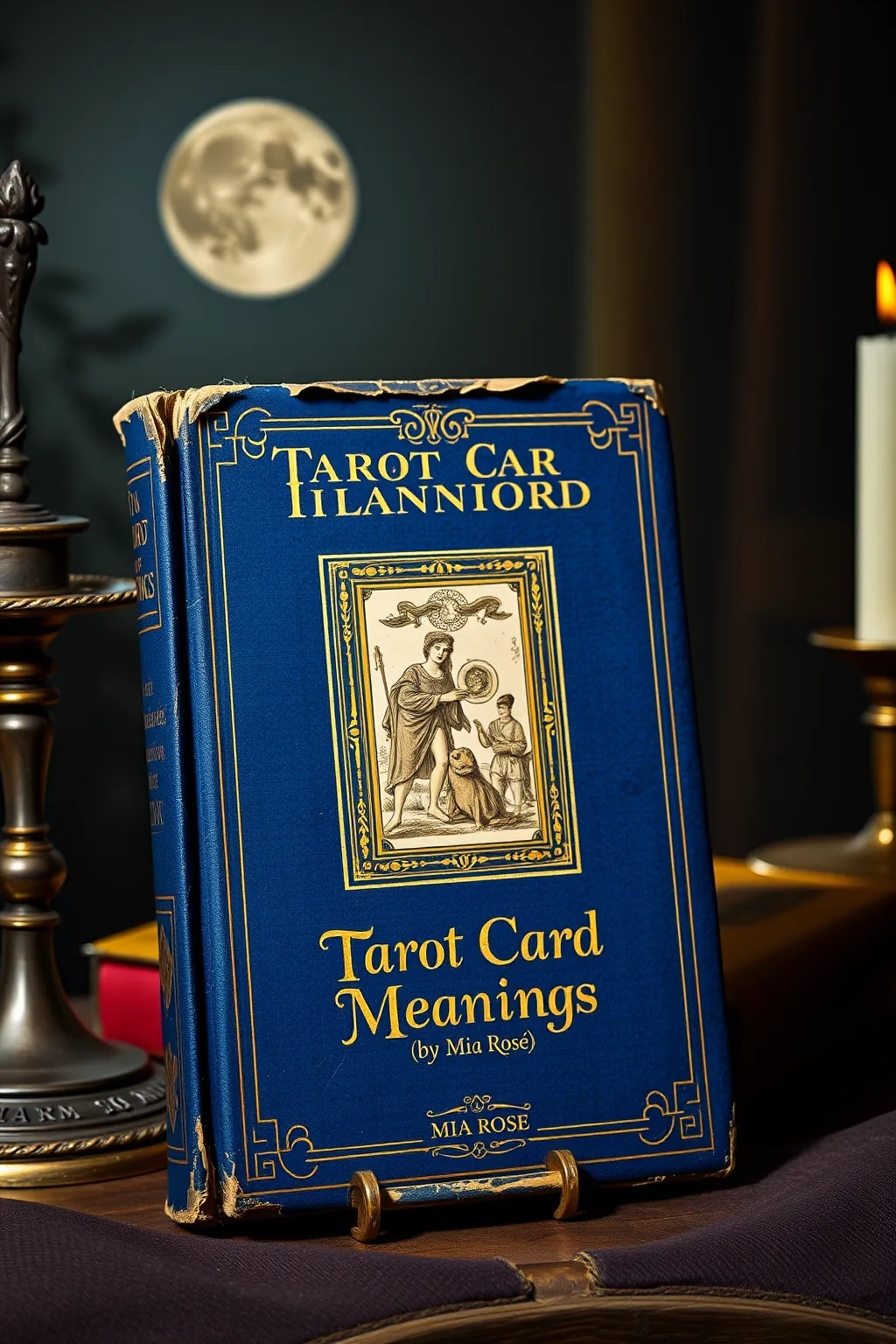
Tarot Card Meanings



Silas Hawthorne (Hermetic Studies Editor) — Mia Rosé's 'Tarot Card Meanings' is an indispensable addition to the serious student's library. Eschewing superficial readings, Rosé masterfully excavates the deep symbolic currents and Hermetic principles embedded within the Tarot. Her interpretations resonate with an alchemical precision, linking each card to broader cosmic forces and psychological landscapes. This work is not for the casual dabbler; it is a profound guide for those committed to the rigorous study of esoteric arts. The book's strength lies in its ability to articulate complex ideas with clarity, making advanced Tarot concepts accessible to the dedicated practitioner and scholar alike. A truly illuminating text.
📝 Description
61
Mia Rosé's 'Tarot Card Meanings' was first published in 2023, aiming to clarify complex symbolism.
Mia Rosé's 'Tarot Card Meanings' examines the symbolism within both the Major and Minor Arcana. The book details specific correspondences and meanings for each card, moving beyond simple predictive uses. Rosé frames the Tarot as a system for understanding personal growth and the interplay between destiny and individual choice. The work aims to provide readers with a deeper comprehension of the archetypal imagery present in the cards. It connects these visual elements to broader concepts of the cosmos and the human psyche.
The author presents the Tarot not just as a tool for fortune-telling, but as a symbolic language. This language, she suggests, reflects universal patterns and can aid in self-reflection. The book guides readers toward unlocking subconscious insights and interpreting hidden truths. Rosé emphasizes the enduring significance of symbolic systems in the search for self-awareness and deeper knowledge. The text encourages a perspective where the cards offer a view into fundamental aspects of existence.
This book situates itself within the Western esoteric tradition, particularly concerning the divinatory arts. It engages with the historical and symbolic interpretations of Tarot decks, which have been linked to Hermeticism, Kabbalah, and astrology since the 18th century. Rosé's approach focuses on the Tarot's capacity for introspection and understanding personal narratives, aligning with psychological interpretations that gained prominence in the 20th century. The work contributes to the ongoing discourse on Tarot as a system for personal development and spiritual insight, rather than solely a predictive tool.
💡 Why Read This Book?
Uncover the profound symbolic language of the Tarot, moving beyond simple predictions to grasp its philosophical and spiritual depths. Ideal for seekers of hidden knowledge, tarot practitioners seeking to deepen their understanding, and scholars of divination. This book offers a transformative journey into self-awareness, connecting you with ancient wisdom and the archetypal forces that shape our lives.
⭐ Reader Reviews
Honest opinions from readers who have explored this book.
❓ Frequently Asked Questions
What makes this book different from other Tarot guides?
'Tarot Card Meanings' delves into the esoteric and philosophical underpinnings of each card, exploring their symbolic depth and connection to ancient wisdom traditions, rather than just offering superficial interpretations or predictive methods.
Is this book suitable for beginners?
Yes, while it offers profound insights for advanced practitioners, Mia Rosé's clear explanations and evocative prose make it an excellent starting point for beginners eager to grasp the true essence of Tarot.
What esoteric traditions are explored in this book?
The book draws upon Hermeticism, Kabbalah, and Jungian archetypes, weaving these rich traditions into a comprehensive understanding of Tarot symbolism and its application in spiritual growth.
How can this book enhance my Tarot practice?
By understanding the deeper symbolic meanings and philosophical implications, practitioners can gain richer, more intuitive readings, and apply Tarot wisdom to personal development and spiritual exploration.
Can I read this book for free online?
As a curated collection of mystical literature, Esoteric Library offers select titles for free online to facilitate the spread of esoteric knowledge. Check our platform for availability.
🔮 Key Themes & Symbolism
The Archetypal Unconscious
This theme explores how the Tarot acts as a mirror to the collective unconscious, drawing upon Jungian psychology to reveal the universal archetypes that shape human experience. Rosé illustrates how the figures and scenes on the cards represent fundamental patterns of behavior, motivation, and spiritual evolution, offering a profound lens through which to understand both oneself and the human condition. The cards become keys to unlocking the deeper psychological currents that influence our lives and choices.
Hermetic Correspondences and Cosmic Law
Mia Rosé masterfully ties in the principles of Hermeticism, demonstrating how Tarot cards embody the ancient axiom 'As Above, So Below.' The book illuminates the intricate web of correspondences between the Tarot, the macrocosm of the universe, and the microcosm of the human spirit. Readers will discover how celestial bodies, elemental forces, and mystical concepts are echoed within the imagery and numerology of the cards, revealing a divinely ordered cosmos and our place within it.
The Alchemical Journey of Transformation
The Tarot is presented not merely as a tool for fortune-telling, but as a map for personal alchemy and spiritual transformation. Rosé guides readers through the stages of inner transformation mirrored in the Fool's Journey and the Major Arcana. Each card becomes a stepping stone on the path to individuation, self-mastery, and the realization of one's highest potential. The book encourages a profound introspection, viewing each reading as an opportunity for growth and metamorphosis.
💬 Memorable Quotes
Direct passages from the work, attributed to the author.
“Each card is a whispered secret from the universe, waiting for the attuned ear.”
— This highlights the mystical and intuitive aspect of Tarot, implying that the cards hold profound, hidden messages meant to be deciphered through a sensitive and open mind.
“Symbolism is the language of the divine, and the Tarot is its most eloquent dialect.”
— This positions the Tarot as a sacred form of communication, a powerful symbolic system through which cosmic truths and spiritual insights can be conveyed.
“The Fool's journey is not a single path, but the myriad paths of becoming.”
— This suggests that the Fool's journey, central to Tarot, represents not a linear progression but a dynamic and complex process of growth and evolution.
💡 Key Ideas
Editorial paraphrase of the work's core concepts — not direct quotes.
The Tarot is the mirror in which the soul beholds its own divine reflection.
This quote emphasizes the Tarot's role as a tool for introspection and self-discovery, suggesting that the cards reveal the inherent divinity within the individual.
To read the cards is to read the unfolding range of destiny and free will.
This quote expresses the complex interplay between fate and personal agency as revealed through Tarot, acknowledging both predetermined influences and our capacity for choice.
🌙 Esoteric Significance
Tradition
This work is deeply rooted in the Hermetic tradition, drawing heavily on its principles of correspondence, causality, and the spiritual interconnectedness of all things. It also engages with Kabbalistic symbolism, particularly the Tree of Life, and Jungian archetypes to provide a multi-layered understanding of the Tarot's profound psychological and spiritual implications, aiming to guide the reader towards inner gnosis.
Symbolism
The book meticulously unpacks the detailed symbolism inherent in each Tarot card, from the elemental energies of the Minor Arcana to the archetypal journeys of the Major Arcana. It explores the significance of numbers, colors, planetary influences, and mythological figures, revealing how these elements coalesce to form a sophisticated language of the soul and the cosmos, a visual representation of universal forces and human consciousness.
Modern Relevance
In an age often characterized by disconnection and superficiality, 'Tarot Card Meanings' offers a profound pathway back to introspection, intuition, and a deeper connection with the subtle energies of life. It provides practitioners with a robust framework for personal growth, ethical guidance, and a more nuanced understanding of the challenges and opportunities we face, fostering resilience and self-awareness.
👥 Who Should Read This Book
This comprehensive guide is an essential resource for a diverse range of individuals. **Beginners** will find a clear, yet profound, introduction to the Tarot's symbolic language. **Serious practitioners** will discover deeper layers of meaning and advanced interpretive techniques to enrich their readings. **Spiritual seekers** will find a map for self-discovery and personal transformation. **Scholars of esotericism** will appreciate the meticulously researched connections to various mystical traditions and the philosophical depth of the interpretations presented.
📜 Historical Context
The Tarot, with its roots shrouded in the mists of the late medieval period, has evolved from a simple card game into a profound esoteric system. Its development in the 18th and 19th centuries saw a significant shift towards occult interpretations, particularly influenced by figures like Antoine Court de Gébelin and Eliphas Lévi. These thinkers began to connect the Tarot's imagery with Kabbalistic principles, ancient Egyptian mysteries, and Hermetic philosophy, transforming it into a tool for spiritual enlightenment and divination. The esoteric revival of the late 19th and early 20th centuries further cemented the Tarot's status within mystical circles, leading to the creation of iconic decks like the Rider-Waite-Smith, which profoundly influenced modern Tarot practice. Mia Rosé's work stands within this rich lineage, engaging with centuries of esoteric scholarship and practice.
📔 Journal Prompts
Reflect on the archetypes present in your current life, as represented by the Major Arcana. Which card's journey mirrors your own most closely today?
Choose a Minor Arcana card that speaks to a recent challenge. How can the elemental lessons of this suit offer guidance and support?
Consider the concept of 'As Above, So Below' in relation to a specific Tarot reading. How does the microcosm of the cards reflect macrocosmic principles?
Explore the idea of personal alchemy through the Tarot. Which card represents a transformation you are currently undergoing or aspire to achieve?
How can the symbolic language of the Tarot be applied to understand and work through the interplay between destiny and free will in your own life?
🗂️ Glossary
Arcana
Refers to the two main divisions of the Tarot deck: the Major Arcana (22 cards representing profound spiritual lessons and life lessons) and the Minor Arcana (56 cards depicting everyday experiences and challenges).
Archetype
Universal, archaic patterns and images that derive from the collective unconscious and are the psychic counterpart of instinct. In Tarot, they represent fundamental human experiences and roles.
Divination
The practice of seeking knowledge of the future or the unknown by supernatural means. In the context of Tarot, it involves interpreting the cards to gain insight and guidance.
Esotericism
A broad category of mystical and occult traditions that focus on inner knowledge, spiritual enlightenment, and the hidden workings of the universe, often involving symbolic interpretation and personal transformation.
Hermeticism
An ancient philosophical and religious tradition based on the purported teachings of Hermes Trismegistus, emphasizing the interconnectedness of all things, the power of the mind, and the principle of 'As Above, So Below'.
This book appears in 3 collections
🔮 Readers Also Liked
Browse all →
More by Mia Rosé
All books →
From the “Tarot” Collection
View all →
More Free Divination & Tarot Books
View all →