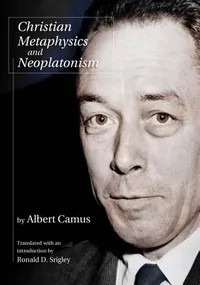
Metaphysique chretienne et neoplatonisme

 79
79

Metaphysique chretienne et neoplatonisme
Albert Camus's Metaphysique chretienne et neoplatonisme offers a meticulous dissection of an often-overlooked intellectual lineage. The strength of the work lies in its granular approach, carefully charting the philosophical currents that flowed from Plotinus's Enneads into the theological discourse of figures like Augustine. Camus avoids anachronism, diligently presenting the Neoplatonic concepts before examining their reception within Christian contexts. A limitation, however, is the dense academic prose, which, while precise, may present a barrier to readers less familiar with the intricacies of late antique philosophy. The section detailing the Christian adaptation of the Neoplatonic concept of the 'One' is particularly illuminating, showcasing how abstract metaphysical notions were recontextualized to serve new theological purposes. This is a rigorous academic study for specialists.
📝 Description
79
Albert Camus published Metaphysique chretienne et neoplatonisme in 2015, examining Christian thought's links to Neoplatonism.
This book analyzes the philosophical connections between early Christian theology and Neoplatonic traditions. Albert Camus investigates how thinkers like Plotinus and Porphyry influenced, or were engaged by, Christian theologians. The work traces the transmission of metaphysical ideas from late antiquity, showing how these frameworks contributed to the formation of Christian doctrine. It is written for scholars and students of philosophy, theology, and classical studies, especially those interested in the intellectual history of Christianity and the impact of Greek philosophy on religious thought.
Camus's study emerges from a contemporary academic climate that acknowledges the complex relationship between pagan philosophy and early Christian theology. It addresses ongoing scholarly discussions about the degree of Neoplatonic influence on Christian dogma. The book presents a balanced view, recognizing a reciprocal process of adaptation and interpretation rather than simple adoption of ideas. It looks at how metaphysical systems shape belief and how these concepts traveled and changed across religious divides.
While not strictly an occult text, this work situates itself within the broader study of Western esotericism by examining the philosophical underpinnings that informed early Christian mysticism and theology. It explores how Neoplatonic concepts, often considered esoteric in their original context, were integrated or contested within emerging Christian doctrines. The book illuminates the intellectual currents that shaped a tradition often perceived as purely theological, revealing a deeper engagement with philosophical systems that dealt with transcendence, emanation, and the soul's journey.
💡 Why Read This Book?
• Gain a precise understanding of how Neoplatonic emanations were reinterpreted as Christian creation doctrines, offering insight into the philosophical scaffolding of early theology. • Explore the specific arguments used by Christian thinkers to engage with Plotinus's concept of the One, revealing a complex dialogue rather than simple adoption. • Appreciate the historical development of key metaphysical terms and ideas, such as the Logos, as they transitioned from pagan philosophy to Christian doctrine in the early centuries CE.
⭐ Reader Reviews
Honest opinions from readers who have explored this book.
❓ Frequently Asked Questions
When was Albert Camus's Metaphysique chretienne et neoplatonisme first published?
Albert Camus's Metaphysique chretienne et neoplatonisme was first published in 2015, making it a relatively recent academic contribution to the study of ancient philosophy and theology.
What is the primary philosophical tradition examined alongside Christianity?
The primary philosophical tradition examined alongside Christianity in this work is Neoplatonism, specifically focusing on the ideas of Plotinus and his followers.
Does the book argue for direct copying of Neoplatonic ideas by Christians?
No, the book generally argues for a complex process of adaptation, reinterpretation, and sometimes resistance, rather than direct copying of Neoplatonic ideas by Christian thinkers.
Who are some key figures discussed in relation to Neoplatonism and Christianity?
Key figures discussed include Plotinus as the central Neoplatonist, and Christian thinkers such as Augustine of Hippo, who engaged deeply with Platonic and Neoplatonic thought.
What kind of metaphysical concepts are analyzed in the book?
The book analyzes concepts such as the nature of the ultimate reality (the One), divine intermediaries, the problem of evil, and the structure of spiritual ascent within both traditions.
Is this book suitable for a general reader interested in philosophy?
While valuable, the book is written for an academic audience. General readers might find the dense philosophical analysis and scholarly approach challenging without prior background in classical philosophy or theology.
🔮 Key Themes & Symbolism
The One and Divine Emanation
This theme explores the Neoplatonic concept of the One as the ultimate, ineffable source from which all reality emanates, and how Christian thinkers adapted this into a doctrine of a singular, transcendent God. Camus traces the philosophical arguments for divine simplicity and procession, noting how Christian theology integrated or modified these ideas to align with scriptural narratives of creation and divine action. The discussion often highlights the intellectual challenges of articulating a monotheistic yet triune Godhead within a framework influenced by emanationist metaphysics.
The Problem of Evil and Matter
The work investigates how Neoplatonic thought, which often viewed matter as a privation or distant from the divine One, informed Christian discussions on the origin of evil. Camus examines the arguments that sought to reconcile the goodness of a Creator God with the existence of suffering and sin in the world. This often involved exploring the Neoplatonic hierarchy and the concept of 'fall' or 'divergence' from the divine source, and how these philosophical tools were employed to explain the presence of imperfection and moral corruption.
Spiritual Ascent and Return
A significant focus is placed on the Neoplatonic ideal of the soul's journey towards reunification with the divine, often conceptualized as a return or ascent. Camus analyzes how Christian asceticism, mysticism, and theological doctrines of salvation adopted and transformed these Neoplatonic patterns of spiritual striving. The book considers how concepts of deification or union with God were framed using philosophical language derived from Plotinus and Porphyry, albeit with distinct theological aims and interpretations of the ultimate goal.
💬 Memorable Quotes
Direct passages from the work, attributed to the author.
“The Christian interpretation of the divine nature often recontextualized Neoplatonic intermediaries.”
— This highlights how Christian theologians did not simply adopt Neoplatonic structures but actively reshaped them to fit their own doctrines, particularly concerning the Logos or Christ.
“The nature of the material world posed a significant challenge when reconciling with a benevolent Creator.”
— This points to the enduring philosophical problem of evil, showing how Neoplatonic ideas about the deficiency of matter were employed in Christian attempts to explain suffering.
“Augustine's engagement with Platonic philosophy laid groundwork for later theological synthesis.”
— This emphasizes the important role of specific Christian thinkers, like Augustine, in mediating and transforming philosophical ideas for theological purposes.
“The concept of spiritual return found new expression in Christian paths to salvation.”
— This illustrates the transformation of Neoplatonic ideals of soul-journey into Christian frameworks of redemption and union with God.
“Metaphysical frameworks from antiquity provided essential language for early Christian discourse.”
— This underscores the book's central argument: that the philosophical tools of the Hellenistic world were indispensable for articulating nascent Christian theology.
🌙 Esoteric Significance
Tradition
While not strictly an esoteric text in the sense of a grimoire or ritual manual, this work belongs to the scholarly tradition of exploring the philosophical and metaphysical underpinnings of Western religious thought. It intersects with esoteric studies by examining the non-literal, philosophical-theological interpretations of core religious doctrines. Its lineage is within academic philosophy and the history of religions, but its subject matter—the deep structure of metaphysical belief systems—is foundational to many esoteric paths that draw on Neoplatonic or Gnostic concepts.
Symbolism
Key symbols explored implicitly include the 'One' (representing ultimate, unmanifest reality), the 'Logos' or 'Nous' (as divine intellect or intermediary), and the concept of 'matter' (often symbolizing distance from the divine or the source of imperfection). The 'ascent' or 'return' of the soul functions as a potent symbolic motif, representing the spiritual journey toward ultimate consciousness or union, a theme resonant across many mystical and esoteric traditions.
Modern Relevance
Modern thinkers and practitioners in fields like comparative mysticism, philosophical theology, and esoteric philosophy continue to draw upon the understanding of how metaphysical systems shape religious expression. Contemporary discussions on consciousness, the nature of reality, and spiritual development often echo themes first articulated in Neoplatonism and later adapted by Christian mystics. The work provides scholars and advanced practitioners with the historical and philosophical grounding to understand these echoes and the lineage of ideas.
👥 Who Should Read This Book
• Scholars of Late Antiquity and Patristics: Gain a refined understanding of the philosophical vocabulary and conceptual frameworks employed by early Christian theologians. • Students of Neoplatonism: See how the philosophical system of Plotinus and his followers was received, adapted, and debated within a major religious tradition. • Comparative Religion Researchers: Analyze the intricate dialogue between philosophical schools and emerging religious doctrines in the formative centuries of Western Christianity.
📜 Historical Context
Albert Camus's Metaphysique chretienne et neoplatonisme, published in 2015, engages with a long-standing academic discourse on the influence of Neoplatonism on early Christianity. This intellectual current gained significant traction in the late 19th and early 20th centuries with scholars like Émile Bréhier and later Pierre Hadot exploring the philosophical underpinnings of ancient religious thought. The book operates within a modern context where the relationship between pagan philosophy and Christian doctrine is understood as complex, involving both adoption and critical engagement. It stands against simplistic narratives of direct borrowing, instead emphasizing the dynamic reinterpretation of concepts. The work implicitly dialogues with scholars who have debated the extent of Plotinus's direct impact versus the broader Platonic tradition, positioning itself as a nuanced analysis for specialists in classical philosophy and Patristics.
📔 Journal Prompts
The Neoplatonic concept of the One and its Christian reinterpretation.
The philosophical arguments concerning the nature of evil and materiality.
The symbolic journey of spiritual ascent as understood in both traditions.
Augustine's specific philosophical influences and their theological application.
The transformation of the Logos concept from pagan philosophy to Christian doctrine.
🗂️ Glossary
Neoplatonism
A school of philosophy originating in the 3rd century CE, primarily associated with Plotinus, emphasizing mystical union with the ultimate divine principle (the One) through intellectual and spiritual discipline.
The One
In Neoplatonism, the ultimate, ineffable, transcendent source of all reality, beyond being and comprehension, from which all existence emanates.
Emanation
The Neoplatonic concept of reality flowing or proceeding from the One in a hierarchical series of levels (e.g., Nous, Soul, Matter), without diminishing the One itself.
Logos
A Greek term meaning 'word' or 'reason.' In Neoplatonism, it often refers to the divine intellect (Nous); in Christian theology, it is identified with Jesus Christ, the divine expression of God.
Patristics
The study of the writings of the early Christian Church Fathers, who were instrumental in shaping Christian doctrine and theology.
Metaphysics
A branch of philosophy that deals with the fundamental nature of reality, including the relationship between mind and matter, substance and attribute, potentiality and actuality.
Asceticism
A lifestyle characterized by abstinence from various types of worldly pleasures, often for the purpose of pursuing spiritual goals.
🔮 Readers Also Liked
Browse all →






More by Albert Camus
All books →
More Free Mysticism & Contemplation Books
View all →