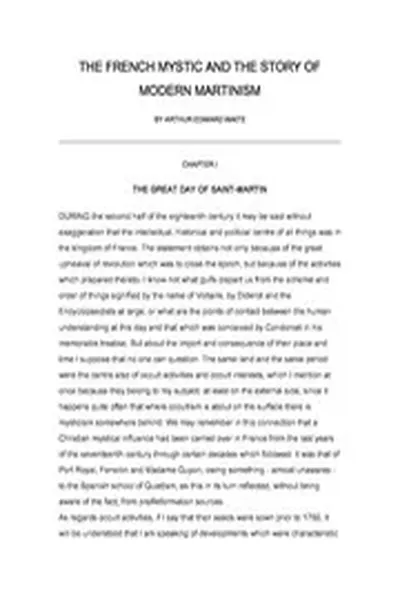
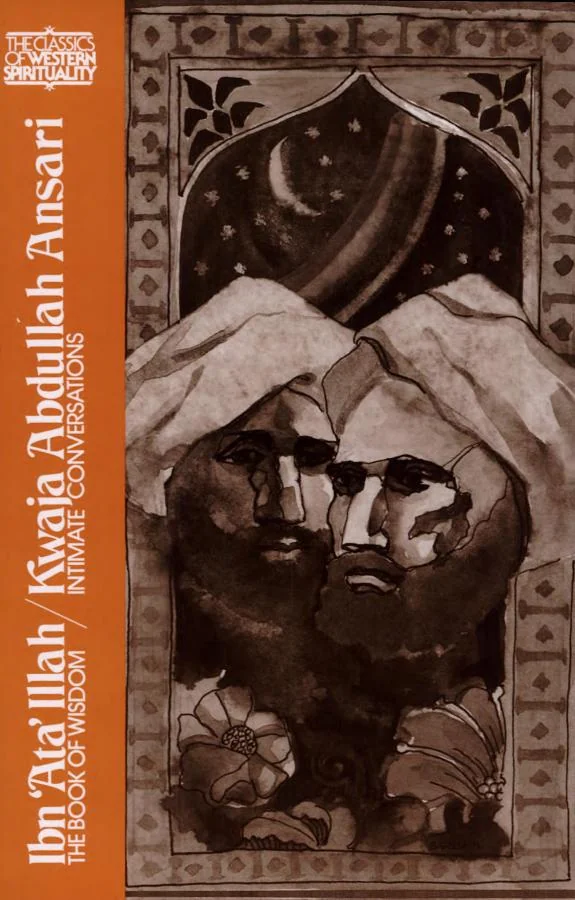
Ibn 'Ata Illah-Kwaja Abdullah Ansari
 80
80

Ibn 'Ata Illah-Kwaja Abdullah Ansari
The dual presentation of Ibn 'Ata' Illah and Kwaja Abdullah al-Ansari in this single volume is a significant service to English-language readers of Islamic mysticism. Victor Danner and Wheeler M. Thackston’s translations offer a clear, unadorned access to these seminal Sufi works. Danner’s rendition of Ibn 'Ata' Illah’s *Hikam* is particularly striking for its precise distillation of spiritual concepts; the aphorism "It is more of a calamity for your service to be pleasing to you than for it to be displeasing to Him" forces a stark self-examination of intention. The primary limitation is the lack of extensive scholarly apparatus that might contextualize the texts for those unfamiliar with the specific socio-historical milieu of 13th-14th century Egypt or 11th-century Persia. Despite this, the volume remains an essential, if demanding, introduction to the core devotional and ethical teachings of early Sufism.
📝 Description
80
This 2001 volume presents translations of key Sufi texts by Ibn 'Ata' Illah and Kwaja Abdullah al-Ansari.
Victor Danner and Wheeler M. Thackston translated these foundational writings from two significant figures in early Islamic mysticism. The collection provides English readers direct access to the spiritual heart of Sufism, highlighting devotional life and ethical teachings that have influenced Islamic spiritual traditions for centuries. It is not a historical overview but an introduction to the experiential path of Sufi saints. The book is intended for serious students of Islamic spirituality, comparative religion scholars, and practitioners interested in the historical and theological foundations of Sufism. It will also appeal to those drawn to the lives and teachings of early mystics and to readers who appreciate devotional literature. Individuals engaged with the history of religious thought and the development of mystical experience will find a deep resource here.
Ibn 'Ata' Illah, active in Mamluk-era Egypt around 1250-1309, was a prominent figure in the Shadhili order. His *Hikam* (Aphorisms) became a standard in Sufi didactic literature. Kwaja Abdullah al-Ansari, from Herat, lived from 1006-1089 and was a central figure in early Persian Sufism, known for his sermons and writings like the *Munajat* (Laments). This compilation connects these two influential, yet different, voices within the broader Sufi movement.
These texts belong to the Sufi tradition, the mystical dimension of Islam. Sufism focuses on the direct experience of God and the purification of the heart, often through practices like meditation, remembrance of God, and asceticism. Ibn 'Ata' Illah and Kwaja Abdullah al-Ansari represent distinct but important streams within this lineage. Ibn 'Ata' Illah is associated with the Shadhili order, while al-Ansari is a key figure in early Persian Sufism. Their writings offer insight into the development of Sufi thought and practice in different regions and eras.
💡 Why Read This Book?
• Gain direct insight into the practice of *tawakkul* (trust in God) as articulated by Ibn 'Ata' Illah, a central concept in Sufi ethics not easily found in secular texts. • Experience the devotional intensity of Kwaja Abdullah al-Ansari's *Munajat*, offering a unique window into Persian mystical literature from the 11th century. • Understand the foundational spiritual disciplines of Islam through the aphoristic wisdom of Ibn 'Ata' Illah, a key figure in the Shadhili order, presented in a 1978 translation.
⭐ Reader Reviews
Honest opinions from readers who have explored this book.
❓ Frequently Asked Questions
Who was Ibn 'Ata' Illah al-Iskandari and when did he live?
Ibn 'Ata' Illah al-Iskandari was a prominent Egyptian Sufi saint and sage, a key figure in the Shadhili order. He lived approximately from 1250 to 1309 CE, during the Mamluk period in Egypt.
What is the significance of Kwaja Abdullah al-Ansari in Persian literature?
Kwaja Abdullah al-Ansari (1006-1089) is considered one of the major early writers of Persian mystical literature. He was a Sufi master from Herat, known for his eloquent sermons and profound devotional writings, particularly his *Munajat*.
What are the main themes covered in this book?
The book covers core Sufi themes including divine love (*mahabbah*), trust in God (*tawakkul*), surrender of the ego (*nafs*), inner purification, and the soul's journey toward the Divine.
What is the historical period of the texts presented?
The texts originate from the medieval Islamic world. Kwaja Abdullah al-Ansari's work dates from the 11th century, while Ibn 'Ata' Illah's writings stem from the late 13th and early 14th centuries.
What is the 'Hikam' by Ibn 'Ata' Illah?
The *Hikam* (Aphorisms) is a collection of concise, profound spiritual sayings attributed to Ibn 'Ata' Illah al-Iskandari. It is considered a foundational text in Sufi didactic literature, offering distilled wisdom on the spiritual path.
Who translated these early Sufi classics?
The translations were undertaken by Victor Danner and Wheeler M. Thackston. The volume containing their work was first published in 1978.
🔮 Key Themes & Symbolism
Divine Providence and Trust
The concept of *tawakkul*, or complete reliance on God's providence, is central. Ibn 'Ata' Illah's aphorisms often challenge the practitioner's perception of control, urging a surrender to the Divine Will. This theme underscores the understanding that true agency lies not in human effort alone, but in aligning oneself with God's unfolding plan. The texts explore how this trust liberates the soul from anxiety and attachment to worldly outcomes, fostering a deeper spiritual peace.
The Inner Battle Against the Ego
Both authors address the perennial struggle against the lower self, or *nafs*. The writings detail the subtle ways the ego can distort intentions, seek recognition, and impede spiritual progress. They advocate for rigorous self-awareness and a constant striving for sincerity (*ikhlas*) in all actions and devotions. This internal warfare is presented not as a sign of failure, but as an integral part of the spiritual journey towards purification and divine proximity.
The Nature of Divine Love
The texts explore *mahabbah*, the profound love that binds the seeker to the Divine and vice versa. Kwaja Abdullah al-Ansari’s *Munajat* often expresses a passionate yearning for God, characteristic of Persian Sufi poetry. Ibn 'Ata' Illah, while more didactic, also frames the spiritual path as a movement towards experiencing God's encompassing love. This theme highlights the emotional and affective dimension of Sufism, where devotion is driven by a profound attraction to the Beloved.
The Path of Sincerity and Devotion
Sincerity (*sidq* or *ikhlas*) in worship and intention is paramount. The writings emphasize that the outward performance of religious duties is secondary to the inner state of the heart. True devotion is characterized by humility, constant remembrance of God (*dhikr*), and a focus on cultivating a God-consciousness that permeates all aspects of life. This theme underscores the experiential and personal nature of the Sufi path.
💬 Memorable Quotes
Direct passages from the work, attributed to the author.
“It is more of a calamity for your service to be pleasing to you than for it to be displeasing to Him.”
— This aphorism from Ibn 'Ata' Illah directly confronts the subtle egoism that can infect even acts of devotion. It warns against seeking personal satisfaction or approval from one's own religious efforts, prioritizing instead alignment with God's pleasure, even if it means acknowledging one's own inadequacy.
“My God, what have I done to Thee that Thou hast loved me?”
— This sentiment, echoing the passionate pleas found in Kwaja Abdullah al-Ansari's *Munajat*, expresses a profound sense of awe and unworthiness in the face of Divine Love. It reflects the Sufi understanding that God's grace and affection are not earned through merit but are bestowed freely, inspiring deep humility and gratitude.
“The heart is the locus of Divine knowing.”
— This concept, prevalent in Sufi thought and reflected in these texts, posits that true spiritual knowledge is not solely intellectual but is experienced directly within the heart. It signifies the heart as the spiritual organ capable of perceiving and receiving divine truths, beyond the limitations of rational thought.
“When He is with you, you need nothing; when He is not with you, you have nothing.”
— This statement expresses the Sufi emphasis on God's omnipresence and the absolute dependence of the seeker on His presence. It suggests that the true measure of wealth and fulfillment is not material possessions or worldly status, but the inner experience of God's companionship.
“He who knows himself knows his Lord.”
— This aphorism highlights the principle of self-knowledge as a pathway to knowing God. It implies that by understanding the depths of one's own being, including its limitations and potential, one can gain insights into the nature of the Creator. This inward journey is fundamental to the Sufi path.
🌙 Esoteric Significance
Tradition
This work is firmly rooted in the Sufi tradition, a mystical dimension of Islam. It aligns with the broader lineage of Islamic mysticism that emphasizes inner purification, direct experience of the Divine, and the transformative journey of the soul. While distinct from Hermeticism or Gnosticism, it shares with them an emphasis on esoteric knowledge and inner transformation accessible through dedicated practice and divine grace.
Symbolism
Key symbols include the 'heart' as the seat of divine wisdom and gnosis, and the concept of 'light' representing divine presence and illumination. The journey itself is often symbolized as a path or ascent, signifying the soul's gradual progress towards God. The ego (*nafs*) can be seen as a symbolic obstacle or a veil obscuring the Divine reality.
Modern Relevance
Contemporary thinkers and practitioners in fields like comparative spirituality, mindfulness, and transpersonal psychology often draw inspiration from Sufi teachings on the heart, divine love, and self-knowledge. The emphasis on inner peace, ethical conduct, and direct spiritual experience continues to resonate with those seeking depth beyond materialist worldviews.
👥 Who Should Read This Book
• Students of comparative religion: To understand the historical development and core tenets of Islamic mysticism (Sufism) through primary source material. • Devotional readers: To engage with profound expressions of spiritual longing, divine love, and ethical guidance from seminal figures in Islamic spirituality. • Practitioners of meditation and mindfulness: To explore different frameworks for inner transformation, self-awareness, and cultivating a deeper connection to the sacred.
📜 Historical Context
This collection emerges from the vibrant intellectual and spiritual milieu of medieval Islam, specifically the 11th century in Persia with Kwaja Abdullah al-Ansari, and the late 13th to early 14th centuries in Egypt with Ibn 'Ata' Illah. Al-Ansari, active during a period of considerable political flux and intellectual development, was a key figure in establishing Persian as a language for profound mystical expression, alongside contemporaries like Abu Sa'id ibn Abi al-Khayr. Ibn 'Ata' Illah, a leading figure in the Shadhiliyya Sufi order, composed his *Hikam* during the Mamluk Sultanate, a time when Sufism was both deeply integrated into society and subject to theological scrutiny. His work became a core part of didactic Sufism, influencing later scholars and mystics like Ahmad Zarruq. The compilation of these two distinct voices offers a view into the diverse yet interconnected currents of Islamic spirituality, bridging geographical and temporal divides within the broader Sufi tradition, which often navigated tensions with more literalist interpretations of Islam.
📔 Journal Prompts
The concept of *nafs* and its subtle manifestations in daily life.
Ibn 'Ata' Illah's challenging aphorisms on the nature of service.
Reflections on the meaning of *tawakkul* in moments of uncertainty.
The experience of divine love as expressed in al-Ansari's *Munajat*.
Identifying the 'locus of Divine knowing' within oneself.
🗂️ Glossary
Sufism
The mystical or esoteric dimension of Islam, focused on the pursuit of direct experience of God and the purification of the heart through various spiritual practices.
Tawakkul
An Islamic concept meaning trust or reliance on God. It signifies a deep conviction in God's providence and will, leading to a state of inner peace and surrender.
Mahabbah
Arabic term for love, specifically divine love in the Sufi context. It refers to the intense love for God that motivates the seeker and is seen as a response to God's love for humanity.
Nafs
The self, ego, or psyche. In Sufism, it often refers to the lower self or carnal soul, which is seen as the source of negative inclinations and a primary obstacle on the spiritual path.
Hikam
Arabic term meaning 'Aphorisms' or 'Wisdom'. Specifically refers to the collection of spiritual maxims by Ibn 'Ata' Illah al-Iskandari.
Munajat
Arabic term for 'confidential talk' or 'supplication'. Refers to the collection of intimate prayers and laments by Kwaja Abdullah al-Ansari.
Ikhlas
Sincerity or purity of intention, especially in religious devotion. It is a crucial virtue in Sufism, emphasizing that actions should be performed solely for the sake of God.
This book appears in 1 collection
🔮 Readers Also Liked
Browse all →








From the “Islamic Mysticism” Collection
View all →




![The Conference Of The Birds Penguin Classics [download]](/img/thumb/the-conference-of-the-birds-penguin-classics-download.webp)
More Free Mysticism & Contemplation Books
View all →