Messianic Mysticism
 61
61

Messianic Mysticism



Celeste Moreau (Divination & Symbolism Reviewer) — Isaiah Tishby's 'Messianic Mysticism' is a cornerstone for any serious student of Kabbalah. It brilliantly deciphers the complex tapestry of Jewish mystical thought, particularly focusing on the eschatological dimensions and their symbolic resonance. Tishby's command of the material is evident, guiding the reader through labyrinthine concepts with clarity and scholarly depth. The book excels in its ability to connect abstract theological ideas to tangible mystical experiences, offering profound insights into the nature of messianic consciousness. It is an indispensable resource for scholars and advanced practitioners seeking a sophisticated understanding of this rich tradition. A truly illuminating work.
📝 Description
61
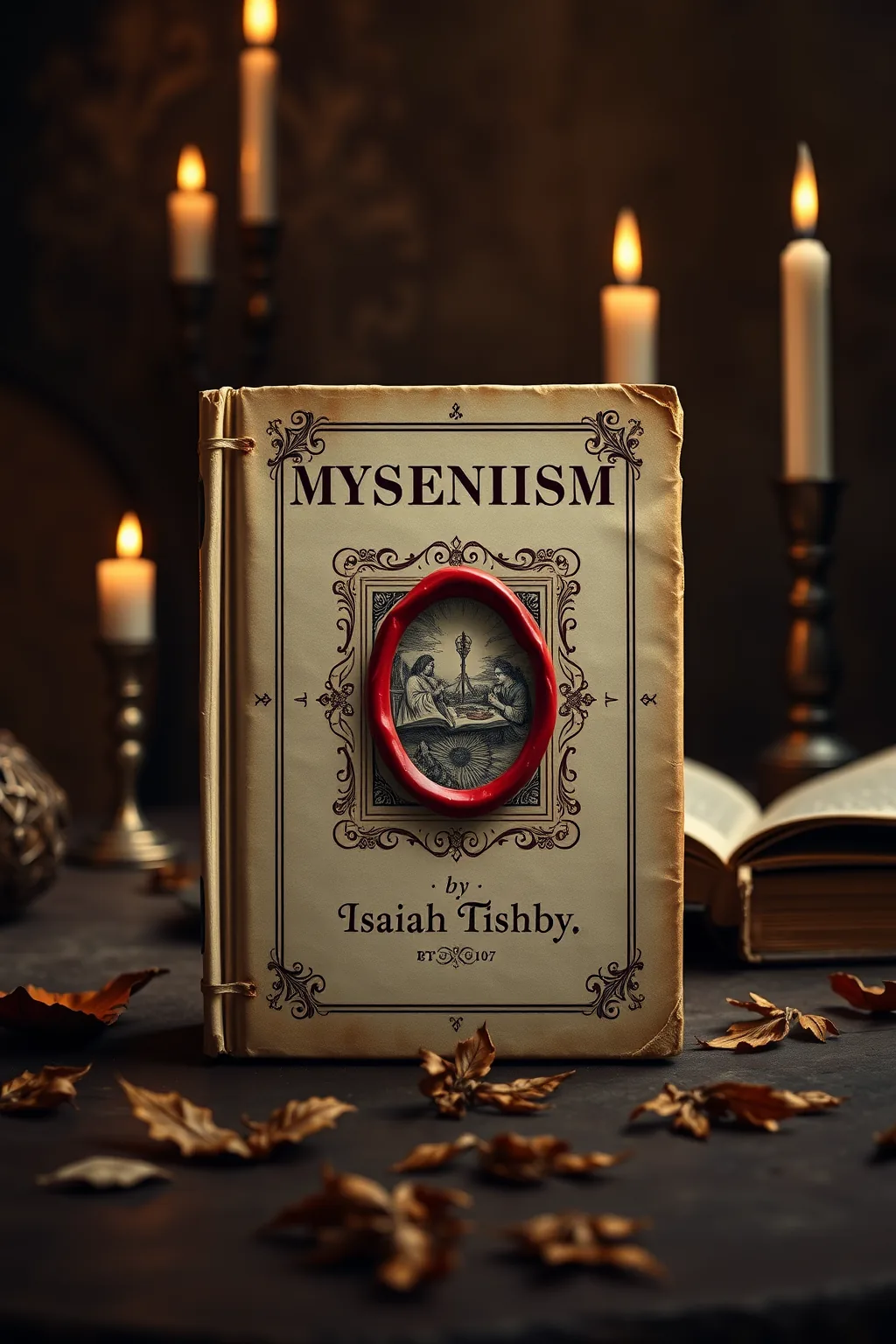
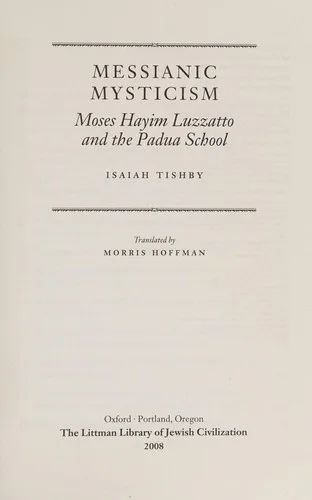
Isaiah Tishby's 1981 study, 'Messianic Mysticism,' examines the historical development of messianic ideas within Kabbalah.
Isaiah Tishby's 'Messianic Mysticism' analyzes the historical and conceptual evolution of messianic thought within Jewish mysticism. The book details how the concept of the Messiah and messianic redemption became central to Kabbalistic thought from its early stages through later developments. Tishby traces the theological and symbolic frameworks that Kabbalists constructed around messianic aspirations, showing how these ideas were not merely abstract doctrines but shaped lived religious experience.
The work scrutinizes the specific interpretations and mystical practices that articulated the yearning for ultimate redemption. It moves beyond a simple historical account to investigate the philosophical underpinnings and the spiritual significance of these messianic currents within the broader landscape of Jewish esoteric traditions. Readers will find a rigorous examination of how the divine presence and the hope for a transformed world were understood and sought within Kabbalistic circles.
This book sits within the study of Kabbalah, a specific tradition of Jewish mysticism. It focuses on the messianic dimension that has been a persistent theme throughout Kabbalistic history. Tishby's work examines how esoteric interpretations of Torah and divine presence contributed to distinct understandings of redemption and the role of the Messiah. The study is rooted in the textual and conceptual traditions of Jewish mysticism, analyzing their internal logic and historical trajectory.
💡 Why Read This Book?
Unravel the profound esoteric currents within Jewish mysticism. 'Messianic Mysticism' offers a deep dive into the symbolic language and philosophical underpinnings of Kabbalah's messianic visions. Ideal for spiritual seekers, academic scholars, and practitioners of contemplative traditions who wish to deepen their understanding of divine longing and redemption. Discover hidden knowledge and ancient wisdom that continues to resonate today.
⭐ Reader Reviews
Honest opinions from readers who have explored this book.
❓ Frequently Asked Questions
What is the primary focus of 'Messianic Mysticism'?
The book primarily explores the intricate relationship between Kabbalistic mysticism and the concept of messianic redemption within Jewish tradition. It delves into the symbolic language and philosophical underpinnings of this profound connection.
Is this book suitable for beginners in Kabbalah?
While comprehensive, the book assumes a certain level of familiarity with Jewish thought. Beginners might benefit from foundational texts before diving into Tishby's detailed analysis, though dedicated readers will find it rewarding.
What is the historical significance of this work?
'Messianic Mysticism' provides crucial insights into the development and interpretation of messianic ideas within the Kabbalistic tradition, tracing their evolution and impact through centuries of Jewish intellectual history.
Does the book discuss practical Kabbalistic applications?
The book's strength lies in its theoretical and philosophical exploration of messianic mysticism. While it illuminates the concepts, it is less focused on direct practical application and more on understanding the underlying principles.
What kind of symbolism is explored in the book?
Tishby examines a rich array of Kabbalistic symbolism, including divine emanations (Sefirot), the nature of the soul, the cosmic drama of creation and redemption, and the messianic figure as a focal point of divine revelation.
🔮 Key Themes & Symbolism
The Kabbalistic Axis of Redemption
This theme explores the core Kabbalistic understanding of redemption not merely as a future event, but as an ongoing process woven into the fabric of existence. It examines how the divine energies and cosmic structures, as interpreted by Kabbalists, inherently contain the potential for rectification and ultimate salvation. The book explores the intricate symbolism surrounding this redemptive arc, from the initial state of creation to the final culmination of messianic fulfillment, revealing a dynamic interplay between the divine will and the unfolding of history through a mystical lens.
Symbolism of the Messianic Figure
Isaiah Tishby meticulously dissects the complex symbolism associated with the messianic figure within Jewish mysticism. This isn't limited to a singular interpretation but explores various archetypes and divine manifestations that represent the ultimate redeemer. The book unpacks how the messianic ideal serves as a focal point for understanding divine immanence and transcendence, the restoration of cosmic order, and the profound reunion of the spiritual and material realms. It highlights the symbolic weight of this figure in ushering in an era of spiritual enlightenment and universal harmony.
The Inner Journey to Messianic Consciousness
Beyond the external prophecies and theological doctrines, 'Messianic Mysticism' illuminates the internal, experiential dimension of messianic longing. Tishby guides readers to understand how Kabbalistic practices and contemplative states can cultivate a 'messianic consciousness' within the individual. This theme explores the soul's yearning for divine unity, the process of spiritual purification, and the awakening of an inner awareness that mirrors the cosmic redemption. It emphasizes that achieving the messianic era begins with inner transformation and the alignment of one's consciousness with divine purpose.
💬 Memorable Quotes
Direct passages from the work, attributed to the author.
“Redemption is not a destination, but a journey of unfolding divine revelation.”
— This highlights the process-oriented nature of redemption in mystical thought, emphasizing continuous spiritual growth and the gradual unveiling of divine truths rather than a singular, static event.
“The Sefirot are divine whispers, guiding the soul through the labyrinth of existence.”
— This poetic metaphor describes the ten divine emanations (Sefirot) as subtle, divine communications that assist the soul in navigating its path through life and understanding cosmic principles.
“To grasp the messiah is to grasp the very essence of God's longing for unity.”
— This profound statement links the messianic concept directly to the divine desire for wholeness and the ultimate reconciliation of all existence, revealing the messiah as a conduit for this divine aspiration.
💡 Key Ideas
Editorial paraphrase of the work's core concepts — not direct quotes.
The spark of the messiah lies dormant within every soul, awaiting its awakening.
This quote suggests that the potential for messianic consciousness and the experience of redemption are inherent within each individual, needing to be ignited through spiritual practice and self-discovery.
Through the shattered vessels, light can still be found, albeit in a new configuration.
Referencing the Kabbalistic concept of 'shattering,' this quote speaks to the possibility of finding spiritual illumination and renewal even amidst brokenness and imperfection.
🌙 Esoteric Significance
Tradition
This work is intrinsically tied to the Kabbalistic tradition, a complex system of Jewish mysticism that seeks to understand the nature of God, the universe, and humanity's place within it. 'Messianic Mysticism' specifically explores the eschatological dimensions of Kabbalah, exploring how the concept of messianic redemption is understood through its symbolic language, cosmological frameworks, and meditative practices. It illuminates the mystical pathways that lead to an experiential understanding of divine salvation and the restoration of cosmic harmony.
Symbolism
The book is a rich repository of Kabbalistic symbolism, dissecting concepts such as the Sefirot (divine emanations), the Tree of Life, the divine name, and the archetypal figures within Jewish cosmology. Tishby explains how these symbols are not mere metaphors but represent profound spiritual realities and cosmic processes. The messianic figure, in particular, is explored through its complex symbolic representations, signifying not only a historical redeemer but also a cosmic principle of divine intervention and universal restoration.
Modern Relevance
In an age often marked by existential uncertainty and a yearning for meaning, 'Messianic Mysticism' offers a timeless perspective on hope, redemption, and spiritual renewal. The Kabbalistic insights into cosmic interconnectedness, the potential for inner transformation, and the pursuit of divine unity resonate deeply with contemporary seekers. Tishby's scholarly yet accessible approach makes these ancient esoteric teachings relevant to modern discussions on spirituality, consciousness, and the human condition, providing a framework for understanding the enduring quest for a more perfect world.
👥 Who Should Read This Book
This profound exploration is essential for dedicated students of Kabbalah and Jewish mysticism, offering a deep dive into its messianic dimensions. Academic scholars will find Tishby's rigorous analysis and historical context important for their research. Spiritual seekers yearning for a deeper understanding of divine longing and redemption will discover clear insights that can inform their personal journeys. Practitioners of contemplative traditions may find the book's exploration of messianic consciousness and inner transformation particularly inspiring, offering a rich theoretical foundation for their practices.
📜 Historical Context
Isaiah Tishby's 'Messianic Mysticism' emerges from a collection of Jewish intellectual and spiritual history, deeply rooted in the post-Sabbatean era. Following the tumultuous messianic fervor and subsequent disillusionment of the 17th and 18th centuries, there was a critical re-evaluation of messianic concepts within Jewish thought. Tishby's work engages with the scholarly efforts to understand, categorize, and interpret the complex legacy of Kabbalah and its messianic currents, particularly as they evolved through figures like Lurianic Kabbalah and later mystical movements. It stands as a proof of the enduring power of these ideas and the ongoing scholarly quest to decipher their profound meanings, offering a bridge between historical interpretation and contemporary understanding of Jewish mysticism.
📔 Journal Prompts
Reflect on the concept of 'redemption' in your own life. What does it signify beyond a future event?
How does the symbolism of the messianic figure resonate with your understanding of hope and transformation?
Consider the idea of 'messianic consciousness.' What inner states or practices might cultivate this within you?
Explore the Kabbalistic notion of shattered vessels. How can light be found and integrated even within personal imperfections?
What does the 'longing for unity' as described in mystical traditions mean to you, and how might it be pursued?
🗂️ Glossary
Kabbalah
A comprehensive system of Jewish mysticism that explores the nature of God, the universe, and the relationship between the divine and the human through symbolic interpretation and esoteric teachings.
Sefirot
The ten divine emanations or attributes of God as described in Kabbalistic cosmology, often visualized as a Tree of Life, through which the divine manifests in the created world.
Messiah
In Jewish tradition, a divinely appointed leader who will usher in an era of peace, justice, and spiritual redemption for all humanity, often understood in mystical traditions as a cosmic principle as well.
Eschatology
The branch of theology concerned with the final events of history, the ultimate destiny of humanity, and the end of the world, particularly as understood through religious or mystical doctrines.
Tikkun Olam
A Hebrew phrase meaning 'repair of the world,' referring to the Jewish concept of social responsibility and the obligation to actively participate in perfecting the world and bringing about redemption.
This book appears in 1 collection
🔮 Readers Also Liked
Browse all →







More by Isaiah Tishby
All books →

From the “Kabbalah” Collection
View all →








More Free Kabbalah & Jewish Mysticism Books
View all →