The Aquarian Qabalah

 61
61

The Aquarian Qabalah

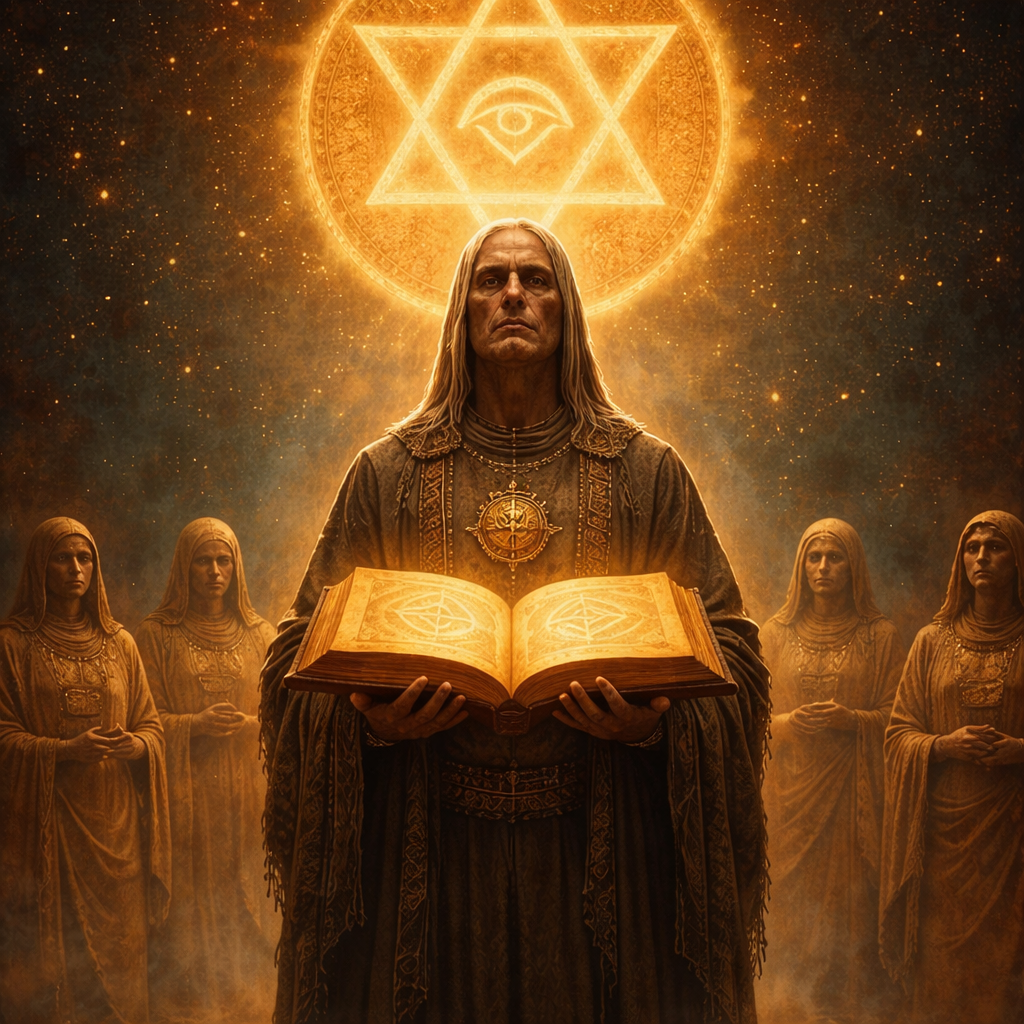

Naomi Ozaniec's 'The Aquarian Qabalah' is a revelation, breathing new life into the venerable Kabbalistic tradition. Ozaniec possesses a rare gift for translating esoteric concepts into accessible yet profoundly insightful prose. She brilliantly bridges the timeless wisdom of the Qabalah with the evolving consciousness of the Aquarian era, offering practitioners a practical framework for spiritual growth. The book's strength lies in its ability to demystify complex symbology while retaining its sacred power. This is an essential read for anyone seeking to deepen their understanding of the Tree of Life as a living, breathing map of the cosmos and the self. It is a transformative guide for serious students of mysticism.
📝 Description
61
Naomi Ozaniec's 'The Aquarian Qabalah' first appeared in 1995, offering a new interpretation of the Kabbalistic Tree of Life.
Naomi Ozaniec's 1995 book, 'The Aquarian Qabalah,' presents the Kabbalistic Tree of Life through the lens of the emerging Aquarian Age. Ozaniec connects traditional Qabalistic symbolism with contemporary spiritual thought, aiming to make these ancient concepts accessible to modern practitioners. The work maps the sephiroth and paths of the Tree, interpreting them as a guide for personal growth and spiritual awareness. It seeks to illuminate the inner workings of the soul and its connection to universal energies.
The book is intended for those interested in esoteric psychology and the transformative potential of spiritual practices. Ozaniec's approach aims to bridge the gap between established Qabalistic study and the evolving spiritual needs of individuals seeking deeper meaning. It encourages readers to engage with the material as a practical tool for self-discovery and alignment with broader cosmic principles.
This work situates itself within the Western esoteric tradition, specifically engaging with Qabalistic studies. It builds upon the traditional Kabbalistic framework, most notably the Tree of Life, but reinterprets its symbolism and application for a modern, post-1960s spiritual sensibility associated with the Aquarian Age. The book seeks to integrate these ancient structures with contemporary understandings of consciousness and personal development, moving beyond purely historical or theological interpretations to a more psychological and experiential focus.
💡 Why Read This Book?
Embark on a transformative journey into the heart of mystical wisdom. 'The Aquarian Qabalah' unveils the ancient Tree of Life through a modern lens, offering profound insights into consciousness, symbolism, and spiritual evolution. It is an indispensable guide for seekers yearning to connect with universal energies, practitioners aiming to deepen their esoteric practice, and scholars eager to explore the evolving landscape of Kabbalistic thought. Discover a living map for personal and collective awakening.
⭐ Reader Reviews
Honest opinions from readers who have explored this book.
❓ Frequently Asked Questions
What is the Aquarian Qabalah?
The Aquarian Qabalah is an interpretation of the ancient Kabbalistic system, specifically the Tree of Life, recontextualized for the energies and consciousness shifts associated with the Aquarian Age. It emphasizes evolution, interconnectedness, and the practical application of Qabalah for modern spiritual development.
Is this book suitable for beginners?
Yes, while it delves into profound concepts, Ozaniec's clear and evocative writing style makes it accessible to earnest beginners who are curious about Kabbalah and esoteric philosophy. It serves as an excellent entry point.
What is the core philosophy presented?
The core philosophy integrates the traditional understanding of the Qabalah with the emergent themes of the Aquarian Age, focusing on spiritual liberation, collective consciousness, and the dynamic evolution of the soul's journey.
How does this differ from traditional Kabbalah?
While rooted in traditional Kabbalistic principles, 'The Aquarian Qabalah' offers a contemporary perspective, emphasizing its relevance to modern psychological and spiritual challenges and its application in a rapidly changing world, rather than focusing solely on historical or religious interpretations.
What esoteric traditions does it draw upon?
It primarily draws upon the Western Esoteric Tradition, specifically Hermetic Qabalah, but also subtly incorporates elements of evolutionary astrology and modern consciousness studies to illuminate its themes.
🔮 Key Themes & Symbolism
The Tree of Life as a Cosmic Blueprint
This theme explores the Qabalistic Tree of Life not merely as a diagram, but as a profound, dynamic map of the universe and the human psyche. Ozaniec reveals how each Sephirah and path represents a stage of consciousness, a divine emanation, and a crucial step in the soul's journey from the unmanifest to the manifest. The book details the interconnectedness of these spheres, illustrating how understanding their relationships unlocks deeper levels of self-awareness and cosmic understanding, acting as a blueprint for spiritual evolution and manifestation in all areas of existence.
Aquarian Age Consciousness and Evolution
Ozaniec expertly links the ancient Qabalistic framework to the emerging consciousness of the Aquarian Age. This theme explores how the archetypal energies of the Tree of Life resonate with the Aquarian ideals of interconnectedness, innovation, humanitarianism, and the evolution of global awareness. It explores how embracing these energies through Qabalistic understanding can empower individuals to read through the current era of rapid change, fostering a more conscious, collaborative, and spiritually awakened humanity. The focus is on liberation, foresight, and the collective ascent.
Symbolism and Inner Alchemy
A central pillar of the book is the in-depth exploration of Qabalistic symbolism and its role in personal transformation. Ozaniec deciphers the collection of Hebrew letters, divine names, angelic hierarchies, and archetypal imagery, presenting them as keys to unlocking inner alchemical processes. The book guides readers on how to meditate upon, integrate, and consciously work with these symbols to transmute lower energies, expand awareness, and achieve a state of spiritual wholeness. It emphasizes the practical, transformative power inherent in engaging with this ancient symbolic language.
💬 Memorable Quotes
Direct passages from the work, attributed to the author.
“In the heart of each Sephirah lies a universe waiting to be discovered.”
— This highlights the idea that profound cosmic and personal truths are contained within each of the ten spheres of the Tree of Life, inviting deep inner exploration.
“The Aquarian Age calls us to ascend through conscious connection.”
— This emphasizes the book's focus on the current era's spiritual imperative: achieving higher consciousness through active, intentional engagement and unity.
“Symbolism is the language of the soul, whispering ancient truths.”
— This speaks to the power of Qabalistic symbols as a direct means of communication with the subconscious and spiritual self, bypassing the limitations of ordinary language.
💡 Key Ideas
Editorial paraphrase of the work's core concepts — not direct quotes.
The Tree of Life is not a static diagram, but a living pathway.
This quote captures the book's dynamic approach, presenting the Qabalistic Tree as an active, evolving map of spiritual progress rather than a fixed theoretical construct.
To know the self is to know the divine.
A core tenet of mystical traditions, this quote underscores the Qabalah's purpose: achieving self-realization as the ultimate path to understanding the universal source.
🌙 Esoteric Significance
Tradition
This work is firmly rooted in the Western Esoteric Tradition, specifically drawing from Hermetic Qabalah. It adapts the ancient Jewish mystical framework, the Tree of Life, to align with the philosophical and energetic currents of the modern era, particularly the perceived shift into the Aquarian Age. It bridges ancient wisdom with contemporary spiritual seeking, emphasizing personal transformation and cosmic interconnectedness.
Symbolism
The book delves deeply into the rich symbolic language of the Qabalah, including the ten Sephiroth, the twenty-two paths, Hebrew letters, divine names, and angelic correspondences. Ozaniec interprets these symbols not as static icons but as living energies and psychological archetypes that, when understood and integrated, facilitate inner alchemy and spiritual growth. The symbolism serves as a map for working through the inner planes and understanding the divine architecture of existence.
Modern Relevance
'The Aquarian Qabalah' is profoundly relevant today as it offers a timeless system for working through the complexities of modern life. It provides tools for self-discovery, emotional intelligence, and conscious evolution in an era of rapid change and global interconnectedness. Its emphasis on personal empowerment, spiritual insight, and understanding the underlying unity of all things resonates strongly with contemporary seekers looking for meaning and practical guidance in their spiritual journeys.
👥 Who Should Read This Book
This useful text is a treasure for a diverse range of spiritual explorers. Beginners in Kabbalah and mysticism will find Ozaniec's clear exposition and accessible approach an ideal entry point. Serious seekers and practitioners will appreciate the fresh perspectives and practical applications for personal growth and expanded consciousness. Scholars of esoteric traditions will find it a valuable contemporary interpretation that bridges ancient wisdom with modern understanding. Ultimately, anyone yearning to understand the deeper architecture of reality, the nature of the soul, and the path to spiritual awakening will find 'The Aquarian Qabalah' an indispensable guide.
📜 Historical Context
Written during a period of burgeoning New Age spirituality and renewed interest in Western Esotericism, Naomi Ozaniec's 'The Aquarian Qabalah' emerged in the late 20th century. This era saw a significant cultural shift, with many individuals seeking spiritual meaning beyond traditional religious dogma. The rise of psychological exploration, coupled with a global awareness of interconnectedness fostered by technological advancements, created fertile ground for works that bridged ancient mystical systems with contemporary life. Ozaniec's contribution reflects this zeitgeist, offering a Qabalistic framework that felt relevant and accessible to a generation eager to understand the self and the cosmos in new, expansive ways. It stands as a key text in the evolution of modern Kabbalistic study, adapting its profound teachings for a world on the cusp of significant transformation.
📔 Journal Prompts
Reflect on your personal understanding of the 'Aquarian Age.' How do its themes of innovation, interconnectedness, and humanitarianism manifest in your life or the world around you?
Choose one Sephirah from the Tree of Life discussed in the book. What does its energy represent to you personally, and how can you consciously embody its qualities more fully?
Consider a personal challenge you are facing. How might the symbolism and principles of the Qabalah offer a new perspective or a pathway towards resolution?
The book speaks of the Tree of Life as a living pathway. Describe a recent experience where you felt you ascended or descended on this 'path.' What did you learn?
How can the concept of 'conscious connection' (a key Aquarian theme) be applied to your relationships, your work, or your spiritual practice?
🗂️ Glossary
Sephirah
One of the ten divine emanations or spheres on the Qabalistic Tree of Life, representing distinct aspects of the divine and stages of consciousness.
Keter
The first Sephirah, representing the supreme crown, the primordial point of creation, and the ultimate divine will. It is the highest emanation, closest to the Ain Soph (the Infinite).
Binah
The third Sephirah, often associated with understanding, intellect, and the receptive, feminine principle of the divine. It is the Great Mother, the matrix of creation.
Tiferet
The sixth Sephirah, representing beauty, harmony, compassion, and the central pillar of the Tree. It is often seen as the microcosm of the divine within humanity, the seat of the higher self.
Malkuth
The tenth Sephirah, representing the kingdom, the material world, and the physical manifestation of the divine. It is the final emanation, where spirit becomes form.
This book appears in 1 collection
🔮 Readers Also Liked
Browse all →







More by Naomi Ozaniec
All books →





From the “Kabbalah” Collection
View all →





More Free Kabbalah & Jewish Mysticism Books
View all →