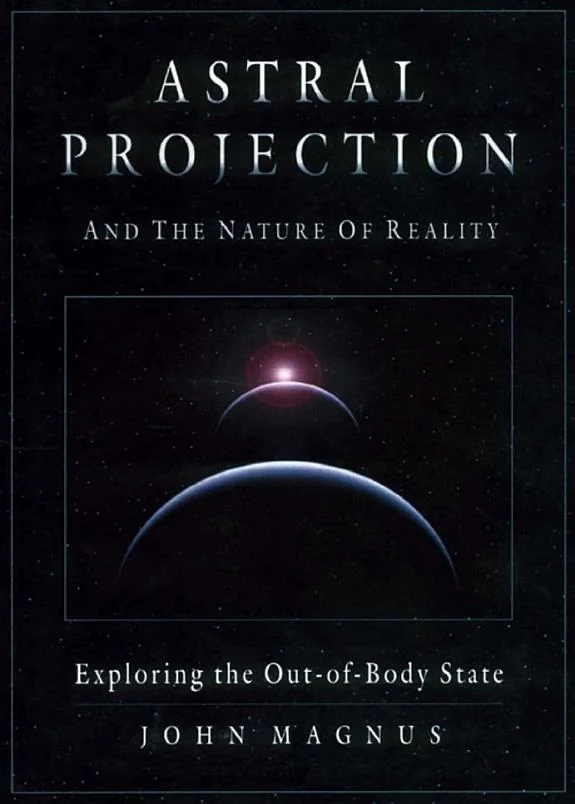
Astral Projection and the Nature of Reality
 74
74

Astral Projection and the Nature of Reality
John Magnus’s "Astral Projection and the Nature of Reality" approaches the subject with a refreshing directness. Unlike many texts that lean into vague mysticism, Magnus provides a clear, step-by-step methodology for initiating out-of-body states. His assertion that "we create our own astral world" is a critical distinction, shifting the focus from external exploration to internal mastery. While the historical overview is competent, it could have benefited from deeper engagement with specific historical figures beyond a brief mention. The book’s primary strength lies in its practical, almost instructional, tone for achieving projection. Its limitation, however, is a tendency to treat the nature of reality solely through the lens of individual consciousness, potentially overlooking broader metaphysical frameworks. Nonetheless, for those seeking a functional guide to OBEs, Magnus delivers a solid framework.
📝 Description
74
John Magnus published Astral Projection and the Nature of Reality in 2005, detailing a systematic method for out-of-body experiences.
Published in 2005, John Magnus's Astral Projection and the Nature of Reality provides a structured approach to out-of-body experiences (OBE). The book moves past sensationalism to present a systematic method for achieving reliable astral projection. Magnus details the process of leaving the physical body and exploring non-physical planes of existence.
This work targets individuals serious about understanding and practicing astral projection. It offers a methodical guide, progressing from foundational principles to advanced explorations of consciousness. Readers interested in the philosophical implications of OBEs and their connection to the nature of reality will find it especially relevant.
The core of Magnus's teaching is the idea that the astral plane is a construct of the projector's consciousness, not just a passive destination. He stresses the importance of the mind as the primary tool for both projection and interpreting astral experiences. The book shows how mental discipline and focused intent are crucial for navigating and shaping the astral environment.
Emerging in the early 21st century, a period of continued interest in consciousness studies, this book built upon earlier traditions from figures like Helena Blavatsky and Robert Monroe. Magnus aimed to refine and demystify OBE techniques for a new generation of experiencers. His work distinguished itself from purely theoretical or anecdotal accounts by providing a practical framework for those seeking direct experience.
💡 Why Read This Book?
• Learn a step-by-step method for achieving reliable astral projection, a technique Magnus details from foundational steps to advanced exploration. • Understand the concept of the mind as the primary architect of the astral world, a core principle presented in the book's early chapters. • Explore the connection between mental discipline and the ability to navigate and influence non-physical realities, as explained in Magnus's practical exercises.
⭐ Reader Reviews
Honest opinions from readers who have explored this book.
❓ Frequently Asked Questions
When was Astral Projection and the Nature of Reality first published?
Astral Projection and the Nature of Reality by John Magnus was first published on November 7, 2005, positioning it as a contemporary guide to esoteric practices.
What distinguishes John Magnus's approach to astral projection?
Magnus distinguishes his approach by emphasizing that practitioners actively create their own astral worlds, rather than passively observing pre-existing ones. This highlights the role of consciousness and intent.
Does the book cover the history of astral projection?
Yes, the book begins with a brief historical overview of astral projection, setting the context for Magnus's own systematic method and theories.
What are the primary benefits of practicing the techniques in this book?
The primary benefits include gaining reliable control over out-of-body experiences, understanding the mind's role in shaping reality, and exploring non-physical dimensions with greater awareness and intent.
Is this book suitable for complete beginners to astral projection?
Yes, the book is designed to guide readers through a step-by-step course for reliable projection, making it suitable for those new to the practice seeking a structured learning path.
What does the book suggest about the nature of reality?
The book suggests that reality, particularly the astral plane, is a construct of individual and collective consciousness, emphasizing the power of the mind in shaping perceived experiences.
🔮 Key Themes & Symbolism
Consciousness as Creator
The central theme posits that the astral realm is not an external landscape but a direct manifestation of the projector's consciousness. Magnus argues that understanding this principle is key to mastering astral projection. By focusing intent and understanding the mind's creative power, individuals can shape their experiences, moving beyond passive observation to active participation and creation within the non-physical dimensions.
Systematic Projection Techniques
Magnus presents a structured, sequential method for achieving out-of-body states. This approach moves away from purely intuitive or accidental OBEs, offering concrete steps and exercises designed to build skill and reliability. The emphasis is on preparation, mental focus, and specific techniques for initiating the separation from the physical body and safely reading through the astral plane.
The Mind-Reality Connection
The book explores the profound link between the mind and the nature of reality itself. It suggests that the perceived boundaries of physical existence are permeable and that consciousness plays a fundamental role in constructing our experience of reality, both in and out of the body. This theme encourages readers to view their mental faculties as primary tools for exploring existence.
Historical Foundations of OBEs
Magnus contextualizes modern astral projection practices within a broader historical framework. He touches upon the evolution of thought regarding consciousness and non-physical exploration, providing a brief lineage for the techniques and concepts discussed. This grounding helps readers appreciate the long-standing human fascination with states beyond ordinary waking awareness.
💬 Memorable Quotes
Direct passages from the work, attributed to the author.
“We create our own astral world.”
— This core assertion highlights the subjective nature of astral experiences. It means the explorer's beliefs, fears, and desires actively shape the environment encountered, making mental clarity and self-awareness paramount for conscious navigation.
“The mind is the primary tool for projection and interpretation.”
— This emphasizes that mastering the mind—its focus, its beliefs, its emotional states—is more critical than any external technique or location for successful astral projection and understanding what is perceived.
“Reliable projection requires a step-by-step course.”
— This indicates that Magnus views astral projection not as a random event but as a skill that can be systematically developed through dedicated practice and a structured learning process.
“Understanding our mind is key to understanding reality.”
— This suggests a deep connection between internal states and external perception, implying that self-knowledge gained through exploring consciousness is fundamental to grasping the true nature of existence.
“Dimensions to which the out-of-body adventurer can travel.”
— This phrase points to the vast scope of exploration possible via astral projection, implying diverse realities and planes of existence accessible through the out-of-body state, each potentially offering unique insights.
🌙 Esoteric Significance
Tradition
This work fits within the broader Western Esoteric tradition, particularly the strands concerned with consciousness, subtle bodies, and non-physical exploration, drawing implicitly from Hermetic and Theosophical concepts of mind over matter and the existence of planes beyond the physical. It departs from strict adherence to any single lineage by offering a distinctly practical and psychological framework, prioritizing individual experience and mental discipline as the primary drivers of OBEs.
Symbolism
While not heavily reliant on overt symbolism, the book's core concepts carry symbolic weight. The 'astral body' itself symbolizes the soul's capacity for independent existence and exploration. The 'astral world' acts as a symbol for the mind's creative potential and the subjective nature of perceived reality. The act of 'projection' symbolizes liberation from physical limitations and the pursuit of higher consciousness.
Modern Relevance
Magnus's emphasis on consciousness as a creative force in shaping reality resonates strongly with contemporary discussions in fields like quantum physics interpretations, transpersonal psychology, and modern manifestation and law of attraction philosophies. Thinkers and practitioners exploring lucid dreaming, virtual reality's psychological impact, and neuroplasticity may find his ideas on mental control and reality construction particularly relevant.
👥 Who Should Read This Book
• Aspiring astral projectors seeking a methodical, practical guide to initiating and controlling out-of-body experiences. • Students of consciousness studies interested in practical techniques for exploring non-physical states and their relationship to the mind. • Esoteric practitioners looking to deepen their understanding of subjective reality and the power of focused intention in shaping experience.
📜 Historical Context
Published in 2005, John Magnus's "Astral Projection and the Nature of Reality" entered a landscape where interest in consciousness exploration was sustained, building on foundations laid by figures like Robert Monroe and Theosophists such as Helena Blavatsky in the late 19th and 20th centuries. While the field of parapsychology was already established, Magnus's work focused more on practical, personal application rather than strict academic validation. It offered a contemporary counterpoint to earlier, more spiritually focused or anecdotal accounts. The early 2000s also saw a rise in accessible online forums dedicated to OBEs, creating a new audience for structured guides. Magnus’s approach, emphasizing the mind as the creator of astral worlds, distinguished itself from purely materialistic interpretations of consciousness that were prevalent in mainstream science, and also from some more dogmatic spiritual traditions that might view the astral plane as a fixed, pre-existing entity.
📔 Journal Prompts
The creation of the astral world through consciousness.
Reliable projection techniques and their mental prerequisites.
The nature of reality as perceived from the astral plane.
Personal experiences with mental discipline during OBE attempts.
The historical context of astral projection practices.
🗂️ Glossary
Astral Projection
The practice of intentionally leaving one's physical body to travel in a non-physical form, often referred to as the astral body, to other locations or dimensions.
Out-of-Body Experience (OBE)
A subjective experience where an individual feels their consciousness has temporarily detached from their physical body, often perceiving themselves from a vantage point outside their physical form.
Astral Body
The subtle, non-physical body or vehicle of consciousness believed to be used during astral projection, capable of traversing non-physical planes.
Astral Plane
A non-physical dimension or area of existence typically associated with consciousness, thoughts, emotions, and dreams, accessible through astral projection.
Mental Discipline
The practice of controlling one's thoughts, focus, and intentions, considered crucial by Magnus for achieving reliable astral projection and reading through the astral plane.
Nature of Reality
The fundamental essence and structure of existence, which Magnus explores through the lens of consciousness and its role in creating subjective and objective experiences.
Consciousness
The state or quality of awareness, or of being aware of an external object or something within oneself. Magnus posits it as the primary force shaping astral experiences.
This book appears in 1 collection
🔮 Readers Also Liked
Browse all →









From the “Out-of-Body Experience” Collection
View all →









More Free Occult Philosophy Books
View all →