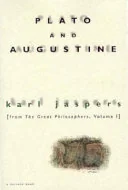
Plato and Augustine
 71
71

Plato and Augustine
Jaspers' unique perspective in "Plato and Augustine" offers a compelling alternative to standard philosophical histories. His focus on the existential impact of these thinkers, rather than mere doctrine, is particularly striking. The strength of the book lies in its ability to present the core philosophical challenges posed by Plato and Augustine in a way that feels immediate and relevant. However, the prose, characteristic of academic philosophy, can be dense, requiring sustained attention. A passage discussing Augustine's concept of time, for instance, reveals how internal philosophical struggles can mirror external historical shifts, illustrating Jaspers' central thesis. This work is a valuable, if demanding, exploration of how two monumental figures continue to shape our intellectual landscape.
📝 Description
71
Karl Jaspers' 1966 posthumous publication examines Plato and Augustine as shaping forces.
Karl Jaspers' "Plato and Augustine" was published in 1966, after his death. It is part of a larger project on the history of philosophy. Jaspers did not approach philosophy chronologically. Instead, he looked at thinkers who profoundly changed how people understood the world. He treated their ideas as active influences on later thought.
This book is for readers interested in the roots of Western philosophy, especially those who like an existentialist viewpoint. It will appeal to students of philosophy, theology, and the history of ideas. Jaspers, who was part of the existentialist movement with figures like Heidegger and Sartre, aimed to show how specific minds continue to affect human understanding. The book reflects a time of deep philosophical rethinking in the mid-20th century.
While not overtly esoteric in the occult sense, Jaspers' work engages with a tradition of philosophical inquiry that seeks deeper, often hidden, structures of human consciousness and existence. His focus on "axis time" figures, those who fundamentally altered the course of thought, aligns with a search for archetypal patterns in intellectual history. By examining Plato and Augustine not just as historical figures but as enduring sources of conceptual power, Jaspers touches on a lineage that explores the fundamental questions of being and meaning, a quest common in many esoteric traditions.
💡 Why Read This Book?
• Gain insight into Plato's Theory of Forms, a concept central to Western metaphysics since its articulation in ancient Greece, and understand its influence on subsequent philosophical systems. • Grasp Augustine's theological philosophy, particularly his ideas on divine grace and the nature of the soul, as presented through Jaspers' existentialist framework. • Discover how Jaspers' approach to philosophical history, focusing on influential personalities and their core ideas, offers a different method for studying intellectual lineage than traditional chronological accounts.
⭐ Reader Reviews
Honest opinions from readers who have explored this book.
❓ Frequently Asked Questions
When was Karl Jaspers' "Plato and Augustine" first published?
Karl Jaspers' "Plato and Augustine" was first published on March 23, 1966, as part of his larger project on the history of philosophy.
What philosophical movement is Karl Jaspers associated with?
Karl Jaspers is primarily associated with existentialism, a philosophical movement that gained prominence in the mid-20th century.
Does this book cover Plato's dialogues or Augustine's theological works?
The book examines the core philosophical ideas and personal philosophies of Plato and Augustine, focusing on their influence and impact rather than a detailed textual analysis of specific works.
How does Jaspers' approach to philosophy differ from traditional histories?
Jaspers focuses on thinkers who shaped human thought and their personal philosophies, presenting them as active forces in history, rather than adhering to a strictly chronological or systematic exposition of doctrines.
What is the significance of Plato and Augustine in Jaspers' universal history project?
Plato and Augustine represent foundational figures whose thinking established enduring conceptual architectures and philosophical frameworks that have profoundly influenced the history of Western thought.
Is "Plato and Augustine" suitable for beginners in philosophy?
While accessible, the book requires sustained attention due to its academic nature. It is best suited for those with some prior interest or background in philosophy or intellectual history.
🔮 Key Themes & Symbolism
Foundational Philosophical Architectures
Jaspers examines how Plato's Theory of Forms and Augustine's theological system created enduring frameworks for Western thought. These 'architectures' are not just abstract concepts but structures that have guided subsequent philosophical and theological inquiry, shaping how reality, knowledge, and existence itself have been understood for centuries. The work explores the lasting power of these original conceptual designs.
The Existential Impact of Ideas
Moving beyond a mere recounting of doctrines, Jaspers focuses on the personal and existential significance of Plato's and Augustine's philosophies. He posits that their ideas are not static but possess a vital force that continues to influence individual consciousness and the collective human pursuit of meaning. This perspective highlights philosophy as a deeply personal and transformative endeavor.
Lineage of Influence
This book is part of Jaspers' larger ambition to chart a universal history of philosophy, organized around thinkers whose ideas have demonstrably shaped human civilization. It emphasizes the concept of intellectual lineage, tracing how the core concerns and solutions offered by figures like Plato and Augustine echo through subsequent intellectual traditions, even when reinterpreted or challenged.
Enduring Philosophical Dilemmas
Jaspers uses Plato and Augustine to illuminate persistent philosophical questions, such as the relationship between the material and immaterial realms, the nature of truth, and the human condition. The work suggests that the fundamental dilemmas confronted by these ancient thinkers remain relevant, offering insights into the perennial challenges of human existence and understanding.
💬 Memorable Quotes
Direct passages from the work, attributed to the author.
“The work explores the personalities and ideas of philosophers who have influenced the history of mankind.”
— This captures Jaspers' focus on the individual thinker as a catalyst for historical change, suggesting that the combination of personality and intellectual output from figures like Plato and Augustine is key to understanding their profound and lasting impact on human civilization.
“Jaspers' history is not traditional but a presentation of ideas that shaped our concepts.”
— This emphasizes Jaspers' non-conventional methodology, differentiating his approach from standard academic histories by focusing on the formative power of philosophical concepts themselves, rather than a mere chronological or systematic cataloging of philosophical schools.
“Plato's Forms and Augustine's theological framework established enduring conceptual architectures.”
— This highlights a core theme, illustrating how the abstract philosophical constructs of Plato and the theological systems of Augustine served as foundational blueprints that continue to structure subsequent thought and understanding in Western philosophy and theology.
“The book is part of Jaspers' preparation for a universal history of philosophy.”
— This contextualizes "Plato and Augustine" within a larger, ambitious project, indicating that this work is a piece of a grander intellectual mosaic aiming to synthesize and understand the entirety of philosophical development across cultures and eras.
💡 Key Ideas
Editorial paraphrase of the work's core concepts — not direct quotes.
Jaspers sought to present great philosophical ideas that have helped form our concepts of truth.
This paraphrased concept highlights Jaspers' aim to reveal how specific philosophical contributions, particularly from foundational thinkers like Plato and Augustine, have actively constructed the very understanding of truth that societies and individuals operate with.
🌙 Esoteric Significance
Tradition
While Jaspers' work is rooted in the Western philosophical tradition, his focus on the existential impact and personal philosophy of thinkers can resonate with esoteric studies. His emphasis on how ideas shape consciousness and reality aligns with traditions that explore the power of thought and inner transformation, common in Hermeticism and Neoplatonism, though Jaspers himself remained a secular philosopher.
Symbolism
Jaspers' analysis of Plato implicitly touches upon the Neoplatonic interpretation of the Forms as divine archetypes or emanations, a concept central to many esoteric traditions. Similarly, Augustine's exploration of the soul's journey towards God can be seen as mirroring esoteric paths of spiritual ascent and divine illumination.
Modern Relevance
Contemporary thinkers exploring the intersection of philosophy and psychology, or those interested in existentialist interpretations of ancient thought, draw from Jaspers' approach. His method of tracing the enduring influence of core philosophical ideas continues to inform studies in comparative philosophy and the history of consciousness.
👥 Who Should Read This Book
• Students of Western philosophy seeking to understand the foundational contributions of Plato and Augustine beyond standard academic analyses. • Readers interested in existentialism who wish to see its application to the study of classical philosophical figures. • Intellectual historians looking for a perspective that emphasizes the personal impact and enduring legacy of philosophical ideas on human thought.
📜 Historical Context
First published on March 23, 1966, Karl Jaspers' "Plato and Augustine" emerged from his late-career project to compose a universal history of philosophy. This was a period when existentialism, a movement Jaspers himself significantly contributed to, was a dominant intellectual force, often debated against structuralism and analytic philosophy. His contemporaries included Martin Heidegger, with whom Jaspers had a complex intellectual relationship, and Jean-Paul Sartre. Jaspers' approach, focusing on the transformative power of individual thinkers, offered a counterpoint to more textually focused or systematically inclined histories. The book's reception, as part of his projected main work, was anticipated by scholars interested in his unique existentialist interpretation of philosophical lineage, rather than a specific event like a major review or award at the time of its initial release.
📔 Journal Prompts
Plato's Forms as conceptual architectures: How might these ideals manifest in contemporary societal structures?
Augustine's concept of divine grace: Reflect on its role in personal transformation outside of theological doctrine.
Jaspers' focus on the existential impact of ideas: Consider a philosophical concept that has personally reshaped your worldview.
The tension between Platonic reason and Augustinian faith: Where do you see this dynamic playing out in modern discourse?
Jaspers' method of historical analysis: How does this approach differ from chronological accounts of philosophy you've encountered?
🗂️ Glossary
Theory of Forms
Plato's philosophical concept positing that the physical world is not the 'real' world; instead, ultimate reality exists beyond our physical world in the area of eternal, perfect, and unchanging Forms or Ideas.
Conceptual Architectures
Enduring structures or frameworks of ideas and concepts that shape understanding and thought within a philosophical or cultural tradition, often established by foundational thinkers.
Existentialism
A philosophical movement emphasizing individual existence, freedom, and choice. It holds that humans define their own meaning in life and try to make rational decisions despite existing in an irrational universe.
Theological Philosophy
A philosophical approach that integrates theological doctrines and beliefs into its reasoning, often exploring the nature of God, faith, and divine influence on human existence, as seen in Augustine's work.
Intellectual Lineage
The historical succession of ideas and thinkers, tracing how philosophical concepts and arguments are passed down, developed, and debated through generations.
Universal History of Philosophy
An ambitious project aiming to provide a comprehensive overview of philosophical development across different cultures and historical periods, often focusing on key influential figures and their contributions.
Divine Grace
In Christian theology, particularly relevant to Augustine, a supernatural gift of God's favor and assistance, seen as essential for salvation and spiritual progress.
This book appears in 1 collection
🔮 Readers Also Liked
Browse all →








From the “Neoplatonism” Collection
View all →









More Free Occult Philosophy Books
View all →