The Scrying Game
 76
76

The Scrying Game
Andrew Harman's The Scrying Game offers a curious examination of a diviner whose primary skill appears to be avoiding the consequences of his own lack of vision. Quintzi Cohatl, the Clerk-in-Charge of Avocado Preservation in Axototl, is a character painted with broad strokes of incompetence and self-delusion. The book’s strength lies in its satirical portrayal of a position that demands foresight, yet is occupied by someone utterly devoid of it. Harman captures the absurdity of bureaucratic roles that require supernatural abilities, a conceit that could have been explored further.
The narrative falters, however, when the arrival of a travelling salesman triggers a plot that feels somewhat rushed, leaving the deeper implications of Quintzi's forty-year charade underdeveloped. The initial premise promises a deeper dive into the metaphysics of divination and destiny, but the story veers towards a more conventional, albeit brief, plot resolution. The work is best appreciated for its initial setup: the mundane title masking a cosmic responsibility, and the stark, almost farcical, failure of the protagonist to meet it. It's an interesting character study, though one wishes the game had been played out more thoroughly.
📝 Description
76
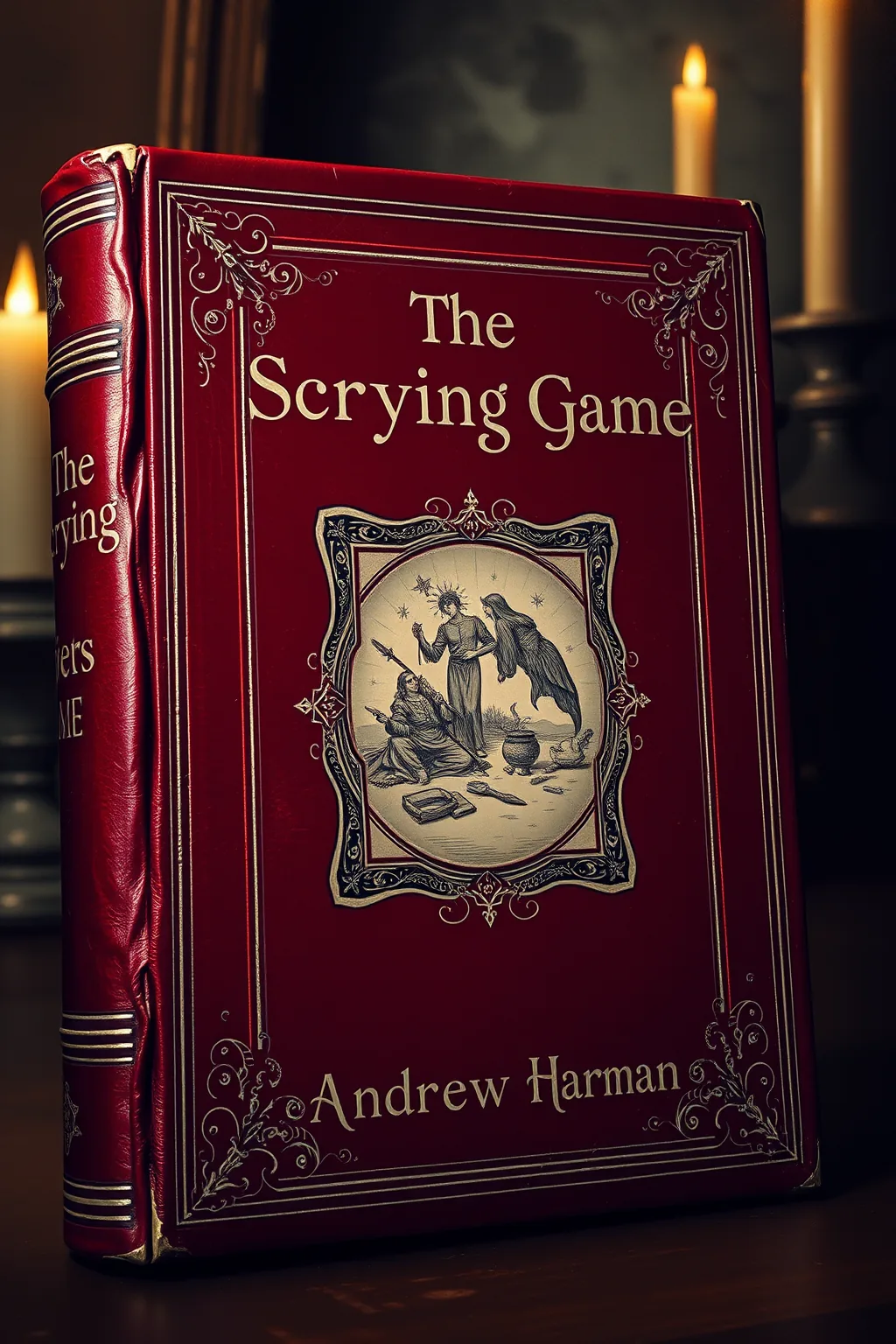
Andrew Harman's 2013 novel, The Scrying Game, centers on a city clerk whose job is to predict the future.
The Scrying Game follows Quintzi Cohatl, the Clerk-in-Charge of Avocado Preservation in the Mountain City of Axototl. His official duties mask a more significant, poorly executed task: scrying, or peering into the future to avert crises. Over a forty-year tenure, Quintzi's lack of genuine foresight leads to increasingly obvious deceptions.
This allegorical fiction with a metaphysical bent will appeal to readers interested in destiny, self-deception, and the consequences of avoiding reality. The narrative is set in a unique, slightly absurd world and examines the internal struggles of characters burdened with significant, hidden responsibilities. It dissects the gap between perceived duty and actual capability within a bureaucratic context.
Published in 2013, The Scrying Game engages with traditions of metaphysical literature. Its blend of bureaucratic satire and divination offers a unique perspective. The book echoes existentialist inquiries into free will and responsibility, questioning the nature of prophecy and human tendencies to evade challenging realities. It presents a counterpoint to deterministic views of fate by focusing on the flawed human capacity to foresee or control events.
💡 Why Read This Book?
• Understand the personal cost of failing to confront one's limitations, as depicted through Quintzi Cohatl's forty-year tenure as Clerk-in-Charge of Avocado Preservation. • Explore the metaphorical 'scrying game,' a concept that critiques the human tendency to avoid difficult truths and the superficiality of perceived foresight. • Appreciate a unique blend of bureaucratic satire and metaphysical commentary, first published in 2013, offering a distinctive perspective on destiny and responsibility.
⭐ Reader Reviews
Honest opinions from readers who have explored this book.
❓ Frequently Asked Questions
What is the primary role of Quintzi Cohatl in The Scrying Game?
Quintzi Cohatl is the Clerk-in-Charge of Avocado Preservation in the Mountain City of Axototl. This seemingly mundane job also involves a duty of scrying, or peering into the future, a task he has demonstrably failed at for forty years.
When was The Scrying Game first published?
The Scrying Game by Andrew Harman was first published on June 27, 2013.
What are the main themes explored in The Scrying Game?
The book explores themes of self-deception, the failure to confront reality, the nature of destiny, and the consequences of holding positions of responsibility without possessing the necessary foresight or capability.
What is the significance of the 'scrying game' mentioned in the title?
The 'scrying game' refers metaphorically to the protagonist's attempts to predict and manage the future, often through ineffective or deceptive means, and more broadly to humanity's own attempts to control destiny.
Who is Quintzi Cohatl?
Quintzi Cohatl is the protagonist of The Scrying Game, serving as the Clerk-in-Charge of Avocado Preservation in Axototl. He is characterized by his forty-year failure to perform his scrying duties effectively.
What kind of setting does The Scrying Game take place in?
The story is set in the fictional Mountain City of Axototl, described as a place where even roles like 'Avocado Preservation' might carry hidden, more significant responsibilities.
🔮 Key Themes & Symbolism
The Illusion of Foresight
The narrative critically examines the concept of prophecy and foresight, presenting Quintzi Cohatl as a figure who has held a position requiring such abilities for forty years without ever truly possessing them. The 'scrying game' becomes a metaphor for the human tendency to engage in superficial divinatory practices or self-deceptive rationalizations rather than confronting genuine challenges. This theme questions the efficacy of external predictions versus internal preparedness and the psychological comfort derived from perceived control over future events.
Bureaucracy and Metaphysical Duty
Harman juxtaposes the mundane reality of 'Avocado Preservation' with the profound, albeit neglected, duty of scrying. This highlights how significant responsibilities can be obscured by bureaucratic titles and routine, or how individuals can occupy roles demanding extraordinary insight while operating with profound ignorance. The Mountain City of Axototl serves as a microcosm where the absurdities of administrative structures intersect with the weight of unseen, potentially world-altering, obligations.
Self-Deception and Consequences
A core element is Quintzi's prolonged self-deception and the inevitable unraveling of his lies. The book explores the personal toll of maintaining a facade of competence, particularly when the stakes involve foreseeing and averting future problems. The arrival of a travelling salesman acts as a catalyst, forcing a confrontation with the consequences of forty years of failing to 'dodge destiny's hurled brickbats,' illustrating the inescapable nature of reality.
The Absurdity of Destiny
The work plays with the idea of destiny not as an immutable force, but as something that can be dodged, manipulated, or, in Quintzi's case, simply ignored due to a lack of awareness. The narrative's slightly humorous, slightly bleak tone underscores the absurdity of believing one can outwit fate, especially when the protagonist's primary method is simply not looking. This perspective invites reflection on agency, free will, and the often-unseen forces that shape individual and collective futures.
💬 Memorable Quotes
Direct passages from the work, attributed to the author.
“Life as Clerk-in-Charge of Avocado Preservation in the Mountain City of Axototl was a real cushy number.”
— This opening line immediately establishes the ironic tone. It juxtaposes a seemingly trivial, bureaucratic role with an implied underlying significance, hinting at the hidden, perhaps metaphysical, duties that the protagonist is meant to fulfill.
“Hurling a few bones about the place, peering into the future, foreseeing all the forthcoming problems screaming your way and making plans to dodge destiny's hurled brickbats.”
— This phrase vividly describes the act of scrying and prophecy as presented in the book. It frames these profound acts as casual, almost game-like activities, reflecting the protagonist's dismissive and ultimately ineffective approach to his responsibilities.
“Piece of cake. Or at least it would have been if Quintzi Cohatl actually possessed anything even remotely resembling foresight.”
— This highlights the central conflict and character flaw of Quintzi. The supposed ease of his duties is immediately undercut by his complete lack of the essential skill required, setting the stage for his deception and eventual downfall.
“After forty years in the job his lies were getting a bit thin.”
— This succinctly captures the long-term consequence of Quintzi's failure. The duration of his deception underscores the depth of his self-deception and the increasing fragility of his position, suggesting an inevitable collapse.
“So when a travelling salesman”
— This truncated sentence, likely the beginning of a narrative turn, signals the introduction of an external element that will disrupt Quintzi's carefully maintained illusion. It marks the point where the 'game' is about to be seriously challenged.
🌙 Esoteric Significance
Tradition
The Scrying Game engages with the broad tradition of divination, a practice found across numerous esoteric lineages, including Hermeticism, Kabbalah, and various forms of folk magic. It departs from traditional practices by focusing on the *failure* of divination and the *character* of the diviner, rather than the efficacy or method of scrying itself. It offers a modern, skeptical, yet still engaged perspective on the human desire to know the future, filtering it through a lens of existential bureaucracy.
Symbolism
The 'bones' mentioned in the blurb likely refer to astragali or other forms of divinatory casting, a symbol of fate and chance. Avocado Preservation, while seemingly mundane, can be interpreted as a symbol of nurturing, growth, and sustenance—elements that Quintzi is meant to protect by foresight but fails to do. The 'Mountain City of Axototl' itself can symbolize an elevated, perhaps isolated, position of responsibility, where the stakes are higher and the consequences of failure more profound.
Modern Relevance
In contemporary discourse, where 'manifestation' and 'law of attraction' are popular, The Scrying Game offers a cautionary counterpoint. It speaks to the modern anxieties surrounding control, prediction, and the overwhelming nature of global events. Thinkers and practitioners exploring the psychology of belief, the ethics of responsibility in uncertain futures, or even those interested in narrative archetypes of the flawed oracle, may find resonance in Harman's work.
👥 Who Should Read This Book
• Aspiring practitioners of divination interested in the psychological pitfalls and ethical considerations of foresight, moving beyond simple technique. • Readers of allegorical fiction and satire who enjoy narratives that use fantastical or metaphysical premises to comment on mundane reality and human nature. • Students of comparative religion and esotericism looking for works that critically examine traditional practices like scrying from a philosophical and character-driven perspective.
📜 Historical Context
Published in 2013, Andrew Harman's The Scrying Game arrived in an era where digital media and a resurgence of interest in occult and metaphysical subjects coexisted. While not aligned with a specific historical esoteric movement like Theosophy or the Golden Dawn, its narrative touches upon perennial themes of divination, fate, and self-knowledge that have been central to Western esotericism for centuries. The book's satirical approach, however, sets it apart from more dogmatic or instructional texts. It emerged in a literary landscape where authors like Haruki Murakami were blending the mundane with the surreal, and where speculative fiction often grappled with existential questions. The specific reception of The Scrying Game is difficult to pinpoint without detailed reviews from its publication year, but its blend of bureaucratic absurdity and metaphysical inquiry offers a unique contribution to contemporary allegorical fiction, subtly questioning deterministic views of destiny without fully embracing free-will absolutism.
📔 Journal Prompts
Quintzi Cohatl's forty years of deception regarding his foresight.
The metaphorical meaning of Avocado Preservation in Axototl.
The role of the travelling salesman as a catalyst for change.
Consequences of avoiding destiny's brickbats.
The concept of the 'scrying game' itself.
🗂️ Glossary
Scrying
The practice of seeking knowledge of the future or the unknown by gazing into a reflective surface, such as a crystal ball, mirror, or pool of water. In this context, it refers to Quintzi's purported ability to foresee problems.
Clerk-in-Charge
A managerial or supervisory position within a bureaucratic system. In The Scrying Game, this title masks a deeper, perhaps metaphysical, responsibility.
Axototl
The fictional 'Mountain City' setting for the book. Its name and mountainous location may suggest isolation or a place of elevated perspective, contrasting with Quintzi's lack of vision.
Destiny's hurled brickbats
A metaphorical phrase representing unavoidable future problems, misfortunes, or challenges that fate or destiny imposes upon individuals.
Quintzi Cohatl
The protagonist of The Scrying Game, whose official role is Clerk-in-Charge of Avocado Preservation but whose true, neglected duty is scrying.
Foresight
The ability to predict or the action of predicting what will happen or be needed in the future. Quintzi's notable lack of this quality drives the narrative.
The Scrying Game
The title concept, referring to the protagonist's flawed attempts at divination and, more broadly, the human tendency to engage with or avoid the future in superficial or self-deceptive ways.