Astral Odyssey
 80
80

Astral Odyssey
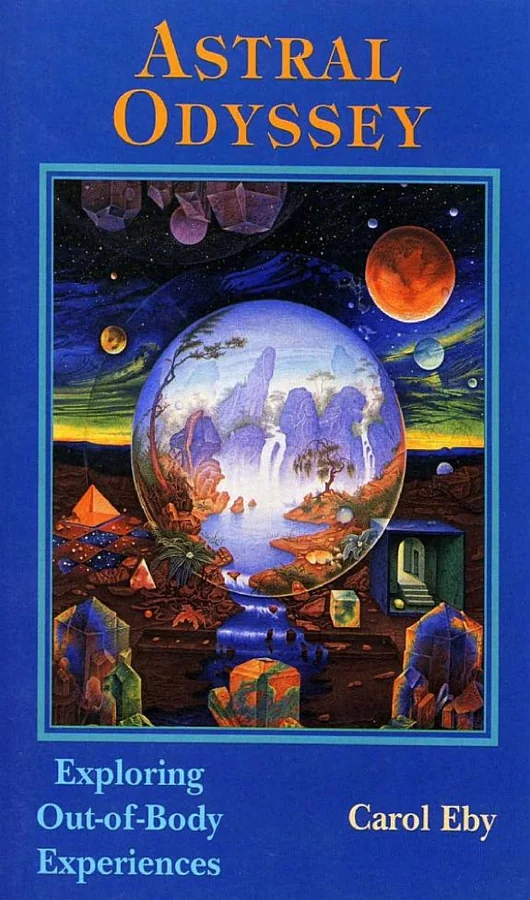
Carol Eby’s Astral Odyssey offers a refreshingly structured approach to the often-vague territory of out-of-body experiences and astral projection. Unlike many texts that rely on anecdotal accounts, Eby’s 1996 publication attempts a rigorous differentiation between various non-physical states. Her strength lies in clearly defining terms like astral projection, OBEs, and even creative inspiration, placing them on a conceptual continuum. This clarity is particularly evident when she discusses the "consciousness continuum," a concept that attempts to map these diverse experiences. However, the book's limitation is its somewhat academic tone, which might feel dry to readers seeking purely experiential accounts. A passage that stands out is Eby’s methodical breakdown of how an OBE differs from a vivid dream, providing concrete criteria for discernment. Astral Odyssey provides a valuable, if somewhat dry, cartography of the inner planes.
📝 Description
80
Carol Eby's 1996 book, Astral Odyssey, distinguishes astral projection from other non-physical experiences.
Astral Odyssey, published in 1996, offers a systematic look at altered states of consciousness, differentiating astral projection, out-of-body experiences (OBEs), and ordinary dreaming. Eby presents these states not as separate occurrences but as points on a spectrum of awareness. The book seeks to clarify these experiences, giving readers a way to understand their nature and what they might mean for those interested in going beyond the physical. It is written for people curious about consciousness and its ability to go beyond physical limits. The work is also for those who have had strange experiences, like vivid dreams or feelings of detachment, and want logical answers and guidance. Students of esoteric philosophy, parapsychology, and comparative religion will find Eby's categories useful for their studies and personal exploration of unusual states.
Published in the mid-1990s, Astral Odyssey connects with a time of growing interest in consciousness studies. It follows in the tradition of thinkers like Robert Monroe, whose work on OBEs was popular. The book also relates to broader esoteric ideas found in Theosophy and New Age thought, which often discussed astral planes. Eby's specific contribution is her structured way of categorizing experiences that are often described in a less organized manner.
💡 Why Read This Book?
• Understand the precise differences between astral projection, out-of-body experiences (OBEs), and dreams, as meticulously detailed by Carol Eby, allowing for clearer self-assessment of personal phenomena. • Gain a framework for viewing these states as accessible "entryways to alternate realities" by understanding Eby's concept of the "consciousness continuum." • Explore the "invisible worlds" around us with a structured, comparative approach, drawing on Eby's systematic classification of awareness states first published in 1996.
⭐ Reader Reviews
Honest opinions from readers who have explored this book.
❓ Frequently Asked Questions
What is the primary difference between astral projection and an out-of-body experience (OBE) according to Carol Eby?
Carol Eby's Astral Odyssey differentiates astral projection and OBEs by context and intent. While both involve a sense of separation from the physical body, Eby implies OBEs can be spontaneous or medically induced, whereas astral projection is often viewed as a more deliberate, consciousness-directed exploration of non-physical realms.
How does Astral Odyssey by Carol Eby relate to other states of consciousness?
The book places astral projection and OBEs within a "consciousness continuum." Eby explains how these states relate to ordinary dreams, creative inspiration, mental projection, and clairvoyance, suggesting they are all points on a spectrum of awareness rather than entirely separate phenomena.
When was Astral Odyssey first published and by whom?
Astral Odyssey was first published on May 1, 1996, authored by Carol Eby. This mid-1990s publication places it within a period of significant interest in consciousness studies and esoteric exploration.
What does Carol Eby mean by 'invisible worlds' in Astral Odyssey?
In Astral Odyssey, 'invisible worlds' refers to dimensions or realities accessible through altered states of consciousness. Eby suggests that through experiences like OBEs and astral projection, individuals can perceive or interact with these subtle realms that exist alongside our physical reality.
Is Astral Odyssey suitable for beginners interested in out-of-body experiences?
Yes, Astral Odyssey is suitable for beginners. Carol Eby's systematic approach and clear definitions of terms like astral projection and OBEs provide a solid foundational understanding for those new to exploring these phenomena.
What historical figures or movements influenced the concepts presented in Astral Odyssey?
While not explicitly detailed, the concepts in Astral Odyssey align with broader esoteric and consciousness exploration movements of the 20th century, influenced by figures like Robert Monroe and the continued exploration of psychic phenomena prominent in New Age thought.
🔮 Key Themes & Symbolism
The Consciousness Continuum
Eby's central thesis posits that various states of awareness, from ordinary dreaming to profound out-of-body experiences (OBEs) and astral projection, are not isolated incidents but points along a continuous spectrum. This framework suggests that the boundaries between these states are permeable and that understanding this continuum allows for a more integrated approach to exploring consciousness. The work provides tools to differentiate these states, moving beyond anecdotal accounts to a more systematic understanding of subjective experience and its potential for expansion.
Differentiating Non-Physical States
A core focus of Astral Odyssey is the meticulous distinction between similar yet unique phenomena. Eby clarifies the differences and similarities between astral projection, out-of-body experiences (OBEs), ordinary dreams, creative inspiration, mental projection, and clairvoyance. This analytical approach aims to equip readers with the discernment needed to identify and categorize their own experiences, thereby explaining phenomena often shrouded in confusion or esoteric jargon.
Entryways to Alternate Realities
The book presents altered states of consciousness, particularly OBEs, as potential pathways to perceiving or interacting with what Eby terms "invisible worlds." These are not mere hallucinations but viewed as alternate dimensions or layers of reality that coexist with our physical plane. By understanding and potentially directing these experiences, individuals are offered a means to explore these subtle realms, expanding their perception of existence beyond the confines of the physical body.
Framework for Experiential Exploration
Astral Odyssey provides a conceptual map for working through the subjective range of consciousness. It moves beyond simply describing experiences to offering a structured understanding of how they occur and what they signify. This approach serves as a guide for individuals seeking to consciously engage with these states, fostering a more informed and less fear-based exploration of the non-physical dimensions of existence.
💬 Memorable Quotes
Direct passages from the work, attributed to the author.
“Eby explains the differences and similarities between astral projection, out-of-body experiences (OBEs), ordinary dreams, creative inspiration, and clairvoyance.”
— This foundational statement highlights the book's analytical approach, aiming to bring clarity to phenomena often conflated. It sets the stage for a comparative study within the broader field of consciousness exploration.
“Astral Odyssey guides us through the pathways of consciousness that lead to the invisible worlds around us.”
— This phrase underscores the book's practical, guiding nature. It promises a roadmap for readers seeking to explore subtle realms and expand their awareness beyond conventional limits.
“What is it and how does it fit in our lives?”
— Framing the central question of the book, this reflects a desire to integrate esoteric experiences into the practical realities of daily existence, seeking meaning and application beyond mere curiosity.
“These various states of awareness can provide entryways to alternate realities.”
— This highlights the potential transformative power of exploring altered states. It positions subjective experiences not as mere mental events, but as keys to accessing different layers of existence.
💡 Key Ideas
Editorial paraphrase of the work's core concepts — not direct quotes.
With OBEs defined and placed in the context of consciousness continuum, these various states of awareness can provide entryways to alternate realities.
This quote captures Eby's core argument: that defined and understood out-of-body experiences are not random events but portals. It suggests a structured method for accessing dimensions beyond our immediate physical perception.
🌙 Esoteric Significance
Tradition
Astral Odyssey fits within the modern esoteric tradition, particularly drawing from psychological interpretations of consciousness common in the late 20th century, influenced by figures like Carl Jung and the broader New Age movement. While not strictly adhering to a single lineage like Hermeticism or Gnosticism, it engages with concepts of subtle bodies and non-physical realms that have roots in these older traditions, reinterpreting them through a lens of comparative consciousness studies.
Symbolism
The primary symbolism revolves around the concept of 'pathways' and 'entryways' into 'invisible worlds.' These terms suggest journeys and thresholds, metaphors for the transition between physical and non-physical states. The 'consciousness continuum' itself functions symbolically, representing a spectrum of being rather than discrete, disconnected realities, implying that the journey between these states is one of degree rather than kind.
Modern Relevance
Eby's work remains relevant for contemporary practitioners and researchers of consciousness exploration, including those involved in lucid dreaming communities, remote viewing, and astral projection groups. Her clear distinctions help newcomers navigate complex terminology. Thinkers exploring the neuroscience of altered states or the philosophy of mind might also find her conceptual mapping useful as a historical reference point for understanding how these experiences were categorized.
👥 Who Should Read This Book
['• Individuals who have experienced unexplained phenomena like vivid dreams or out-of-body sensations and seek a structured understanding of these events.', '• Students of consciousness studies, comparative religion, and parapsychology looking for a text that differentiates various non-physical states of awareness.', "• Practitioners of esoteric disciplines interested in mapping the terrain of subjective experience and exploring potential 'entryways to alternate realities'."]
📜 Historical Context
Carol Eby's Astral Odyssey, published in 1996, arrived during a period when interest in consciousness, parapsychology, and esoteric studies was experiencing a resurgence, partly fueled by the accessibility of information through early internet forums and the continued legacy of figures like Robert Monroe. Monroe's own work, particularly his books detailing his extensive out-of-body experiences, had popularized the concept in the decades prior. Eby's contribution was to offer a more structured, comparative framework, differentiating between various related phenomena such as astral projection, OBEs, and lucid dreaming. This contrasted with some earlier, more narrative-driven accounts. The mid-90s saw a proliferation of New Age literature, and while Eby's approach was analytical, her work contributed to the broader discourse on non-ordinary states of consciousness that sought to legitimize and understand these experiences within a wider spiritual or psychological context.
📔 Journal Prompts
The consciousness continuum as an entryway to alternate realities: map your own experiences.
Distinguishing between OBEs and ordinary dreams: identify key differentiating factors in your dream recall.
The concept of 'invisible worlds': reflect on personal experiences that might align with this idea.
Creative inspiration as a state of awareness: how does Eby's definition relate to your creative process?
Pathways of consciousness: chart a potential personal journey through different states of awareness.
🗂️ Glossary
Astral Projection
A state where consciousness or a 'subtle body' is perceived to leave the physical body and travel independently, often explored with intent.
Out-of-Body Experience (OBE)
A sensation or perception of consciousness detaching from the physical body, which can occur spontaneously, during sleep, or under altered states.
Consciousness Continuum
Eby's conceptual framework suggesting that various states of awareness, from dreaming to OBEs, exist on a spectrum rather than as isolated phenomena.
Invisible Worlds
Refers to dimensions or subtle realities perceived or accessed through altered states of consciousness, existing alongside the physical plane.
Mental Projection
The directed use of mental energy or focus, distinct from astral projection, often involving visualization or focused intention.
Clairvoyance
The purported ability to perceive objects, persons, locations, or events through extrasensory means, beyond the normal sensory channels.
Alternate Realities
Non-physical dimensions or states of existence that can be accessed or perceived through specific states of consciousness.
This book appears in 1 collection
🔮 Readers Also Liked
Browse all →









From the “Out-of-Body Experience” Collection
View all →






More Free Occult Philosophy Books
View all →