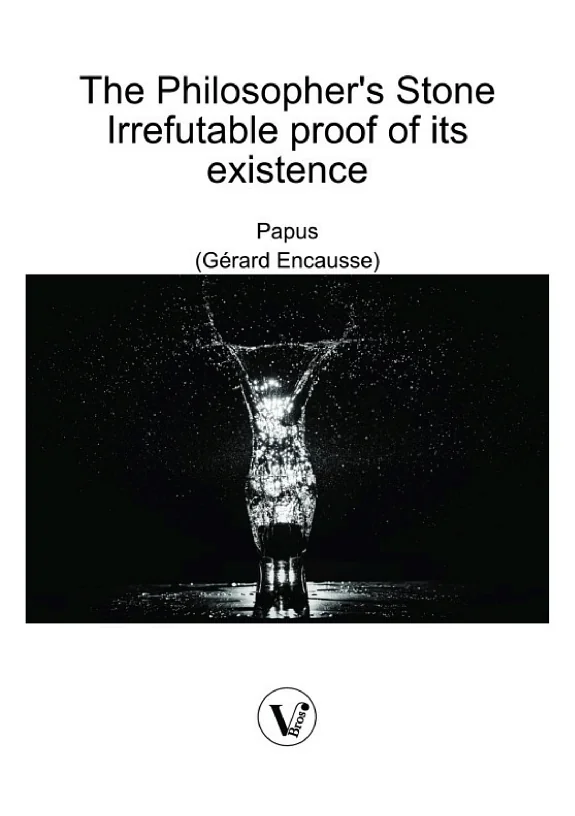
The Philosopher's Stone - Irrefutable proof of its existence
 79
79

The Philosopher's Stone - Irrefutable proof of its existence
Papus’s insistence on the literal existence of the Philosopher’s Stone is both the book's greatest strength and its most contentious point. He marshals an impressive array of citations from alchemical literature, attempting to build an irrefutable case. For instance, his interpretation of specific passages from the *Mutus Liber* offers a compelling, if highly specialized, argument for a tangible process. However, the very nature of alchemical texts, often deliberately obscure and allegorical, means that "irrefutable proof" remains elusive. The reader must accept Papus’s framework and his specific interpretations of ancient symbols, which can be a significant hurdle for those approaching the subject with a more skeptical or purely symbolic viewpoint. Despite this, the book serves as a vital historical document for understanding late 19th-century occult thought and Papus's own unique contribution to its discourse. It is a formidable, if challenging, treatise for dedicated alchemical scholars.
📝 Description
79
Gérard Encausse, Papus, presented irrefutable proof for the Philosopher's Stone's existence in his 1909 work.
Papus, writing as Gérard Encausse, argued for the literal existence of the Philosopher's Stone in his 1909 book. He rejected purely allegorical interpretations, instead asserting the Stone as a tangible reality grounded in historical alchemical texts and symbols. His aim was to offer concrete evidence for the Great Work, moving beyond mere philosophical speculation. This book targets serious students of alchemy and esoteric traditions who seek a scholarly, evidence-based approach. It is for those who question symbolic readings of alchemical literature and want to grasp its potential material and spiritual implications. Researchers in Hermetic philosophy and comparative mysticism will also find it valuable.
Published during a late 19th and early 20th century revival of occult sciences, Papus's work appeared alongside figures like Eliphas Lévi and the rise of Theosophy. While many contemporaries saw alchemical symbols as purely metaphorical, Papus engaged directly with earlier alchemists, referencing texts from the Renaissance and later periods. His book challenged the skepticism of its time by proposing a concrete, achievable goal for alchemical practice. Papus viewed the Philosopher's Stone not just as a substance but as a principle of ultimate transformation. He connected the symbolism within alchemical operations to spiritual growth and the possibility of transcending earthly limits. The work suggests that understanding the Stone requires a blend of theoretical knowledge, practical application, and spiritual insight.
Papus's work emerged within a late 19th and early 20th century context of renewed interest in the occult, influenced by figures like Eliphas Lévi and the burgeoning Theosophical Society. While many contemporaries favored metaphorical readings of alchemical texts, Papus drew directly from historical sources, including Renaissance alchemical literature, to argue for the literal existence and potential realization of the Philosopher's Stone. He positioned his research against the prevailing scientific skepticism of the era, proposing alchemy as a legitimate path toward material and spiritual transformation.
💡 Why Read This Book?
• Gain a comprehensive understanding of Papus's detailed arguments for the tangible existence of the Philosopher's Stone, moving beyond purely symbolic interpretations often found in modern alchemical studies. • Explore the intricate alchemical symbolism and laboratory practices discussed, as presented in Papus's specific interpretations of historical texts like the *Mutus Liber*. • Understand the late 19th-century intellectual milieu surrounding occultism, appreciating how Papus engaged with and challenged contemporary views on alchemy during this period.
⭐ Reader Reviews
Honest opinions from readers who have explored this book.
❓ Frequently Asked Questions
Is Gérard Encausse's *The Philosopher's Stone* a primary source for alchemical recipes?
While Papus analyzes alchemical texts and practices, *The Philosopher's Stone* is primarily a theoretical and argumentative work. It presents evidence for the Stone's existence rather than a step-by-step guide for its creation.
What is the historical significance of Papus's work on the Philosopher's Stone?
Published in the late 19th/early 20th century, Papus's book was significant for its defense of alchemy's material reality amidst growing scientific rationalism and symbolic interpretations of esoteric traditions.
What does Papus mean by 'irrefutable proof' regarding the Philosopher's Stone?
Papus uses 'irrefutable proof' to describe the collective weight of evidence he compiles from historical alchemical texts, symbols, and philosophical arguments, which he believes logically necessitates the Stone's existence.
Who was Gérard Encausse (Papus)?
Gérard Encausse (1865-1916), known as Papus, was a prominent French occultist, physician, and author. He was a key figure in the late 19th-century revival of esoteric studies and a founder of the Martinist Order.
Does this book discuss modern scientific perspectives on alchemy?
No, *The Philosopher's Stone* is rooted in historical alchemical traditions and the esoteric thought of its time. It predates modern scientific dialogues concerning the potential physical or psychological aspects of alchemical pursuits.
What are the main subjects covered in Papus's *The Philosopher's Stone*?
The book covers the history of alchemy, alchemical symbolism, the nature and existence of the Philosopher's Stone, and its potential for spiritual and material transformation, drawing heavily from classical alchemical literature.
🔮 Key Themes & Symbolism
Tangibility of the Stone
Papus argues forcefully that the Philosopher's Stone is not merely a metaphor for spiritual enlightenment but a real, albeit subtle, substance or principle. He dedicates significant effort to dissecting historical alchemical writings, seeking explicit or implicit confirmations of its physical nature and potential effects. This perspective challenges interpretations that reduce alchemy solely to psychological processes or spiritual allegory.
Alchemical Symbolism Deciphered
The work provides extensive analysis of the complex iconography and symbolic language prevalent in alchemical texts. Papus seeks to decode these symbols, revealing layers of meaning related to the creation, properties, and ultimate purpose of the Philosopher's Stone. He connects these symbols to cosmological principles and the transformative potential inherent in the Great Work.
The Great Work as Transformation
Central to Papus's thesis is the concept of the Great Work (Main work) as a process leading to profound transformation. This transformation is presented as both spiritual, involving the purification of the soul, and potentially material, hinting at the Stone's legendary ability to transmute metals and confer longevity.
Historical Alchemical Sources
Papus draws heavily on a wide range of historical alchemical sources, referencing authors and texts that have shaped the tradition for centuries. His approach involves critical examination and synthesis of these ancient works to build his case for the Stone's reality, positioning his argument within the lineage of classical alchemy.
💬 Memorable Quotes
Direct passages from the work, attributed to the author.
“The Stone is not a myth, but a reality accessible through precise knowledge.”
— This expresses Papus's core argument: that the Philosopher's Stone, often dismissed as legend, is a tangible entity verifiable through diligent study and adherence to alchemical principles.
“Alchemical symbols contain the keys to both spiritual perfection and material mastery.”
— Here, Papus highlights the dual nature of alchemical pursuits as understood in the tradition he champions, suggesting symbols unlock understanding for both inner development and external manipulation of matter.
“True alchemy requires a synthesis of intellect, will, and practical labor.”
— This statement emphasizes the holistic approach Papus advocates for the Great Work, asserting that success depends not just on theoretical knowledge but also on focused intention and dedicated practical application.
“The *Mutus Liber* offers veiled yet essential clues to the Stone's operation.”
— Papus points to specific historical texts, like the *Mutus Liber*, as containing crucial, albeit cryptic, information necessary for understanding the practical and theoretical aspects of creating the Philosopher's Stone.
💡 Key Ideas
Editorial paraphrase of the work's core concepts — not direct quotes.
Dismissing the Stone as mere allegory misses its wide implications.
This quote directly addresses and refutes purely symbolic interpretations of alchemy, underscoring Papus's belief that the material reality of the Stone holds significant, often overlooked, consequences.
🌙 Esoteric Significance
Tradition
Papus's work is deeply rooted in the Western Hermetic tradition, drawing extensively from its alchemical and Kabbalistic branches. It aligns with the Hermetic principle of 'As Above, So Below,' linking celestial influences and spiritual states to material transformations. The book seeks to synthesize practical alchemical operations with a theoretical framework that emphasizes spiritual evolution as integral to the Great Work.
Symbolism
Key symbols explored include the Ouroboros, representing cyclic completion and self-sufficiency; the Caduceus of Hermes, signifying balance, mediation, and the union of opposites; and various metallic and planetary correspondences. Papus interprets these not merely as abstract concepts but as indicators of real processes and substances involved in the creation of the Philosopher's Stone.
Modern Relevance
Contemporary practitioners of Hermeticism and ceremonial magic often engage with Papus's work as a foundational text for understanding alchemical theory. His emphasis on the tangible aspects of the Great Work continues to inform discussions within modern occult circles, particularly those seeking to bridge esoteric philosophy with potential practical or experimental dimensions of alchemy.
👥 Who Should Read This Book
• Students of Western Esotericism and Hermeticism seeking a scholarly defense of alchemy's material dimension. • Researchers into the history of occult sciences and late 19th-century esoteric movements who want to understand Papus's specific contributions. • Aspiring alchemists who desire to move beyond purely symbolic interpretations and explore arguments for the tangible Great Work.
📜 Historical Context
Gérard Encausse's *The Philosopher's Stone* emerged in the late 19th and early 20th centuries, a period of intense revival for esoteric thought in Europe. Figures like Eliphas Lévi had already reframed occultism, and the Theosophical Society, founded in 1875, was gaining significant traction. Papus himself was a central figure, co-founding the Martinist Order. This era saw a division in how alchemy was perceived: many intellectuals and even some occultists favored purely symbolic or psychological interpretations. Papus, however, actively engaged with earlier alchemical traditions, seeking to validate the material reality of the Great Work. His approach stood in contrast to more abstract philosophical or mystical schools, prioritizing a literal understanding derived from centuries of alchemical literature, thereby challenging the increasing rationalism and skepticism of the age.
📔 Journal Prompts
Papus's assertion of the Philosopher's Stone's tangible reality: What alchemical texts or symbols most strongly support this claim for you?
The synthesis of spiritual and material transformation: How does Papus connect the inner work of the alchemist to the external Great Work?
The role of historical alchemical sources: Which specific texts mentioned by Papus warrant further investigation into their symbolic or literal meaning?
Papus's concept of 'irrefutable proof': What criteria would constitute such proof for you in the context of alchemy?
The Ouroboros as a symbol of completion: How does this symbol, as interpreted by Papus, relate to the cyclical nature of the alchemical process?
🗂️ Glossary
Philosopher's Stone
A legendary alchemical substance said to be capable of transmuting base metals into gold or silver, and sometimes associated with the elixir of life or immortality.
Great Work (Main work)
The process of creating the Philosopher's Stone, involving complex chemical and spiritual operations aimed at achieving perfection, transformation, and enlightenment.
Hermeticism
A philosophical and religious tradition based on the purported teachings of Hermes Trismegistus, emphasizing esoteric knowledge, spiritual enlightenment, and the interconnectedness of the universe.
Mutus Liber
A 17th-century anonymous alchemical text known for its series of allegorical engravings, often considered a key work for understanding alchemical processes through visual symbolism.
Transmutation
In alchemy, the purported process of changing one element or substance into another, most famously the conversion of base metals into noble metals like gold.
Allegory
A story, poem, or picture that can be interpreted to reveal a hidden meaning, typically a moral or political one. In alchemy, often used to describe symbolic interpretations of texts.
Esoteric
Intended for or likely to be understood by only a small number of people with a specialized knowledge or interest; relating to inner, hidden, or secret teachings.
This book appears in 1 collection
🔮 Readers Also Liked
Browse all →









From the “Philosopher's Stone” Collection
View all →








More Free Occult Philosophy Books
View all →