Bhagavad-gita As It Is
 78
78

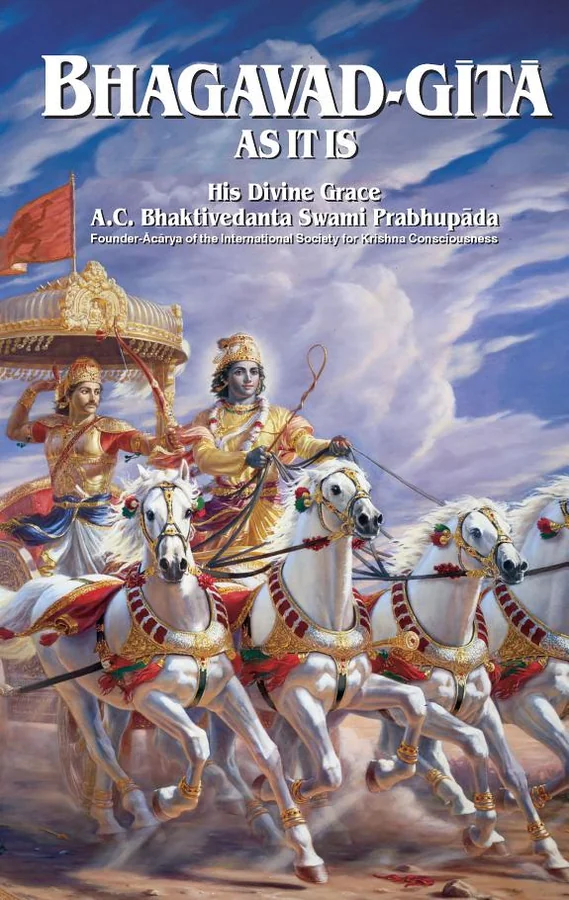
Bhagavad-gita As It Is
Prabhupada's Bhagavad-gita As It Is is undeniably a significant cultural artifact, serving as the gateway to Vedic philosophy for millions. Its strength lies in its unwavering devotional focus and the sheer accessibility of Prabhupada's prose, which breaks down complex ideas with consistent, fervent energy. The extensive purports, while repetitive at times, ensure that the Vaishnavite perspective is never in doubt. However, this very adherence to a singular interpretive lens can feel exclusionary to those seeking a broader, comparative study of the Gita's diverse interpretations throughout history. A particular passage that highlights this is the explanation of Arjuna's dilemma, which is consistently framed through the lens of Krishna's divine will, leaving little room for existential angst beyond the prescribed devotional response. While its influence is immense, readers seeking a critical or multi-faceted academic approach may find its dogmatism a limitation.
It offers a deeply devotional and accessible entry into Vedic thought.
📝 Description
78
Published starting in the late 1960s, A. C. Bhaktivedanta Swami Prabhupada's Bhagavad-gita As It Is presents a specific Vaishnavite interpretation of a classic Hindu scripture.
This edition translates and explains the Bhagavad Gita, a scripture central to Hinduism, through the lens of the Gaudiya Vaishnavism tradition. It structures the text as a conversation between the warrior Arjuna and Lord Krishna on a battlefield. The commentary aims to convey the original meaning as understood within this specific devotional lineage.
This book is suited for readers interested in a detailed, tradition-bound interpretation of the Bhagavad Gita, especially those drawn to the path of bhakti-yoga as taught by ISKCON. It will also appeal to students of Eastern philosophy, comparative religion, and anyone examining consciousness, the self, and the divine. The Bhagavad Gita itself is ancient, part of the Mahabharata epic. Prabhupada's translation and commentary appeared during a period of growing Western interest in Eastern spirituality, offering a distinct Vaishnavite viewpoint that found a significant audience.
The Bhagavad Gita, a component of the vast Mahabharata epic, is a key text in Vedic traditions. This particular edition, authored by A. C. Bhaktivedanta Swami Prabhupada, anchors its interpretation within the Gaudiya Vaishnavism school. This school emphasizes a personal relationship with God, specifically Krishna, as the supreme object of devotion. Prabhupada's work thus frames the Gita's philosophical inquiries through the lens of divine love and surrender, positioning it within a lineage that stresses devotional practice as the primary means of spiritual realization.
💡 Why Read This Book?
• Gain a comprehensive understanding of bhakti-yoga, the path of devotion, as explained through Krishna's teachings to Arjuna on the battlefield of Kurukshetra, offering a specific devotional framework not found in secular philosophical texts. • Explore the concept of the 'atman' (the soul) and its eternal nature, contrasting it with the temporary material body, as detailed in Chapter 2, providing a distinct ontological perspective. • Grasp the significance of 'karma' and 'dharma' within a theistic context, understanding how prescribed duties (dharma) performed without attachment to results lead to spiritual progress, a core tenet explained throughout the text.
⭐ Reader Reviews
Honest opinions from readers who have explored this book.
❓ Frequently Asked Questions
When was the Bhagavad Gita originally written?
The Bhagavad Gita is estimated to have been composed between the 5th and 2nd centuries BCE, making it an ancient text integral to the epic Mahabharata.
Who is A. C. Bhaktivedanta Swami Prabhupada?
A. C. Bhaktivedanta Swami Prabhupada was an Indian spiritual teacher who founded the International Society for Krishna Consciousness (ISKCON) in 1966, significantly popularizing Vaishnavism in the West.
What are the five basic truths explained in the Bhagavad Gita?
The five truths are God (Ishvara), the soul (jiva), matter (prakriti), time (kala), and action (karma), forming the basis of the philosophical framework presented in the text.
Is Bhagavad Gita As It Is the only translation available?
No, there are numerous translations and interpretations of the Bhagavad Gita, but Prabhupada's edition is the largest-selling in the Western world due to its extensive commentary.
What is the significance of the battlefield setting in the Bhagavad Gita?
The battlefield of Kurukshetra symbolizes the arena of life where one must confront difficult moral and existential choices, making the dialogue between Krishna and Arjuna highly relevant to human struggles.
Where can I find Bhagavad Gita As It Is online?
The full text, including Prabhupada's commentary, is often available for free online through the official ISKCON website or other dedicated Vedic resource sites.
🔮 Key Themes & Symbolism
The Nature of the Soul
This edition emphasizes the soul (atma) as distinct from the temporary material body, an eternal spiritual entity that is part of God. It explains that true happiness comes from realizing this identity and its relationship with the Supreme Being. The commentary consistently returns to this concept to reframe Arjuna's worldly anxieties, presenting the soul's unchanging nature as a source of solace and spiritual understanding, differentiating it from purely materialistic or atheistic views of consciousness.
Bhakti-Yoga: The Path of Devotion
Central to Prabhupada's interpretation is the supremacy of bhakti-yoga, the devotional service to Krishna. The text details how all other yogic paths, such as jnana-yoga (knowledge) and karma-yoga (action), are ultimately meant to lead to this highest form of spiritual practice. It describes various devotional activities, such as chanting, hearing, and remembering Krishna, as the most effective means to achieve spiritual realization and attain the spiritual world.
The Material World and Its Illusions
The Bhagavad-gita As It Is describes the material world as a area of duality, suffering, and illusion (maya), where beings are conditioned by the modes of nature (sattva, rajas, tamas). The commentary explains that entanglement in this world arises from forgetfulness of one's true spiritual nature and relationship with God. The goal presented is to transcend these material influences through spiritual practice and return to the eternal spiritual kingdom.
The Role of the Supreme Personality of Godhead
Krishna is presented not merely as a teacher but as the Supreme Personality of Godhead, the source of all existence. The commentary elaborates on Krishna's divine attributes, His pastimes, and His role as the supreme controller and enjoyer. Understanding Krishna's identity and engaging in His service is portrayed as the ultimate purpose of life, providing a theistic anchor for all philosophical and ethical discussions within the text.
💬 Memorable Quotes
Direct passages from the work, attributed to the author.
“The living entity is by nature the servant of God, and his natural condition is to serve.”
— This statement expresses the core theological assertion that the soul's inherent purpose is devotional service to the divine. It suggests that true fulfillment lies in accepting this natural order rather than in ego-driven pursuits or independence from God.
“There is no truth more essential than that the living entity is eternally connected with the Supreme Lord.”
— This emphasizes the fundamental spiritual relationship as the basis of existence. It posits that recognizing this eternal bond is key to understanding oneself and one's place in the cosmos, transcending temporary material identities.
“One who has taken shelter of the lotus feet of the Lord, who has a great personality, certainly becomes free from all material causes of anxiety.”
— This highlights the protective and liberating power of complete surrender to God. It suggests that by dedicating oneself to the divine, one can overcome the anxieties and sufferings that plague material existence.
“The modes of material nature greatly influence the living entities, and by their interaction, the living entities appear to be born and to act in various ways.”
— This explains how the material world operates through the influence of different energies (gunas). It posits that our actions, personalities, and perceived destinies are largely shaped by these material qualities, obscuring our true spiritual nature.
“The Bhagavad-gita As It Is is the science of self-realization.”
— This positions the text as a practical guide to understanding one's true identity beyond the physical body. It frames the Gita's teachings as a systematic approach to achieving spiritual consciousness and liberation.
🌙 Esoteric Significance
Tradition
This work is deeply rooted in the Gaudiya Vaishnavism tradition, a devotional lineage within Hinduism that emphasizes the worship of Krishna as the Supreme Personality of Godhead. While the Bhagavad Gita is a universal scripture, Prabhupada's commentary specifically interprets it through the lens of Chaitanya Mahaprabhu's teachings, highlighting the ecstatic devotional practices and the theology of Krishna's supremacy, distinguishing it from other Vedanta schools or more philosophical interpretations of the Gita.
Symbolism
Key symbols include the battlefield of Kurukshetra, representing the soul's struggle in the material world between duty and inclination. Krishna as the charioteer guiding Arjuna symbolizes the Supreme Lord's role in directing the sincere seeker through life's challenges. The chariot itself, with senses as horses, mind as reins, and body as the vehicle, is a potent metaphor for the disciplined spiritual path required to achieve self-mastery and divine connection.
Modern Relevance
Bhagavad-gita As It Is continues to be a starting point for practitioners of Krishna consciousness globally. Its influence extends to contemporary discussions on yoga philosophy, comparative religion, and ethical living within spiritual communities. Thinkers and practitioners engaged with Vedic traditions, particularly those within ISKCON and affiliated groups, frequently cite Prabhupada's interpretations for guidance on spiritual practice, diet, and worldview.
👥 Who Should Read This Book
• Aspiring practitioners of Bhakti-yoga seeking a detailed, devotional explanation of Vedic scriptures, particularly those drawn to the teachings of Krishna as the Supreme Lord. • Students of comparative religion and philosophy interested in understanding the specific theological and philosophical framework of Gaudiya Vaishnavism as presented by a key modern proponent. • Individuals exploring questions of purpose, consciousness, and the nature of the self from a tradition-centric spiritual perspective, looking for a text with extensive commentary and guidance.
📜 Historical Context
The Bhagavad Gita, the source text for this edition, emerged from the cultural and philosophical milieu of ancient India, likely compiled between the 5th and 2nd centuries BCE. It became embedded within the epic Mahabharata, a vast narrative exploring dharma and human conflict. The specific translation and commentary, Bhagavad-gita As It Is, by A. C. Bhaktivedanta Swami Prabhupada, gained prominence in the Western world starting in the 1960s. This era saw a surge of interest in Eastern spirituality, partly fueled by the counterculture movement and the activities of figures like Maharishi Mahesh Yogi. Prabhupada's work offered a distinct, orthodox Vaishnavite perspective, emphasizing Krishna consciousness, which contrasted with other popular interpretations of Indian philosophy prevalent at the time, such as Advaita Vedanta or Buddhist thought. Its publication and widespread distribution by ISKCON marked a significant moment in the global dissemination of Hindu devotional traditions.
📔 Journal Prompts
Arjuna's dilemma on the battlefield of Kurukshetra: His reluctance to fight and his duty.
The concept of the 'atman' as distinct from the temporary body.
Krishna's instructions on performing actions without attachment to results.
The different types of yoga (karma, jnana, bhakti) and their relationship.
Understanding the influence of the three modes of material nature (sattva, rajas, tamas).
🗂️ Glossary
Atma
The individual soul; the eternal, conscious self, distinct from the material body and mind. It is considered part of the Supreme Being.
Bhakti-yoga
The yoga of devotion; the path of selfless service and love towards God, considered the most accessible and potent means of spiritual realization in Vaishnavism.
Dharma
One's religious duty, occupational duty, or intrinsic nature. In this context, it often refers to the spiritual path and righteous conduct prescribed by scriptures.
Gunas
The three modes or qualities of material nature: sattva (goodness), rajas (passion), and tamas (ignorance). These modes influence all living beings in the material world.
Karma
Action and its consequences; the law of cause and effect that binds the soul to the cycle of birth and death based on one's deeds.
Maya
Illusion; the deluding energy of the material world that causes individuals to forget their spiritual nature and relationship with God.
Samsara
The continuous cycle of birth, death, and rebirth, driven by karma and ignorance of one's true spiritual identity.
This book appears in 2 collections
🔮 Readers Also Liked
Browse all →








From the “Transcendental Meditation” Collection
View all →








More Free Occult Philosophy Books
View all →