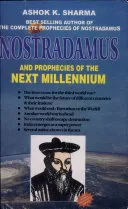
Nostradamus And Prophecies of The Next Milleneum
 83
83

Nostradamus And Prophecies of The Next Milleneum
A. K. Sharma's "Nostradamus And Prophecies of The Next Milleneum" tackles the formidable task of contextualizing Nostradamus's 16th-century prophecies for a 21st-century audience. The work's strength lies in its attempt to provide a structured approach to interpreting the seer's often-obscure quatrains, moving beyond mere sensationalism. Sharma engages with the historical milieu of Nostradamus, acknowledging the astrological and alchemical currents of the Renaissance. However, the book sometimes struggles with the inherent subjectivity of prophetic interpretation; when Sharma posits a direct link between a specific quatrain and a modern event, the interpretive leap can feel speculative rather than demonstrably factual. The section discussing the astrological chart of the year 2000, while ambitious, highlights the challenge of applying ancient predictive frameworks to complex, unforeseen future developments. Ultimately, the book serves as a diligent, if occasionally overzealous, exploration of one of history's most enduring prophetic figures.
📝 Description
83
A. K. Sharma's 2003 book examines Nostradamus's quatrains and their relation to events after 2000.
Published in the early 2000s, A. K. Sharma's "Nostradamus And Prophecies of The Next Milleneum" analyzes the predictions of Michel de Nostredame. The book aims to connect Nostradamus's enigmatic verses with future occurrences, particularly those expected in the millennium after the year 2000. Sharma investigates the astrological interpretation and symbolic analysis common to prophetic traditions, seeking to understand the methods behind such foresight.
The work is intended for readers interested in historical prophecy, esoteric thought, and the lasting impact of figures like Nostradamus. It addresses how older predictions are understood in the context of modern history and future possibilities. Those drawn to comparative mythology or the psychological aspects of belief in prophecy may also find the text engaging. The early 2000s, a time of renewed interest in esotericism and futurism, provided a backdrop for Sharma's contribution to discussions on predictive systems and their contemporary relevance.
Sharma's work is part of a long history of interpreting Nostradamus, a practice that began with his contemporaries and continued through figures such as Eliphas Levi. This tradition involves deciphering cryptic verses through various symbolic and astrological methods. The book situates itself within this ongoing discourse, contributing to the understanding of how prophetic texts are applied to contemporary and future events, reflecting a broader interest in esotericism and futurism around the turn of the millennium.
💡 Why Read This Book?
• Gain insight into the specific methods A. K. Sharma employs to interpret Nostradamus's quatrains, offering a structured approach to deciphering cryptic predictions. • Understand the historical and astrological context of Nostradamus's original predictions, as explored through the lens of the early 2000s, to appreciate their evolution. • Explore Sharma's attempts to connect Renaissance prophecies to events surrounding the turn of the millennium, providing a case study in how ancient foresight is applied to modern anxieties.
⭐ Reader Reviews
Honest opinions from readers who have explored this book.
❓ Frequently Asked Questions
When was 'Nostradamus And Prophecies of The Next Milleneum' first published?
The book by A. K. Sharma was first published in the early 2000s, aligning with a period of heightened interest in millennial prophecies and future-oriented esotericism.
What is the primary focus of A. K. Sharma's book?
The book primarily focuses on analyzing the prophecies of Michel de Nostredame, known as Nostradamus, and interpreting his quatrains in relation to events anticipated in the millennium after the year 2000.
Does the book offer concrete predictions for the future?
While it examines Nostradamus's predictions and attempts to align them with future possibilities, the book's approach is more interpretive, exploring how prophecies are understood rather than making definitive new predictions.
Who was Michel de Nostredame?
Michel de Nostredame (1503-1566) was a French astrologer, physician, and reputed seer, best known for his book 'Les Prophéties', a collection of quatrains that have been interpreted as predictions of future events for centuries.
What is a 'quatrain' in the context of Nostradamus's work?
A quatrain is a stanza of four lines, especially one having alternate rhymes. Nostradamus's prophecies are primarily written in this four-line verse format, making them famously ambiguous and open to varied interpretations.
What is the significance of the 'next millennium' in the book's title?
The 'next millennium' refers to the thousand-year period beginning after the year 2000. The title signifies the book's attempt to interpret Nostradamus's prophecies as relevant to this specific future epoch.
🔮 Key Themes & Symbolism
Prophetic Interpretation Methodology
The work examines the techniques used to decipher Nostradamus's quatrains. This involves understanding the symbolic language, astrological references, and historical context of the 16th century. Sharma likely outlines a systematic approach, illustrating how specific verses are connected to potential future events, particularly those anticipated in the millennium post-2000. The emphasis is on the process of interpretation itself, highlighting the challenges and methodologies involved in making sense of prophetic texts.
Millennial Prophecy and Futurism
Sharma places Nostradamus's predictions within the context of millennial thought, especially as it pertained to the turn of the 21st century. The book addresses the anxieties and hopes associated with entering a new millennium and how prophetic traditions are often invoked during such transitional periods. It explores the enduring human fascination with foretelling the future and the specific interpretations that emerged around the year 2000, linking ancient prophecies to contemporary concerns.
Astrology and Symbolic Language
A core theme is the role of astrology and symbolic language in prophetic works like Nostradamus's. The book likely details how celestial alignments and esoteric symbols were employed by seers to encode their visions. Understanding these elements is presented as crucial for unlocking the meaning of the quatrains. Sharma's work explores how these symbolic systems function as a bridge between the seer's time and the future they purportedly predict.
Nostradamus's Legacy and Influence
The book examines the historical impact and enduring fascination with Nostradamus. It traces how his prophecies have been interpreted and reinterpreted across centuries, from his contemporaries to modern-day enthusiasts. Sharma's work contributes to this ongoing legacy by offering a specific interpretation relevant to the early 2000s, showcasing how the seer's work continues to be a subject of scholarly and popular interest.
💬 Memorable Quotes
Direct passages from the work, attributed to the author.
“The quatrains of Nostradamus are not simple predictions but complex symbolic matrices.”
— This statement suggests that Nostradamus's verses are not straightforward forecasts but intricate puzzles requiring deep analysis of symbolism and context to be understood, implying a need for scholarly interpretation.
“Interpreting the future requires understanding the astrological underpinnings of the past.”
— This highlights the book's focus on the connection between celestial movements and historical events, positing that a grasp of ancient astrological principles is key to deciphering prophetic visions of what is to come.
“The turn of the millennium presented a unique lens through which to re-examine Nostradamus.”
— This emphasizes the specific historical moment of the early 2000s as a critical period for revisiting and reinterpreting Nostradamus's prophecies, driven by societal anticipation and anxieties about the new era.
“Symbolism in prophecy acts as a universal language across time.”
— This suggests that the allegorical and symbolic elements within prophetic texts transcend specific eras, allowing their meaning to be accessed and understood by subsequent generations who can decipher the underlying symbols.
“The challenge lies not in finding predictions, but in discerning their intended meaning.”
— This points to the core difficulty in dealing with prophetic works: the ambiguity of the language. The effort is in correctly understanding the message, rather than merely identifying potential predictive statements.
🌙 Esoteric Significance
Tradition
Sharma's work sits within the broad stream of Western esotericism, specifically engaging with the tradition of prophetic literature and astrological interpretation. While not strictly Hermetic or Kabbalistic, it draws upon the historical practice of using celestial patterns and symbolic language to understand divine or future knowledge, a practice found across various esoteric lineages. The book's focus on Nostradamus connects it to a lineage of seers and interpreters who sought hidden meanings in cosmic and earthly events.
Symbolism
Key symbols likely explored include astrological glyphs (planets, zodiacal signs) used by Nostradamus to denote specific times or influences, and archetypal imagery within the quatrains (e.g., war, plague, figures of authority, natural disasters) that resonate across historical periods. These symbols function not just as literal representations but as carriers of deeper, often multi-layered, meanings intended to be deciphered by initiates or those versed in esoteric traditions.
Modern Relevance
Contemporary interest in Nostradamus continues within various subcultures, including conspiracy theorists, alternative historians, and esoteric practitioners. Works like Sharma's are relevant for understanding how these historical prophecies are continuously reinterpreted in light of new geopolitical events, technological advancements, and perceived societal shifts. Modern thinkers in fields like comparative mythology and the psychology of belief might also reference such analyses to explore enduring human engagement with the concept of fate and foresight.
👥 Who Should Read This Book
• Students of Western Esotericism: Those interested in the historical development of prophecy, astrology, and symbolic interpretation within esoteric traditions will find value in Sharma's analysis. • Enthusiasts of Nostradamus: Individuals fascinated by Michel de Nostredame and the ongoing debate surrounding his quatrains will appreciate this specific interpretation focused on the early 21st century. • Comparative Religion and History Scholars: Researchers examining how societies engage with apocalyptic narratives and future prediction during periods of change will find this book a case study.
📜 Historical Context
Published in the early 2000s, A. K. Sharma's "Nostradamus And Prophecies of The Next Milleneum" arrived during a period of intense global introspection and forward-gazing, catalyzed by the transition into the 21st century. This era saw a surge in popular and academic interest in esotericism, futurism, and apocalyptic literature. The book emerged within a long-standing tradition of Nostradamus scholarship that dates back to the 16th century itself, with figures like the Comte de Gébelin in the 18th century and later occultists such as Eliphas Lévi engaging with his quatrains. Sharma's work contributed to a discourse that often contrasted with more rationalist or purely historical analyses, engaging instead with the symbolic and astrological dimensions that Nostradamus himself employed. The reception of such works often involved debates between those who saw genuine prescience and those who viewed the prophecies as Rorschach tests for contemporary anxieties, a debate that intensified around the millennial cusp.
📔 Journal Prompts
Nostradamus's symbolic matrices and their application to 21st-century concerns.
The astrological underpinnings of prophecy as presented by Sharma.
Reflect on how the turn of the millennium influenced interpretations of Nostradamus.
Analyze the concept of prophecy as a universal language across time.
The challenge of discerning intended meaning versus literal prediction in prophetic texts.
🗂️ Glossary
Quatrain
A stanza consisting of four lines of verse, typically with a specific rhyme scheme. Nostradamus famously composed his prophecies in this four-line format.
Esotericism
Belief systems, spiritual practices, and philosophical traditions that are secret, hidden, or accessible only to a select group of initiated individuals.
Astrology
The study of the movements and relative positions of celestial bodies interpreted as having an influence on human affairs and the natural world.
Symbolic Language
A system of communication that uses symbols—objects, pictures, written words, or numbers—to represent ideas, concepts, or qualities.
Millennium
A period of one thousand years. In a religious context, it often refers to a period of great peace and happiness, especially in the Christian tradition.
Michel de Nostredame
The 16th-century French astrologer and physician known by the Latinized name Nostradamus, famous for his collection of prophecies.
Futurism
A philosophical and aesthetic movement originating in the early 20th century, emphasizing speed, technology, youth, and violence, and objects such as the car, the airplane, and the industrial city.