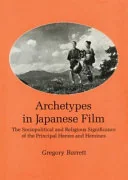
Archetypes in Japanese Film
 71
71

Archetypes in Japanese Film
Gregory Barrett's "Archetypes in Japanese Film" provides a valuable academic lens through which to view the enduring figures of Japanese cinema. The work's strength lies in its meticulous tracing of archetypal characters from ancient folklore and literature into their cinematic manifestations. Barrett successfully links the stoic samurai of Kurosawa's *Seven Samurai* (1954) to earlier literary traditions, illustrating a clear evolutionary path. A limitation, however, is the book's 1989 publication date, which means it predates analyses of many influential post-war and contemporary cinematic movements and directors who have since recontextualized these archetypes. The exploration of the 'Akuyaku' or villain figure, and its societal reflections, is particularly illuminating, showing how cinematic antagonists often embody collective anxieties. Ultimately, Barrett offers a solid, if dated, foundation for understanding the symbolic language of Japanese film.
📝 Description
71
Published in 1989, Gregory Barrett's "Archetypes in Japanese Film" connects cinematic figures to classical Japanese literature.
Gregory Barrett's "Archetypes in Japanese Film," published in 1989, analyzes recurring heroic and villainous characters in Japanese cinema. The book traces these figures back to their roots in Japanese literature, drama, and oral traditions. Barrett shows how these patterns reappeared and changed in popular culture, offering a way to understand why Japanese movie characters resonate so deeply.
The study is for academics in film studies, comparative literature, and cultural history who focus on East Asian cinema. It also speaks to fans of Japanese folklore and mythology interested in their modern media impact. Anyone looking into the psychological aspects of storytelling and character creation will find much to consider in this work. Barrett's research came out during a time of growing academic interest in how stories cross cultures and how myths shape modern art. The late 1980s saw Japanese cultural studies expand, and this book applied archetypal theory, drawing from thinkers like Carl Jung, to Japanese film.
This book examines archetypes, concepts central to esoteric traditions, particularly those influenced by Carl Jung's analytical psychology. Jungian archetypes are universal, archaic patterns and images that derive from the collective unconscious. Barrett applies this framework to the specific context of Japanese cinema, showing how these deep psychological structures manifest in national narratives. The work bridges the study of psychology, mythology, and cultural expression, locating universal human themes within a particular cultural and artistic tradition.
💡 Why Read This Book?
• Gain insight into the cultural roots of Japanese cinematic heroes and villains, understanding how figures like the 'Onna-bugeisha' are informed by centuries of Japanese folklore and literature. • Analyze the psychological dimensions of recurring character types, learning how Barrett connects archetypal patterns, influenced by Jungian thought, to specific Japanese film narratives. • Appreciate the evolution of narrative motifs, examining how concepts explored in Barrett's 1989 study continue to inform contemporary directors and their reinterpretation of classic Japanese storytelling structures.
⭐ Reader Reviews
Honest opinions from readers who have explored this book.
❓ Frequently Asked Questions
What specific Japanese literary traditions does Barrett connect to cinematic archetypes?
Barrett's work links cinematic archetypes to classical Japanese literature, including Noh and Kabuki drama, as well as oral traditions and folktales that have shaped the national consciousness for centuries.
When was 'Archetypes in Japanese Film' first published?
Gregory Barrett's 'Archetypes in Japanese Film' was first published in 1989, offering an analysis rooted in scholarship from that era.
Does the book discuss specific directors or films?
Yes, while focusing on archetypes, the work explores their manifestation in films and the characters portrayed by directors such as Akira Kurosawa, whose samurai narratives are often analyzed through an archetypal lens.
What is the 'Akuyaku' concept as discussed in the book?
The 'Akuyaku' refers to the villain or antagonist figure in Japanese cinema. Barrett examines how this archetype reflects societal anxieties and moral ambiguities within Japanese culture.
How does this book relate to Jungian psychology?
The book applies archetypal theory, a concept heavily influenced by Carl Jung's work, to understand the recurring patterns and symbolic roles of characters in Japanese films, suggesting a universal basis for these figures.
Is this book suitable for casual film fans?
While accessible, the book is primarily an academic study. Casual fans interested in a deep, scholarly understanding of Japanese cinema's symbolic underpinnings and historical context will find it most rewarding.
🔮 Key Themes & Symbolism
The Heroic Archetype
This theme centers on the persistent figures of the hero in Japanese cinema, examining their origins in historical samurai, legendary warriors, and virtuous protagonists from classical texts. Barrett analyzes how these characters embody ideals of honor, duty, and sacrifice, often reflecting societal expectations and moral frameworks. The evolution from literary figures to cinematic icons is explored, demonstrating how filmmakers utilize these established patterns to create relatable and culturally significant protagonists that resonate with audiences across generations.
The Shadow Figure
The book investigates the role of the 'Akuyaku,' or villain, as a crucial counterpoint to the hero. This theme explores how antagonists in Japanese film often represent societal fears, repressed desires, or the consequences of moral compromise. Barrett traces the development of these figures from folkloric demons and treacherous historical figures to complex cinematic adversaries, highlighting their function in driving narrative and exploring the darker aspects of human nature and social dynamics within Japanese culture.
Literary and Folkloric Roots
A core focus is the deep wellspring of Japanese literature, drama, and folklore from which cinematic archetypes emerge. This theme examines the transmission of character patterns and narrative structures from classical periods, including the Edo period, into modern filmmaking. Barrett illustrates how iconic roles are informed by traditions like Noh theater and Kabuki, providing a scholarly bridge between ancient storytelling and contemporary visual media.
Cultural Continuity and Change
This theme addresses how archetypes in Japanese film serve as markers of cultural continuity while also reflecting societal transformations. Barrett explores how traditional heroic and villainous roles are adapted and reinterpreted to comment on modern issues, social changes, and the shifting values within Japan. The book demonstrates the dynamic nature of these figures, showing their capacity to adapt and retain significance across different historical periods and cultural contexts.
💬 Memorable Quotes
Direct passages from the work, attributed to the author.
“The significance of archetypal figures extends beyond mere character representation; they are vessels for collective memory and cultural identity.”
— This interpretation highlights Barrett's view that cinematic characters are not simply plot devices but carry deep cultural weight, embodying shared historical experiences and societal values passed down through generations.
“The evolution of the samurai archetype in post-war cinema often reflects a renegotiation of national identity and honor.”
— This interpretation suggests Barrett's argument that the cinematic samurai's portrayal after World War II was not static but actively engaged with contemporary Japanese society's search for meaning and ethical grounding.
“Understanding the archetypal 'Akuyaku' is key to deciphering the societal anxieties projected onto cinematic antagonists.”
— This interpretation focuses on Barrett's analysis of villains, positing that their construction in film is intrinsically linked to revealing and exploring the collective fears and societal tensions present within the culture.
💡 Key Ideas
Editorial paraphrase of the work's core concepts — not direct quotes.
Cinematic variations of the 'Onna-bugeisha' demonstrate a persistent fascination with female strength and agency, echoing ancient warrior traditions.
This paraphrased concept points to Barrett's analysis of female warrior archetypes, showing how their portrayal in film connects to historical and literary precedents, reflecting enduring cultural ideals about women's roles and power.
Folkloric motifs provide a foundational layer, offering symbolic language that filmmakers can readily adapt to explore complex human emotions.
This paraphrased concept emphasizes Barrett's argument about the foundational role of folklore, suggesting it provides a rich symbolic vocabulary that filmmakers draw upon to convey universal human experiences within a specific cultural context.
🌙 Esoteric Significance
Tradition
While not strictly within a single esoteric lineage like Hermeticism or Kabbalah, Barrett's work operates within the broader tradition of applying archetypal psychology, notably Jungian analysis, to cultural artifacts. Jung's exploration of universal symbols and the collective unconscious can be seen as a bridge to esoteric thought, positing that these deep psychic structures hold a form of universal, almost mystical, truth. The book fits within a post-Jungian interpretive framework that seeks symbolic meaning beyond the purely material or historical, aligning with esoteric concerns about hidden patterns and universal consciousness.
Symbolism
The book frequently engages with symbols deeply embedded in Japanese culture, which often carry esoteric or spiritual weight. For instance, the samurai archetype is not just a warrior but a symbol of discipline, Bushido (the Way of the Warrior), and a quest for enlightenment through rigorous practice and acceptance of mortality. Similarly, the recurring motif of nature—whether a specific mountain, river, or season—often functions symbolically, representing cosmic order, impermanence (mujō), or the spiritual realm, echoing Shinto and Buddhist philosophical concepts.
Modern Relevance
Contemporary scholars and filmmakers continue to draw on the foundational work of archetypal analysis. Thinkers in comparative mythology and psychology, as well as practitioners of depth psychology, find Barrett's framework useful for understanding the enduring power of Japanese cinematic narratives. The concept of archetypes as universal psychic structures remains relevant in fields exploring consciousness, symbolism, and cross-cultural psychology, indicating that Barrett's early work laid groundwork for ongoing discussions about the deep, often subconscious, connections between art, culture, and the human psyche.
👥 Who Should Read This Book
• Scholars of East Asian cinema and cultural studies seeking to understand the deep historical and psychological roots of Japanese film characters. • Students of comparative mythology and folklore interested in how ancient narratives manifest in modern visual media and popular culture. • Readers of Jungian psychology and archetypal theory looking for concrete applications of these concepts within a specific, rich cultural context like Japanese cinema.
📜 Historical Context
Gregory Barrett's "Archetypes in Japanese Film," published in 1989, emerged at a key moment for Japanese cultural studies in the West. The late 1980s witnessed a surge in academic interest in non-Western cinematic traditions, moving beyond the dominance of European art cinema. Barrett's work contributed to this by applying established archetypal theory, heavily influenced by Carl Jung's concepts of the collective unconscious, to the specific context of Japanese cinema. This approach offered a framework for understanding recurring character types and narrative structures that might otherwise seem culturally specific. Its publication predates the widespread digital dissemination of many classic Japanese films, making its comprehensive analysis of literary and folkloric precursors particularly valuable. While scholars like Donald Richie had already extensively documented Japanese cinema, Barrett's focus on the direct lineage of archetypes from folklore to screen offered a distinct contribution, aligning with a broader academic trend to find universal patterns in diverse cultural expressions.
📔 Journal Prompts
The 'Akuyaku' archetype: how does its cinematic portrayal reflect societal anxieties from the film's production era?
Compare and contrast a literary hero with their cinematic counterpart, noting shifts in symbolic meaning.
The role of honor in the samurai archetype: explore its evolution from historical context to Kurosawa's films.
Reflect on a recurring symbol from Japanese folklore that appears in film and its potential esoteric interpretation.
How do archetypal heroines, like the 'Onna-bugeisha', challenge or reinforce traditional gender roles across different eras?
🗂️ Glossary
Archetype
In this context, a universal, archaic pattern of imagery or thought derived from the collective unconscious, which recurs in literature, mythology, and art, influencing character types and narrative structures.
Onna-bugeisha
Literally 'female warrior.' A term for women warriors in pre-modern Japan who were trained in martial arts and often fought alongside samurai, representing strength and martial prowess.
Akuyaku
A Japanese term for 'villain' or 'antagonist.' Barrett uses it to denote characters who embody opposition, malice, or societal transgression within Japanese cinematic narratives.
Bushido
The code of conduct associated with the samurai of feudal Japan. It emphasized virtues such as loyalty, self-discipline, martial skill, and honor unto death.
Noh Drama
A classical Japanese musical drama that is highly stylized and symbolic, often featuring masked characters and themes rooted in mythology, history, and spiritual narratives.
Kabuki Theatre
A traditional Japanese form of theatre known for its highly stylized performances, elaborate costumes, and dramatic storytelling, often featuring heroic or villainous characters.
Mujō
A Buddhist concept in Japanese philosophy signifying impermanence or transience, reflecting the ephemeral nature of life and the universe, often symbolized in art and literature.
This book appears in 1 collection
🔮 Readers Also Liked
Browse all →









From the “Archetypes” Collection
View all →









More Free Occult Philosophy Books
View all →