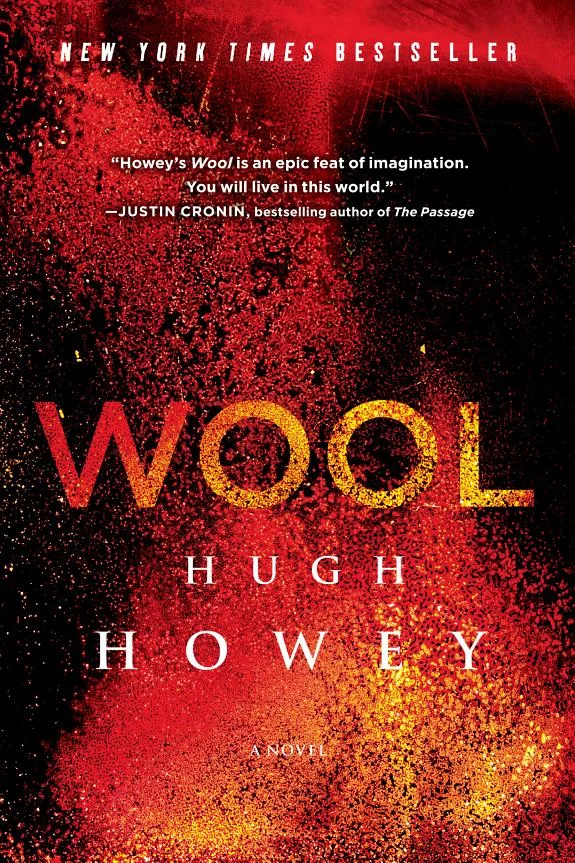
Wool
 83
83

Wool
Hugh Howey's Wool presents a compelling, claustrophobic vision of a future humanity encased in a colossal subterranean structure. The initial setup, revolving around Sheriff Holston’s mandated exit and Juliet’s subsequent investigation, expertly builds suspense. Howey excels at portraying the oppressive atmosphere of the Silo and the simmering discontent beneath its ordered surface. The intricate world-building, particularly the mechanics of the Silo’s society and its history, is a significant strength. However, the pacing occasionally falters, with certain plot developments feeling slightly rushed in their resolution. A particularly impactful moment involves the discovery of the true nature of the outside world’s visibility, shattering the established dogma. Wool is a solid entry in speculative fiction, offering a tightly controlled narrative that questions authority and the cost of perceived security.
📝 Description
83
Hugh Howey's "Wool" began as a self-published novella in 2011, depicting life in an underground silo.
Hugh Howey's "Wool" imagines a society living in a colossal underground silo, sealed off from a world presumed to be toxic. The narrative unfolds within this confined, hierarchical structure, where the ruling powers maintain strict control over information and daily life. As the story progresses, characters begin to question the established order and the nature of the reality presented to them. The desire for truth and freedom surfaces, challenging the foundations of their existence.
The novel delves into the psychological toll of isolation and manufactured narratives. It examines how societies maintain order through secrecy and the manipulation of collective memory. The inhabitants' limited understanding of the outside world fuels their compliance, but a growing curiosity, particularly concerning the reasons for their confinement, ignites dissent. "Wool" tracks the consequences of this awakening, as individuals push against the boundaries of their controlled environment.
While often categorized as dystopian science fiction, "Wool" engages with themes that resonate within esoteric thought. The silo itself functions as a microcosm, a controlled environment designed to protect inhabitants from an external 'fall,' echoing concepts of spiritual or intellectual isolation for preservation. The governing body's manipulation of information and history can be seen as a commentary on how established dogmas or narratives can obscure deeper truths. The characters' yearning for knowledge beyond their immediate reality and their questioning of the imposed order align with esoteric traditions that emphasize personal inquiry and the pursuit of hidden wisdom.
💡 Why Read This Book?
• Learn about the psychological impact of enforced ignorance, as depicted through the inhabitants' limited understanding of their Silo environment and the world beyond, a concept explored intensely after 2013. • Understand the mechanics of societal control and rebellion, mirroring real-world dynamics of information suppression and the fight for truth, a theme prominent in the novel's core conflict. • Experience a unique form of isolation narrative, focusing on a community’s deep-seated fears and the courage required to confront the unknown, exemplified by characters like Juliet Nichols.
⭐ Reader Reviews
Honest opinions from readers who have explored this book.
❓ Frequently Asked Questions
When was Hugh Howey's book Wool first published?
Wool by Hugh Howey was first published as a novella in 2011 and later compiled into a full novel in 2013, gaining significant traction in the burgeoning self-publishing market.
What is the main setting of the book Wool?
The primary setting of Wool is a colossal, underground silo where humanity has been confined for generations, believing the outside world to be toxic and uninhabitable.
Who is the main protagonist in Wool?
While Sheriff Holston initiates the central conflict, Juliet Nichols emerges as the primary protagonist, taking over the role of sheriff and uncovering the Silo's deepest secrets.
What are the key themes explored in Wool?
Key themes include societal control, the manipulation of information, the nature of truth, human resilience, and the conflict between safety and freedom within a confined environment.
Is Wool part of a series?
Yes, Wool is the first book in the Silo series, followed by Shift and Dust, which further explore the universe and backstory established in the initial novel.
What makes Wool unique in the dystopian genre?
Wool stands out with its intricate world-building focused on a single, massive underground structure and its exploration of how confined societies maintain order and suppress dissent.
🔮 Key Themes & Symbolism
Information Control and Truth
The Silo's society is built upon a foundation of carefully curated information, with the governing body, Judicial, acting as the sole arbiter of truth. The outside world is presented as a deadly wasteland, and any deviation from this narrative is suppressed. This control extends to the very history of the Silo's construction and purpose. The novel looks at how manufactured realities can maintain order but also stifle progress and individual liberty. The characters' struggle to uncover the genuine history and nature of their confinement forms a central pillar of the narrative, questioning the ethics of maintaining peace through deception.
Confinement and Freedom
The physical confinement within the Silo mirrors a psychological confinement. Generations have lived and died within its metal walls, their world defined by its limits. The desire to go outside, initially a death sentence, becomes a potent symbol of the yearning for freedom and truth. The narrative explores the profound psychological impact of living in a closed system, where the unknown is feared more than the known, even when the known is oppressive. This theme is amplified by the stark contrast between the sterile, regulated environment of the Silo and the forbidden, mysterious 'outside'.
Societal Hierarchy and Order
Wool meticulously details the rigid social structure of the Silo, from the engineers who maintain its systems to the Judicial department that enforces its laws. Order is paramount, and transgression is met with severe punishment, often exile to the outside. The novel examines how such hierarchies are established and maintained, exploring the roles of fear, tradition, and propaganda. Sheriff Holston and later Juliet Nichols navigate this complex web of authority, challenging the established norms and revealing the fragility of enforced order when faced with the desire for authenticity and self-determination.
The Nature of Humanity
Beneath the dystopian setting, Wool probes fundamental questions about human nature. It explores our innate curiosity, our need for connection, and our capacity for both great cruelty and profound bravery. The characters' reactions to the harsh realities of their existence, their adherence to or defiance of rules, and their pursuit of understanding all speak to the enduring aspects of the human spirit. The novel suggests that even in the most controlled environments, the drive for truth and individual agency will inevitably surface.
💬 Memorable Quotes
Direct passages from the work, attributed to the author.
“The work explores the idea that ignorance is often maintained through the suppression of information.”
— This highlights the narrative's focus on how authority figures in the Silo actively prevent citizens from knowing the truth about their world, using fear and control to maintain the status quo.
“Interpretation: The desire to clean is linked to a deeper need for control and order.”
— This concept relates to the ritualistic cleaning of the external cameras by those sent outside, suggesting an ingrained behavior or psychological drive for order even in the face of impending death.
“The passage suggests that questioning the established narrative is a dangerous act.”
— This refers to the severe consequences faced by characters who begin to doubt or investigate the official story about the outside world, illustrating the oppressive nature of the Silo's regime.
“The act of looking outside represents a fundamental human drive for knowledge.”
— This captures the essence of characters like Sheriff Holston and Juliet Nichols, whose curiosity and desire to understand the truth about their existence drive the plot forward, despite the risks.
“The narrative questions what constitutes a 'safe' existence.”
— This reflects the core dilemma presented in Wool: is a life of enforced safety and ignorance preferable to a dangerous existence where truth and freedom are possible?
🌙 Esoteric Significance
Tradition
Wool does not align with a specific, named esoteric tradition like Hermeticism or Kabbalah. However, its themes of hidden knowledge, societal deception, and the pursuit of truth by a protagonist who challenges the established order echo Gnostic narratives. The Silo's governing body acts as a demiurge, perpetuating a false reality, while the inhabitants are akin to souls trapped in ignorance, seeking gnosis (knowledge) to escape their illusory prison. The narrative explores the struggle against a corrupt or ignorant system that prioritizes control over enlightenment.
Symbolism
The Silo itself is a potent symbol of the material world or the mundane consciousness, a self-contained structure designed to prevent inhabitants from perceiving a larger, possibly more authentic, reality. The external cameras, constantly cleaned by exiles, symbolize the authorities' need to maintain a facade of truth and control over the perception of the outside world. The act of 'going outside' represents a perilous journey towards awakening or enlightenment, a shedding of illusion that often comes at the ultimate cost.
Modern Relevance
Wool's exploration of systemic deception and the power of information control is highly relevant in the contemporary digital age. Thinkers and communities interested in critical theory, post-truth politics, and the ethics of surveillance capitalism find parallels in the Silo's society. The novel's themes resonate with discussions around data privacy, algorithmic control, and the manipulation of public discourse, making it a touchstone for understanding anxieties about unseen forces shaping our reality.
👥 Who Should Read This Book
• Readers of speculative fiction interested in societal control mechanisms and the consequences of suppressed information, particularly those who enjoyed works like 1984 or Brave New World. • Individuals fascinated by claustrophobic settings and intricate world-building, who appreciate narratives that slowly unravel mysteries and explore the psychological impact of confinement. • Those exploring themes of rebellion, truth-seeking, and the human drive for autonomy, especially when presented within a challenging, high-stakes environment.
📜 Historical Context
Published in 2013, Hugh Howey's Wool emerged from the burgeoning self-publishing revolution, a period where digital platforms empowered authors to reach audiences independently. It gained immense popularity, demonstrating the viability of the indie model in the face of traditional publishing gatekeepers. The early 2010s were a fertile ground for dystopian fiction, with Suzanne Collins's The Hunger Games series (concluding in 2010) having already captivated a massive young adult audience and setting a high bar for speculative world-building. Mandel's Station Eleven, published in 2014, offered a different, more literary take on post-apocalyptic survival. Wool's success was notable for its intricate world-building and its exploration of themes that resonated widely: societal control, the nature of truth, and the human spirit's resilience under duress. It was lauded for its mature handling of complex ideas, appealing to a broad readership beyond the typical young adult demographic often associated with dystopian narratives.
📔 Journal Prompts
The Silo's enforced ignorance and its relationship to control.
Juliet Nichols's transition from mechanic to sheriff and her pursuit of truth.
The symbolic meaning of the external cleaning ritual.
Reflect on the balance between safety and freedom within the Silo.
The concept of a 'manufactured reality' and its societal implications.
🗂️ Glossary
Silo
A massive, subterranean structure housing the last remnants of humanity, designed to protect them from a toxic external environment. It is a self-contained society with strict rules and hierarchy.
Judicial
The governing body within the Silo responsible for enforcing laws, maintaining order, and controlling information. They hold significant power and are often seen as the arbiters of truth.
Going Outside
The ultimate punishment in the Silo, where an individual is sent out onto the surface to clean the external cameras before succumbing to the toxic atmosphere. It is viewed as a death sentence.
The Pact
An agreement or set of rules governing the behavior and understanding of the Silo inhabitants, particularly concerning the forbidden knowledge of the outside world and the purpose of their confinement.
Mechanical
Refers to the engineering and maintenance aspects of the Silo, often associated with the lower levels and the workers who keep the structure functioning. Juliet Nichols begins her journey here.
Sheriff
The head of law enforcement within the Silo, responsible for investigating crimes and maintaining order. The role is passed down, often to individuals who can uphold the established system.
World
In the context of the Silo, 'World' refers specifically to the underground structure and its immediate, controlled environment, as opposed to the forbidden and unknown external surface.
This book appears in 1 collection
🔮 Readers Also Liked
Browse all →








From the “Apocalyptic Literature” Collection
View all →
More Free Occult Philosophy Books
View all →