Reincarnation
 80
80

Reincarnation
Joel Bjorling's "Reincarnation" offers a meticulous dissection of a concept that often resides in the realm of faith or folklore. The work anchors its discussion in a historical and philosophical framework, a welcome departure from purely devotional or speculative treatments. Bjorling’s strength lies in his systematic approach, presenting arguments and counter-arguments with scholarly detachment. For instance, the discussion around the philosophical problem of personal identity, particularly how one maintains continuity of self across successive lives, is handled with considerable acumen. A limitation, however, is the book's academic tone, which, while precise, might alienate readers seeking a more experiential or devotional engagement with the subject. The examination of the concept's roots within early Vedic texts, while informative, could benefit from deeper engagement with the practical meditative traditions that arose alongside them. Ultimately, "Reincarnation" serves as a robust academic resource for understanding the intellectual history and philosophical debates surrounding rebirth.
📝 Description
80
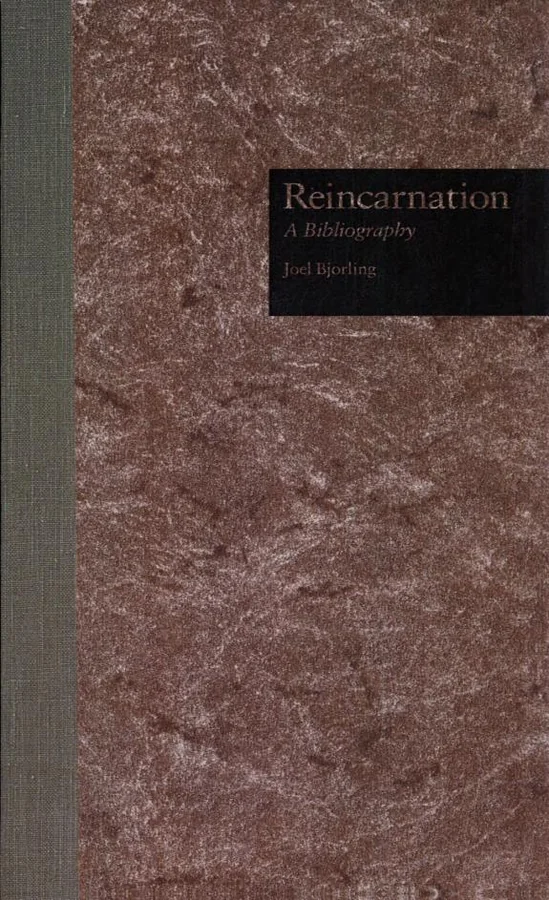
Joel Bjorling's 1996 book, Reincarnation, examines rebirth across cultures and philosophies.
Published in 1996 by Routledge, Joel Bjorling's Reincarnation is an academic study of rebirth beliefs in different cultures and philosophical systems. The book moves past simple ideas of rebirth to analyze arguments for and against its existence. It was written for scholars, students of comparative religion, and serious practitioners of esoteric or philosophical studies who want a thorough, evidence-based look at soul transmigration. This is not a basic introduction; it is a significant addition to the academic discussion on the topic.
Bjorling's work appeared when academic interest in religious studies and consciousness research was growing. Eastern philosophies were being examined through Western academic methods at this time. Routledge's decision to publish the book indicated its aim to join established scholarly conversations, not popular occultism. The book likely examines various views on reincarnation, from ancient Indian religions like Hinduism and Buddhism to its place in Western esoteric thought. It probably contrasts cyclical views of existence with linear beliefs and tackles philosophical issues like personal identity across different lives.
Joel Bjorling's 1996 study, Reincarnation, situates itself within the academic study of spiritualism and afterlife beliefs. It engages with how concepts of rebirth have been understood within both major world religions and various Western esoteric traditions. The book aims for a scholarly treatment, distinguishing its approach from more popular or less critical examinations of these themes. Its publication in 1996 reflects a specific moment in the academic engagement with Eastern spiritual ideas.
💡 Why Read This Book?
• Gain a structured understanding of the philosophical arguments surrounding personal identity and consciousness continuity across lifetimes, as explored in Bjorling's analysis of the "problem of personal identity" in reincarnation. • Grasp the historical trajectory of reincarnation beliefs from their origins in ancient Indian traditions, such as the Vedic scriptures mentioned, to their adaptation in Western thought. • Evaluate the academic debates and critiques of reincarnation, moving beyond anecdotal evidence to a more critical, analytical perspective informed by Bjorling's scholarly method.
⭐ Reader Reviews
Honest opinions from readers who have explored this book.
❓ Frequently Asked Questions
What academic traditions does Joel Bjorling's "Reincarnation" primarily engage with?
Joel Bjorling's "Reincarnation" primarily engages with philosophical and comparative religion studies. The work analyzes the concept of rebirth through lenses of Western philosophy and historical religious texts, particularly those originating from India.
When was "Reincarnation" by Joel Bjorling first published and by whom?
Joel Bjorling's "Reincarnation" was first published in 1996 by Routledge, which is noted as an imprint of Taylor & Francis.
Does the book discuss reincarnation in Western esoteric circles?
While the primary focus is on historical and philosophical treatments, the work likely touches upon the reception and adaptation of reincarnation concepts within Western esoteric thought, contrasting them with more traditional theological or philosophical stances.
What are the main philosophical challenges to reincarnation discussed in the book?
The book likely addresses key philosophical challenges such as the problem of personal identity across successive lives, the mechanism of karmic causality, and the empirical evidence (or lack thereof) for such phenomena.
Is "Reincarnation" by Joel Bjorling suitable for beginners in esoteric studies?
Given its academic nature and publication by Routledge, the book is better suited for advanced students or scholars. Beginners might find its scholarly rigor and philosophical depth more challenging than introductory texts.
What role does the concept of karma play in Bjorling's analysis of reincarnation?
The concept of karma is likely central to Bjorling's analysis, serving as a framework for understanding the causal mechanisms that proponents of reincarnation propose for the distribution of experiences across lifetimes.
🔮 Key Themes & Symbolism
Philosophical Problem of Identity
A central concern in Bjorling's "Reincarnation" is the philosophical challenge of personal identity across multiple lifetimes. The work scrutinizes how an individual can be considered the same person if their physical body, memories, and personality traits undergo radical transformation between existences. This requires an examination of what constitutes the enduring self, a concept explored through various philosophical lenses, potentially referencing thinkers who grappled with continuity of consciousness.
Historical Development of Beliefs
The book traces the historical evolution of reincarnation doctrines, starting from their ancient roots, likely in the Vedic period of India. It examines how these ideas were articulated within different religious and philosophical systems, such as Hinduism and Buddhism, and how they were subsequently interpreted or debated in other cultural contexts, including their reception in Western thought and esoteric traditions.
Comparative Religious Frameworks
Bjorling situates reincarnation within a broader comparative religious framework. This involves analyzing how the concept of rebirth contrasts with or complements linear eschatologies prevalent in Abrahamic religions. The work likely explores the theological implications of cyclical existence and the ethical systems, like karma, that often accompany such beliefs, providing a scholarly comparison of diverse spiritual cosmologies.
Arguments For and Against
The text systematically presents arguments both supporting and refuting the possibility of reincarnation. This scholarly approach necessitates engagement with empirical claims, philosophical objections, and theological justifications. Bjorling likely examines evidence cited by proponents, such as past-life regression cases or birthmarks correlating with past traumas, alongside the skeptical counter-arguments rooted in psychology, sociology, and philosophy of mind.
💬 Memorable Quotes
Direct passages from the work, attributed to the author.
“The problem of personal identity across lifetimes presents a significant philosophical hurdle for reincarnation theories.”
— This statement highlights a core academic challenge discussed in the book: how to establish continuity of self if the physical and mental characteristics change drastically between incarnations. It underscores the need for a robust theory of what constitutes the 'I'.
“Early Vedic texts articulate foundational concepts that would later develop into elaborate doctrines of rebirth.”
— This points to the historical origins of reincarnation beliefs, suggesting that the book traces the concept's lineage back to ancient Indian scriptures, showing its foundational elements rather than fully formed theories.
“Linear eschatologies offer a contrasting view of existence to the cyclical models found in Eastern traditions.”
— This indicates the book's comparative approach, positioning reincarnation within a wider spectrum of religious beliefs about the end of life and the afterlife, setting it against the more common Western concept of a single life followed by judgment.
“Scholarly examination requires confronting both the philosophical objections and the purported evidence for reincarnation.”
— This emphasizes the book's balanced and critical methodology, suggesting it does not shy away from examining claims made by proponents while also thoroughly investigating skeptical viewpoints and theoretical difficulties.
“The concept of karma serves as a primary mechanism for explaining the distribution of fortunes and misfortunes across existences.”
— This highlights the integral role of karma in many reincarnation frameworks discussed, presenting it not just as a moral principle but as a causal law governing the cycles of birth, death, and rebirth.
🌙 Esoteric Significance
Tradition
While "Reincarnation" is presented as an academic text, its subject matter aligns it with traditions that explore cyclical existence and the transmigration of souls. It engages with concepts foundational to Dharmic religions (Hinduism, Buddhism, Jainism) and their influence on Western esoteric thought, particularly Theosophy and various New Age movements that adopted and adapted these ideas, often divorcing them from their original religious contexts.
Symbolism
Key symbols implicitly explored include the wheel of Samsara, representing the cyclical nature of birth, death, and rebirth driven by karma. The concept of the Atman or soul, as the enduring essence that transmigrates, is also central. Furthermore, motifs of karmic consequence, where actions in one life dictate conditions in another, function as symbolic representations of universal justice and moral causality.
Modern Relevance
Contemporary spiritual seekers, mindfulness practitioners, and therapists exploring past-life regression techniques often draw upon the foundational concepts of reincarnation and karma that Bjorling examines. The work provides an intellectual bedrock for understanding these modern practices, allowing for a critical evaluation of their theoretical underpinnings and historical lineage, connecting them to ancient philosophical and religious discussions.
👥 Who Should Read This Book
• Students of Comparative Religion: Those seeking to understand the theological and philosophical underpinnings of reincarnation across diverse global traditions will find a structured academic overview. • Philosophy of Mind Scholars: Researchers interested in the nature of consciousness, personal identity, and the arguments for and against soul-survival will benefit from the rigorous philosophical analysis. • Esoteric History Enthusiasts: Individuals curious about the historical development and intellectual trajectory of beliefs in rebirth, from ancient India to their adoption in Western esoteric thought, will find valuable context.
📜 Historical Context
Joel Bjorling's "Reincarnation" emerged in 1996, a period marked by increasing academic engagement with Eastern religions and Western esoteric traditions. The late 20th century saw a proliferation of studies exploring consciousness, parapsychology, and comparative religion, moving beyond earlier Orientalist perspectives. Routledge, as Bjorling's publisher, signaled the work's intent to engage with serious scholarly discourse. This era was also characterized by a growing interest in alternative spiritualities, contrasting with the more established theological frameworks of the mid-20th century. While not directly engaging with the sensationalism of popular mediums, Bjorling's work implicitly responded to a broader cultural curiosity about life after death and the nature of the soul. It existed in dialogue with scholars like Ian Stevenson, who was actively researching children claiming past-life memories, though Bjorling's approach appears more focused on philosophical and textual analysis than empirical case studies.
📔 Journal Prompts
The philosophical problem of personal identity across lifetimes, as analyzed in Bjorling's work, requires personal reflection.
Consider the historical development of reincarnation beliefs as presented in the text.
How does the concept of karma, detailed in the book, influence your understanding of causality?
Reflect on the contrast between cyclical and linear eschatologies discussed in the volume.
Evaluate the arguments for and against reincarnation using the framework provided by Bjorling.
🗂️ Glossary
Samsara
In many Eastern traditions, Samsara refers to the continuous cycle of birth, death, and rebirth, driven by karma and desire. It is often viewed as a state of suffering from which liberation is sought.
Karma
A principle of cause and effect where intentional actions influence future consequences, both in this life and in subsequent rebirths. It is a central doctrine in many Indian religions that explains the conditions of existence.
Eschatology
The branch of theology and philosophy concerned with death, judgment, and the final destiny of the soul and of humankind. It often contrasts linear (single life, final judgment) with cyclical views.
Personal Identity
In philosophy, the concept of what makes a person the same person over time. This is a crucial challenge for reincarnation theories, as it questions how continuity of self can be maintained through different bodies and experiences.
Vedic Texts
A collection of ancient Indian scriptures, including the Rigveda, Samaveda, Yajurveda, and Atharvaveda. These texts contain early hymns, rituals, and philosophical insights that laid the groundwork for later Indian religious and metaphysical thought.
Transmigration of Souls
The passage of a soul into a new body after death; a synonym for reincarnation or metempsychosis. It implies an enduring spiritual essence that moves between physical forms.
Linear Eschatology
A belief system that posits a single life followed by a final judgment and an eternal afterlife, characteristic of Abrahamic religions like Christianity, Islam, and Judaism.
This book appears in 1 collection
🔮 Readers Also Liked
Browse all →









From the “Reincarnation” Collection
View all →






More Free Occult Philosophy Books
View all →