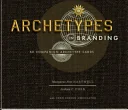
Archetypes in Branding
 78
78

Archetypes in Branding
Hartwell and Chen's "Archetypes in Branding" offers a structured approach to a concept that can often feel nebulous. The book's strength lies in its direct translation of Jungian archetypes into actionable brand strategies, providing concrete examples and exercises. Its focus on identifying and leveraging these deep-seated patterns to build trust and demand is commendable. However, the reliance on the companion card deck, while practical, means the book itself feels somewhat incomplete without it, serving more as a guide to the tool than a standalone exploration. A particularly insightful section discusses how specific archetypes can resolve "brand inconsistencies," a common pitfall in modern marketing. Ultimately, it's a functional guide for those ready to move beyond surface-level branding.
📝 Description
78
Published in 2015, Archetypes in Branding provides a framework for applying universal psychological patterns to brand identity.
This book details how to use fundamental psychological patterns to shape a brand's identity. It moves past surface-level design to identify the core drivers and storytelling elements that affect a brand's public image. The authors present methods and tools for clarifying a brand's essential nature. This helps create stronger connections with audiences and ensures consistent communication across all platforms. It is structured as a practical guide for professionals in creative and strategic roles.
The intended audience includes brand strategists, marketers, designers, and business leaders. It appeals to those who understand that a brand's success depends not only on its products or services but also on its underlying story and emotional impact. Anyone involved in developing new brands, rebranding existing ones, or trying to fix inconsistent messaging will find actionable advice within these pages.
The 2015 publication of Archetypes in Branding occurred during a period of renewed interest in Jungian psychology and narrative theory for business applications. While Carl Jung's original work on archetypes began in the early to mid-20th century, the 2010s saw these ideas become more widely adopted in practical fields. This book follows earlier explorations of archetypal frameworks for branding by figures like Carol S. Pearson and Margaret Mark, but it specifically focuses on providing a direct toolkit for implementation.
💡 Why Read This Book?
• Gain a practical framework for identifying your brand's core motivations, a concept explored through the 60 archetype cards first introduced in 2015. • Learn to enhance stakeholder trust by understanding how archetypal narratives foster deeper connections, a key takeaway from the book's strategic applications. • Develop methods for resolving brand inconsistencies by applying the principles of archetypal alignment, directly addressing challenges outlined by Hartwell and Chen.
⭐ Reader Reviews
Honest opinions from readers who have explored this book.
❓ Frequently Asked Questions
What are the main benefits of using archetype cards for branding?
The archetype cards, as detailed in "Archetypes in Branding," help reveal a brand's underlying motivations, enhance stakeholder trust, resolve inconsistencies, and generate demand by providing a tangible tool for strategists.
How does this book relate to Carl Jung's theories?
The book applies Carl Jung's theory of archetypes, which posits universal, inherited patterns of thought and imagery, to the specific field of brand identity development and marketing strategy.
Is "Archetypes in Branding" suitable for beginners?
Yes, the book is designed as a toolkit for creatives and strategists, making it accessible for those new to archetypal branding, especially when used alongside its companion card deck.
What is the historical significance of the book's publication year?
Published in October 2015, the book emerged during a period of renewed interest in psychological archetypes within marketing and branding discourse, building on earlier works from the early 2000s.
Can I use these archetypes for personal branding as well as corporate branding?
While focused on corporate branding, the underlying principles of archetypes and their motivational power are universally applicable and can certainly inform personal branding strategies.
Does the book offer examples of brands that successfully use archetypes?
The book provides a framework and tools for identifying and applying archetypes, encouraging readers to analyze existing brands and develop their own archetypal strategies, rather than listing specific historical examples.
🔮 Key Themes & Symbolism
Brand Motivation Unveiled
This theme explores how brands, much like individuals, possess inherent motivations rooted in universal psychological patterns. The book details how identifying these archetypes – such as the Hero, Sage, or Innocent – allows for a deeper understanding of a brand's purpose and drives. By aligning a brand's communication and actions with its core archetype, businesses can achieve greater authenticity and connect with consumers on a more profound, instinctual level. This approach moves beyond surface-level marketing to tap into the collective unconscious, as theorized by figures like Carl Jung, providing a powerful lens for strategic development.
Stakeholder Trust and Consistency
Enhancing trust with stakeholders is a central outcome of effectively applying archetypal branding. The work posits that a clearly defined brand archetype provides a stable, recognizable identity that fosters reliability and predictability. When a brand consistently embodies its chosen archetype across all touchpoints – from advertising to customer service – it builds a strong reputation. This consistency helps resolve internal brand confusion and external misinterpretations, ensuring that all parties, including employees, customers, and investors, share a unified understanding of the brand's values and promises.
Demand Generation Through Narrative
Archetypes serve as powerful narrative devices that can generate magnetic demand for a brand. By tapping into the inherent stories and emotional resonances of archetypal figures, brands can create compelling narratives that capture attention and loyalty. The book suggests that consumers are drawn to brands that embody certain archetypal qualities, fulfilling psychological needs or aspirations. This strategic use of narrative, informed by the 60 archetype cards, helps differentiate brands in crowded markets and encourages a deeper emotional investment from the audience.
Strategic Toolkit for Creatives
The book is framed as a practical toolkit, emphasizing actionable methodologies for creatives and strategists. It moves beyond theoretical discussion to offer tangible exercises and frameworks for identifying, defining, and implementing archetypal branding. The companion deck of 60 archetype cards is presented as a key instrument within this toolkit, designed to facilitate discovery and application. This focus on practical utility makes the concepts of archetypal psychology accessible and directly applicable to the challenges of modern brand building and marketing.
💬 Memorable Quotes
Direct passages from the work, attributed to the author.
“Use them to reveal your brand's motivations, enhance trust with stakeholders, resolve brand inconsistencies and generate magnetic demand.”
— This statement captures the core promise of the archetype cards and the book itself. It highlights the practical, problem-solving utility of archetypal frameworks in branding, focusing on tangible business outcomes like increased trust and market demand.
“The companion tool to the book, Archetypes In Branding: A Toolkit for Creatives and Strategists.”
— This defines the relationship between the book and its associated deck, emphasizing that the book serves as a guide and theoretical underpinning for the practical application offered by the cards.
“Reveal your brand's motivations”
— This phrase points to the introspective and discovery-oriented aspect of archetypal branding. It suggests that a brand's core purpose and driving forces can be uncovered, much like a psychological profile, through the application of archetypal principles.
“Enhance trust with stakeholders”
— This highlights a key benefit of consistent, archetype-driven branding. By embodying a clear and recognizable identity, brands can build reliability and foster deeper, more confident relationships with all parties involved.
“Resolve brand inconsistencies”
— This addresses a common challenge in branding: internal misalignment or contradictory messaging. The book implies that archetypal clarity provides a guiding principle to unify disparate brand elements and communications.
🌙 Esoteric Significance
Tradition
This work draws directly from the field of analytical psychology, specifically Carl Jung's theories on archetypes and the collective unconscious. While not strictly an esoteric tradition in the vein of Hermeticism or Kabbalah, Jungian psychology itself has deeply influenced esoteric thought and practices by providing a framework for understanding universal symbols and psychological structures that resonate across cultures and spiritual paths.
Symbolism
The core symbolism revolves around the 12 primary archetypes (e.g., The Innocent, The Orphan, The Hero, The Caregiver, The Explorer, The Rebel, The Lover, The Creator, The Jester, The Sage, The Magician, The Ruler) and their associated motifs. Each archetype carries a distinct set of symbols, narrative patterns, and motivational drives that are intended to be recognized and leveraged in brand communication.
Modern Relevance
Contemporary thinkers and practitioners in fields ranging from brand strategy and marketing to coaching and even some therapeutic modalities continue to draw upon archetypal frameworks. The book's practical application of Jungian concepts for brand building remains highly relevant in an era where authenticity and deep emotional connection are paramount for consumer engagement and loyalty.
👥 Who Should Read This Book
• Brand strategists and marketers seeking to deepen their brand's identity and resonance beyond superficial attributes. • Creatives and designers looking for a structured method to develop compelling and consistent brand narratives. • Business leaders aiming to understand and resolve brand inconsistencies and foster stronger stakeholder trust through psychological alignment.
📜 Historical Context
Published in October 2015, "Archetypes in Branding" emerged during a period of significant engagement with Jungian psychology in popular culture and business strategy. While Carl Jung introduced his concept of archetypes in the early 20th century, the early 21st century saw a resurgence and practical application of these ideas, particularly in marketing and branding. Authors like Margaret Mark and Carol S. Pearson had already popularized archetypal frameworks in books like "The Hero and the Outlaw" (2001). Hartwell and Chen's work distinguishes itself by offering a direct, toolkit-oriented approach, specifically a deck of 60 archetype cards, to implement these theories. This book contributes to a lineage of thought that seeks to imbue brands with deeper psychological resonance, moving beyond functional attributes to connect with consumers on a narrative and emotional level.
📔 Journal Prompts
The Innocent archetype's core desire for safety and belonging.
The Rebel archetype's drive to disrupt the status quo.
The Sage archetype's pursuit of truth and knowledge.
The Hero archetype's journey of overcoming challenges.
The Caregiver archetype's motivation to nurture and protect.
🗂️ Glossary
Archetype
In Jungian psychology, a universal, inherited pattern of thought or image derived from the collective unconscious, which shapes human experience and behavior. In branding, it's a symbolic character that embodies core motivations and speaks to audiences.
Collective Unconscious
A term coined by Carl Jung, referring to the part of the unconscious mind that is common to all humanity, containing inherited ideas and latent images derived from the ancestral past.
Brand Motivation
The underlying psychological drivers and core purpose that influence a brand's identity, actions, and communication strategies, often aligned with specific archetypes.
Stakeholders
Individuals or groups who have an interest or stake in a company or brand, including customers, employees, investors, and partners.
Brand Inconsistency
Discrepancies or lack of alignment in a brand's messaging, visual identity, or behavior across different platforms or over time.
Narrative Structure
The underlying framework or pattern of a story, which guides the audience's understanding and emotional engagement with the content.
Demand Generation
Marketing strategies and activities aimed at creating interest and desire for a product or service, leading to potential sales.
This book appears in 1 collection
🔮 Readers Also Liked
Browse all →









From the “Archetypes” Collection
View all →




More Free Occult Philosophy Books
View all →