Hans Andersen's Fairy Tales

 83
83

Hans Andersen's Fairy Tales
Andersen's fairy tales, particularly the 1846 collection, possess an uncanny ability to disturb and enchant simultaneously. The familiar narratives, often encountered in sanitized childhood versions, reveal darker, more existential currents upon closer inspection. The stark portrayal of "The Little Match Girl's" fate, for instance, offers a brutal commentary on societal indifference rather than a simple lesson in virtue. While the prose is deceptively simple, its allegorical power is undeniable, inviting multiple readings across different life stages. A limitation, however, is the sheer volume; some lesser-known tales lack the concentrated symbolic punch of the celebrated ones. The collection's enduring strength lies in its unapologetic exploration of sorrow and longing, elements frequently excised from modern retellings. These stories remain potent because they refuse to shy away from the bittersweet nature of existence.
📝 Description
83
Hans Christian Andersen's collection of fairy tales first appeared in its entirety in 1846.
Hans Christian Andersen's fairy tales, first published as a complete collection in 1846, extend beyond simple children's narratives. Drawing on Danish folklore and broader European traditions, these stories use allegorical characters and fantastical situations to address enduring human conditions. Well-known tales such as "The Little Mermaid," "The Ugly Duckling," and "The Snow Queen" are included, each examining moral dilemmas and psychological complexity.
This compilation suits readers who value layered storytelling and symbolic interpretation, particularly those interested in the psychological roots of folklore, literary analysis, and the development of narrative archetypes. Adults seeking to revisit childhood stories with a more mature perspective will find ample material for reflection. The work is also of interest to scholars of comparative mythology and literature.
Published during the Romantic era, Andersen's stories coincided with a European surge of interest in folk traditions and national identity. This period, roughly from the late 18th to the mid-19th century, saw a rise in the collection and retelling of oral stories, a movement exemplified by the Brothers Grimm. Andersen distinguished himself by creating original compositions, merging traditional motifs with personal, often somber, observations on society and the human spirit.
Andersen's tales, while seemingly innocent, engage with deeper currents of transformation and the hidden life of the spirit. The recurring motif of metamorphosis, evident in "The Ugly Duckling" and "The Little Mermaid," mirrors alchemical processes and spiritual rebirth. Suffering and sacrifice often precede a profound understanding or a form of redemption, reflecting mystical traditions where hardship purifies the soul. The interplay between the ordinary world and the magical realm serves as a symbolic stage for exploring the soul's journey toward self-discovery and meaning, echoing Gnostic ideas of hidden knowledge and the search for the divine within.
💡 Why Read This Book?
• Understand the symbolic weight of transformation as depicted in "The Ugly Duckling," learning how societal perception can obscure inner worth. • Grasp the recurring motif of sacrifice and suffering, particularly evident in "The Little Mermaid," to explore themes of unfulfilled desire and existential longing. • Analyze the stark social commentary present in "The Little Match Girl," offering a critical perspective on empathy and societal neglect beyond a simple moral fable.
⭐ Reader Reviews
Honest opinions from readers who have explored this book.
❓ Frequently Asked Questions
When were Hans Christian Andersen's Fairy Tales first published as a collected volume?
The first collected volume of Hans Christian Andersen's fairy tales was published in 1846, bringing together many of his previously released stories and new ones.
Are "The Little Mermaid" and "The Ugly Duckling" in the 1846 collection?
Yes, both "The Little Mermaid" and "The Ugly Duckling" are among the iconic tales featured in the 1846 collected edition of Hans Christian Andersen's Fairy Tales.
What is the historical period associated with Hans Christian Andersen's writing?
Hans Christian Andersen was active during the Romantic era, with his fairy tales gaining significant traction in the mid-19th century, particularly after the 1846 publication.
Are these tales exclusively for children?
While often read by children, Andersen's tales contain complex psychological and philosophical themes that offer profound insights for adult readers as well.
What are some common symbolic elements found in Andersen's tales?
Common symbols include transformation, often seen in "The Ugly Duckling," and the motif of suffering leading to spiritual insight, as in "The Little Match Girl."
Does the 1846 collection include "The Snow Queen"?
Yes, "The Snow Queen," a tale rich in allegorical and potentially Gnostic symbolism, is a prominent story within the 1846 compilation of Hans Andersen's Fairy Tales.
🔮 Key Themes & Symbolism
The Alchemy of Transformation
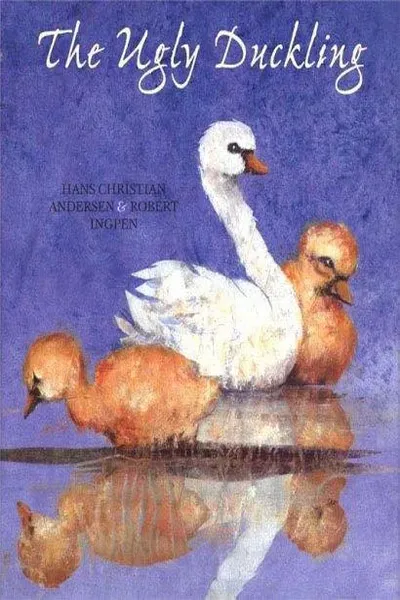
Andersen's narratives frequently depict characters undergoing profound changes, mirroring alchemical processes of purification and transmutation. "The Ugly Duckling's" journey from ostracized outcast to graceful swan is a prime example of inner potential being realized, defying external judgment. This theme suggests that true identity is not fixed but can be revealed through hardship and self-discovery, aligning with esoteric concepts of spiritual evolution and the unlocking of latent spiritual qualities within the human psyche.
Suffering as a Catalyst
Many protagonists endure significant suffering, which paradoxically leads to spiritual awakening or a deeper understanding of existence. "The Little Match Girl's" ephemeral visions offer solace only in her final moments, highlighting a tragic interplay between earthly misery and transcendent peace. This aligns with mystical traditions where trials and tribulations are viewed not as punishments, but as necessary purifications that refine the soul and prepare it for higher states of consciousness.
The Sacred and the Profane Divide
The tales often juxtapose the ordinary world with domains of magic and profound spiritual significance. "The Snow Queen" separates Gerda's innocent love from the ice-bound, crystalline world of the Snow Queen, representing a conflict between emotional warmth and cold, intellectual detachment. This division reflects esoteric dualisms, such as the material versus the spiritual, or the ego versus the higher self, exploring the challenges of navigating these disparate realities.
The Quest for Belonging
A persistent theme is the longing for acceptance and a sense of place, often experienced by characters who are different or misunderstood. "The Little Mermaid's" sacrifice for a chance at an immortal soul and human love exemplifies this desperate search for belonging in a world that feels alien. This appeals to the esoteric concept of the soul's journey through various incarnations, seeking union with the divine or its true spiritual home.
💬 Memorable Quotes
Direct passages from the work, attributed to the author.
“The world is a beautiful place to be born into if you don't come into it too late.”
— This sentiment suggests a perceived loss of innocence or opportunity, hinting that the purity and wonder of existence are best accessed early, before the corrupting influences of the world take hold.
“It is better to have loved and lost than never to have loved at all.”
— This reflects the profound value placed on emotional experience, even when fraught with pain. It suggests that the richness of life is found in engagement and connection, regardless of the ultimate outcome.
“When the bird of the soul can sing, it is well with it.”
— This metaphorical statement links inner well-being and spiritual health to the capacity for joyful expression, suggesting that a vibrant inner life manifests outwardly.
“Andersen himself was the ugly duckling.”
— This interpretation, often applied to Andersen's personal life, highlights the recurring theme of the outsider finding their true worth, suggesting the author projected his own experiences onto his characters.
💡 Key Ideas
Editorial paraphrase of the work's core concepts — not direct quotes.
Just fancy that! – she is not dead, she is only sleeping, and she will be well again tomorrow morning.
Often applied to the ostensibly deceased mother in "The Story of a Mother," this quote speaks to a denial of finality and a persistent hope for reunion, reflecting a desire for continuity beyond mortal cessation.
🌙 Esoteric Significance
Tradition
Andersen's tales can be viewed through a lens informed by Hermeticism and Neoplatonism, particularly in their exploration of inner transformation and the soul's journey. The emphasis on suffering leading to spiritual insight echoes Gnostic themes of liberation from material constraints. While not explicitly aligned with any single esoteric school, the universality of his archetypes and symbolic language allows them to be interpreted within multiple traditions, serving as accessible entry points to deeper metaphysical concepts.
Symbolism
The "Ugly Duckling" symbolizes the soul's unrecognized divine nature, trapped in mundane circumstances until its true form is revealed. "The Snow Queen's" ice palace represents the cold, rational intellect detached from emotional warmth and spiritual connection, which Gerda's pure heart must thaw. Andersen's recurring motif of the mermaid, sacrificing her voice and form for a soul, speaks to the yearning for transcendence and union with a higher spiritual reality.
Modern Relevance
Contemporary thinkers in Jungian psychology continue to analyze Andersen's tales for their archetypal resonance and depiction of the individuation process. Modern mythographers and comparative religion scholars draw upon his narratives to illustrate universal spiritual quests. Furthermore, contemporary fantasy writers and artists often cite Andersen's work as foundational, adapting his symbolic language and character archetypes to explore modern psychological and spiritual themes.
👥 Who Should Read This Book
• Students of comparative mythology and folklore: To analyze the evolution of traditional motifs into original literary narratives and their psychological underpinnings. • Aspiring writers and storytellers: To study how simple language can convey complex emotional truths and symbolic depth, drawing inspiration from Andersen's techniques. • Readers interested in psychological archetypes: To explore recurring patterns of the hero's journey, the shadow, and the process of self-discovery as embodied in characters like "The Ugly Duckling."
📜 Historical Context
Hans Christian Andersen's fairy tales, with the 1846 collection marking a significant compilation, emerged from the fertile ground of European Romanticism. This era, spanning roughly the late 18th to mid-19th centuries, fostered a deep appreciation for folk traditions, national identity, and the subjective experience. Contemporaries like the Brothers Grimm were meticulously collecting and publishing existing folktales, grounding their work in philology. Andersen, however, distinguished himself by creating original narratives that often drew from folklore but were infused with his unique voice, personal melancholy, and keen social observation. His work gained considerable international attention, with translations appearing across Europe. While not facing widespread censorship, the tales' blend of simple narrative with complex emotional and philosophical undertones sometimes challenged conventional expectations for children's literature, prompting varied critical reception.
📔 Journal Prompts
The transformation of the "Ugly Duckling" into a swan: What societal pressures might obscure one's true nature?
Gerda's journey to the "Snow Queen's" palace: What inner coldness must be overcome to restore warmth?
The "Little Mermaid's" sacrifice: What is the spiritual cost of desiring a different existence?
The suffering of "The Little Match Girl": How does her experience contrast earthly despair with perceived heavenly solace?
The concept of the soul's voice in "The Little Mermaid": When is silence a sacrifice for a greater spiritual gain?
🗂️ Glossary
Archetype
A universal, archaic pattern or image derived from the collective unconscious and appearing in individual behavior and thought, often seen in fairy tales.
Allegory
A story, poem, or picture that can be interpreted to reveal a hidden meaning, typically a moral or political one.
Romanticism
An artistic, literary, and intellectual movement originating in Europe toward the end of the 18th century, characterized by emphasis on emotion and individualism.
Folklore
The traditions, customs, and stories of a community, passed through generations by word of mouth, forming the basis for many fairy tales.
Transmutation
In esoteric contexts, the transformation of one state of being or substance into another, often referring to spiritual purification or enlightenment.
The Unconscious
In psychology, the part of the mind of which we are not aware but which influences feelings and behavior, often expressed through symbols in dreams and stories.
Individuation
The psychological process of integrating the conscious and unconscious aspects of oneself to form a unique, whole personality.
🔮 Readers Also Liked
Browse all →









More by Hans Christian Andersen
All books →




More Free Occult Philosophy Books
View all →







![Erzählungen [40 stories, 4 poems]](/img/thumb/erzählungen-40-stories-4-poems-edgar-allan-poe-214101.webp)

