Geomancy in Theory and Practice
 74
74

Geomancy in Theory and Practice
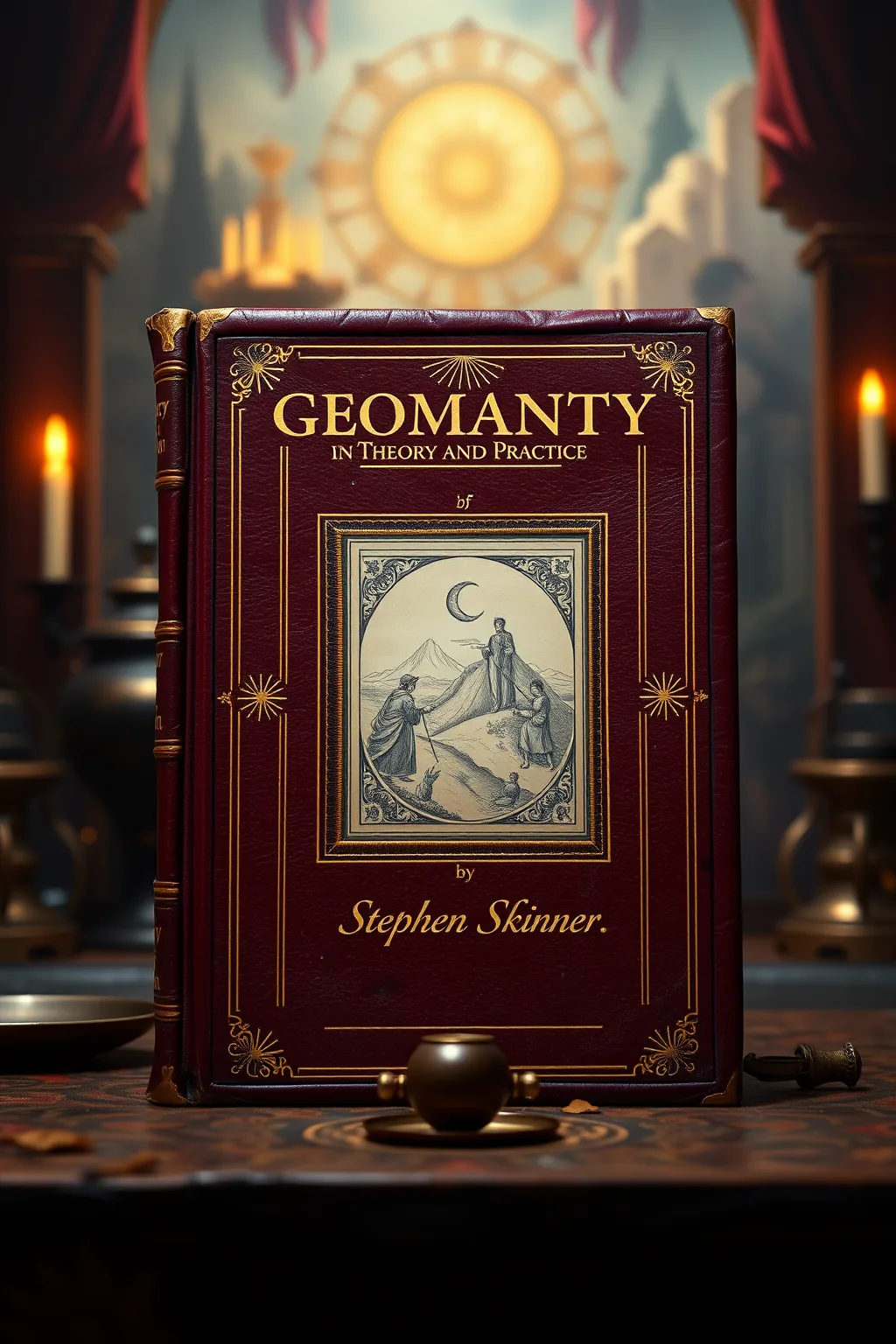
Stephen Skinner's "Geomancy in Theory and Practice" tackles a subject often relegated to simplified manuals with scholarly rigor. Skinner avoids the pitfalls of New Age sensationalism, instead presenting a meticulously researched account of geomancy's mechanics and historical embedding. His explanation of the "Pugnus" or "Shield" method for generating the figures, for instance, is particularly illuminating, grounding the practice in tangible steps. While the sheer density of information can be overwhelming for the absolute novice, the book's strength lies in its systematic approach, which clarifies the underlying logic of the art. The limitation, however, is that the extensive theoretical exposition might leave some readers yearning for more immediate practical examples. Nevertheless, for anyone serious about understanding the depths of geomancy, Skinner's work is an indispensable, if demanding, resource.
📝 Description
74
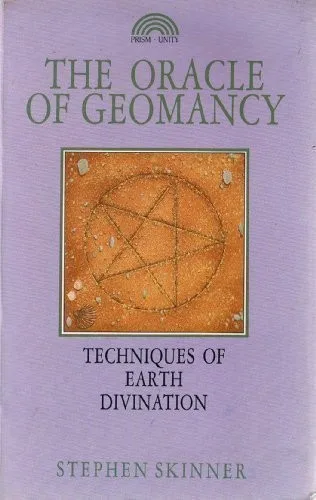
Stephen Skinner's 2000 book, Geomancy in Theory and Practice, details a divinatory system tied to the earth.
This work examines the principles and methods of geomancy, a practice with roots stretching back to antiquity. Skinner traces its evolution from early forms to more structured approaches used today. The book explains how to generate the sixteen geomantic figures and interpret their meanings across different situations. It functions as both a theoretical guide and a practical handbook for those wishing to understand this divinatory art.
Geomancy, sometimes called 'The Art of the Earth,' has a long history. It is thought to have originated with scholars in the medieval Islamic world before spreading to Europe. There, it influenced both common fortune-telling methods and more complex magical traditions. Skinner places geomancy within this historical lineage, noting its coexistence with other divination techniques and its role in Renaissance magic and later occult revivals.
The central element of geomancy involves creating sixteen distinct figures, each made of four lines of four points. These figures arise from a random process, often simulated by dice rolls or drawing marks. The book covers how these figures are arranged in a twelve-part chart and how their relationships form the basis for divinatory readings. Mastery requires understanding the inherent qualities of each figure and their interactions.
Geomancy is a divinatory art that has been practiced for centuries, often linked to Hermeticism and Western ceremonial magic. Its systematic nature, involving the generation of figures through chance operations and their interpretation within a structured chart, places it alongside other complex oracular systems like astrology or I Ching. Skinner's text situates this practice within the broader history of Western esotericism, acknowledging its medieval origins and its integration into Renaissance magical theory and later occult revivals, making it a significant subject for students of comparative divination and historical magic.
💡 Why Read This Book?
• Gain a systematic understanding of the sixteen geomantic figures, learning their names, formations, and astrological significations as detailed in the foundational chapters, which is essential for accurate divination. • Explore the historical evolution of geomancy, with specific attention to its transmission into Europe around the 12th century, providing context that few other texts offer. • Master the practical application of geomantic charts through detailed examples and house interpretations, enabling you to conduct more nuanced and insightful readings than general fortune-telling guides.
⭐ Reader Reviews
Honest opinions from readers who have explored this book.
❓ Frequently Asked Questions
What is the origin of geomancy as described in Stephen Skinner's book?
Stephen Skinner's work traces geomancy's origins to medieval Arabic scholars, with its introduction into Europe around the 12th century, becoming a significant divinatory art.
How are the sixteen geomantic figures generated according to the book?
The book explains that the sixteen figures are generated through a process of random point selection, often simulated by marking dots in four columns, which are then translated into binary sequences.
What is the 'Pugnus' method mentioned in Geomancy in Theory and Practice?
The 'Pugnus' or 'Shield' method is a specific technique detailed by Skinner for generating the initial four mothers and subsequent figures in a geomantic reading, emphasizing systematic generation.
Does the book cover the interpretation of geomantic charts?
Yes, "Geomancy in Theory and Practice" provides extensive coverage on interpreting geomantic charts, including the meanings of individual figures and their relationships within the twelve houses.
Is Stephen Skinner's book suitable for beginners in divination?
While thorough, the book is best suited for dedicated students of divination. Beginners might find the depth of theory and historical context challenging but rewarding with focused study.
What distinguishes Skinner's approach to geomancy from simpler guides?
Skinner's approach is distinguished by its scholarly depth, detailed historical sourcing, and systematic breakdown of geomantic principles, moving beyond superficial 'how-to' instructions.
🔮 Key Themes & Symbolism
The Sixteen Figures
The core of geomancy lies in the generation and understanding of the sixteen distinct figures, such as 'Populus', 'Via', and 'Fortuna Major'. Each figure possesses unique characteristics, astrological correspondences, and symbolic meanings derived from their point formations. Skinner meticulously details how these figures are produced through a pseudo-random process and lays the groundwork for their interpretation within a divinatory context. Understanding the 'mothers', 'daughters', 'witnesses', and 'judge' is crucial for deciphering the complex interplay of influences within a geomantic chart.
Chart Construction and Houses
Beyond the figures themselves, the book elucidates the construction of the geomantic chart, which consists of twelve houses analogous to astrological houses. Each house represents a specific area of inquiry or life circumstance. The placement of the generated figures within these houses dictates the nature of the answer to a querent's question. Skinner explains the traditional assignments of these houses and the methods for reading the chart as a whole, emphasizing the synergistic interpretation of figures and their positional significance.
Historical Development
Skinner situates geomancy within its historical and cultural milieu, tracing its lineage from potential ancient roots through its codification by medieval Arabic scholars. The work examines the transmission of geomancy into Europe, its adoption and adaptation by Renaissance occultists, and its place within the broader range of Western esoteric traditions. This historical perspective provides context for the variations in practice and theory that have emerged over centuries.
Divinatory Application
The ultimate purpose of geomancy, as explored in the book, is divination. Skinner guides the reader through the process of posing questions and interpreting the resulting charts to gain insight into future outcomes, hidden influences, or the nature of a situation. The book emphasizes a systematic and disciplined approach to reading, encouraging practitioners to develop their intuitive faculties in conjunction with the established rules of the art.
💬 Memorable Quotes
Direct passages from the work, attributed to the author.
“The figures are generated by a process of random selection, typically by marking dots in four columns.”
— This highlights the foundational mechanic of geomancy, emphasizing its reliance on chance and systematic conversion into meaningful symbols, distinguishing it from purely intuitive methods.
“Each of the sixteen figures has specific significations and astrological associations.”
— This points to the rich symbolic language of geomancy, where each of the sixteen forms carries inherent meaning and planetary connections that inform its interpretation.
“The twelve houses of the geomantic chart correspond to different areas of life and inquiry.”
— This emphasizes the structured framework of a geomantic reading, showing how the art maps universal life concerns onto a symbolic grid for specific answers.
“Geomancy's transmission into Europe occurred primarily through Arabic translations around the 12th century.”
— This provides a key historical anchor, situating the art's Western development and highlighting its intellectual lineage from the Islamic Golden Age.
“The interpretation involves analyzing the relationships between the figures in the houses.”
— This underscores the analytical aspect of geomancy, moving beyond simple symbol lookup to a complex synthesis of positional and relational meanings within the chart.
🌙 Esoteric Significance
Tradition
Geomancy, as presented by Skinner, fits within the Western Esoteric Tradition, particularly its divinatory branches. While often associated with Hermeticism due to its systematic, symbolic nature, its direct lineage traces more clearly to medieval Islamic occult sciences. It operates as a form of 'earth divination,' distinct from celestial astrology but sharing a common goal of understanding divine will or future events through symbolic interpretation. Skinner's work aims to restore its status as a sophisticated, intellectual art form within this broader tradition.
Symbolism
The core symbolism resides in the sixteen geomantic figures themselves. For example, 'Fortuna Major,' composed of four 'great' (even) lines, often signifies good fortune and success, representing a positive culmination. Conversely, 'Puer,' with its 'young' (odd) lines, can indicate beginnings, impulsiveness, or a male query. The interplay between these figures, their association with planets and zodiacal signs, and their placement within the twelve houses create a complex symbolic language for answering specific questions.
Modern Relevance
Contemporary practitioners of Western magic, Hermeticism, and divination continue to draw upon Skinner's detailed exposition. His systematic approach appeals to those seeking a robust theoretical framework for geomantic practice, moving beyond anecdotal methods. Modern occultists and scholars of comparative religion find value in his historical context and the detailed mechanics of chart generation and interpretation, making it a key reference for understanding this ancient art today.
👥 Who Should Read This Book
• Aspiring geomancers seeking a comprehensive introduction to the theory and practice, who wish to understand the generation of figures and the structure of the chart. • Students of Western Esotericism interested in the history and mechanics of a major divinatory art, appreciating detailed scholarship and historical context. • Experienced diviners looking to expand their repertoire or deepen their understanding of geomancy, benefiting from Skinner's systematic analysis and nuanced interpretations.
📜 Historical Context
Stephen Skinner's "Geomancy in Theory and Practice" emerges from a renewed interest in Western esoteric traditions that gained momentum in the late 20th and early 21st centuries. While geomancy itself has medieval Arabic origins, reaching Europe around the 12th century, its study experienced periods of decline and resurgence. Skinner's work follows in the wake of foundational texts by figures like Cornelius Agrippa and later occultists such as Eliphas Lévi, who integrated geomancy into broader magical systems. The book's meticulous approach can be seen as a response to more superficial treatments of the subject that often appeared in popular occult literature. It engages with a scholarly tradition of examining divination, potentially drawing comparisons with contemporary works on astrology or Tarot by authors like Robert Hand or Rachel Pollack, who also focused on historical accuracy and systematic interpretation.
📔 Journal Prompts
The generation of the sixteen geomantic figures: document your own attempt to create 'Via' and 'Acquisitio'.
The symbolism of 'Fortuna Major' and 'Fortuna Minor': how might these figures manifest in a practical reading?
Reflecting on the twelve houses: which house corresponds most closely to your current life concerns?
The historical transmission of geomancy: consider its journey from Arabic scholarship to European courts.
Interpreting the 'witnesses' and 'judge': practice reading a simple chart for a hypothetical question.
🗂️ Glossary
Geomancy
An ancient divinatory art based on the interpretation of figures generated by a systematic process, often involving random marks or points.
Geomantic Figures
The sixteen distinct patterns, each composed of four lines of two or three points, which form the basis of a geomantic reading.
Mothers
The first four geomantic figures generated, from which the subsequent figures are derived in the standard calculation process.
Witnesses
The two geomantic figures (the 7th and 8th) that are derived from the 'mothers' and provide a commentary or supporting aspect to the reading.
Judge
The final geomantic figure (the 12th) in the chart, which is derived from the preceding eleven and often provides the ultimate resolution or answer to the question.
Houses
The twelve divisions of the geomantic chart, each representing a specific area of life or inquiry, analogous to astrological houses.
Pugnus
A specific method or technique for generating the geomantic figures, often referred to as the 'Shield' method.
🔮 Readers Also Liked
Browse all →

More by Stephen Skinner
All books →
More Free Occult Philosophy Books
View all →