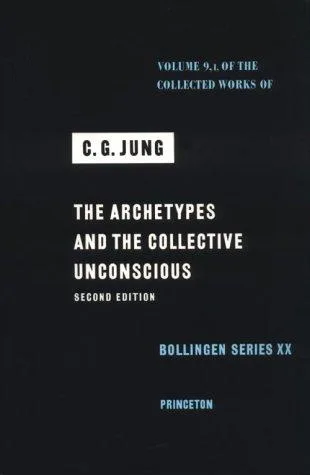
Archetypen und das kollective Unbewusste
 72
72

Archetypen und das kollective Unbewusste
Jung's exploration of the collective unconscious, particularly his detailed treatment of archetypal figures, remains a potent, if sometimes dense, contribution to understanding the human psyche. The strength of *Archetypen und das kollective Unbewusste* lies in its ambitious attempt to map the universal grammar of myth and symbol, offering a compelling counterpoint to purely materialist explanations of human behavior. However, the text can become quite abstract, and Jung's extensive mythological references, while illuminating, occasionally obscure the direct psychological application for the uninitiated reader. The discussion around the Self archetype, presented as the organizing principle of the psyche, is particularly striking for its attempt to integrate spiritual dimensions into psychological theory. It’s a demanding but ultimately rewarding study for those prepared to engage with its complexities.
📝 Description
72
Carl Gustav Jung first published his theories on archetypes and the collective unconscious in 1968.
Archetypen und das kollective Unbewusste lays out Carl Gustav Jung's central ideas about archetypes and the collective unconscious. Jung proposed that beyond individual experiences, humans share a deeper psychic stratum containing inherited patterns. These patterns, or archetypes, influence our perceptions and actions, appearing in myths, dreams, and symbols across cultures. The book connects analytical psychology with fields like mythology, religion, and anthropology.
Jung developed these concepts in dialogue with psychoanalysis and individual psychology, yet he carved a unique path. His work on the collective unconscious challenged contemporary scientific views. He drew extensively from comparative religion and mythology. The book systematically details core Jungian concepts, including the collective unconscious as a reservoir of ancestral experiences and archetypes like the Anima, Animus, Shadow, and the Self. These are not static images but innate potentials shaping human life. Jung also describes the process of individuation, the journey toward psychological wholeness.
Jung's work on the collective unconscious and archetypes fits within a broader esoteric tradition that looks for universal patterns in human consciousness. This tradition often draws from Gnosticism, alchemy, and ancient mystery religions, seeking symbolic meanings that transcend individual experience and cultural specificity. Jung's engagement with mythology, religion, and comparative studies places his theories in conversation with these long-standing inquiries into the hidden structures of the psyche and their manifestation in symbols and rituals.
💡 Why Read This Book?
• Gain insight into the innate symbolic patterns that shape human experience, as detailed in Jung's concept of the collective unconscious, which provides a framework for understanding universal motifs beyond personal history. • Understand the function of specific archetypes like the Anima and Animus, as presented in the book's 1968 publication, offering a lens to interpret interpersonal dynamics and internal psychological structures. • Explore the concept of individuation, a core theme discussed in the text, providing a roadmap for personal psychological development and the pursuit of wholeness.
⭐ Reader Reviews
Honest opinions from readers who have explored this book.
❓ Frequently Asked Questions
What is the primary focus of Carl Gustav Jung's 'Archetypen und das kollective Unbewusste'?
The book's primary focus is Jung's theory of archetypes and the collective unconscious, exploring inherited psychic structures and universal symbolic patterns that influence human behavior and perception.
When was 'Archetypen und das kollective Unbewusste' first published?
The work was first published in 1968, offering a significant contribution to depth psychology during the latter half of the 20th century.
What are some key archetypes discussed by Jung in this book?
Key archetypes explored include the Anima, Animus, Shadow, and the Self, which Jung identified as fundamental psychic patterns influencing dreams, myths, and conscious behavior.
How does Jung define the collective unconscious?
Jung defines the collective unconscious as a transpersonal layer of the psyche, common to all humanity, containing inherited predispositions and universal psychic content, distinct from personal experiences.
Is 'Archetypen und das kollective Unbewusste' suitable for beginners in psychology?
While foundational, the book's dense theoretical framework and extensive mythological references make it more suited for intermediate to advanced students of psychology and comparative mythology.
What is the concept of individuation as presented by Jung?
Individuation, as presented by Jung, is the lifelong psychological process of integrating the conscious and unconscious aspects of the personality to achieve wholeness and self-realization.
🔮 Key Themes & Symbolism
The Collective Unconscious
This volume systematically introduces Jung's concept of the collective unconscious, a transpersonal psychic layer shared by all humanity. It's posited as the repository of archetypes, universal psychic structures inherited from our ancestral past. This concept challenges the notion that the psyche is solely a product of personal experience, suggesting instead a deep, innate foundation influencing our perceptions, emotions, and behaviors across cultures and time periods. The work explores how this inherited psychic content manifests in myths, dreams, and symbols.
Archetypal Structures
The core of the book details specific archetypes—primordial patterns of imagery and behavior. Jung identifies figures like the Anima (feminine principle in men), Animus (masculine principle in women), the Shadow (repressed aspects of the personality), and the Self (the archetype of wholeness). These are not fixed entities but dynamic potentials that shape individual psychology and collective human expression. Their appearance in dreams and mythology provides evidence for their universal presence and influence on the human psyche.
Individuation and the Self
Jung presents individuation as the central process of psychological development, a lifelong journey towards integrating conscious and unconscious elements to achieve a unified personality. The archetype of the Self serves as the goal and organizing principle of this process. The book illustrates how encountering and integrating archetypal contents, particularly the Shadow and the contrasexual archetypes, are crucial steps in this path toward psychological maturity and wholeness, often symbolized by the mandala.
Symbolism in Myth and Dream
A significant aspect of *Archetypen und das kollective Unbewusste* is its examination of how archetypal patterns manifest through symbols in myths, fairy tales, and dreams. Jung argues that these symbols are not arbitrary but are expressions of the collective unconscious, offering clues to the psychic state of individuals and cultures. Understanding this symbolic language is presented as key to unlocking deeper psychological meanings and facilitating the individuation process.
💬 Memorable Quotes
Direct passages from the work, attributed to the author.
“The collective unconscious is the psychic inheritance of mankind.”
— This statement captures Jung's core idea that our psyche contains a layer beyond personal experience, a reservoir of ancestral patterns and predispositions common to all humans, shaping our fundamental ways of perceiving and reacting.
“Archetypes are not inherited ideas, but innate forms of psychic functioning.”
— Jung clarifies that archetypes aren't pre-formed images or concepts transmitted directly. Instead, they are inherent potentials or predispositions within the psyche that structure our experiences and give rise to recognizable patterns of thought, feeling, and behavior.
“The Shadow is the personification of the dark and repressed side of the personality.”
— This highlights the Shadow archetype as representing all the aspects of oneself that are disowned or projected onto others due to societal norms or personal discomfort, making its integration crucial for psychological completeness.
“Individuation is the process by which a person becomes a psychological individual.”
— This emphasizes that individuation is not about conforming or becoming isolated, but about developing a unique, integrated personality by actualizing one's innate potentials and reconciling unconscious elements with conscious awareness.
“The Self is the archetype of wholeness and the regulating center of the psyche.”
— This defines the Self as the ultimate goal of psychological development, representing the totality of the personality and acting as an ordering principle that strives for balance and integration between conscious and unconscious realms.
🌙 Esoteric Significance
Tradition
Jung's work on archetypes and the collective unconscious is deeply rooted in Western esoteric traditions, particularly Hermeticism and Gnosticism, through its emphasis on hidden psychic structures and the journey toward inner knowledge. It also draws from Neoplatonism's concept of the One and the hierarchy of being. While presented within a psychological framework, it speaks to alchemical symbolism and theosophical ideas concerning universal consciousness and archetypal forms, offering a psychological interpretation of age-old mystical concepts.
Symbolism
Central symbols explored include the Anima and Animus, representing the soul-image and contrasexual aspects of the psyche, often depicted through mythological figures and dreams. The Shadow symbolizes the repressed, darker aspects of the personality that must be integrated for wholeness. The Self, frequently symbolized by the mandala or divine figures, represents the ultimate goal of psychological development—a state of psychic totality and integration, echoing ancient symbols of cosmic order and divine unity.
Modern Relevance
Contemporary thinkers in depth psychology, mythology, and consciousness studies continue to draw heavily on Jung's archetypal theories. Practices such as Jungian analysis, dream interpretation, and the study of mythology remain vibrant. Furthermore, concepts like the collective unconscious and archetypes have found echoes in fields ranging from literary theory and film studies to transpersonal psychology and even certain branches of artificial intelligence research exploring universal patterns in human expression.
👥 Who Should Read This Book
• Students of analytical psychology and depth psychology seeking to understand the foundational concepts of Jungian theory, including the collective unconscious and archetypes. • Mythologists and comparative religion scholars looking for a psychological framework to analyze recurring symbols and narratives across diverse cultures and historical periods. • Individuals engaged in personal growth and self-exploration who are interested in understanding the deeper, often unconscious, patterns that shape their dreams, behaviors, and life path.
📜 Historical Context
Published in 1968, Carl Gustav Jung's *Archetypen und das kollective Unbewusste* emerged during a period of significant upheaval and intellectual ferment. While Sigmund Freud's psychoanalysis had already established a foothold, Jung's analytical psychology, with its emphasis on archetypes and the collective unconscious, offered a distinct and often more spiritually oriented perspective. His work stood in contrast to the prevailing behaviorism and burgeoning humanistic psychology movements of the era. Jung engaged with classical mythology, comparative religion, and anthropology, drawing inspiration from scholars like Mircea Eliade. The reception of his ideas was often polarized; while embraced by many in literary criticism, theology, and certain artistic circles, orthodox academic psychology remained largely skeptical of his more metaphysical propositions. The book solidified Jung's reputation as a profound, albeit controversial, thinker of the 20th century.
📔 Journal Prompts
The manifestation of the Animus archetype in personal relationships.
Reflecting on personal encounters with the Shadow archetype.
Symbols of the Self archetype observed in dreams or waking life.
The influence of the collective unconscious on contemporary cultural narratives.
Tracing a personal individuation journey through archetypal encounters.
🗂️ Glossary
Collective Unconscious
A transpersonal, inherited layer of the human psyche containing universal patterns, instincts, and archetypes common to all people, distinct from personal memories and experiences.
Archetype
An innate, universal psychic disposition or pattern that influences human perception and behavior, manifesting in symbols, myths, and dreams. Examples include the Mother, Hero, and Trickster.
Anima
The unconscious feminine aspect within the male psyche, influencing emotional responses, relationships, and creative expression. Often projected onto women.
Animus
The unconscious masculine aspect within the female psyche, influencing rationality, assertiveness, and logical thought. Often projected onto men.
Shadow
The repressed, unconscious aspects of the personality that the conscious ego does not identify with, often perceived as negative or socially unacceptable.
Self
The archetype of wholeness and the central organizing principle of the psyche, representing the integration of conscious and unconscious elements, often symbolized by the mandala.
Individuation
The lifelong psychological process of developing one's innate potentials and integrating conscious and unconscious aspects of the personality to achieve psychological wholeness and self-realization.
🔮 Readers Also Liked
Browse all →








More by Carl Gustav Jung
All books →

More Free Occult Philosophy Books
View all →