Living in the Light
 79
79

Living in the Light
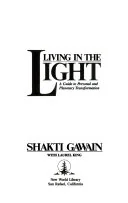
Shakti Gawain’s *Living in the Light* offers a remarkably direct approach to integrating spiritual awareness with the mundane. The 1991 edition revisits Gawain’s foundational ideas on self-empowerment, presenting them with updated perspectives on relationships, work, and personal finance. Its strength lies in its accessible language and practical, actionable advice, avoiding overly esoteric jargon. A particularly compelling section discusses the concept of 'giving and receiving' in financial matters, reframing money not as a source of anxiety but as a flow of energy. However, the book occasionally leans towards an optimistic certainty that might feel simplistic to readers navigating profound personal struggles; the nuances of deep-seated trauma or systemic barriers are not its primary focus. Despite this, Gawain’s consistent message of personal agency and inner alignment provides a valuable framework for positive change. It remains a solid primer for those embarking on a path of conscious living.
📝 Description
79
### What It Is Living in the Light, first published in 1986 and updated for its 1991 release, is Shakti Gawain's guide to personal empowerment and spiritual growth. It addresses practical aspects of life through a lens of higher consciousness. Gawain presents tools and perspectives designed to help individuals align their daily experiences with their inner truth, fostering a sense of peace and purpose.
### Who It's For This work is intended for individuals seeking to integrate spiritual principles into tangible areas of their lives. Readers interested in applying metaphysical concepts to relationships, finances, health, and sexuality will find guidance here. It appeals to those moving beyond theoretical spirituality toward practical application and personal transformation, aiming for a more conscious and fulfilling existence.
### Historical Context Emerging in the late 20th century, a period marked by growing interest in New Age philosophies and self-help movements, Gawain's book tapped into a cultural zeitgeist. It followed influential works like Marilyn Ferguson's 'The Aquarian Conspiracy' (1980), reflecting a broader societal shift towards personal responsibility and holistic well-being. The book’s enduring appeal suggests its concepts spoke to fundamental human desires for meaning and connection.
### Key Concepts The core of Living in the Light revolves around the idea of aligning one's outer life with their inner guidance. Gawain emphasizes the power of positive intention, conscious choice, and the interconnectedness of all things. She explores how to overcome limiting beliefs, embrace personal responsibility, and cultivate a mindset that supports growth and abundance in all life areas, from personal relationships to professional endeavors.
💡 Why Read This Book?
• Gain practical strategies for aligning your daily actions with your core values, inspired by Gawain's discussions on conscious choice, a central tenet of her work. • Discover a renewed perspective on financial well-being by understanding the concept of 'energy flow' as presented in the sections on money. • Learn techniques for enhancing interpersonal dynamics through the principles of authentic communication and mutual respect explored in the relationships chapter.
⭐ Reader Reviews
Honest opinions from readers who have explored this book.
❓ Frequently Asked Questions
When was Shakti Gawain's 'Living in the Light' first published?
The original edition of 'Living in the Light' by Shakti Gawain was first published in 1986, with a subsequent updated edition appearing in 1991.
What are the main topics covered in 'Living in the Light'?
The book covers essential life areas including relationships, work and play, finances, health, and sexuality, all viewed through the lens of spiritual principles and personal empowerment.
What is the core philosophy of 'Living in the Light'?
Its core philosophy centers on aligning one's outer life with inner guidance, emphasizing personal responsibility, conscious choice, and the interconnectedness of all things for greater fulfillment.
Is 'Living in the Light' considered a self-help book?
Yes, 'Living in the Light' is widely considered a self-help and personal development book, offering practical guidance for spiritual growth and improved daily living.
Who was Shakti Gawain?
Shakti Gawain was an American author and speaker known for her work in New Age spirituality, personal growth, and consciousness, with 'Living in the Light' being one of her most recognized titles.
What makes the 1991 edition of 'Living in the Light' different from the original?
The 1991 edition features updated and supplemented sections from the original 1986 publication, reflecting further development in Gawain's thought on key life areas.
🔮 Key Themes & Symbolism
Inner Guidance Alignment
The central theme is learning to access and trust one's inner wisdom as a guiding force for all decisions. Gawain posits that by consciously choosing to listen to this inner voice, individuals can create a life that is authentic and fulfilling. This involves developing practices that quiet the external noise and cultivate a strong connection to one's spiritual essence, thereby bringing external reality into harmony with internal truth.
Conscious Choice and Responsibility
Gawain strongly advocates for taking full responsibility for one's life circumstances by recognizing the power of conscious choice. Each thought, word, and action is presented as an opportunity to create reality. This theme encourages readers to move away from victimhood and towards empowerment, understanding that they are the architects of their experiences and have the agency to shape their destiny through deliberate decisions.
Energy Flow and Abundance
The book re-frames concepts like money and health as forms of energy that can be consciously managed. Gawain suggests that embracing a mindset of abundance, rather than scarcity, allows for a greater flow of positive energy into one's life. This perspective applies to all areas, promoting a holistic understanding of well-being where giving and receiving are seen as natural, reciprocal processes within a larger energetic system.
Integration of Spirituality and Daily Life
Living in the Light aims to bridge the gap between spiritual ideals and practical, everyday existence. It's not about escaping the world but about bringing a higher consciousness into it. The book provides concrete examples and exercises for applying spiritual principles to common challenges in relationships, work, and personal health, making esoteric concepts tangible and actionable for the average person.
💬 Memorable Quotes
Direct passages from the work, attributed to the author.
“We create our reality through our beliefs and intentions.”
— This captures Gawain's core message: our internal landscape directly shapes our external experiences. It encourages readers to examine their beliefs and consciously direct their intentions towards desired outcomes.
“The key to abundance is the ability to receive.”
— This statement highlights the importance of receptivity in the flow of energy, particularly concerning finances and well-being. It suggests that blocking the flow of receiving can hinder abundance as much as blocking the flow of giving.
“Relationships are mirrors reflecting our inner state.”
— Gawain uses the concept of relationships as a diagnostic tool for self-awareness, implying that interpersonal dynamics offer valuable insights into one's own unresolved issues or patterns.
“Health is a state of balance and harmony within.”
— This interpretation of health moves beyond the purely physical, suggesting that true well-being is intrinsically linked to one's mental, emotional, and spiritual state of equilibrium.
“Work should be an expression of your true self.”
— This highlights Gawain's view that professional life can and should be a source of fulfillment and self-expression, rather than merely a means of survival.
🌙 Esoteric Significance
Tradition
While not strictly adhering to a single lineage, *Living in the Light* draws heavily from the New Thought movement, which itself has roots in Transcendentalism and Christian Science. It shares common ground with metaphysical traditions that emphasize the mind's power in shaping reality and the inherent divinity within each individual. Gawain’s work can be seen as a modern, accessible interpretation of principles found in Hermeticism and various Eastern spiritual philosophies, particularly Vedanta, focusing on inner awareness and universal consciousness.
Symbolism
The book frequently employs the concept of 'light' as a primary symbol, representing consciousness, truth, and spiritual energy. 'Darkness' or 'shadow' often symbolizes ignorance, fear, or unacknowledged aspects of the self. The idea of 'flow' is another significant motif, representing the natural, unhindered movement of energy (money, love, health) when one is in alignment with universal principles, contrasting with the blockages caused by resistance or limiting beliefs.
Modern Relevance
Gawain's emphasis on intentionality, conscious choice, and the mind-body connection continues to influence contemporary wellness and personal development spheres. Modern practitioners of mindfulness, positive psychology, and even certain streams of manifestation coaching echo her core tenets. Thinkers and authors focusing on conscious capitalism, holistic health, and relationship dynamics often build upon the foundations laid by Gawain and her contemporaries, demonstrating the enduring appeal of integrating spiritual principles into practical life management.
👥 Who Should Read This Book
• Individuals new to spiritual self-development seeking practical guidance on applying metaphysical principles to everyday challenges. • Those interested in understanding how to foster abundance and well-being by aligning their inner state with their external circumstances. • Readers exploring concepts of personal empowerment and conscious creation who want actionable strategies for relationships, work, and finances.
📜 Historical Context
Shakti Gawain's *Living in the Light*, particularly its updated 1991 edition, emerged during a fertile period for New Age and self-help literature. The late 1980s and early 1990s saw a widespread embrace of concepts related to personal empowerment, consciousness expansion, and holistic living, influenced by thinkers like Werner Erhard and the broader human potential movement. This era was characterized by a growing interest in Eastern philosophies and alternative spiritual practices, often disseminated through books and workshops. Gawain's work resonated with a public seeking practical applications of these ideas, differentiating itself from more academic or strictly mystical traditions. While figures like Marianne Williamson were also gaining prominence with similar themes of spiritual self-help, Gawain's focus on integrating these principles into specific life domains—relationships, work, finance—provided a tangible framework. The book’s reception was generally positive within its target audience, reflecting a societal desire for tools to navigate personal challenges with a sense of spiritual grounding.
📔 Journal Prompts
Reflecting on your current beliefs about abundance and its relationship to your receiving capacity.
Identifying specific conscious choices you can make today to align with your inner guidance.
Examining the 'mirror' your closest relationships present regarding your inner state.
Considering how the concept of 'energy flow' applies to your health and vitality.
Exploring ways to express your 'true self' more fully in your professional endeavors.
🗂️ Glossary
Inner Guidance
The intuitive wisdom or inner voice that arises from one's higher consciousness, believed to provide authentic direction for life.
Conscious Choice
The act of making decisions with full awareness of their potential impact, aligning them with one's values and intentions, rather than acting out of habit or unconscious programming.
Energy Flow
The concept that life force, wealth, health, and other positive experiences are forms of energy that move naturally when not blocked by fear, resistance, or limiting beliefs.
Abundance Mindset
A mental attitude characterized by a belief in plentiful resources and opportunities, fostering a sense of gratitude and openness to receiving.
Personal Responsibility
The principle of acknowledging and accepting accountability for one's own actions, choices, and the resulting circumstances in life.
Alignment
The state of harmony achieved when one's external actions, thoughts, and feelings are congruent with their inner truth or spiritual essence.
Receptivity
The quality of being open and willing to receive, whether it be love, support, opportunities, or abundance, seen as crucial for balanced energy exchange.
This book appears in 1 collection
🔮 Readers Also Liked
Browse all →









From the “Self-Realization” Collection
View all →





More Free Occult Philosophy Books
View all →