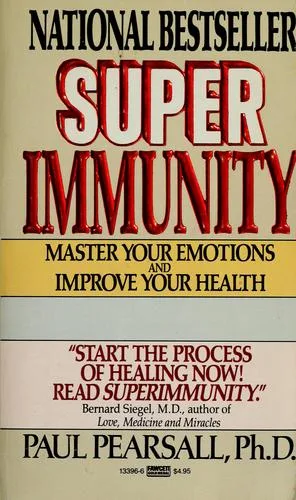
Superimmunity
 71
71

Superimmunity
Paul Pearsall's Superimmunity, from its 1986 debut, presents a compelling argument for the mind's active role in physical health. The strength of the book lies in its accessible exploration of complex psychosomatic interactions, making concepts like the "psychological immune system" understandable for a general audience. Pearsall skillfully connects psychological states to physiological outcomes, a perspective that feels prescient given current research trends. However, the book occasionally leans into anecdotal evidence, which, while illustrative, might not satisfy readers seeking strictly empirical validation. A particularly resonant section discusses how perceived helplessness can directly impact immune response, a concept Pearsall articulates with clarity. Ultimately, Superimmunity remains a valuable early contribution to understanding the intricate dialogue between mind and body.
📝 Description
71
Paul Pearsall's 1986 book Superimmunity suggests conscious effort can bolster the body's defenses.
Published in 1986, Superimmunity examines the relationship between psychological states and physical health. Clinical psychologist Paul Pearsall outlines how "superimmunity" is not a mystical power but a condition cultivated through awareness of internal processes. He argues that specific mental practices and emotional attitudes can strengthen the body's natural resistance to illness.
This book is for readers interested in the psychological roots of health, looking beyond standard medical explanations. It appeals to those who investigate self-healing, the impact of positive psychology, and consciousness's part in preventing disease. Pearsall's ideas will resonate with individuals who favor a comprehensive view of human health, recognizing the mind and body as interconnected systems.
Superimmunity appeared during the mid-1980s, a time when mind-body medicine and alternative health ideas were gaining traction. This period coincided with research into neuropeptides and the immune system, challenging purely mechanical disease models. Pearsall's contribution joined a broader discussion that acknowledged the influence of stress, outlook, and beliefs on health outcomes.
Superimmunity emerged from a growing dialogue in the 1980s that sought to integrate psychological and spiritual understanding with physiological health. It connected with traditions that view the body's well-being as intrinsically linked to mental and emotional states, moving beyond purely materialist explanations. Pearsall's work resonated with a broader interest in personal agency over health, echoing earlier movements that emphasized inner states as crucial determinants of physical condition.
💡 Why Read This Book?
• Gain insight into the "psychological immune system," learning how your thoughts and emotions, as detailed by Pearsall's 1986 research, can actively bolster or weaken your body's defenses. • Understand the concept of "conscious healing" and how to potentially engage your mental state to support physical well-being, a core idea explored in the book's framework. • Explore the historical context of mind-body medicine by engaging with a work that was influential in the 1980s, challenging purely biological disease models.
⭐ Reader Reviews
Honest opinions from readers who have explored this book.
❓ Frequently Asked Questions
What is the central concept of "superimmunity" as presented by Paul Pearsall?
Superimmunity, as defined by Pearsall in his 1986 book, refers to an enhanced state of physical resilience and robust immune function that can be cultivated through conscious psychological and emotional management.
When was Paul Pearsall's Superimmunity first published?
Paul Pearsall's book Superimmunity was first published in 1986, positioning it as an early exploration of psychosomatic influences on health.
Does Superimmunity offer practical techniques for improving one's immune system?
Yes, the book explores principles that can be applied to consciously influence one's health, focusing on mental disciplines and emotional regulation as pathways to enhanced immunity.
What is the "psychological immune system" according to Pearsall?
The "psychological immune system" is a concept Pearsall uses to describe how our mental state, beliefs, and emotional responses act as a crucial defense mechanism against stressors that could otherwise compromise physical health.
How does Superimmunity relate to modern research on mind-body medicine?
Published in 1986, Superimmunity anticipated many modern discussions in mind-body medicine by emphasizing the significant impact of psychological factors on physiological processes and immune function.
Who would benefit most from reading Superimmunity?
Individuals interested in holistic health, psychosomatic medicine, self-healing practices, and the interplay between consciousness and physical well-being would find this book particularly beneficial.
🔮 Key Themes & Symbolism
Psychological Immune System
Pearsall introduces the concept of a "psychological immune system," positing that our mental and emotional states are not passive bystanders but active participants in our body's defense against illness. This theme explores how factors like stress, belief, and emotional outlook directly influence physiological responses, particularly those related to immunity. The book suggests that by understanding and managing these psychological factors, individuals can cultivate a more resilient and robust physical state, moving beyond a purely biological model of health. It highlights the interconnectedness of mind and body in maintaining overall well-being.
Conscious Healing
This theme examines the idea that healing and health maintenance are not solely external processes but can be significantly influenced by an individual's internal consciousness and intentionality. Pearsall suggests that by actively engaging one's mind through specific disciplines and shifts in perspective, one can participate directly in the body's restorative and protective functions. It moves away from a passive patient role towards an active agent in one's own health, emphasizing the power of belief and focused mental states in overcoming disease and fostering a state of "superimmunity."
Mind-Body Interconnection
Fundamentally, Superimmunity emphasizes the inseparable link between the mind and the body. Pearsall argues against a dualistic view, presenting a unified system where psychological distress can manifest as physical ailments and, conversely, positive mental states can promote physical health. This theme explores the mechanisms through which emotions, thoughts, and beliefs impact the immune system and overall bodily function, laying groundwork for understanding psychosomatic medicine. The book posits that true health requires attending to both mental and physical aspects holistically.
Resilience and Well-being
The central aim of cultivating "superimmunity" is to achieve a state of enhanced resilience and overall well-being. Pearsall suggests that this state is not merely the absence of disease but a proactive condition of robust health. This theme explores the practices and mindsets that contribute to this resilient state, focusing on how psychological strength can translate into physical fortitude. It offers a framework for understanding how to foster a body and mind better equipped to handle life's challenges and maintain optimal health over time.
💬 Memorable Quotes
Direct passages from the work, attributed to the author.
“The psychological immune system acts as a vital buffer.”
— This interpretation emphasizes the protective function of our mental state as described by Pearsall, suggesting it plays a critical role in defending the body against the detrimental effects of stress and illness.
“Perceived helplessness can significantly weaken the body's defenses.”
— This concept underscores the negative impact of a victim mentality or a feeling of powerlessness on physical health, as explored by Pearsall in relation to immune system function.
“Conscious intention can be a powerful tool in the healing process.”
— This interpretation points to the active role individuals can play in their own recovery and well-being, suggesting that focused mental states can contribute positively to physical restoration.
💡 Key Ideas
Editorial paraphrase of the work's core concepts — not direct quotes.
Our minds, through their continuous stream of thoughts and feelings, are actively shaping our bodies.
This paraphrased concept highlights Pearsall's core argument that our internal mental landscape is not separate from our physical reality but is a dynamic force influencing our biological processes and health outcomes.
Superimmunity is a state of cultivated resilience.
This paraphrased idea defines the book's central goal, not as an innate gift, but as an achievable condition developed through conscious effort and understanding of mind-body dynamics.
🌙 Esoteric Significance
Tradition
Superimmunity can be seen as aligning with certain Hermetic and Gnostic principles that emphasize the power of consciousness and the interconnectedness of the manifest and unmanifest realms. While not explicitly drawing from these traditions, its focus on the mind's ability to influence physical reality reflects the Hermetic maxim "As above, so below." It departs from strictly materialist interpretations of health, suggesting an underlying energetic or consciousness-based component to well-being, a common thread in many esoteric philosophies.
Symbolism
The concept of "superimmunity" itself can be viewed symbolically as a shield or armor, representing a fortified state of being against external negative influences (disease, stress). The "psychological immune system" functions as an internal guardian, a symbolic representation of the mind's protective power. The idea of "conscious healing" symbolizes the alchemical transformation of illness into health, driven by inner will and awareness, rather than solely external intervention.
Modern Relevance
Pearsall's work speaks to contemporary fields such as psychoneuroimmunology (PNI), positive psychology, and mindfulness-based stress reduction (MBSR). Modern thinkers and practitioners in wellness, integrated medicine, and even quantum healing frameworks often echo Pearsall's core ideas about the mind's role in health. His emphasis on cultivating a "superimmune" state through mental discipline finds parallels in current discussions on resilience training and the impact of meditation on physical health.
👥 Who Should Read This Book
• Individuals interested in psychosomatic medicine, seeking to understand the scientific and psychological basis for how thoughts and emotions affect physical health. • Those exploring self-healing practices and empowerment, who want to learn how to actively participate in their own well-being through mental and emotional cultivation. • Readers curious about the historical development of mind-body health concepts, particularly works that were influential in the 1980s and challenged prevailing medical paradigms.
📜 Historical Context
Published in 1986, Paul Pearsall's Superimmunity emerged during a period of burgeoning interest in the psychosomatic aspects of health. The 1980s saw significant developments in the mind-body medicine field, with researchers like Candace Pert exploring the neurochemical links between emotion and immunity. Pearsall’s work contributed to a growing discourse that challenged the purely biomedical model of disease, which often overlooked psychological factors. It arrived in the wake of popular books like Norman Cousins's "Anatomy of an Illness" (1979), reflecting a societal curiosity about non-pharmacological approaches to health. While the medical establishment was still largely focused on germ theory and genetic predispositions, Pearsall's book tapped into a nascent movement advocating for the power of consciousness and emotional well-being in preventing and combating illness.
📔 Journal Prompts
The "psychological immune system" and its daily impact.
Cultivating "superimmunity" through conscious intention.
The relationship between perceived helplessness and physical health.
Mind-body interconnection in personal wellness.
Defining "conscious healing" for personal application.
🗂️ Glossary
Superimmunity
A concept introduced by Paul Pearsall, denoting an enhanced state of physical health and resilience achieved through the conscious management of psychological and emotional states.
Psychological Immune System
A term used by Pearsall to describe the mental and emotional processes that actively defend the body against stressors and illness, influencing physiological responses.
Conscious Healing
The process by which an individual actively engages their mind and consciousness to influence and support their body's natural healing mechanisms.
Mind-Body Interconnection
The principle that the mind and body are not separate entities but are intrinsically linked, with psychological states directly impacting physical health and vice versa.
Psychosomatic
Pertaining to physical bodily symptoms or diseases that are caused or aggravated by mental or emotional factors.
Resilience
The capacity to recover quickly from difficulties; toughness. In the context of Superimmunity, it refers to the body's ability to withstand and recover from illness or stress.
Holistic Health
An approach to health that considers the whole person—mind, body, and spirit—rather than focusing solely on the treatment of symptoms or disease.
🔮 Readers Also Liked
Browse all →









More by Paul Pearsall
All books →


More Free Occult Philosophy Books
View all →