Hex

 81
81

Hex
Thomas Olde Heuvelt's *Hex* presents a chillingly effective premise: a town cursed by a 17th-century witch, whose spectral presence requires constant, suffocating surveillance. The narrative's strength lies in its meticulously constructed atmosphere of dread and the unsettling portrayal of how normal life warps under perpetual, shared terror. The townspeople's elaborate system of watching and being watched, their forced normalcy, is where the true horror resides. However, the novel falters slightly in its final act, where the attempts to externalize the curse's threat feel less impactful than the internal societal decay it previously depicted. A particularly memorable passage details the young people’s desperate, futile attempts to break free from the town’s oppressive control, showcasing the generational conflict born of inherited doom. *Hex* offers a potent, if imperfect, examination of fear's social architecture.
📝 Description
81
Thomas Olde Heuvelt's 2016 novel Hex imagines a Dutch town cursed by a 17th-century witch.
Hex centers on Black Spring, a modern Dutch town bound by a medieval curse. This affliction transforms its victims into grotesque figures that must not be directly seen, lest others suffer the same fate. To manage this, the residents maintain a system of constant, rigid surveillance and ritual. They live in perpetual fear, their lives dictated by the need to avoid direct sight of the afflicted.
The novel appeals to readers of folk horror who appreciate narratives that connect supernatural dread with social critique. It is for those who find horror in a community's isolation and its internal dynamics. Readers interested in slow-burn psychological terror and stories examining the consequences of collective action, or inaction, will find much to engage with. The setting in an isolated, contemporary Dutch town creates a dissonance, showing how ancient fears persist.
The novel draws on European folklore and witch trial histories, specifically the concept of a 'Hex' as an evil spell or curse. While not tied to a specific historical event, it taps into a deep-seated cultural fear of unseen malevolent forces and the societal responses to perceived witchcraft. The narrative's setting in a modern, yet isolated, Dutch town highlights how ancient fears can manifest and persist in contemporary environments.
💡 Why Read This Book?
• You will learn how ancient folklore, specifically the concept of a witch's curse as depicted in *Hex*, can be recontextualized into a modern-day horror narrative that dissects societal control mechanisms. • You will feel the suffocating weight of collective paranoia and the psychological toll of constant surveillance, as experienced by the residents of Black Spring. • You will gain insight into how a community's response to an inescapable supernatural threat can reveal deeper truths about human nature and social cohesion, as demonstrated by the town's elaborate monitoring system.
⭐ Reader Reviews
Honest opinions from readers who have explored this book.
❓ Frequently Asked Questions
What is the origin of the curse in Thomas Olde Heuvelt's Hex?
The curse in *Hex* originates from the 17th century, inflicted upon Katherine, a woman accused of witchcraft and subsequently banished to the town of Black Spring. Her spectral presence and the curse she wields dictate the town's modern existence.
How does the curse affect the residents of Black Spring?
The curse compels the residents to perpetually watch the witch Katherine. Anyone who sees her becomes afflicted themselves, turning into a grotesque figure. This forces the town into a strict, fear-driven system of constant surveillance and isolation.
Is Hex based on a true story or historical event?
While *Hex* draws inspiration from European folklore regarding witchcraft and curses, it is a fictional narrative. The concept of a 'Hex' as a malevolent spell is rooted in historical beliefs, but the specific events and the town of Black Spring are original to the novel.
What is the significance of the surveillance in Hex?
The intense surveillance in *Hex* is the direct consequence of the curse. It represents the town's desperate attempt to contain the supernatural threat and maintain a semblance of control over their lives, highlighting themes of communal responsibility and psychological burden.
What kind of horror does Hex represent?
*Hex* is primarily a work of folk horror and psychological horror. It focuses on atmospheric dread, the uncanny, and the unsettling implications of a community living under a constant, inescapable supernatural threat, rather than jump scares.
When was Hex first published and who is the author?
Hex was first published in 2016 in Dutch. The author is Thomas Olde Heuvelt, a Dutch writer known for his contributions to contemporary horror literature.
🔮 Key Themes & Symbolism
The inescapable Hex
The central theme is the ancient curse that binds the residents of Black Spring to a life of perpetual observation. This supernatural affliction, originating from a 17th-century witch, dictates every aspect of their existence. The narrative explores how such a pervasive, inescapable threat shapes societal structures, forcing a community into a collective, fear-driven pact. The curse is not merely an external force but an internalized dread that defines their reality, creating a unique form of communal imprisonment.
Community and Surveillance
The novel meticulously details the elaborate surveillance system developed by the townspeople to manage the curse. This involves constant observation of the witch, Katherine, and strict protocols to prevent anyone from seeing her directly. This theme examines how fear can foster extreme social control, leading to a society that prioritizes containment over individual freedom. It questions the nature of community when it is built upon shared terror and enforced conformity.
Isolation and Modernity
Black Spring is depicted as a town deliberately cut off from the outside world, its isolation a necessary component of managing the curse. The narrative contrasts the ancient, supernatural threat with the modern setting, highlighting the persistence of primal fears. This isolation serves to amplify the psychological pressure on the residents, creating a microcosm where the effects of the curse are intensely focused, exploring how tradition and fear can override modern sensibilities.
The Nature of Fear
Fear is the pervasive undercurrent of *Hex*. The book studies the psychological impact of living with a constant, invisible threat, and the societal mechanisms created to cope with it. It explores how fear can be weaponized, how it breeds paranoia, and how it can lead to both extreme measures of control and desperate acts of rebellion. The residents' fear of the Hex shapes their every interaction and decision.
💬 Memorable Quotes
Direct passages from the work, attributed to the author.
“The curse was a part of their lives, as normal as breathing.”
— This highlights the normalization of the extraordinary in Black Spring. What would be an unimaginable horror to outsiders has become mundane, deeply ingrained into the daily routines and psychological makeup of the inhabitants.
“They had to make the curse visible, to understand it, to control it.”
— This reflects the town's proactive, albeit desperate, approach to managing the supernatural threat. The residents attempt to objectify and rationalize the curse through constant observation, seeking agency in a situation defined by powerlessness.
“The fear was a physical thing, a constant pressure in the air.”
— This vividly describes the palpable atmosphere of dread that permeates Black Spring. The fear is not just an emotion but a tangible presence, a suffocating force that dictates the town's environment and the well-being of its inhabitants.
“They built their lives around the silence, around the averted gaze.”
— This emphasizes the core behavioral adaptations required by the curse. The entire social fabric and daily existence of Black Spring's residents are structured around the avoidance of seeing the witch, dictating their interactions and their very way of life.
💡 Key Ideas
Editorial paraphrase of the work's core concepts — not direct quotes.
They are being watched, by the whole world, and they are watching the whole world.
This quote captures the dual nature of the surveillance in Black Spring. The town's secret is a global spectacle, and its residents are thus under constant scrutiny, while simultaneously being the primary watchers of their own cursed existence.
🌙 Esoteric Significance
Tradition
While not strictly adhering to a single esoteric lineage, *Hex* draws heavily from European folk magic and the historical perception of witchcraft. It engages with the concept of the 'curse' (or 'Hex') as a tangible, supernatural force, a common element in animistic and older magical traditions. The novel's focus on the witch's lingering power and the community's ritualistic responses aligns with a broader fascination with the remnants of pagan beliefs and their integration into or suppression by later religious and social structures.
Symbolism
The primary symbol is the witch Katherine herself, representing the inescapable past, repressed societal ills, and the object of collective fear and control. Her spectral presence and the requirement for constant observation symbolize the burden of guilt and the need for external vigilance. The town of Black Spring functions as a symbol of isolation and a contained microcosm of human society under duress, where fear dictates social order. The 'Hex' itself is a symbol of malevolent intent and supernatural influence that defies rational explanation.
Modern Relevance
Contemporary practitioners of folk magic and occult studies find *Hex* relevant for its exploration of how ancient curses and folkloric entities can be conceptualized within modern settings. It appeals to discussions on the power of belief, collective consciousness, and the psychological impact of fear. The novel's depiction of a community managing a supernatural threat through rigid social control provides a cautionary tale for modern societies grappling with anxieties, misinformation, and the potential for collective delusion.
👥 Who Should Read This Book
• Readers interested in folk horror narratives that examine the psychological effects of isolation and supernatural dread, particularly those who appreciate atmospheric storytelling. • Students of comparative mythology and folklore who wish to explore how historical beliefs about witchcraft and curses are adapted into contemporary fiction. • Fans of Thomas Olde Heuvelt's previous works or those seeking dark, unsettling fiction that probes the darker aspects of community and social control.
📜 Historical Context
Published in 2016, Thomas Olde Heuvelt's *Hex* emerged in a landscape where folk horror was experiencing a resurgence, partly influenced by directors like Robert Eggers. The novel taps into a long European tradition of demonology and witch trials, particularly prevalent in the 17th century, the era from which the curse in the book originates. Unlike the explicit historical accounts of witch hunts, *Hex* presents a modern, isolated Dutch community grappling with an ancient, supernatural affliction. The narrative can be seen as a contemporary response to anxieties about community, isolation, and the persistence of older beliefs, echoing themes explored by authors like Shirley Jackson in the mid-20th century, though Olde Heuvelt grounds his horror in a more localized, community-enforced dread. The reception of *Hex* highlighted its success in translating a distinctly European folkloric concept into a globally accessible horror narrative, demonstrating the enduring power of curses and witch narratives.
📔 Journal Prompts
The town's elaborate surveillance system as a response to the Hex.
Katherine's perspective on her curse and the town's actions.
The psychological toll of living under constant, inescapable fear.
The younger generation's rebellion against the town's oppressive traditions.
How the modern world interacts with ancient, supernatural forces.
🗂️ Glossary
Hex
In the context of the novel, a 'Hex' refers to a powerful, malevolent curse or spell cast by a witch, designed to inflict suffering and control upon individuals or communities.
Black Spring
The name of the isolated Dutch town afflicted by the 17th-century curse. It serves as a setting that amplifies the themes of isolation, fear, and supernatural dread.
The Witch
Refers to Katherine, the historical figure from the 17th century who was banished and cursed Black Spring. She is the central supernatural entity around whom the town's existence revolves.
Surveillance
The constant, organized watching of the witch Katherine by the townspeople. This is their primary method of managing and containing the curse, dictating their daily lives and social structure.
Afflicted
Describes individuals who have seen the witch and subsequently succumbed to the curse, transforming into grotesque, non-human figures that must also be watched.
Folk Horror
A subgenre of horror that often draws on folklore, paganism, and isolated rural settings to create a sense of dread and unease, focusing on the clash between tradition and modernity.
17th Century Witchcraft Accusations
Refers to the historical period characterized by widespread accusations, trials, and executions of individuals, predominantly women, accused of practicing witchcraft, often fueled by superstition and religious fervor.
🔮 Readers Also Liked
Browse all →









More by Thomas Olde Heuvelt
All books →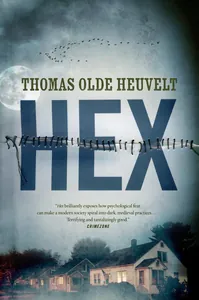

More Free Occult Philosophy Books
View all →