Archetypen

 83
83

Archetypen
Carl Jung’s 'Archetypen' presents a compelling, albeit dense, exploration of the psyche’s deepest structures. Jung meticulously outlines his theory of archetypes, arguing for their universal presence across human cultures. The strength of this work lies in its expansive scope, drawing parallels between ancient myths, religious symbols, and individual dream imagery to support his thesis. However, the sheer volume of Jung’s theoretical constructs and the intricate interconnections he draws can be daunting for readers new to his work. A particularly illuminating section is his discussion of the Shadow, which offers a stark, often uncomfortable, but necessary confrontation with the darker aspects of the self. While the book demands significant intellectual engagement, its insights into the primal patterns of human experience remain undeniably influential. Jung’s 'Archetypen' is a cornerstone text for understanding the universal grammar of the soul.
📝 Description
83
Carl Jung's 'Archetypen' detailed the collective unconscious and its primordial patterns, first published in full in 1999.
Carl Gustav Jung's 'Archetypen' systematically examines the universal, inherited patterns of the human psyche. Jung proposed that these archetypes, which he developed over decades, shape our perceptions and actions. They appear consistently in myths, religions, and dreams across different cultures and historical periods. The book presents a view of the unconscious not merely as a collection of individual experiences, but as a shared inheritance common to all humanity.
This work is pertinent for students and professionals in psychology, especially those focused on depth psychology or psychodynamic theory. It also speaks to scholars of mythology, religious studies, literature, and anthropology interested in recurring themes in human culture. Individuals pursuing personal growth, dream interpretation, or a deeper understanding of consciousness will find its theoretical framework useful.
Jung's exploration of archetypes places 'Archetypen' within a tradition that seeks to understand the deeper structures of the human mind, often connecting them to ancient wisdom and universal symbolism. It bridges academic psychology with occult philosophy by positing a psychic inheritance that transcends personal experience, echoing ideas found in Gnosticism and Hermeticism regarding innate knowledge and cosmic patterns. The book suggests that these primordial images are not mere psychological constructs but manifest in ways that suggest a connection to a larger, unseen reality.
💡 Why Read This Book?
• Understand the collective unconscious: Learn how Jung's 1930s concept of a shared psychic inheritance, distinct from personal experience, manifests through archetypes like the Shadow. • Decipher symbolic language: Gain tools to interpret recurring motifs in myths, dreams, and art, as explored through Jung's method of amplification. • Grasp the concept of the Self: Comprehend Jung's vision of psychic totality and the drive towards wholeness, often symbolized by the mandala, as presented in this seminal work.
⭐ Reader Reviews
Honest opinions from readers who have explored this book.
❓ Frequently Asked Questions
What is the primary focus of Carl Jung's 'Archetypen'?
'Archetypen' focuses on Carl Jung's theory of archetypes, which are innate, universal psychic predispositions that shape human experience and are expressed in myths, dreams, and symbols across cultures. It explores the concept of the collective unconscious.
When was Carl Jung's 'Archetypen' first published?
While Jung developed his theories over many years, 'Archetypen' was first published in its complete form in 1999. His foundational work on these concepts began in the early to mid-20th century.
How does 'Archetypen' relate to Freud's theories?
Jung's 'Archetypen' presents a significant divergence from Sigmund Freud's focus on the personal unconscious. Jung proposed the existence of a collective unconscious, an inherited psychic structure shared by all humans, which is the source of archetypes.
What are some key archetypes discussed in the book?
The book discusses several key archetypes, including the Shadow, the Anima and Animus (representing the contrasexual aspects of the psyche), the Self (the totality of the psyche), and the Great Mother, among others.
Can 'Archetypen' be used for dream analysis?
Yes, 'Archetypen' provides a theoretical framework that is highly applicable to dream analysis. Jung believed dreams are a primary way archetypal patterns and the collective unconscious reveal themselves to the individual.
What is the 'collective unconscious' as described by Jung?
The collective unconscious, as described by Jung, is a deeper layer of the psyche that is inherited and shared by all humanity. It contains the archetypes, which are universal patterns of thought and behavior.
🔮 Key Themes & Symbolism
The Collective Unconscious
Jung posits the collective unconscious as a universal psychic inheritance, a reservoir of latent images and predispositions shared by all humanity, distinct from the personal unconscious. This layer is the source of archetypes, manifesting across cultures in myths, religions, and dreams. Its existence, theorized through extensive comparative studies of symbolism, challenged prevailing psychological paradigms. The work explores how these inherited structures profoundly influence individual consciousness and behavior, providing a common ground for human experience that transcends personal history and cultural specificities. It is the bedrock upon which individual psychic life is built, shaping our perceptions and reactions in fundamental ways.
Archetypal Patterns
Archetypes are the fundamental units of the collective unconscious, described as primordial images or patterns of potential experience. Jung identifies numerous archetypes, such as the Hero, the Shadow, the Anima/Animus, and the Wise Old Man. These are not fully formed images but rather predispositions to form certain representations and experience specific emotions when encountering particular situations. The book details how these patterns emerge in narratives, religious figures, and dream symbolism, offering a framework for understanding the universal dynamics of the human psyche. Their recognition is key to psychological integration and understanding the deep currents of human motivation.
Symbolism and Amplification
Jung's method of amplification is central to understanding archetypes. It involves exploring the meaning of a symbol by drawing upon a wide range of cultural, mythological, and religious parallels. Unlike Freud's reductionist approach to dream symbols, Jung sought to expand their meaning through comparative study. This technique allows the analyst and analysand to trace the archetypal roots of a symbol, revealing its manifold layers of significance. The work emphasizes that symbols are not merely signs but are living expressions of psychic reality, often carrying energies and meanings far beyond their immediate context, pointing towards psychic wholeness.
The Self and Individuation
The Self is presented as the central archetype, representing the totality of the psyche and the ultimate goal of psychological development, known as individuation. It is often symbolized by the mandala, a circular pattern symbolizing wholeness and integration. Individuation is the lifelong process of becoming a complete, integrated individual, differentiating oneself from the collective while also achieving a conscious relationship with the unconscious. Jung viewed this process as essential for psychological health, involving the integration of conscious and unconscious elements, including the challenging archetypes like the Shadow and the Anima/Animus.
💬 Memorable Quotes
Direct passages from the work, attributed to the author.
“The collective unconscious is the repository of the experiences of mankind.”
— This concise statement expresses Jung's radical idea that our unconscious mind contains not just personal memories but also the accumulated experiences of our ancestors. It's a shared psychic heritage that influences our instincts and perceptions.
“The goal of the individuation process is to become one's own self.”
— This emphasizes the ultimate aim of Jungian psychology: not to conform or achieve an ideal type, but to realize one's unique, integrated potential as an individual. It’s a journey of self-discovery and wholeness.
“The Anima is a symbol of the unconscious in relation to consciousness.”
— Here, the Anima (or Animus) is presented as a crucial bridge between the conscious ego and the vast, unknown territory of the unconscious. It represents the contrasexual element within the psyche and plays a key role in relating to the outer world and inner depths.
💡 Key Ideas
Editorial paraphrase of the work's core concepts — not direct quotes.
The archetype is a tendency to form representations of a motif—representations that can vary enormously in detail without losing their basic pattern.
This quote highlights Jung's view of archetypes not as fixed images but as dynamic predispositions. They provide a fundamental structure or blueprint that allows for diverse expressions across different cultures and individuals, while maintaining a recognizable core pattern.
The Shadow is a living something, a preliminary state of the unconscious, the sum of all the lesser psychiciousness that, owing to their incompatibility with the conscious attitude, are not carried on in the personality.
This passage defines the Shadow as more than just repressed negativity; it's a vital, albeit less developed, part of the unconscious psyche. Its incompatibility with our conscious persona leads to its exclusion, yet it remains an influential force.
🌙 Esoteric Significance
Tradition
Jung's work bridges analytical psychology with esoteric traditions, particularly Hermeticism, Gnosticism, and alchemy, which he studied extensively. He saw archetypes as modern expressions of ancient primordial images found in these lineages. His concept of the collective unconscious can be seen as a psychological interpretation of universal spiritual principles or the 'Akashic records' of Theosophy, albeit framed scientifically. Jung's approach sought to reconcile the empirical with the numinous, offering a psychological language to describe experiences previously confined to mysticism and occult philosophy.
Symbolism
Key symbols include the mandala, representing the Self and the drive towards wholeness; the Serpent, often symbolizing transformation, wisdom, and the unconscious, particularly its chthonic aspects; and the Dragon, representing primordial chaos, untamed power, and the unconscious forces that must be confronted for individuation. These symbols are not mere representations but are seen as active psychic forces that emerge from the collective unconscious and guide the individual towards integration.
Modern Relevance
Jung's concepts of archetypes and the collective unconscious continue to profoundly influence contemporary esoteric thought, depth psychology, and even popular culture. Thinkers in Jungian analysis, archetypal psychology (like James Hillman), and transpersonal psychology draw directly from his work. Practices such as modern shamanism, active imagination, and certain forms of art therapy are deeply indebted to his exploration of symbolic processes and the unconscious. His ideas provide a framework for understanding recurring themes in spirituality, mythology, and personal growth movements.
👥 Who Should Read This Book
• Students of depth psychology: Individuals studying Jungian analysis or archetypal psychology will find this text essential for understanding the foundational concepts of the collective unconscious and archetypal forms. • Comparative mythology scholars: Researchers exploring recurring patterns in global myths, folklore, and religious narratives will gain a powerful theoretical lens for analysis. • Individuals on a path of self-discovery: Those interested in dream work, active imagination, and understanding the deeper symbolic language of their own psyche will find practical and useful insights.
📜 Historical Context
Carl Gustav Jung developed his theories of archetypes and the collective unconscious throughout the first half of the 20th century, a period of intense intellectual ferment in psychology and philosophy. His work emerged as a significant departure from Sigmund Freud’s psychoanalysis, particularly his 1913 concept of the collective unconscious, which proposed a transpersonal dimension to the psyche. While Freud focused on repressed personal experiences, Jung looked to mythology, anthropology, and comparative religion to identify universal psychic structures. Jung's ideas were influential but also controversial, often viewed with skepticism by the more empirically-minded scientific establishment of the time. Key contemporaries like Alfred Adler also broke with Freud but pursued different avenues of psychological exploration. Jung's reception was mixed; while celebrated in some esoteric and literary circles, mainstream psychology often struggled to integrate his more metaphysical concepts. His work continued to evolve, with major syntheses appearing in later decades, shaping fields far beyond clinical psychology.
📔 Journal Prompts
The Shadow archetype's integration: How might acknowledging the 'lesser psychiciousness' that is incompatible with your conscious attitude manifest in daily life?
Archetypal motifs in dreams: Reflect on a recurring symbol or character in your dreams and consider its potential archetypal basis, beyond personal association.
The Self as a mandala: Explore the concept of psychic totality and how it might be represented symbolically in your personal experience.
The Anima/Animus projection: Consider how your contrasexual archetype might be influencing your relationships and perceptions of others.
Amplification of a personal symbol: Choose a powerful personal symbol and use the method of amplification to explore its deeper, cross-cultural meanings.
🗂️ Glossary
Archetype
An innate, universal psychic disposition that influences human experience and perception. It is a primordial pattern or image that forms the basis of recurring motifs in myths, dreams, and cultural expressions.
Collective Unconscious
A deeper layer of the psyche, inherited and shared by all humanity, containing the archetypes. It is distinct from the personal unconscious, which comprises repressed individual experiences.
Shadow
The archetype representing the repressed, unconscious aspects of the personality, often perceived as negative or unacceptable. Integration of the Shadow is crucial for psychological wholeness.
Anima/Animus
The contrasexual archetype in the psyche: the Anima represents the feminine aspect in men, and the Animus represents the masculine aspect in women. They mediate the relationship with the unconscious.
Self
The central archetype, symbolizing the totality of the psyche and the goal of individuation. It represents the drive towards psychic wholeness and integration, often symbolized by the mandala.
Individuation
The lifelong process of psychological development whereby an individual becomes a complete, integrated, and distinct personality, differentiating from the collective unconscious and realizing their unique Self.
Amplification
A method used in Jungian psychology to explore the meaning of symbols by comparing them across various cultural, mythological, and historical contexts, revealing their archetypal significance.
🔮 Readers Also Liked
Browse all →









More by Carl Gustav Jung
All books →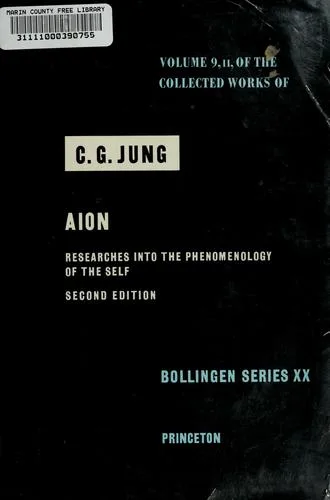

More Free Occult Philosophy Books
View all →