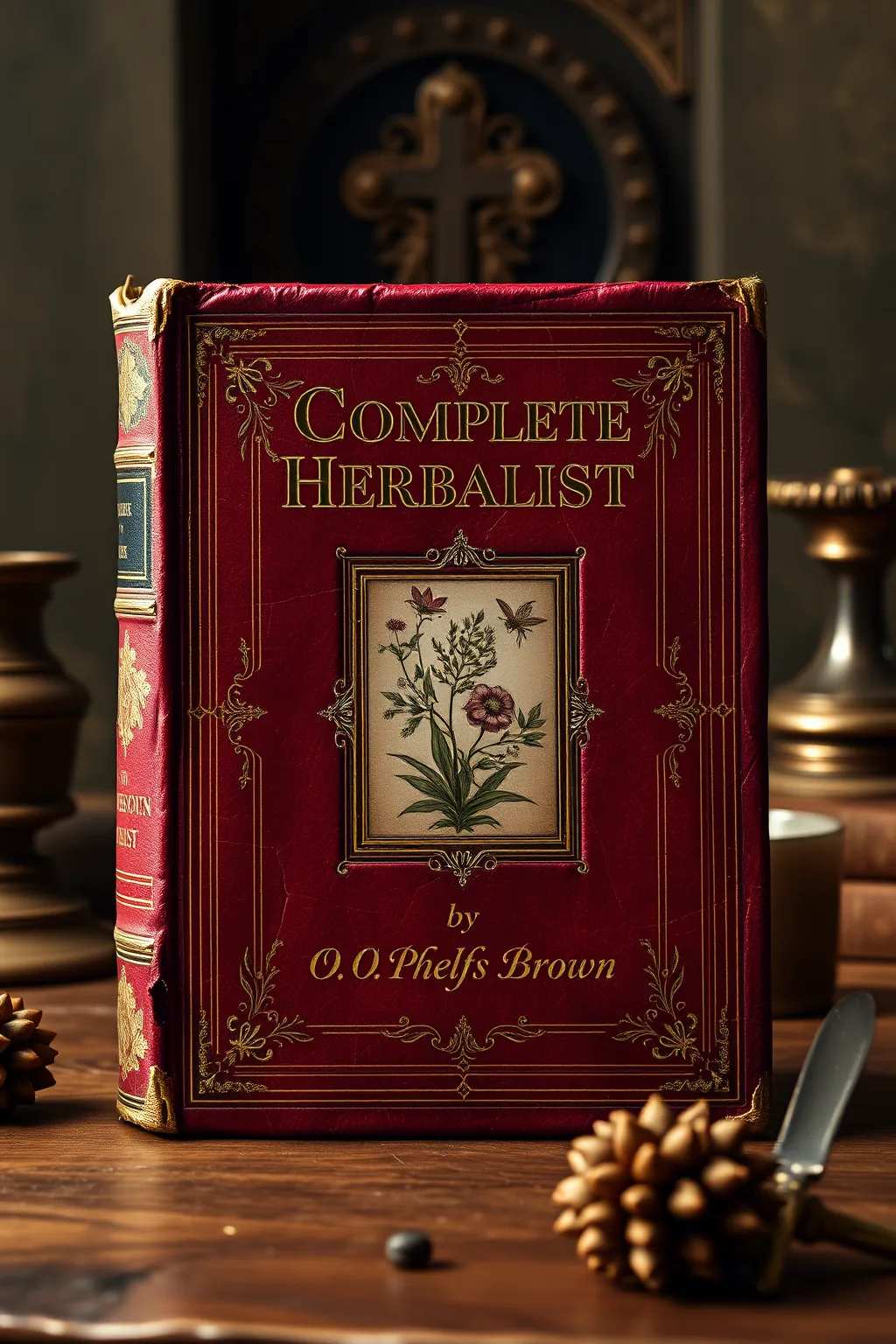
Complete Herbalist; Or, People Their Own Physician
 84
84

Complete Herbalist; Or, People Their Own Physician
O. Phelps Brown's Complete Herbalist presents a fascinating window into 19th-century botanical therapeutics, offering a dense compendium of plant lore. Its strength lies in its encyclopedic scope and the earnest attempt to democratize health knowledge at a time when medical access was limited. The practical instructions for preparing remedies are particularly valuable for historical reenactment or study. However, the work's inherent limitation is its lack of modern scientific validation; many of its asserted medicinal properties are now understood differently or have been disproven. For instance, the detailed section on preparing and using specific plant poultices, while historically accurate, requires careful cross-referencing with contemporary botanical and toxicological data. Brown's approach, while rooted in observation, predates rigorous clinical trials. Ultimately, Complete Herbalist is a significant artifact of folk medicine, best approached with a critical, historical lens.
📝 Description
84
O. Phelps Brown's Complete Herbalist, published in 1833, details plant remedies for self-healing.
Complete Herbalist; Or, People Their Own Physician, first appearing in 1833, is a guide to botanical medicine and self-care informed by 19th-century folk practices. O. Phelps Brown details medicinal plants, their properties, and their use in treating various ailments. The book acts as a practical manual for those wanting to use nature's healing power without depending on professional medical advice.
This text is for the self-reliant person interested in historical health approaches. It appeals to those who prefer practical, nature-based remedies and want to learn about plant efficacy as recorded in earlier times. Readers interested in herbalism, folk medicine, early American home care, and the history of health sciences will find considerable content here. Brown's work reflects a desire for accessible health knowledge during a time of scientific growth and continued folk traditions. It bridges the gap between emerging scientific medicine and the ongoing use of domestic herbal remedies, offering detailed botanical information before modern pharmaceuticals.
While not strictly occult, this work is situated within a broader esoteric tradition concerned with natural philosophy and the body's inherent healing capacities. It connects to a lineage of texts that sought to demystify healing, placing knowledge directly into the hands of the individual. This approach aligns with certain vitalist philosophies and a general interest in forces beyond conventional, iatromechanical understandings of health prevalent in the era. The focus on 'virtues' of plants and direct application reflects a belief in the inherent, discoverable powers within the natural world.
💡 Why Read This Book?
• Learn about historical plant-based remedies and preparation methods, such as the creation of specific tinctures and decoctions detailed by Brown, offering a tangible link to past healing practices. • Understand the 19th-century perspective on self-care and the role of botany in domestic health, as exemplified by the book's focus on empowering individuals to act as their own physicians. • Explore the detailed descriptions of numerous medicinal plants, gaining knowledge of their traditional uses and properties as cataloged by O. Phelps Brown, providing a foundational understanding of historical herbalism.
⭐ Reader Reviews
Honest opinions from readers who have explored this book.
❓ Frequently Asked Questions
When was O. Phelps Brown's Complete Herbalist first published?
The original publication date for O. Phelps Brown's Complete Herbalist; Or, People Their Own Physician is 1833. This places it within the early 19th century, a period of burgeoning interest in practical home remedies and botanical knowledge.
What kind of remedies does the Complete Herbalist focus on?
The Complete Herbalist focuses primarily on botanical remedies derived from medicinal plants. It details how to identify, prepare, and administer these herbs for various health conditions, advocating for a self-sufficient approach to personal health.
Is the Complete Herbalist suitable for modern herbal practice?
While valuable for historical context and understanding past practices, the Complete Herbalist is not a direct guide for modern clinical herbalism. Modern practice relies on scientific validation, whereas Brown's work is based on 19th-century observations and folk traditions.
What does 'People Their Own Physician' imply in the title?
The subtitle 'People Their Own Physician' signifies the book's aim to equip readers with the knowledge to diagnose and treat common ailments using natural means, particularly herbal remedies, thereby reducing reliance on professional medical services.
Where can I find a copy of O. Phelps Brown's Complete Herbalist?
As an early 19th-century work, O. Phelps Brown's Complete Herbalist is likely in the public domain. Digital versions are often available through online archives, university libraries, and sites dedicated to historical texts.
What historical period does the Complete Herbalist reflect?
The Complete Herbalist reflects the early to mid-19th century. Its content and approach are characteristic of the folk medicine and domestic herbalism prevalent during that era, prior to widespread adoption of modern scientific medicine.
🔮 Key Themes & Symbolism
Botanical Therapeutics
The work champions the medicinal properties of plants, detailing their "virtues" for healing. It serves as an extensive catalog of herbs, outlining their specific uses in treating a vast spectrum of human ailments. Brown meticulously describes how to prepare these botanical agents, favoring methods like tinctures, poultices, and decoctions, thereby empowering the reader with practical knowledge for self-administered care rooted in the natural world.
Self-Sufficiency in Health
The subtitle, 'Or, People Their Own Physician,' underscores a central tenet: individual autonomy in health management. In an era with limited access to formal medical care, Brown's guide aimed to equip households with the necessary knowledge to address health concerns using readily available plant resources. This theme promotes a proactive, informed approach to well-being, fostering independence from external medical authorities.
19th-Century Folk Medicine
Complete Herbalist is a significant artifact of 19th-century folk medicine, reflecting the prevailing understanding and application of herbal remedies before the advent of modern pharmaceuticals. It captures the empirical wisdom and traditional practices passed down through generations, offering a glimpse into the domestic health field of the period and the integration of botanical knowledge into daily life.
Practical Application of Plant Lore
Beyond theoretical knowledge, Brown's text emphasizes the practical application of botanical lore. It provides explicit instructions for harvesting, preparing, and administering plant-based remedies, covering methods from simple infusions to more complex preparations. This focus on actionable steps ensures the reader can translate knowledge into tangible healing practices, bridging the gap between understanding and doing.
💬 Memorable Quotes
Direct passages from the work, attributed to the author.
“The medicinal virtues of plants are the subject of this work.”
— This statement captures the book's core purpose: to systematically document and explain the healing powers inherent in the botanical world, positioning plants as primary agents of health and wellness.
“Various preparations are detailed for efficacy, including tinctures and poultices.”
— This points to the practical, hands-on nature of the guide, emphasizing the specific methodologies Brown outlines for extracting and applying medicinal properties from plants for therapeutic outcomes.
“Ailments of the body may be treated by correct application of herbs.”
— This assertion reflects the belief system of the era, where a wide range of illnesses were considered treatable through the judicious use of plant-derived remedies, assuming proper knowledge and application.
“Knowledge of domestic botany empowers the household.”
— This interpretation conveys the book's intent to disseminate botanical knowledge for practical, domestic use. It suggests that understanding plants for healing purposes grants agency and capability to the family unit.
💡 Key Ideas
Editorial paraphrase of the work's core concepts — not direct quotes.
To be your own physician is to understand the remedies Nature provides.
This paraphrase highlights the book's philosophy of self-reliance in health. It suggests that true personal medicine lies in comprehending and utilizing the natural healing resources available, particularly plants.
🌙 Esoteric Significance
Tradition
While not explicitly aligned with a specific esoteric lineage like Hermeticism or Kabbalah, Complete Herbalist draws from the broader tradition of natural magic and folk healing deeply embedded in Western esoteric thought. It shares the Hermetic principle of "As Above, So Below" by seeking correspondences between the macrocosm (Nature's bounty) and the microcosm (the human body), advocating for harmony through natural remedies. Its emphasis on the inherent virtues of plants can be seen as a practical application of vitalist philosophies common in older occult traditions.
Symbolism
The primary symbolism lies in the plants themselves, each imbued with specific "virtues" that reflect their perceived essence and function. For example, a plant with a red sap might symbolize blood or vitality, while a root resembling a human form could suggest a connection to the physical body. The act of preparing remedies—infusions, decoctions, poultices—can also be seen symbolically, representing processes of extraction, purification, and transformation, mirroring alchemical principles of working with natural substances.
Modern Relevance
Contemporary interest in plant-based medicine, the resurgence of herbalism, and the growing movement towards holistic and natural health practices show a clear lineage back to works like Brown's. Modern herbalists and naturopaths, while relying on scientific research, often consult historical texts to understand the traditional applications and historical context of herbs. The book's emphasis on individual empowerment and accessible remedies appeals to current trends in self-care and alternative wellness movements.
👥 Who Should Read This Book
• Students of historical herbalism and 19th-century domestic practices seeking primary source material on plant-based remedies and self-care. • Researchers interested in the history of medicine and public health, particularly how individuals managed illness before modern pharmaceuticals became widespread. • Enthusiasts of folk traditions and natural living who wish to understand the empirical knowledge and practical applications of botany in earlier eras.
📜 Historical Context
O. Phelps Brown's Complete Herbalist, published in 1833, emerged during a key era in American medicine. The early 19th century was characterized by a dichotomy: the nascent development of scientific, allopathic medicine, often employing harsh treatments like bloodletting and purging, and the persistent strength of folk traditions, including eclectic herbalism. Contemporaries like Samuel Thomson, with his Thomsonian system, also advocated for natural remedies and patient empowerment, though often with different theoretical underpinnings. Brown's work tapped into a widespread desire for accessible, less invasive health practices, serving as a popular manual that provided detailed botanical information to households. While scientific medicine was gaining ground, exemplified by figures like Benjamin Rush advocating for empirical observation, the public retained a deep trust in traditional herbal lore, making works like Brown's highly relevant and widely circulated.
📔 Journal Prompts
Reflect on the "virtues" attributed to the plant called 'Comfrey' (Symphytum officinale) as described by Brown.
Consider the historical context of self-physiciancy implied by the book's subtitle and its relevance today.
Analyze the preparation methods for tinctures mentioned in the text and their underlying principles.
Explore the concept of "domestic botany" and how it functioned in 19th-century households.
Identify three common ailments discussed in the book and the specific herbal treatments recommended for them.
🗂️ Glossary
Virtues
In the context of 19th-century herbalism, 'virtues' refers to the inherent medicinal properties or powers of a plant, believed to be specific to its nature and capable of influencing the human body for healing.
Tincture
A medicinal preparation made by steeping herbs or other plant materials in alcohol (like brandy or spirits) to extract their active compounds. Tinctures are concentrated liquid forms of herbal remedies.
Poultice
A soft, moist mass, typically made from mashed herbs or other substances, applied hot to a sore or inflamed part of the body for healing or relief.
Decoction
A medicinal preparation made by boiling plant materials, usually the tougher parts like roots, bark, or seeds, in water to extract their soluble properties.
Domestic Botany
The study and application of botanical knowledge within the home, focusing on the practical uses of plants for household needs, particularly in health, cooking, and crafts.
Ailment
A minor illness or ailment; a bodily disorder or sickness, often implying a condition that can be managed with home remedies or less severe treatments.
Physician
In the context of the title, 'Physician' refers to anyone who diagnoses and treats illness. The book encourages readers to take on this role for themselves using herbal knowledge.
🔮 Readers Also Liked
Browse all →









More by O. Phelps Brown
All books →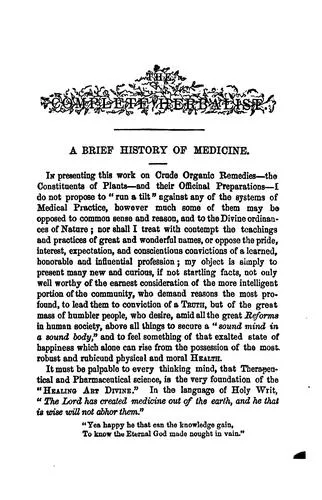
More Free Occult Philosophy Books
View all →