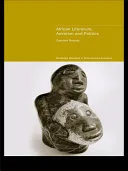
African Literature, Animism and Politics
 75
75

African Literature, Animism and Politics
Caroline Rooney's "African Literature, Animism and Politics" offers a formidable exploration of how animistic thought structures African literary and political expression. The work's strength lies in its meticulous deconstruction of Western epistemological biases that have historically obscured the philosophical depth of these traditions. Rooney's engagement with specific texts, demonstrating how animistic ontologies actively shape narrative and ideology, is particularly compelling. For instance, her analysis of how communal spiritual connections translate into political resistance provides a potent counterpoint to Eurocentric political theories. A limitation, however, is the dense theoretical apparatus, which, while illuminating, can occasionally obscure the vibrant cultural expressions it seeks to illuminate. The section dissecting the concept of the 'African discourse of consciousness' is a highlight, articulating a nuanced understanding of how indigenous worldviews persist and adapt. Ultimately, Rooney provides a vital critical lens for understanding African intellectual traditions beyond colonial impositions.
📝 Description
75
Caroline Rooney's 2004 book examines animism's role in African literature and politics.
Caroline Rooney's "African Literature, Animism and Politics" (2004) analyzes how animistic beliefs inform African literary works and political thought. The book argues that these beliefs are not outdated traditions but active philosophical systems that continue to shape identity and consciousness in postcolonial Africa. Rooney engages with animism as a complex framework influencing perception, social structures, and intellectual discourse. The work challenges earlier Western interpretations that often dismissed or misunderstood these African worldviews. It places Rooney's study within a scholarly shift to re-center African ways of knowing.
The book is aimed at academics and advanced students in fields like literary theory, postcolonial studies, anthropology, political science, and psychoanalysis. It is particularly useful for those studying the connections between literature, philosophy, and culture in African societies. Readers interested in understanding how belief systems interact with power and societal change will find its interdisciplinary approach valuable. Rooney's research contributes to a deeper understanding of African intellectual traditions and their contemporary relevance.
This work engages with animism not as mere superstition, but as a complex philosophical system with profound implications for understanding worldviews outside of Western rationalism. It situates African animistic traditions within a broader, though often overlooked, lineage of thought that emphasizes interconnectedness between the material and spiritual, the individual and the collective. By analyzing how these beliefs manifest in literature and politics, Rooney connects them to a rich vein of inquiry into indigenous knowledge systems and their resilience against colonial imposition. The book contributes to understanding how non-Western cosmologies operate as dynamic forces in shaping societies.
💡 Why Read This Book?
• Learn how animistic belief systems function not as static traditions but as dynamic philosophical frameworks informing contemporary African literature and politics, as demonstrated by Rooney's analysis of the "literature of animism." • Understand the concept of the "African discourse of consciousness" and how it challenges Western ontological assumptions, offering a unique perspective on subjectivity and reality. • Gain insight into the political implications of animism, exploring how these spiritual and communal worldviews translate into specific forms of political thought and resistance, as detailed in the book's analyses of postcolonial contexts.
⭐ Reader Reviews
Honest opinions from readers who have explored this book.
❓ Frequently Asked Questions
What is the primary focus of Caroline Rooney's "African Literature, Animism and Politics"?
The book's primary focus is the intricate relationship between African literary works, animistic belief systems, and political thought, particularly in postcolonial contexts. It examines how animism shapes consciousness and is expressed through literature.
When was "African Literature, Animism and Politics" first published?
The book "African Literature, Animism and Politics" by Caroline Rooney was first published on January 14, 2004.
Which academic fields would find this book most relevant?
The book is relevant to literary and critical theory, philosophy, anthropology, politics, and psychoanalysis, offering interdisciplinary insights into African thought.
What does the book mean by the 'African discourse of consciousness'?
It refers to the distinct ways of thinking, perceiving, and understanding the world that are informed by African philosophical traditions, including animism, and how these differ from Western paradigms.
Does the book argue that animism is only found in ancient African cultures?
No, the book emphasizes that animism is a living and evolving force within contemporary African literature and politics, actively shaping modern thought and social structures.
Who is the author of "African Literature, Animism and Politics"?
The author is Caroline Rooney, and the book was first published in 2004.
🔮 Key Themes & Symbolism
Animism as Philosophical System
This theme explores animism not merely as superstition but as a complex philosophical framework that underpins African worldviews. Rooney examines how these systems offer alternative ontologies, challenging Western dualisms and providing a rich conceptual language for understanding existence, community, and the interconnectedness of the spiritual and material realms. The book analyzes how this philosophical depth is articulated within literary narratives, demonstrating its enduring relevance.
Postcolonial Consciousness
The work investigates the 'African discourse of consciousness' as a product of and response to colonial encounters. It scrutinizes how indigenous epistemologies, particularly animistic ones, are reasserted and adapted in the face of colonial legacies. This theme looks at how literature becomes a site for articulating and contesting dominant Western narratives, fostering a distinct postcolonial subjectivity that integrates traditional beliefs with modern realities.
Literature as Political Expression
Here, the focus shifts to how the 'literature of animism' functions as a potent form of political expression. Rooney demonstrates that these literary works are not just descriptive but actively engage in political discourse, offering critiques of power structures and proposing alternative models of social organization derived from animistic principles. The connection between spiritual cosmology and political ideology is a central concern.
Challenging Western Epistemologies
A core objective of the book is to challenge the dominance of Western philosophical and critical frameworks in understanding African cultures. By highlighting the sophistication of animistic thought and its literary manifestations, Rooney aims to decenter Western perspectives and validate indigenous knowledge systems. This theme underscores the importance of approaching African literature and thought on its own terms.
💬 Memorable Quotes
Direct passages from the work, attributed to the author.
“the African discourse of consciousness”
— This phrase expresses Rooney's central analytical concept, referring to the unique modes of thought and perception shaped by African philosophical traditions, particularly animism, which differ significantly from Western paradigms.
“a literature of animism”
— This highlights Rooney's argument that certain literary works are not merely about animism but are fundamentally structured by its principles, employing its logic and worldview as core components of their narrative and thematic concerns.
“the work will be of great interest to scholars in many fields”
— This indicates the book's interdisciplinary nature, suggesting its relevance extends beyond literary studies to encompass philosophy, anthropology, politics, and psychoanalysis due to its broad theoretical scope.
“analyses of a literature of animism”
— This points to the book's methodology, emphasizing its detailed examination and interpretation of literary texts through the lens of animistic belief systems and their cultural implications.
“its far-reaching analyses”
— This suggests that the book's arguments and conclusions have significant implications, extending the understanding of African literature and its connection to philosophical and political structures.
🌙 Esoteric Significance
Tradition
While not strictly aligning with a single Western esoteric lineage like Hermeticism or Gnosticism, Rooney's work engages with concepts that resonate with animistic traditions found globally, which often share foundational principles with certain esoteric schools. These include the inherent spirituality of the natural world, the interconnectedness of all beings, and the existence of unseen forces or realms influencing the material plane. Her analysis aligns with esoteric philosophies that posit a unified cosmic consciousness and emphasize intuitive or spiritual ways of knowing.
Symbolism
The book implicitly engages with the symbolism inherent in animistic thought. Concepts such as the spiritual essence residing in natural elements (trees, rivers, animals) and the symbolic language used in rituals and oral traditions represent a form of symbolic communication between the human and spiritual realms. The 'African discourse of consciousness' itself can be seen as a symbolic representation of a worldview that prioritizes communal well-being and spiritual harmony over individualistic materialism, reflecting a deeper symbolic order.
Modern Relevance
Rooney's work finds contemporary relevance in fields exploring critical indigenous studies, decolonial theory, and eco-philosophy. Thinkers and practitioners interested in non-dualistic philosophies, nature-based spiritualities, and alternative political models that emphasize community and ecological balance draw upon such analyses. The book's insights inform contemporary discussions about consciousness studies and the potential of non-Western epistemologies to offer solutions to global challenges, resonating with movements advocating for a more holistic and interconnected understanding of reality.
👥 Who Should Read This Book
• Scholars of postcolonial literature and theory seeking to understand the philosophical underpinnings of African texts beyond Eurocentric frameworks. • Anthropologists and philosophers interested in comparative belief systems and the intellectual traditions of non-Western cultures. • Political scientists and activists exploring alternative models of governance and social organization informed by communal and spiritual worldviews.
📜 Historical Context
Published in 2004, Caroline Rooney's "African Literature, Animism and Politics" entered a postcolonial studies landscape increasingly focused on epistemological diversity. The work engaged with scholars like Ato Quayson and Achille Mbembe, who were exploring the complexities of African modernity and subjectivity. Rooney's intervention was significant in its direct confrontation with Western philosophical biases that had historically marginalized animistic worldviews, often dismissing them as primitive. Unlike earlier anthropological studies that might have focused solely on descriptive ethnography, Rooney's approach was deeply theoretical, linking animism to sophisticated political thought and literary expression. The book emerged as Western critical theory itself was grappling with its own limitations in addressing non-Western philosophical traditions, making Rooney's work timely in its call for a re-evaluation of African intellectual heritage.
📔 Journal Prompts
The African discourse of consciousness as a lens for self-reflection.
Animism's structuring of narrative in a chosen literary work.
Political implications of communal spiritual belief systems.
Challenging your own ingrained Western epistemological assumptions.
The symbolism of nature within the literature of animism.
🗂️ Glossary
Animism
A belief system attributing spiritual essence or agency to natural objects, phenomena, and the universe. In this context, it refers to traditional African worldviews that perceive a vital force or spirit within all things.
African discourse of consciousness
A term used by Rooney to describe the unique modes of thought, perception, and self-understanding that arise from African philosophical and cultural traditions, particularly animism, distinct from Western paradigms.
Literature of animism
Literary works that are not merely about animistic beliefs but are fundamentally shaped by and express animistic worldviews, ontologies, and epistemologies.
Postcolonial studies
An academic field examining the cultural legacy of colonialism and imperialism, focusing on the impact on colonized societies and the literature produced within these contexts.
Ontology
The philosophical study of being or existence. In this book, it refers to the fundamental nature of reality as understood through animistic frameworks.
Epistemology
The theory of knowledge, especially regarding its methods, validity, and scope. It refers to how we know what we know, explored here in relation to Western vs. African traditions.
Colonial legacy
The lasting impact of colonial rule on the political, social, economic, and cultural structures of formerly colonized nations.