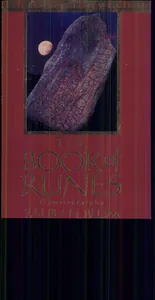
Runes

 72
72

Runes
Jeffery Taylor's *Runes* tackles a subject often shrouded in mystique with commendable clarity. Its strength lies in its methodical approach, breaking down the Elder Futhark into digestible components for the absolute beginner. The historical overview, while necessarily condensed, effectively grounds the magical practices in their Germanic origins. I found the section detailing the individual rune meanings particularly well-structured, avoiding the overly poetic ambiguity that can plague similar texts. However, the book's primary limitation is its very accessibility; seasoned practitioners might find the interpretations somewhat generalized. A deeper dive into the more complex mythological connections or variations in runic traditions, perhaps referencing the work of scholars like Rune Hjarnø, would have added further depth. Despite this, for someone taking their first steps into rune reading, *Runes* provides a solid and unintimidating foundation. It succeeds in making an ancient art feel approachable.
📝 Description
72
Jeffery Taylor's Runes, published in 2022, demystifies the ancient Germanic alphabet for divinatory use.
Published in 2022, Jeffery Taylor's Runes serves as an introduction to the historical Germanic alphabet and its use in divination. The book systematically breaks down the origins of the runes, the individual symbols, and their associated meanings. It aims to make the study of rune lore accessible to those new to the subject. Taylor offers a structured approach to understanding this esoteric system, bridging historical interest with practical application.
This work is specifically for beginners interested in magical practices. Those seeking a starting point for exploring runes will find its guidance useful. The book caters to readers curious about the historical roots and symbolic language of runes. It provides a clear method for learning rune reading for personal insight or divination, for anyone who has wondered about the secrets these ancient symbols hold.
Runes places the Elder Futhark, the oldest Germanic alphabet, within its historical context. It acknowledges scholarly discussions about the script's origins and early applications, linking them to migration periods. The book focuses on the 24 symbols of the Elder Futhark, treating each as a symbol with meanings connected to Norse mythology, nature, and human experience. It explains practical methods for rune casting, positioning the practice as a tool for personal insight.
💡 Why Read This Book?
• You will learn a structured method for interpreting the Elder Futhark, moving beyond simple memorization to understand the nuanced meanings of each symbol, such as the protective symbolism of Algiz, as presented in the book's 'Symbols and Meanings' section. • Gain practical skills in rune casting for personal divination, enabling you to derive insights from the symbolic language of runes, a process detailed in the book's practical application guides. • Understand the historical lineage of runes, tracing their origins to the Germanic tribes and the Elder Futhark, providing a factual basis for their esoteric use that goes beyond mere speculation.
⭐ Reader Reviews
Honest opinions from readers who have explored this book.
❓ Frequently Asked Questions
What are the origins of the runes discussed in Jeffery Taylor's book?
The book traces the origins of runes to the Elder Futhark, the oldest runic alphabet used by Germanic tribes. This alphabet is believed to have emerged around the 2nd century CE and was used for inscriptions on stone, wood, and metal.
Is Jeffery Taylor's 'Runes' suitable for someone with no prior knowledge?
Yes, the book is specifically designed as a 'runes for beginners' guide. It systematically explains what runes are, their history, and their meanings, making it an accessible starting point for newcomers.
What is the Elder Futhark mentioned in the book?
The Elder Futhark is the oldest of the runic alphabets, comprising 24 symbols. Jeffery Taylor's book dedicates significant attention to exploring each of these symbols and their associated meanings.
How does the book teach rune reading?
The book covers the fundamental aspects of rune reading, including understanding the symbolism of individual runes and exploring methods for casting and interpreting their combinations for divination and personal insight.
Does the book cover the historical evolution of runes?
Yes, the book provides a historical context for runes, discussing their emergence with the Elder Futhark and acknowledging the evolution into later scripts like the Younger Futhark and Anglo-Saxon Futhorc.
What kind of magical or esoteric knowledge does 'Runes' impart?
It imparts knowledge related to the esoteric and divinatory uses of runes, focusing on understanding their symbolic language and how to apply this knowledge for self-discovery and guidance.
🔮 Key Themes & Symbolism
Elder Futhark Symbolism
The core of Taylor's work lies in clarifying the Elder Futhark, the foundational 24-rune alphabet. Each rune is presented not merely as a phonetic symbol but as a potent sigil carrying layers of meaning. The book meticulously details concepts like Fehu (wealth, abundance) and Uruz (strength, primal energy), explaining how their inherent qualities can be applied to understand life's circumstances. This focus on individual rune significance is crucial for beginners seeking to grasp the building blocks of runic divination and magic.
Historical Roots and Evolution
Taylor anchors the study of runes in their historical context, tracing their lineage from the Elder Futhark, used by Germanic tribes from approximately the 2nd century CE. The work acknowledges the script's journey through different historical periods and geographical locations, touching upon the development of later variations. Understanding this historical trajectory, from its likely origins in the Roman alphabet's influence to its use in ancient inscriptions, provides a solid framework for appreciating the runes' enduring power.
Practical Rune Casting
Beyond theoretical knowledge, 'Runes' emphasizes practical application. The book guides readers through the process of rune casting, a method of divination using the drawn symbols to gain insight. It explains how to prepare for a reading, cast the runes, and interpret the resulting patterns. This hands-on approach empowers readers to use runes for self-reflection, decision-making, and exploring potential futures, transforming the ancient symbols into a living tool.
Beginner's Accessibility
A significant theme is making rune study approachable for newcomers. Taylor consciously avoids overly academic or obscure language, opting for clear explanations of complex concepts. The book serves as a gateway, encouraging those curious about magic and esoteric traditions to start their journey with a reliable and understandable resource. This focus on accessibility is key to its purpose as an introductory text.
💬 Memorable Quotes
Direct passages from the work, attributed to the author.
“What Runes Are?”
— This direct question, serving as a chapter title, highlights the book's intent to clarify the fundamental nature and purpose of runes for the uninitiated reader.
“History of Runes”
— This section title indicates the book's commitment to providing a factual and chronological understanding of the runes' origins and development, grounding their esoteric use.
“Symbols and Meanings”
— This phrase underscores the central focus on the individual runic characters and their associated esoteric or divinatory interpretations, crucial for practical application.
“U”
— Likely an abbreviation or incomplete entry in the original blurb, this suggests the book covers specific runes, perhaps starting with the letter 'U' in its listing or discussion.
“This book of runes for beginners is a wonderful place to start your journey to uncover the hidden secrets of runes.”
— This statement from the blurb clearly positions the book as an entry-level text, promising a guided exploration into the mysteries of runic lore for novice students.
🌙 Esoteric Significance
Tradition
This work fits within the broader Western Esoteric tradition, specifically drawing from the Neo-Germanic and Northern European revivalist currents. It aligns with practices that seek to reclaim and reinterpret ancient spiritual symbols for modern use, moving beyond strict adherence to historical accuracy towards symbolic and divinatory efficacy. It departs from purely academic philology by focusing on the magical and psychological dimensions of the runes, as popularized in 20th-century occultism.
Symbolism
Central symbols include the runes of the Elder Futhark themselves. For instance, the rune Ansuz (ᚨ) is often interpreted as representing divine inspiration, communication, and wisdom, linked to Odin. Another key symbol is Thurisaz (ᚦ), signifying raw power, chaos, and the destructive/protective force of the thorn, often associated with Thor. These symbols function not just as letters but as energetic archetypes within the runic system.
Modern Relevance
Contemporary practitioners of Heathenry, Asatru, and various forms of modern paganism often utilize rune casting for divination and personal growth. The work's accessible approach makes it relevant for individuals exploring these paths, as well as for those interested in psychological archetypes and comparative mythology, drawing parallels with Jungian concepts of the collective unconscious.
👥 Who Should Read This Book
• Beginning students of divination seeking a structured introduction to a new symbolic system, offering clear explanations of the Elder Futhark's history and individual meanings. • Individuals curious about Norse mythology and Germanic history who wish to understand the practical, esoteric applications of the runic alphabet beyond academic study. • Aspiring practitioners of modern pagan or Heathen paths looking for a foundational text on rune reading as a tool for self-discovery and spiritual guidance.
📜 Historical Context
Published in 2022, Jeffery Taylor's *Runes* enters a contemporary landscape where interest in esoteric practices, including divination and ancient scripts, continues to grow. It arrives amidst a resurgence of popular engagement with Norse mythology and pagan traditions, often fueled by media and online communities. While academic scholarship on runes has been ongoing since the late 19th century, with figures like Sophus Bugge making foundational contributions to understanding their linguistic roots, popular interpretations have often diverged. Taylor's work aims to bridge this gap by offering a guide rooted in historical understanding but focused on practical application, differentiating itself from purely academic texts or more speculative occult writings. It does not appear to have faced significant censorship or garnered specific academic prizes, positioning itself primarily as an accessible educational resource for a general audience interested in Western esotericism.
📔 Journal Prompts
The historical context of the Elder Futhark: Reflect on its emergence around the 2nd century CE.
The symbolism of Algiz: Consider its protective qualities and how they might apply to your current situation.
Methods of rune casting: Document your first attempt at drawing and interpreting a rune spread.
The dual nature of Thurisaz: Explore its representation of both chaos and defense.
Personal connection to Fehu: Analyze what 'wealth' or 'abundance' signifies in your life beyond material possessions.
🗂️ Glossary
Elder Futhark
The oldest known runic alphabet, consisting of 24 symbols, used by Germanic tribes from approximately the 2nd to the 8th centuries CE. It forms the basis for most modern runic studies.
Rune Casting
The practice of divining or seeking insight by drawing runes from a bag or container and interpreting their meaning based on their position and combination.
Divination
The practice of seeking knowledge of the future or the unknown by supernatural means. In this context, it refers to using runes to gain insight into questions or situations.
Futhark
A generic term for a runic alphabet, derived from the first six letters of the Elder Futhark: F, U, Th, A, R, K. The specific sequence denotes different runic alphabets (e.g., Elder, Younger).
Sigil
A symbol used in magic, often representing a specific intention, deity, or concept. Runes can be considered sigils within their esoteric framework.
Norse Mythology
The body of myths originating from the ancient Norse and Germanic peoples, concerning their gods, heroes, the creation of the world, and the end of the world. Runes are deeply intertwined with these narratives.
Meaning (Runic)
The symbolic, divinatory, or esoteric interpretation associated with each individual rune character, often drawing from mythology, nature, and human experience.
This book appears in 1 collection
🔮 Readers Also Liked
Browse all →








From the “Rune Reading” Collection
View all →






More Free Occult Philosophy Books
View all →