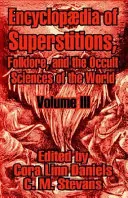
Collected Works of C. G. Jung, Volume 10

 77
77

Collected Works of C. G. Jung, Volume 10
Celeste Moreau, Divination & Symbolism Reviewer
Volume 10 of Jung's Collected Works, *Civilization in Transition*, showcases a less frequently discussed facet of his work: his direct, often prescient, analysis of contemporary socio-political events. The inclusion of "The Undiscovered Self" (1958) is particularly potent, offering a stark warning about the dangers of mass society and the erosion of the individual psyche. Jung's assertion that World War I (1914-1918) represented a 'psychological crisis' originating in the collective unconscious, presented as early as 1918, demonstrates his consistent theoretical framework applied to unfolding history. While the essay "Flying Saucers: A Modern Myth of Things Seen in the Skies" (1958) might seem tangential, it serves as a fascinating case study in modern myth-making and projection. A limitation might be that some of the political analyses, while insightful, are rooted in the specific anxieties of the mid-20th century, requiring readers to bridge the gap to current contexts. Nevertheless, Jung's exploration of the individual's struggle against overwhelming collective forces remains a vital perspective.
Read more ↓
This volume confirms Jung's enduring relevance for understanding the psychological dynamics underlying societal shifts.
📝 Description
77
Collected Works Vol. 10 gathers C. G. Jung's writings from 1918 to 1959 on societal shifts.
This volume, *Civilization in Transition*, collects essays C. G. Jung wrote between 1918 and 1959. The writings address Jung's views on the social and political climate of his time, including how mass movements and the psychology behind historical events influenced individuals. Among the included texts are "The Undiscovered Self" and "Flying Saucers: A Modern Myth of Things Seen in the Skies."
The book is aimed at students of depth psychology, those who analyze culture, and anyone interested in how the individual mind connects with larger collective forces. Readers will find value in tracing the development of Jung's ideas as they responded to major world events, technological changes, and the rise of different ideologies. It offers a look at 20th-century intellectual history through a psychological lens.
Published in the mid-20th century, these essays show Jung confronting the crises of his era, such as the aftermath of World War I and the tensions of the Cold War. His work developed alongside existentialism and Freudian psychoanalysis, but his willingness to examine contemporary phenomena, even topics like flying saucers, distinguished him. This approach drew both praise and criticism.
While not strictly occult, Jung's work here engages with the unconscious forces that drive societal change, a topic often explored within esoteric traditions. His analysis of "modern myths" like flying saucers connects with the esoteric interest in widespread symbolic phenomena that arise from the collective psyche. Jung's willingness to interpret these as manifestations of unconscious needs and archetypes places his work in dialogue with traditions that look beyond rational explanation for understanding human behavior and belief.
💡 Why Read This Book?
• Gain insight into Jung's application of psychological concepts to major historical events, such as his analysis of World War I (1914-1918) as a crisis of the collective unconscious, providing a framework for understanding societal trauma. • Understand Jung's perspective on the relationship between the individual and the state, particularly through the lens of "The Undiscovered Self" (1958), learning how societal pressures can lead to conformity and psychological diminishment. • Explore Jung's method of analyzing contemporary phenomena as expressions of archetypal patterns, exemplified by his study of "Flying Saucers" (1958), which reveals how collective anxieties and hopes can manifest in modern myths.
⭐ Reader Reviews
Honest opinions from readers who have explored this book.
❓ Frequently Asked Questions
What is the primary focus of C.G. Jung's *Civilization in Transition*?
This volume focuses on Jung's essays concerning contemporary events and the relationship between the individual and society. It includes his analyses of mass psychology, war, and modern myths, such as "The Undiscovered Self" and "Flying Saucers."
When did C.G. Jung first propose that World War I was a psychological crisis?
Jung first advanced the theory that World War I was a psychological crisis originating in the collective unconscious in an essay titled "The Role of the Unconscious," written in 1918.
What is 'The Undiscovered Self' about?
"The Undiscovered Self" is a significant essay within this volume where Jung discusses the dangers of the modern state and mass movements, emphasizing the importance of individual consciousness and self-knowledge in the face of societal pressures.
Does Volume 10 of the Collected Works include Jung's thoughts on flying saucers?
Yes, Volume 10 contains Jung's essay "Flying Saucers: A Modern Myth of Things Seen in the Skies" (1958), where he examines the phenomenon from a psychological and mythological perspective, viewing it as a manifestation of collective unconscious content.
What is the historical period covered by the essays in *Civilization in Transition*?
The essays in this volume were written by Jung between 1918 and 1959, covering a crucial period of global upheaval including two World Wars and the rise of various political ideologies.
How does Jung connect individual psychology to societal events in this book?
Jung posits that collective events like wars are often expressions of underlying psychological dynamics within the collective unconscious. He explores how archetypes and shadow projections influence mass behavior and political movements.
🔮 Key Themes & Symbolism
Individual vs. Collective
This volume intensely explores the perennial tension between the individual psyche and the overwhelming forces of collective movements and societal structures. Jung argues that modern civilization, with its emphasis on mass conformity and technological advancement, poses a significant threat to individual consciousness and autonomy. Essays like "The Undiscovered Self" directly confront this issue, urging a return to introspection and the development of a personal relationship with the unconscious to resist psychological assimilation by the collective. The work posits that societal crises are often symptomatic of a collective psychic imbalance.
The Collective Unconscious and History
Jung presents historical events not merely as political or economic occurrences, but as manifestations of deeper, unconscious psychological forces. He theorizes that major upheavals, such as World War I, originate within the collective unconscious of humanity. This perspective allows him to interpret contemporary events, including the fascination with flying saucers in the 1950s, as expressions of archetypal patterns and collective psychic needs. Understanding history through this lens reveals recurring motifs and the enduring influence of ancient psychological structures on modern life.
Modern Myth-Making
In an era increasingly dominated by science and secularism, Jung observed the potent emergence of new myths. His analysis of flying saucers, for instance, treats them not as literal spacecraft but as a modern myth, a projection of collective unconscious content onto the sky. This theme highlights how humanity continues to grapple with profound existential questions and the need for symbolic meaning, even amidst technological progress. The book explores how these modern myths function psychologically, fulfilling a vital need for orientation and understanding in a rapidly changing world.
Psychological Roots of Conflict
Jung applies his psychological framework to understand the origins of war and social conflict. He suggests that nationalistic fervor, ideological conflicts, and the demonization of the 'other' are often fueled by the projection of the collective shadow. By failing to confront their own internal darkness, individuals and societies project it outwards, leading to external aggression and destruction. This volume provides a psychological interpretation of the destructive impulses that characterized the mid-20th century, offering a framework for recognizing similar dynamics today.
💬 Memorable Quotes
Direct passages from the work, attributed to the author.
“The statesman is a bad psychoanalyst.”
— This statement, likely from "The Undiscovered Self," suggests that political leaders often fail to grasp the underlying psychological realities driving societal phenomena. Their focus on external structures and policies overlooks the unconscious forces at play within the populace.
“World War I was a psychological crisis originating in the collective unconscious.”
— This early assertion from 1918 (in "The Role of the Unconscious") frames Jung's approach to historical events. It proposes that major conflicts are not just external events but internal psychic disturbances manifesting on a global scale, stemming from shared, unconscious patterns.
“The superstition of the modern man is not belief, but the illusion that his imagination must be wrong.”
— This concept, present in his writings on modern myths like flying saucers, critiques the modern dismissal of imagination and inner experience. Jung argues that this denial leads to the unconscious projecting its contents externally, creating potent, albeit often misunderstood, phenomena.
“The greater the contrast, the greater the potential energy.”
— This principle, related to Jung's concept of psychic energy and the balancing of opposites, suggests that extreme societal divisions or internal conflicts hold the potential for significant transformation, provided the energy is consciously managed.
“When the individual is no longer the active agent, he becomes the puppet of the collective.”
— This highlights Jung's concern about mass movements and totalitarianism. It underscores the danger of losing personal agency and critical thinking, becoming passively manipulated by societal trends and ideologies without conscious awareness.
🌙 Esoteric Significance
Tradition
Jung's work, particularly as presented in *Civilization in Transition*, occupies a unique position bridging depth psychology with broader symbolic and mythological traditions. While not strictly adhering to a single esoteric lineage like Hermeticism or Gnosticism, his exploration of the collective unconscious, archetypes, and synchronicity draws heavily from these ancient streams of thought. He engaged with alchemy, astrology, and Eastern philosophies, reinterpreting their symbolic language through a psychological lens. His work can be seen as a modern psychological exegesis of perennial wisdom, making esoteric concepts accessible and relevant to the modern psyche.
Symbolism
Key symbols in this volume include the "flying saucer" itself, interpreted as a modern manifestation of the mandala archetype and a projection of collective unconscious content related to wholeness and salvation. The "undiscovered self" represents the archetype of the Self, the integrated totality of the psyche, often obscured by societal pressures. Jung also frequently references the "shadow" archetype, not just in individuals but projected onto nations and ideologies, becoming a potent symbol of destructive collective forces and the unconscious roots of conflict.
Modern Relevance
Contemporary thinkers in fields ranging from ecopsychology to critical theory engage with Jung's insights on the collective psyche and societal dynamics. His analysis of mass movements and the dangers of ideological possession finds echoes in discussions of political polarization and online echo chambers. Furthermore, contemporary mythographers and cultural critics draw upon his work to understand how archetypal patterns continue to shape popular culture, media, and spiritual seeking. Jung's emphasis on individuation remains a touchstone for personal development and therapeutic practices seeking to balance the individual with the collective.
👥 Who Should Read This Book
• Students of Jungian psychology: This volume provides crucial context for understanding Jung's application of his theories to the socio-political realities he witnessed, deepening comprehension of concepts like the collective unconscious and archetypes. • Historians and cultural analysts: Readers interested in 20th-century intellectual history will find Jung's unique psychological perspective on events like World War I and the Cold War era clear, offering an alternative to purely materialist interpretations. • Individuals exploring the intersection of psychology and spirituality: Those seeking to understand how archetypal patterns influence societal trends and modern myth-making, particularly through essays like "Flying Saucers," will find valuable material for reflection.
📜 Historical Context
Collected Works, Volume 10, *Civilization in Transition*, emerged during a period of profound global upheaval, spanning the aftermath of World War I (1914-1918) through the Cold War era. Jung's writings here directly confront the psychological impact of these events, challenging prevailing intellectual currents. While many intellectuals focused on socio-economic determinism or positivist science, Jung insisted on the primacy of the unconscious psyche in shaping history. His willingness to engage with topics like the "Flying Saucers" (1958) provoked criticism from figures like the logical positivists, who dismissed such phenomena as irrational. However, this approach also resonated with thinkers grappling with the existential anxieties of the mid-20th century. Contemporaries like Albert Camus were exploring similar themes of absurdity and meaning in a fractured world, though from a different philosophical standpoint. Jung's work offered a psychological counterpoint to the prevailing rationalist and materialist explanations for human behavior and historical trends.
📔 Journal Prompts
The concept of the "undiscovered self" in modern society: how does mass conformity obscure individual potential?
Reflect on "The Role of the Unconscious" (1918): how might unconscious dynamics have fueled World War I beyond political factors?
Analyze the "flying saucer" as a modern myth: what collective psychological needs might it fulfill?
Consider the "shadow" in national identity: how are projected national complexes evident in contemporary global affairs?
The statesman as a "bad psychoanalyst": in what ways do leaders fail to address underlying psychological realities?
🗂️ Glossary
Collective Unconscious
A universally inherited layer of the unconscious psyche, containing archetypes and shared human experiences. Jung proposed it as the source of many myths, symbols, and instinctual behaviors.
Archetype
Universal, archaic patterns and images that derive from the collective unconscious and are the psychic counterpart of a biological instinct. Examples include the Mother, the Hero, and the Shadow.
Individuation
The lifelong psychological process of differentiation of the self, by which an individual integrates conscious and unconscious elements to become a whole, unique person.
The Shadow
The unconscious or repressed aspects of the personality. It often contains qualities that the conscious ego rejects or finds unacceptable, and can be projected onto others.
Psychological Crisis
A period of intense psychological disturbance or upheaval, affecting either an individual or a collective group. Jung applied this to historical events, viewing them as expressions of underlying psychic states.
Mass Movements
Large-scale social or political gatherings characterized by a shared ideology or goal. Jung viewed these with caution, seeing them as potentially suppressing individual consciousness and promoting conformity.
Synchronicity
Meaningful coincidences, events that are acausally related yet occur together in a significant way. Jung explored this concept in relation to the collective unconscious.
This book appears in 1 collection
🔮 Readers Also Liked
Browse all →








From the “Collective Unconscious” Collection
View all →






More Free Occult Philosophy Books
View all →