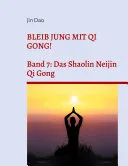
Bleib jung mit Qi Gong
 83
83

Bleib jung mit Qi Gong
Jin Dao's "Bleib jung mit Qi Gong" offers a clear, if somewhat generalized, introduction to the principles of Qi cultivation. The text commendably demystifies the practice, presenting it as an accessible tool for health maintenance rather than an arcane discipline. Its strength lies in its straightforward explanation of movements and breathwork, making it suitable for absolute beginners. However, the work occasionally leans towards a simplified, almost prescriptive tone, particularly concerning the "keeping young" aspect, which might feel overly promotional to a seasoned practitioner. The section on visualization, while present, could benefit from more detailed examples to truly unlock its potential. The book serves as a competent entry point, though deeper explorations into the energetic nuances of Qi Gong would have elevated its critical standing.
📝 Description
83
Jin Dao's 'Bleib jung mit Qi Gong' details methods for cultivating vital energy.
This book explains the ancient Chinese practice of Qi Gong, focusing on how specific movements, breathing, and visualization can bring the body and mind into harmony. It presents Qi Gong as a way to support health and encourage a longer life, suitable for anyone regardless of their physical ability or previous experience. The author aims to provide readers with practical tools to improve their physical condition and mental focus. It is particularly useful for those interested in the principles of Traditional Chinese Medicine and seeking gentle exercise routines.
The text clarifies that no advanced physical training or prior knowledge is required to start practicing Qi Gong. It emphasizes the accessibility of these techniques for a wide range of people. The book covers the core ideas behind cultivating and moving Qi, the body's vital life force, which is influenced by physical action, breath control, and mental concentration. By consciously working with these elements, practitioners can address energetic blockages, reinforce bodily functions, and achieve a state of equilibrium.
Originating from within Traditional Chinese Medicine, Qi Gong has a long history as a method for health preservation in China. Its systematic development intensified over time, especially as the People's Republic of China began to promote and standardize certain forms in the mid-20th century. The practice spread globally from the late 20th century, offering an alternative approach to Western wellness models. The book positions this practice as a way to achieve sustained vitality and a balanced life.
💡 Why Read This Book?
• Gain practical understanding of foundational Qi Gong movements and breathing exercises, as detailed in the book's core chapters, enabling you to begin a personal practice for vitality. • Discover the principles of Traditional Chinese Medicine (TCM) as applied to Qi Gong, learning how the body’s energy flow, as explained by Jin Dao, impacts long-term health. • Explore the role of focused visualization in energy cultivation, a technique presented in the book that can be integrated into daily life to enhance mental calm and physical well-being.
⭐ Reader Reviews
Honest opinions from readers who have explored this book.
❓ Frequently Asked Questions
What is Qi Gong and how does it differ from Tai Chi?
Qi Gong is an ancient Chinese practice involving gentle movements, deep breathing, and meditation to cultivate and balance vital energy (Qi). While both share roots in Chinese martial arts and TCM, Qi Gong often focuses more directly on health cultivation and energy work, whereas Tai Chi emphasizes martial applications and flowing, continuous forms.
Can I really stay young by practicing Qi Gong?
The book suggests that consistent Qi Gong practice, by promoting health, vitality, and balance, contributes to a longer, more energetic life. It's presented as a method for maintaining youthful vigor and slowing the effects of aging through internal cultivation, rather than a literal reversal of time.
What are the essential components of Qi Gong?
The essential components highlighted in the book are: 1) Coordinated movements designed to facilitate Qi flow, 2) Specific breathing techniques to enhance energy intake and regulation, and 3) Mental focus or visualization to direct the Qi within the body.
Is Qi Gong suitable for older adults or those with physical limitations?
Yes, Qi Gong is exceptionally well-suited for individuals of all ages and physical conditions. The movements are typically slow, gentle, and can be modified, making it accessible even for those with limited mobility or chronic health issues, as emphasized by Jin Dao.
How does Qi Gong relate to Traditional Chinese Medicine (TCM)?
Qi Gong is an integral part of TCM, alongside acupuncture, herbal medicine, and dietary therapy. It is viewed as a primary method for preventing illness and maintaining health by ensuring the smooth flow of Qi and blood, thereby supporting the body's natural healing capabilities.
When was Qi Gong first developed?
The practice of Qi Gong has roots stretching back thousands of years in China, evolving from ancient health exercises and Taoist/Buddhist contemplative practices. While precise origins are debated, its systematic development and integration into medical texts occurred over centuries, with significant standardization in the 20th century.
🔮 Key Themes & Symbolism
Qi Cultivation and Flow
The central theme is the cultivation and circulation of Qi, the vital life force. The book explains how specific postures, breathwork, and mental imagery are employed to harmonize this energy within the body. By clearing blockages and strengthening Qi flow, practitioners are said to achieve better health and longevity. This concept is rooted in Traditional Chinese Medicine's understanding of energetic pathways and imbalances as the source of illness and vitality.
Longevity and Youthful Vitality
A primary aim presented is the maintenance of youthful energy and a prolonged life. This is framed not as a magical pursuit but as a consequence of sustained physical and mental well-being achieved through consistent Qi Gong practice. The methods described aim to reduce stress, enhance bodily functions, and foster a sense of inner balance, contributing to a feeling of enduring vitality.
Accessibility and Inclusivity
The work emphasizes that Qi Gong is a practice accessible to everyone, irrespective of age, physical condition, or prior experience. This inclusive approach is key to its widespread adoption. The book aims to explain the practice, presenting it as a practical set of techniques that can be easily learned and integrated into daily life by anyone seeking self-improvement.
Mind-Body Integration
Qi Gong fundamentally operates on the principle of mind-body connection. The book details how conscious intention, focused breathing, and deliberate movement work in concert. This integration is presented as essential for achieving optimal health, as mental states directly influence physical energy (Qi) and vice versa, creating a feedback loop for well-being.
💬 Memorable Quotes
Direct passages from the work, attributed to the author.
“The goal is to maintain the health of body and mind, thereby leading a long, happy life.”
— This statement expresses the core philosophy of Qi Gong as presented in the book: a holistic approach to wellness aimed at achieving not just physical health but also mental contentment and longevity.
“Qi Gong is a part of Traditional Chinese Medicine (TCM).”
— This positions Qi Gong within a well-established ancient medical system, lending it credibility and context. It suggests that the practice is not merely exercise but a therapeutic modality with deep historical roots.
“This happens with a combination of traditional movements, breathing methods, and the power of imagination.”
— This highlights the multi-faceted nature of Qi Gong practice, emphasizing that it engages physical action, respiratory control, and mental focus synergistically to produce its effects.
💡 Key Ideas
Editorial paraphrase of the work's core concepts — not direct quotes.
Anyone can begin learning Qi Gong regardless of age, prior knowledge, or constitution.
This quote underscores the book's commitment to making Qi Gong accessible, reassuring potential practitioners that barriers to entry are minimal and the practice is adaptable to individual circumstances.
The objective is to preserve the health of body and mind for a long and happy existence.
This paraphrased concept reinforces the book's central thesis: Qi Gong as a practical pathway to sustained well-being, encompassing both physical vitality and mental equanimity for a fulfilling life.
🌙 Esoteric Significance
Tradition
Qi Gong belongs to the Taoist and Buddhist contemplative traditions of China, focused on cultivating internal alchemy and harmonizing the body's vital energy (Qi). It aligns with broader esoteric concepts of subtle energy systems found in many world cultures, such as Prana in Yoga or the Holy Spirit in Gnosticism, emphasizing the manipulation of unseen forces for spiritual and physical well-being. This work fits within this lineage by presenting structured methods for energy cultivation, departing from purely meditative forms towards more physically active disciplines.
Symbolism
Key symbols in Qi Gong include the concept of Qi itself, often visualized as a flowing, luminous substance. The Yin-Yang symbol is fundamental, representing the balance of opposing yet complementary forces that practitioners seek to maintain. Specific movements often mimic natural forms – animals, plants, or celestial bodies – imbuing the practice with archetypal symbolism that connects the microcosm of the body to the macrocosm of the universe.
Modern Relevance
Contemporary thinkers and practitioners in fields like integrative medicine, somatic psychology, and mindfulness-based stress reduction draw heavily on Qi Gong principles. Schools of somatic movement, energy healing modalities, and even certain athletic training programs incorporate Qi Gong's emphasis on breath, intention, and fluid motion. Its principles of self-healing and holistic well-being continue to resonate with individuals seeking alternatives or complements to conventional healthcare approaches.
👥 Who Should Read This Book
• Individuals new to mind-body practices seeking a gentle, foundational method for improving physical health and reducing stress. • Practitioners of Traditional Chinese Medicine (TCM) or those interested in understanding its core principles through active engagement. • Anyone looking for accessible, self-directed techniques to enhance vitality, mental clarity, and overall life satisfaction, regardless of age or fitness level.
📜 Historical Context
The practice of Qi Gong, as presented in "Bleib jung mit Qi Gong," is deeply embedded within the lineage of Traditional Chinese Medicine (TCM). While its roots are ancient, tracing back thousands of years to early Taoist and Buddhist contemplative practices and health exercises, its modern codification and dissemination accelerated significantly in the mid-to-late 20th century. Following the establishment of the People's Republic of China in 1949, there was a concerted effort to standardize and promote various forms of Qi Gong as part of national health initiatives. This period saw a divergence from more esoteric or purely spiritual interpretations towards a more health-focused, accessible practice. The global spread of Qi Gong gained momentum from the 1970s and 1980s, coinciding with a growing interest in alternative and complementary medicine worldwide. During this time, Qi Gong practices were often presented in contrast to Western biomedical models, offering a different paradigm for understanding and maintaining health. Key figures like Yang Jwing-ming played a role in introducing these practices to Western audiences, though the specific reception and interpretation varied widely across different cultural contexts.
📔 Journal Prompts
The foundational movements and their energetic purpose.
How the breath informs the movement in Qi Gong.
Visualization techniques for directing Qi.
The concept of maintaining health for a long, happy life.
Integrating Qi Gong principles into daily routines.
🗂️ Glossary
Qi (or Chi)
The fundamental concept of vital life force or energy that animates all living things. In Qi Gong, the cultivation and balanced flow of Qi are central to health and well-being.
TCM
Abbreviation for Traditional Chinese Medicine, an ancient system of health and healing that originated in China, encompassing practices like acupuncture, herbal medicine, and Qi Gong.
Breathing Methods
Specific techniques for controlling respiration during Qi Gong practice, aimed at enhancing energy absorption, regulating internal balance, and calming the mind.
Visualization
The mental practice of forming clear images or sensations in the mind, used in Qi Gong to guide the flow of Qi, enhance focus, and deepen the effects of the practice.
Constitution
Refers to an individual's inherent physical and energetic makeup, influencing their health and susceptibility to illness. Qi Gong is adaptable to various constitutions.
Longevity
The state of living for a long time. In the context of Qi Gong, it is seen as a natural outcome of maintaining optimal health and energetic balance through consistent practice.
Harmonize
To bring into a state of balance and accord. In Qi Gong, this refers to aligning the body, breath, and mind, as well as balancing internal energies (e.g., Yin and Yang).