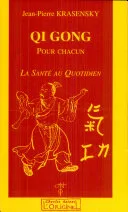
Qi Gong pour chacun
 79
79

Qi Gong pour chacun
Jean-Pierre Krasensky’s Qi Gong pour chacun offers a straightforward introduction to a practice often shrouded in mystique. The author avoids overly academic jargon, presenting the core tenets of Qi Gong with clarity. A notable strength is the book’s focus on actionable steps, making it feel less like a theoretical treatise and more like a practical manual. Krasensky’s explanation of the ‘Eight Brocades’ (Ba Duan Jin) sequence, for instance, is particularly lucid, breaking down each movement into digestible components. However, the book occasionally leans towards a simplified view, potentially underserving the deeper philosophical underpinnings that inform the practice for some adherents. While the 2001 publication date means it predates some of the more recent scientific explorations of Qi Gong, its foundational guidance remains sound. Krasensky provides a competent, if not revolutionary, entry point into the world of Qi cultivation.
📝 Description
79
Jean-Pierre Krasensky's Qi Gong pour chacun, published in April 2001, explains vital energy cultivation for a Western audience.
Published in April 2001, Qi Gong pour chacun by Jean-Pierre Krasensky offers a practical introduction to the Chinese practice of cultivating vital energy, known as Qi. Krasensky breaks down the core principles and techniques of Qi Gong, making them accessible for those new to the discipline. The book aims to help individuals integrate these exercises into their daily routines for self-healing, stress reduction, and overall well-being.
This guide is suitable for anyone interested in using mindful movement and breathwork to improve their physical and mental state. It caters to beginners curious about Eastern philosophies and practices, as well as those who have some prior experience and wish to deepen their knowledge or improve their technique. The text addresses how to harmonize the body, mind, and spirit through specific exercises.
Qi Gong's roots trace back thousands of years in China, evolving from Taoist and Buddhist traditions. These practices focus on the internal cultivation of Qi, or vital life force, through specific movements, breathing techniques, and mental focus. The popularization of Qi Gong in the West accelerated in the late 20th century alongside growing interest in alternative health and mind-body disciplines. Krasensky's 2001 work arrived as Westerners increasingly sought methods for personal development that existed outside conventional approaches.
💡 Why Read This Book?
• Learn foundational Qi Gong postures and breathing techniques, such as those found in the 'Eight Brocades' sequence, enabling you to begin a personal practice for improved vitality. • Understand the concept of Qi as vital energy and its role in health, as explained by Krasensky, offering a different perspective on well-being than Western medicine. • Discover practical applications for stress reduction and mental clarity through the specific exercises presented, providing accessible methods for daily self-care.
⭐ Reader Reviews
Honest opinions from readers who have explored this book.
❓ Frequently Asked Questions
What is Qi Gong according to Jean-Pierre Krasensky's book?
According to Krasensky's Qi Gong pour chacun, Qi Gong is an ancient Chinese system of exercises that cultivate and balance the body's vital energy (Qi) through gentle movements, breath control, and focused intention for improved health and well-being.
When was Qi Gong pour chacun first published?
Qi Gong pour chacun by Jean-Pierre Krasensky was first published on April 17, 2001.
What are some common Qi Gong exercises mentioned?
The book likely details foundational exercises, possibly including the 'Eight Brocades' (Ba Duan Jin), which are traditional Qi Gong movements known for their health benefits and relative ease of learning.
Is Qi Gong pour chacun suitable for absolute beginners?
Yes, the book is designed as an accessible introduction, aiming to demystify Qi Gong for those new to the practice and provide clear instructions for self-study.
What benefits can one expect from practicing Qi Gong as described in the book?
Readers can anticipate benefits such as stress reduction, improved physical flexibility, enhanced circulation, and a greater sense of mental calm and energy balance.
Does the book explain the theory behind Qi?
Yes, Krasensky's work aims to explain the fundamental concept of Qi (vital energy) and how its cultivation through specific practices contributes to overall health.
🔮 Key Themes & Symbolism
Cultivating Vital Energy
The central theme is the cultivation and circulation of Qi, often translated as vital energy. Krasensky's work guides readers to understand Qi not as a mystical force but as a tangible, life-sustaining energy that can be influenced through specific practices. It details how focused intention and gentle movements, as exemplified in sequences like the 'Eight Brocades,' can harmonize this energy flow within the body, leading to improved health and vitality.
Mind-Body Harmony
A significant focus is placed on the interconnectedness of the mind and body. The book explains how mental focus, breath control, and physical posture work synergistically in Qi Gong. By training the mind to be present and the body to move with intention, practitioners can achieve a state of balance, reduce internal friction, and foster a sense of calm and integration.
Accessible Practice for Well-being
Qi Gong pour chacun emphasizes making the practice accessible to everyday individuals seeking practical solutions for modern life's stresses. It breaks down complex theories into actionable steps, demonstrating how consistent practice, even for short durations, can yield tangible benefits for physical health, emotional stability, and overall life quality.
Foundations of Eastern Health
The book serves as an introduction to the foundational principles of traditional Eastern health systems, particularly Chinese medicine. It presents Qi Gong as a method rooted in ancient wisdom, offering a holistic approach to wellness that complements or provides an alternative to conventional Western healthcare paradigms.
💬 Memorable Quotes
Direct passages from the work, attributed to the author.
“Breathing deeply calms the spirit.”
— This interpretation emphasizes the psychosomatic link central to Qi Gong. Conscious, controlled respiration is presented as a direct pathway to achieving mental tranquility and emotional equilibrium.
“Focus your intention on the energy centers.”
— This concept underscores the mental aspect of Qi Gong practice, suggesting that directing one's awareness and intention towards specific energetic points within the body is crucial for effective cultivation.
“Balance is key to vitality.”
— This idea expresses the overarching goal of Qi Gong: achieving a state of equilibrium within the body and mind, which is presented as the foundation for robust health and sustained energy.
“Consistency yields the best results.”
— This practical advice stresses the importance of regular engagement with Qi Gong exercises. The book implies that sustained, even brief, daily practice is more beneficial than infrequent, longer sessions for long-term well-being.
💡 Key Ideas
Editorial paraphrase of the work's core concepts — not direct quotes.
The gentle movements are designed to guide the Qi.
This paraphrased concept highlights the core mechanism of Qi Gong: deliberate, soft physical actions serve as conduits for directing the body's internal energy, facilitating its smooth flow and balance.
🌙 Esoteric Significance
Tradition
Qi Gong pour chacun draws from the Taoist tradition, a foundational lineage within Chinese esotericism. Taoism emphasizes living in harmony with the Tao (the Way), the fundamental principle of the universe. Qi Gong, as presented in the book, is a practical application of this principle, focusing on cultivating and balancing the body's intrinsic energy (Qi) to align with natural rhythms and achieve longevity and spiritual well-being.
Symbolism
While not heavily symbolic in a Western esoteric sense, the practice itself is rich with meaning. The concept of 'Qi' (energy) is paramount, representing the life force that animates all things. The emphasis on gentle, flowing movements often mimics natural phenomena like water or wind, symbolizing adaptability and the pursuit of natural harmony. Posture and breath are also symbolic, representing the grounding of the physical self and the cultivation of inner stillness.
Modern Relevance
Krasensky's work remains relevant today as interest in accessible, non-pharmacological approaches to health and stress management continues to grow. Modern practitioners and wellness coaches often draw upon foundational texts like this to introduce Qi Gong to clients seeking complementary therapies. It speaks to contemporary movements focused on mindfulness, somatic experiencing, and preventative health, offering a time-tested method for cultivating inner balance in a fast-paced world.
👥 Who Should Read This Book
• Individuals new to Eastern practices seeking a clear, step-by-step introduction to Qi Gong, focusing on practical application rather than dense theory. • Those experiencing stress or physical tension looking for gentle, accessible exercises to promote relaxation and improve bodily awareness. • Students of comparative health systems interested in understanding the foundational principles of traditional Chinese energetic practices as presented in a 2001 European context.
📜 Historical Context
Published in April 2001, Jean-Pierre Krasensky's *Qi Gong pour chacun* emerged during a period of burgeoning Western interest in Eastern wellness practices. The late 20th and early 21st centuries saw a significant influx of Chinese health disciplines, including acupuncture, Tai Chi, and Qi Gong, into global consciousness. This era was marked by a growing critique of purely materialistic Western medicine and a search for holistic approaches. While figures like Dr. Yang Jwing-ming were already established in popularizing martial arts and Qi Gong in English-speaking countries, Krasensky’s work aimed to provide a French-speaking audience with accessible entry points. The book arrived as mindfulness and mind-body medicine gained academic and public traction, positioning Qi Gong as a practical tool within this broader movement. Its reception likely contributed to the growing community of Qi Gong practitioners in France and Europe, offering a counterpoint to more esoteric or medically focused interpretations.
📔 Journal Prompts
Reflect on the concept of Qi as vital energy and its presence in your daily life.
Consider the described relationship between breath and mental calm.
Analyze the structure of the 'Eight Brocades' sequence and its potential benefits.
Explore the idea of mind-body harmony through the lens of Qi Gong.
Evaluate the accessibility of Qi Gong for modern wellness routines.
🗂️ Glossary
Qi
The fundamental concept of vital energy or life force in traditional Chinese culture and medicine. It is believed to animate all living things and can be cultivated and balanced through practices like Qi Gong.
Qi Gong
An ancient Chinese practice that involves gentle movements, deep breathing, and focused meditation to cultivate and balance Qi, promoting health, vitality, and spiritual development.
Eight Brocades (Ba Duan Jin)
A popular and ancient set of Qi Gong exercises consisting of eight distinct movements, known for their effectiveness in improving physical health, flexibility, and energy flow.
Dantian
In traditional Chinese medicine and Qi Gong, a crucial energy center in the body, typically located in the lower abdomen, where Qi is stored and cultivated.
Meridians
Channels or pathways within the body through which Qi is believed to flow, according to traditional Chinese medicine. Blockages or imbalances in meridians are associated with illness.
Tao (Dao)
A fundamental concept in Taoism, often translated as 'the Way.' It represents the natural order of the universe, the underlying principle that guides existence and is sought through practices like Qi Gong.
Vitality
The state of being full of energy and life; the capacity to thrive. In the context of Qi Gong, vitality is seen as a direct result of balanced and abundant Qi.