Dying to live
 78
78

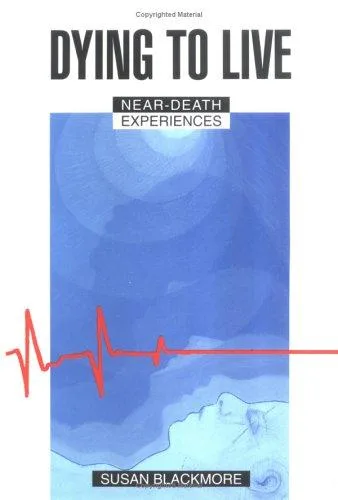
Dying to live
Susan Blackmore’s *Dying to Live* attempts to dissect the phenomenon of near-death experiences with a cool, analytical gaze, a welcome departure from the often mystical or purely sensationalist treatments of the subject. Blackmore’s strength lies in her meticulous comparison of NDE accounts with other altered states of consciousness, such as those induced by sensory deprivation or certain psychoactive substances. This comparative approach offers a compelling argument for understanding NDEs as complex neurological events rather than solely supernatural encounters. However, the book occasionally feels too dismissive of the profound existential shifts reported by experiencers, perhaps underestimating the subjective impact of such events even if explained neurologically. The chapter discussing the 'tunnel and light' experience, while grounded in research, may leave readers craving a deeper engagement with the spiritual or symbolic weight these elements carry for individuals. Ultimately, *Dying to Live* provides a valuable, scientifically-informed perspective on NDEs, even if it doesn't fully satisfy the existential yearning for transcendence.
📝 Description
78
Susan Blackmore's 1993 book *Dying to Live* examines near-death experiences through psychology, neuroscience, and religion.
Susan Blackmore's *Dying to Live*, published in 1993, investigates near-death experiences (NDEs) without sensationalism. It applies psychology, neuroscience, and comparative religion to analyze anecdotal accounts, scientific research, and philosophical interpretations of these personal encounters. The book aims to demystify the NDE phenomenon for readers interested in consciousness, mortality, and altered states of experience.
This work is suited for those grappling with fundamental questions about life and death, and the nature of awareness. It will interest students of psychology, consciousness studies, and comparative spirituality, as well as individuals who have experienced NDEs or know someone who has. Readers seeking a rational yet open-minded perspective on phenomena that challenge conventional scientific views will find valuable material within its pages.
Published in the early 1990s, *Dying to Live* emerged when research into NDEs was gaining traction but remained on the academic fringes. While Raymond Moody had popularized the concept, Blackmore provided a more critical and skeptical examination. This period also saw growing interest in altered states of consciousness, influenced by earlier explorations of meditation and psychedelics, and the emerging field of consciousness studies sought to integrate subjective experience with scientific inquiry.
💡 Why Read This Book?
• Gain a critical understanding of near-death experiences by comparing Blackmore's analysis of the 'tunnel and light' phenomenon with scientific explanations, offering insights distinct from purely spiritual interpretations. • Explore the parallels Blackmore draws between NDEs and altered states induced by sensory deprivation, providing concrete examples that challenge conventional notions of consciousness. • Appreciate the historical context of NDE research in the early 1990s, understanding how Susan Blackmore's work contributed to the scientific discourse surrounding consciousness and mortality.
⭐ Reader Reviews
Honest opinions from readers who have explored this book.
❓ Frequently Asked Questions
What is Susan Blackmore's main argument in 'Dying to Live' regarding near-death experiences?
Blackmore argues that near-death experiences, while profound, can largely be explained by neurological and psychological processes, drawing parallels with other altered states of consciousness rather than solely supernatural causes.
When was 'Dying to Live' first published and what was the context?
The book was first published in 1993, during a period when research into consciousness and altered states was expanding, and NDEs were becoming a topic of popular and academic interest.
Does 'Dying to Live' dismiss the spiritual aspects of near-death experiences?
While Blackmore focuses on scientific explanations, she acknowledges the profound subjective impact and existential shifts reported by NDE experiencers, though her primary aim is analytical rather than spiritual validation.
What other phenomena does Blackmore compare near-death experiences to?
She compares NDEs to altered states induced by sensory deprivation, certain drugs, and mystical experiences, seeking common underlying mechanisms or explanations.
Is 'Dying to Live' suitable for someone who has had a near-death experience?
Yes, it offers a valuable perspective for those who have had an NDE or are interested in understanding the phenomenon from a more scientific and comparative viewpoint.
What are some common elements of NDEs discussed in the book?
The book discusses common elements such as out-of-body sensations, encountering a light, life review, and feelings of peace, examining their potential psychological and neurological origins.
🔮 Key Themes & Symbolism
Neurological Basis of NDEs
Blackmore meticulously examines the physiological underpinnings of near-death experiences, suggesting that phenomena like out-of-body sensations and visions of light can be attributed to specific brain states. She discusses theories involving endorphin release, temporal lobe activity, and the effects of oxygen deprivation. This perspective shifts the focus from purely spiritual interpretations to a more empirical understanding of consciousness under extreme stress, referencing research from the late 20th century.
Comparative States of Consciousness
A core theme is the comparison of NDEs with other altered states, including those induced by sensory deprivation and psychoactive drugs. Blackmore argues that shared subjective elements across these diverse experiences point to common underlying mechanisms in the brain's processing. This comparative approach is crucial for her argument, demonstrating how seemingly unique NDE phenomena might arise from predictable psychological and neurological responses.
The Nature of Reality
The book implicitly questions the nature of reality by exploring experiences that transcend ordinary perception. While advocating for scientific explanations, Blackmore doesn't entirely discount the profound existential impact these experiences have on individuals. The implications for beliefs about life, death, and the continuity of consciousness are explored, prompting readers to reconsider the boundaries of subjective experience and its relation to objective reality.
Skepticism and Empirical Inquiry
Blackmore champions a skeptical, evidence-based approach to understanding extraordinary experiences. She critiques overly mystical or anecdotal accounts, emphasizing the need for rigorous scientific investigation. This theme underscores the importance of critical thinking in esoteric studies, encouraging readers to seek verifiable explanations while remaining open to the complexities of human consciousness and perception.
💬 Memorable Quotes
Direct passages from the work, attributed to the author.
“The tunnel and the light are not unique to NDEs.”
— This statement highlights Blackmore's central thesis: that common elements of near-death experiences can be found in other states of consciousness, suggesting a neurological rather than purely spiritual origin.
“NDE reports often involve a life review.”
— This points to a frequently reported element of near-death experiences that Blackmore analyzes, exploring its psychological and potentially neurological basis as a feature of consciousness under duress.
“Out-of-body experiences are key to understanding NDEs.”
— This highlights the significance of the out-of-body sensation, which Blackmore examines in detail as a common and crucial component of the near-death experience phenomenon.
“The brain's response to stress may explain NDEs.”
— This captures the essence of Blackmore's physiological approach, suggesting that the body's reaction to extreme situations provides a framework for understanding the subjective reports of near-death experiencers.
💡 Key Ideas
Editorial paraphrase of the work's core concepts — not direct quotes.
The effects of drugs and sensory deprivation can mimic NDEs.
This paraphrased concept emphasizes the comparative method used in the book, suggesting that chemical or environmental factors can produce subjective experiences similar to those reported during life-threatening events.
🌙 Esoteric Significance
Tradition
While not strictly adhering to a single esoteric tradition, Blackmore's work engages with perennial themes found across mystical and spiritual paths: the nature of consciousness, the experience of death, and the possibility of existence beyond the physical body. Her analytical approach contrasts with the faith-based explorations common in many esoteric lineages. She draws implicitly on Gnostic ideas of transcending the material world and Hermetic principles of correspondence, but frames them through a modern psychological and neurological lens.
Symbolism
The 'tunnel' and 'light' are central motifs she analyzes. In many esoteric traditions, the tunnel can symbolize a passage through the underworld or a transition between states of being, while the light often represents divine presence, ultimate truth, or pure consciousness. Blackmore examines these symbols not as direct spiritual manifestations but as common subjective experiences arising from specific physiological conditions, reinterpreting their symbolic weight through a scientific lens.
Modern Relevance
Blackmore's research continues to be relevant in contemporary discussions on consciousness, artificial intelligence, and the philosophy of mind. Her work informs debates within neuroscience about the correlates of consciousness and the potential for subjective experience in non-biological systems. Researchers exploring psychedelics for therapeutic purposes also engage with her comparative analyses of altered states, seeking to understand the mechanisms behind profound subjective shifts.
👥 Who Should Read This Book
• Students of psychology and neuroscience interested in the biological and psychological correlates of altered states of consciousness. • Individuals seeking a scientifically grounded perspective on near-death experiences, moving beyond purely spiritual or anecdotal accounts. • Researchers of comparative religion and mysticism looking to understand how scientific inquiry approaches phenomena often considered spiritual or supernatural.
📜 Historical Context
When *Dying to Live* was released in 1993, the study of near-death experiences (NDEs) was already a burgeoning field, significantly shaped by Raymond Moody's earlier work. However, Blackmore’s contribution offered a more critical, scientifically-oriented perspective. The era was characterized by an increasing academic interest in consciousness studies, fueled by advancements in neuroscience and psychology, as well as ongoing exploration of altered states of consciousness. While figures like Stanislav Grof were exploring transpersonal psychology and psychedelic therapy, Blackmore stood apart by rigorously applying empirical methods and comparative analysis to NDE phenomena. Her work aimed to ground these experiences in observable biological and psychological processes, a stance that positioned it against more spiritual or mystical interpretations prevalent in popular discourse and some academic circles. The reception was one of scholarly engagement, with her approach being noted for its detailed comparison to drug-induced states and sensory deprivation.
📔 Journal Prompts
The 'tunnel and light' experience as a recurring motif in altered states.
Brain chemistry and its potential role in profound subjective experiences.
Comparing personal altered states with reported NDE phenomena.
The concept of life review and its psychological implications.
The balance between empirical explanation and existential impact in NDEs.
🗂️ Glossary
Near-Death Experience (NDE)
A profound personal experience associated with the process of dying, often involving altered perceptions, emotions, and spiritual or mystical elements.
Out-of-Body Experience (OBE)
A sensation of floating outside one's physical body, often accompanied by the ability to see oneself from a distance.
Sensory Deprivation
A condition where a person is deprived of stimuli such as sight and sound, which can induce altered states of consciousness.
Endorphins
Neurochemical substances produced by the body that act as natural painkillers and can induce feelings of euphoria.
NMDA Receptors
Receptors in the brain involved in learning and memory, which can be affected by certain drugs and may play a role in altered states of consciousness.
Life Review
A common component of NDEs where individuals report experiencing their entire life in rapid succession, often with a sense of judgment or understanding.
Altered State of Consciousness
Any mental state significantly different from the normal waking state, induced by factors like meditation, drugs, or extreme physiological conditions.
🔮 Readers Also Liked
Browse all →









More by Susan J. Blackmore
All books →



More Free Occult Philosophy Books
View all →