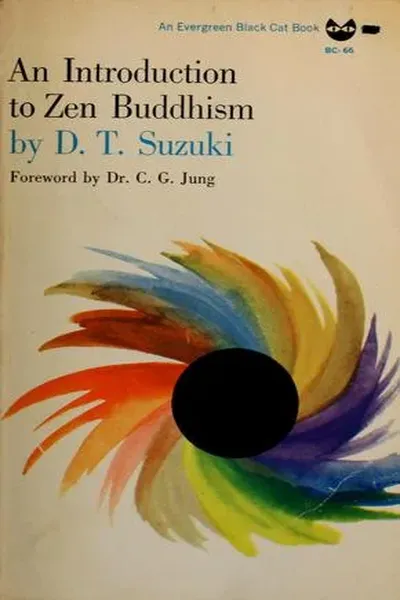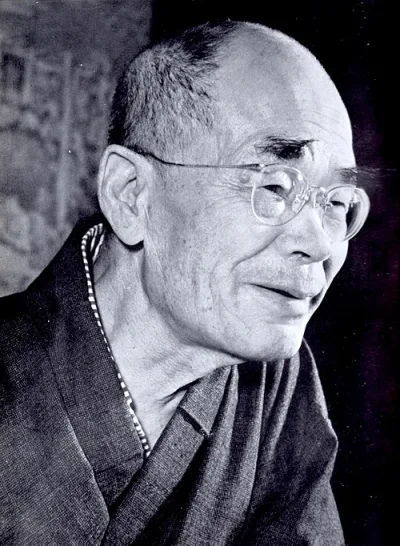
Daisetsu Teitaro Suzuki
D.T. Suzuki was a pivotal figure in introducing Zen and Mahayana Buddhism to the West through his prolific writings and lectures.
Daisetsu Teitaro Suzuki was a Japanese scholar and essayist renowned for his extensive work in popularizing Buddhist philosophy, particularly Zen and Shin Buddhism, in Western countries. Born into a declining samurai family and facing early hardship, Suzuki pursued knowledge in various languages and philosophies, eventually studying at Waseda and Tokyo Universities.
His intellectual journey led him to Zen practice and a significant collaboration with American publisher Paul Carus, for whom he translated Eastern spiritual texts. Suzuki spent considerable time in the West, lecturing at universities and contributing to a global Buddhist revival. He held professorships in Japan, notably at Ōtani University, and founded the Eastern Buddhist Society. His work aimed to make complex Buddhist concepts accessible, often highlighting their practical and experiential aspects, which resonated with Western audiences interested in mysticism and esoteric thought. Suzuki's efforts significantly shaped the perception and study of Buddhism outside of Asia.
Introduction of Eastern Philosophy to the West
D.T. Suzuki played a crucial role in bridging Eastern and Western thought, specializing in Buddhism, especially Zen and Shin traditions. He was instrumental in fostering interest in these philosophies, as well as broader Far Eastern thought, among Western audiences. Suzuki also translated a wide range of literature from Chinese, Korean, Japanese, Vietnamese, and Sanskrit. He dedicated significant portions of his career to teaching and lecturing at Western universities, complementing his professorship at Ōtani University in Japan. His efforts were recognized globally, leading to his nomination for the Nobel Peace Prize in 1963.
Early Life and Intellectual Development
Born Teitarō Suzuki in Kanazawa, Japan, he was the son of a physician. His Zen master, Soyen Shaku, bestowed upon him the Buddhist name Daisetsu, signifying 'Great Humility.' Growing up in impoverished conditions following his father's death and the decline of the samurai class, Suzuki sought answers in religion. His sharp intellect found some traditional cosmologies challenging, leading him to explore diverse philosophical and religious avenues. He pursued his studies at Waseda and Tokyo Universities, acquiring proficiency in languages such as Chinese, Sanskrit, Pali, and several European languages.
Scholarly Contributions and Zen Practice
Suzuki's academic career included professorships at Gakushuin and Tokyo Universities, and later at Ōtani University. Alongside his wife, Beatrice Erskine Lane Suzuki, he founded the Eastern Buddhist Society in 1921, which disseminated knowledge through lectures and its journal, The Eastern Buddhist. He also taught about Kegon philosophy, which he considered an intellectual interpretation of Zen experience. Suzuki's writings often focused on translating and analyzing key Chan Buddhist texts like the Blue Cliff Record and the Gateless Passage. He explored how Buddhism, particularly Zen, influenced Japanese culture and history, a topic he detailed in 'Zen and Japanese Culture.' His engagement with Zen practice began at Engaku-ji in Kamakura, where he underwent rigorous training under masters like Kosen Roshi and Soyen Shaku.
Influence on Western Esoteric Thought
Suzuki's portrayal of Zen Buddhism emphasized its practical nature and direct experience, aligning it with Western mystical traditions that interested scholars like William James. This approach made his ideas accessible and appealing to Westerners seeking spiritual depth. He facilitated a connection between Zen and Western esotericism, presenting it as a form of 'eastern mysticism.' In his later years, Suzuki also explored Jōdo Shinshū, the faith of his mother, and examined Christian mysticism, drawing parallels between figures like Meister Eckhart and the Myokonin followers. He was among the first to introduce research on the Myokonin to an international audience.
Key Ideas
- Zen awakening as a goal integrated with daily life.
- The adaptation of Buddhist monastic life in China, involving mundane tasks.
- Zen as a practical religion emphasizing direct experience.
- The common essence between Zen and Western mystical traditions.
- Jōdo Shinshū as a significant development in Mahayana Buddhism.
- Comparison of Jōdo Shinshū followers (Myokonin) with Western mystics.
Notable Quotes
“Suzuki in his later years was not just a reporter of Zen, not just an expositor, but a significant contributor to the development of Zen and to its enrichment.”
Books by Daisetsu Teitaro Suzuki
17 free public domain books · Read online or download