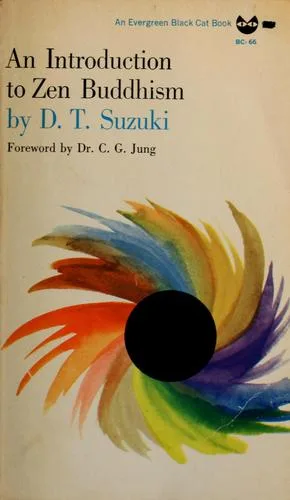
An introduction to Zen Buddhism
 82
82

An introduction to Zen Buddhism
Daisetsu Teitaro Suzuki’s *An Introduction to Zen Buddhism* remains a significant, if somewhat dated, entry point into the subject. Suzuki’s strength lies in his ability to articulate the non-intellectual, experiential core of Zen in a way that resonates with Western readers, a feat he began in the early 20th century and continued through this 1952 publication. He successfully conveys the essence of *zazen* and the paradoxical nature of *koan* practice, moving beyond mere academic description. A notable limitation, however, is the inherent difficulty in fully capturing Zen's immediacy through text alone; the book can feel like a detailed map rather than the territory itself. Suzuki's exposition on the concept of emptiness (*sunyata*) is particularly lucid, explaining it not as nihilism but as the absence of inherent, independent existence. Despite its textual constraints, the work offers a clear, accessible, and historically important overview of Zen Buddhism.
📝 Description
82
Daisetsu Teitaro Suzuki published this introduction to Zen Buddhism in 1952.
Published in 1952, Daisetsu Teitaro Suzuki's "An Introduction to Zen Buddhism" seeks to clarify the core principles and practices of this Mahayana Buddhist tradition for a Western readership. Suzuki emphasizes Zen's focus on direct experience and personal insight rather than reliance on scripture or dogma. He translates complex philosophical ideas into language accessible to those unfamiliar with the tradition.
The book addresses individuals interested in understanding Zen Buddhism more deeply than a surface level. It appeals to students of religion, philosophy, and those drawn to Eastern spiritual paths. Those who value introspective methods and direct inquiry will find this work of particular interest. It serves as a clear starting point for newcomers to Buddhist thought, presenting its unique perspective.
Suzuki played a significant role in bringing Zen to Western attention in the mid-20th century. His writings, including this volume from 1952, appeared as Western interest in Eastern thought grew. His work acted as a bridge, explaining concepts that were new to Western philosophical and psychological understanding, as Zen began to spread beyond its Asian origins.
Daisetsu Teitaro Suzuki's work is central to the post-war transmission of Zen Buddhism to the West. He translated complex philosophical and spiritual concepts from Japanese and Chinese traditions into English, making them accessible to a new audience. His writings are part of a broader movement in the 20th century to introduce Eastern contemplative practices and philosophies to Westerners, influencing fields from psychology to art.
💡 Why Read This Book?
• Gain an understanding of *zazen*, the seated meditation central to Zen practice, as detailed in Suzuki's explanations, providing a practical method for cultivating present-moment awareness. • Grasp the significance of *kensho*, a sudden awakening or insight into one's true nature, a core concept that Suzuki elucidates, offering a glimpse into Zen's ultimate aim. • Explore the role of *koans* and their paradoxical nature, as presented in this 1952 work, offering a method to transcend conventional logic and direct apprehension.
⭐ Reader Reviews
Honest opinions from readers who have explored this book.
❓ Frequently Asked Questions
What is the primary goal of Zen Buddhism as presented in this book?
The primary goal is enlightenment, often experienced as *kensho* or a sudden awakening to one's true nature. This is achieved not through intellectual study but through direct experience cultivated via practices like *zazen* and engagement with *koans*.
When was Daisetsu Teitaro Suzuki's An Introduction to Zen Buddhism first published?
Daisetsu Teitaro Suzuki's *An Introduction to Zen Buddhism* was first published in 1952, making it a foundational text for Western understanding of Zen during the mid-20th century.
How does this book explain the practice of zazen?
The book explains *zazen* as seated meditation, emphasizing its role in quieting the discursive mind and fostering direct awareness. It is presented as the bedrock practice for achieving insight in Zen Buddhism.
What are koans and why are they used in Zen?
*Koans* are enigmatic questions or statements used in Zen to break through conventional, logical thinking. Their paradoxical nature is intended to provoke a deeper, intuitive understanding of reality.
Is this book suitable for absolute beginners to Buddhism?
Yes, the book is structured as an introduction and aims to clarify Zen's core concepts for those unfamiliar with Buddhist philosophy, making it an accessible starting point.
Does the book discuss the historical origins of Zen?
While primarily focused on core concepts and practice, the book touches upon Zen's lineage and its development, particularly its transmission to the West through figures like Suzuki himself.
🔮 Key Themes & Symbolism
Direct Experience Over Doctrine
Suzuki emphasizes that Zen's core truth is not found in scriptures or intellectualization but in direct, personal realization. This theme underscores the experiential nature of Zen, differentiating it from purely philosophical or theological approaches. The book suggests that concepts like *kensho* are not learned but awakened to, often through dedicated practice like *zazen*.
The Practice of Zazen
Central to the book is the explanation of *zazen*, seated meditation. Suzuki presents it not merely as a relaxation technique but as the primary method for sharpening awareness and probing the nature of existence. It's depicted as the disciplined posture from which insight into the self and the universe can arise, forming the bedrock of Zen training.
Koans and Paradoxical Insight
The use of *koans* – seemingly illogical questions or statements – is explored as a vital Zen tool. Suzuki explains how these paradoxes function to exhaust the rational mind, creating an opening for a non-dualistic understanding. This method bypasses conceptual frameworks, aiming for a direct apprehension of reality that transcends ordinary thought processes.
The Nature of the Self
The book addresses the Zen understanding of the self, often described as empty (*sunyata*) of inherent, independent existence. Suzuki clarifies that this does not imply nihilism but rather points to an interconnectedness and impermanence. Realizing this non-self is presented as a key step towards liberation from ego-driven suffering.
💬 Memorable Quotes
Direct passages from the work, attributed to the author.
“Zen is the practice of zazen.”
— This concise statement highlights the centrality of seated meditation to the Zen tradition. It suggests that Zen is not primarily a set of beliefs but a discipline of direct, embodied practice.
“The koan is designed to break the intellect.”
— This interpretation conveys the function of *koans* as tools to disrupt habitual, logical thinking patterns. By presenting paradoxes, they aim to force a breakthrough into a different mode of perception.
“Zen seeks direct experience, not mere knowledge.”
— This captures Suzuki's emphasis on lived experience over theoretical understanding. It underscores that the transformative aspect of Zen lies in direct realization, not in accumulating information.
💡 Key Ideas
Editorial paraphrase of the work's core concepts — not direct quotes.
Kensho is an awakening to one's true nature.
This paraphrase captures the essence of *kensho*, emphasizing its nature as a moment of clear insights or sudden realization about the self, distinct from gradual intellectual understanding.
Emptiness means the absence of an independent self.
This paraphrase clarifies the concept of emptiness (*sunyata*) in Zen, distinguishing it from mere nothingness. It points to the interdependent and impermanent nature of all phenomena, including the self.
🌙 Esoteric Significance
Tradition
While Zen Buddhism is a distinct Mahayana tradition originating in China (as Chan) and Japan, Suzuki's presentation often highlights aspects that resonate with broader esoteric and contemplative practices found in Western traditions. His emphasis on direct experience, the non-conceptual mind, and the realization of an underlying unity aligns with mystical paths seeking immediate apprehension of the divine or ultimate reality. Suzuki bridges the gap, showing how Zen's methods can be understood through a lens of inner transformation familiar to esoteric seekers.
Symbolism
The concept of the empty circle (*enso*) is a potent symbol in Zen, representing enlightenment, the void, and the totality of existence. Suzuki's work implicitly engages with this by describing the state of mind that *enso* symbolizes – one free from conceptual limitations. Another motif is the transmission of the Dharma from master to disciple, often depicted as a non-verbal, direct passing of understanding, underscoring the experiential and lineage-based nature of the tradition.
Modern Relevance
Contemporary mindfulness movements, secularized meditation practices, and certain branches of transpersonal psychology draw heavily on concepts popularized by Suzuki. Thinkers and practitioners in fields ranging from neuroscience exploring contemplative states to therapists integrating mindfulness techniques often trace their lineage back to the introductions provided by Suzuki's work. His ability to articulate Zen's psychological and experiential dimensions makes it relevant for modern seekers of inner peace and self-understanding outside traditional religious contexts.
👥 Who Should Read This Book
• Aspiring practitioners of meditation seeking a clear explanation of *zazen* and its purpose beyond simple relaxation, as detailed by Suzuki. • Students of comparative religion interested in understanding the unique experiential and non-dogmatic aspects of a major Eastern spiritual tradition. • Philosophically inclined readers curious about non-dualistic thought and methods for transcending ordinary consciousness, as explored through *koans* and the concept of *kensho*.
📜 Historical Context
Daisetsu Teitaro Suzuki's *An Introduction to Zen Buddhism*, first published in 1952, emerged during a key era of East-West cultural exchange. Suzuki, working from the 1930s onward, was a primary conduit for introducing Zen to Western audiences, often through influential figures like Carl Jung. His work appeared as interest in Eastern spirituality surged in post-war America, alongside movements like the Beat Generation, which embraced Buddhist philosophy. Suzuki's writings offered a counterpoint to more scholastic or ritualistic interpretations of Buddhism, emphasizing Zen's direct, experiential path. While scholars like Walter Evans-Wentz were also exploring Eastern traditions, Suzuki's accessible prose and focus on psychological relevance made his work particularly impactful. The book gained traction as Zen began to be seen not just as a religion, but as a form of contemplative psychology.
📔 Journal Prompts
The practice of *zazen* as described by Suzuki.
The function of *koans* in disrupting habitual thought.
Realizing *kensho* as a direct experience.
The concept of emptiness (*sunyata*) and its implications.
Suzuki's emphasis on direct experience versus intellectual study.
🗂️ Glossary
Zen
A school of Mahayana Buddhism that originated in China (as Chan) and spread to other East Asian countries. It emphasizes meditation and direct insight into the nature of reality over scripture.
Zazen
Seated meditation, the core practice of Zen Buddhism. It involves precise posture and breath awareness to cultivate concentration and insight.
Kensho
A Japanese Buddhist term for a sudden awakening or glimpse of one's true nature. It is often seen as an initial experience of enlightenment.
Koan
A paradoxical anecdote or riddle used in Zen Buddhism to provoke doubt and test a student's progress in Zen practice. It aims to break through rational thought.
Sunyata
A Sanskrit term meaning 'emptiness' or 'voidness'. In Buddhism, it refers to the doctrine that phenomena lack inherent, independent existence.
Dharma
In Buddhism, this refers to the teachings of the Buddha, the cosmic law and order, or the ultimate truth. It can also refer to phenomena or constituents of reality.
Mahayana
One of the two major branches of Buddhism, originating in India. It is characterized by its emphasis on the bodhisattva ideal and the concept of emptiness.
🔮 Readers Also Liked
Browse all →









More by Daisetsu Teitaro Suzuki
All books →





More Free Occult Philosophy Books
View all →