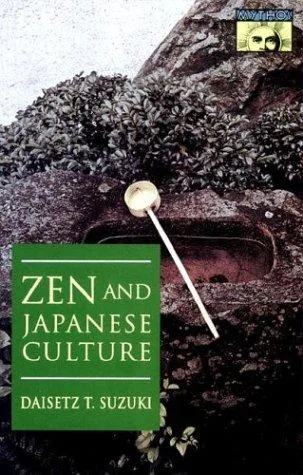
Zen Buddhism and its influence on Japanese culture
 75
75

Zen Buddhism and its influence on Japanese culture
Daisetsu Teitaro Suzuki's seminal work, Zen Buddhism and its Influence on Japanese Culture, remains a crucial text for anyone seeking to understand the deep symbiosis between Zen and the Japanese psyche. Suzuki, a pivotal figure in introducing Zen to the West, masterfully articulates how Zen's emphasis on direct experience, emptiness, and the present moment permeated art, warfare, and daily rituals. A particular strength lies in his detailed analysis of *wabi-sabi*, the aesthetic of imperfect, impermanent, and incomplete beauty, which he links directly to Zen principles. However, the book's narrative can sometimes feel dense, particularly for readers unfamiliar with Buddhist terminology, occasionally obscuring the very clarity Zen espouses. The section discussing Zen's role in the tea ceremony, however, offers a lucid example of how spiritual practice translates into cultural form. This is an essential, if occasionally demanding, exploration of Zen's cultural footprint.
📝 Description
75
Daisetsu Teitaro Suzuki's 1988 book examines Zen Buddhism's deep roots in Japanese culture.
First published in 1988, Daisetsu Teitaro Suzuki's work details how Zen Buddhist principles shaped Japanese society and art. The book traces Zen's integration into aesthetics, ethics, and daily life, beginning with its philosophical underpinnings and practical applications. Suzuki places Zen within the context of East Asian Buddhism, noting its distinct development in Japan after arriving from China. The text highlights Zen's rise during periods of social and political change, including its embrace by samurai and its impact on artistic movements of the Muromachi period (1336–1573).
The book explains core Zen concepts like *mushin* (no-mind), *mu* (nothingness), and *satori* (enlightenment). Suzuki shows how these abstract ideas appear in tangible cultural forms. These include the minimalist aesthetics found in the tea ceremony (*chanoyu*) and garden design, as well as the focused discipline seen in martial arts and calligraphy. This study is intended for scholars of Eastern philosophy, Zen practitioners, and those interested in Japan's cultural history.
This book examines Zen Buddhism, a school of Mahayana Buddhism that originated in China and later flourished in Japan. Zen emphasizes meditation and direct experience to understand the nature of reality, often using koans (paradoxical riddles) and mindfulness practices to break down conventional thinking. Its influence extends beyond religious practice, shaping Japanese arts, martial disciplines, and philosophical outlooks. Suzuki, a prominent interpreter of Zen for the West, details how these contemplative traditions became woven into the fabric of Japanese identity and creative expression.
💡 Why Read This Book?
• Learn how Zen's concept of *mushin* (no-mind) directly influenced the spontaneous yet disciplined execution found in Japanese calligraphy and martial arts, offering a practical understanding of mind training. • Discover the aesthetic principles of *wabi-sabi*, as articulated by Suzuki, which emerged from Zen's appreciation for impermanence and simplicity, providing a unique lens for appreciating Japanese art and design. • Understand the historical integration of Zen Buddhism into Japanese society, particularly its patronage by samurai classes during the Muromachi period, revealing how spiritual ideas shaped social structures and warrior ethics.
⭐ Reader Reviews
Honest opinions from readers who have explored this book.
❓ Frequently Asked Questions
When was Daisetsu Teitaro Suzuki's 'Zen Buddhism and its Influence on Japanese Culture' first published?
The original publication date for Daisetsu Teitaro Suzuki's 'Zen Buddhism and its Influence on Japanese Culture' was 1988, making it a foundational text for understanding Zen's impact.
What is the significance of 'satori' as discussed in Suzuki's book?
Suzuki explains 'satori' as a sudden awakening or enlightenment, a core Zen experience that influences the directness and intuitive approach found in Japanese arts and philosophy.
How did Zen Buddhism affect Japanese warrior ethics according to the book?
The book details how Zen principles, emphasizing discipline, mindfulness, and acceptance of impermanence, were adopted by samurai, shaping their approach to combat and life, particularly during the Muromachi period.
What is 'wabi-sabi' and its connection to Zen?
Suzuki's work connects 'wabi-sabi' to Zen's embrace of imperfection, transience, and simplicity, influencing Japanese aesthetics in tea ceremonies, pottery, and garden design.
Does the book discuss Zen's influence on specific Japanese art forms?
Yes, the book extensively covers Zen's influence on various Japanese art forms, including the tea ceremony (*chanoyu*), ink painting, garden design, and martial arts, illustrating abstract principles through concrete examples.
Who was Daisetsu Teitaro Suzuki?
Daisetsu Teitaro Suzuki (1870-1966) was a highly influential Japanese scholar and author who introduced Zen Buddhism and other forms of Japanese philosophy to the Western world, beginning in the late 19th century.
🔮 Key Themes & Symbolism
Zen and Aesthetics
Suzuki meticulously details how Zen's core tenets, such as the appreciation of emptiness (*mu*) and the impermanent nature of existence, directly shaped Japanese aesthetic sensibilities. This is most evident in the minimalist design of Zen gardens, the profound simplicity of ink wash paintings (*sumi-e*), and the ritualistic grace of the tea ceremony (*chanoyu*). The book illustrates how the pursuit of enlightenment through meditation led to an artistic expression that valued naturalness, asymmetry, and the subtle beauty found in imperfection, often termed *wabi-sabi*.
The Samurai and Zen
A significant portion of the book examines the profound connection between Zen Buddhism and the Japanese warrior class, the samurai. Suzuki explains how Zen's emphasis on discipline, detachment from fear of death, and intense focus on the present moment provided a spiritual framework for the samurai's way of life. Concepts like *mushin* (no-mind), essential for executing martial arts with intuitive precision, became integral to their training and philosophy, shaping their code of ethics and their approach to conflict and life itself.
Mindfulness in Daily Life
The influence of Zen extends beyond high art and martial prowess into the fabric of everyday Japanese existence. Suzuki explores how Zen practices, particularly meditation and the cultivation of present-moment awareness, became integrated into seemingly mundane activities. This transformed daily routines into opportunities for spiritual practice, fostering a culture that values attentiveness, mindfulness, and the recognition of the sacred in the ordinary, influencing everything from craftsmanship to interpersonal interactions.
Enlightenment and Cultural Expression
Suzuki's work posits that the ultimate aim of Zen, *satori* or enlightenment, is not divorced from worldly engagement but profoundly informs it. The book demonstrates how the direct, intuitive insights gained through Zen practice manifest in a culturally distinct manner. Rather than abstract philosophical discourse, Zen's influence is shown through its tangible expressions in Japanese culture, suggesting that the pursuit of spiritual awakening can organically imbue a society's art, ethics, and social customs with unique characteristics.
💬 Memorable Quotes
Direct passages from the work, attributed to the author.
“The ideal of the warrior is to be ready to die at any moment.”
— This statement expresses how Zen's acceptance of impermanence and focus on the present moment fostered a mindset of readiness and detachment from the fear of death among samurai.
“Zen is a discipline of the mind, not a creed to be believed.”
— This highlights Zen's emphasis on practice and direct experience over dogma, explaining its appeal as a method for self-cultivation that permeates action and thought.
“The tea ceremony is Zen in practice.”
— This concise phrase illustrates how the ritualistic elements and aesthetic principles of the Japanese tea ceremony (*chanoyu*) are seen as a direct embodiment of Zen philosophy and practice.
“The void is the source of all existence.”
— This interpretation reflects the Zen concept of *mu* (nothingness) not as an absence, but as a fertile emptiness from which all phenomena arise, influencing minimalist aesthetics.
“True understanding comes from direct perception, not intellectualization.”
— This emphasizes Zen's focus on intuitive insight (*satori*) and experiential knowledge, contrasting it with purely rational or academic approaches to truth.
🌙 Esoteric Significance
Tradition
While Zen Buddhism itself is a major Mahayana Buddhist tradition, Suzuki's presentation often aligns with broader esoteric interests by focusing on experiential realization and the transcendence of dualistic thinking. His work can be seen as an exposition of 'esoteric Buddhism' in the sense of practices leading to direct insight (*prajna*) rather than solely intellectual understanding. It departs from strictly scholastic interpretations by emphasizing the non-discursive nature of enlightenment, a characteristic shared with other esoteric paths that value inner transformation over external dogma.
Symbolism
Key symbols explored include the empty circle (*enso*), representing enlightenment, the void, and the totality of existence, often drawn spontaneously in Zen art. The concept of *mu* (nothingness) functions symbolically not as an absence, but as the pregnant potential from which all things arise, influencing minimalist aesthetics. The tea ceremony (*chanoyu*) itself becomes a symbolic microcosm of Zen practice, where every gesture, utensil, and aesthetic choice embodies principles of mindfulness, impermanence, and harmony.
Modern Relevance
Suzuki's work continues to be highly relevant for contemporary mindfulness movements, secularized meditation practices, and philosophical inquiries into consciousness. Thinkers and practitioners in fields ranging from psychology (e.g., mindfulness-based cognitive therapy) to art theory and design draw upon his explanations of Zen aesthetics and the concept of *mushin*. Modern schools of psychotherapy and personal development often cite Suzuki's writings as foundational for understanding the application of Zen principles to stress reduction and self-awareness in a secular context.
👥 Who Should Read This Book
• Students of comparative religion and Eastern philosophy seeking to understand the specific cultural impact of Buddhism in Japan, moving beyond theoretical doctrines. • Artists, designers, and architects interested in the aesthetic principles of minimalism, *wabi-sabi*, and the connection between spiritual practice and creative output. • Practitioners of meditation and mindfulness seeking deeper context for the origins and philosophical underpinnings of their practice, particularly as it relates to cultural traditions.
📜 Historical Context
Daisetsu Teitaro Suzuki's key work emerged during a period of intense cultural exchange and re-evaluation for Japan. First published in 1988, the book draws upon decades of Suzuki's own scholarship, which began in the late 19th century, a time when Japan was rapidly modernizing and grappling with its identity in relation to the West. Zen Buddhism had already seen significant development in Japan, particularly flourishing during the Kamakura (1185–1333) and Muromachi (1336–1573) periods, where it found favor with the ruling samurai class. Suzuki's writings provided an accessible bridge, explaining complex Buddhist concepts and their cultural manifestations to a global audience, including Western scholars like Erich Fromm, who collaborated with Suzuki. While competing schools of Mahayana Buddhism existed, Zen's emphasis on direct experience and its integration into arts like Noh theater and the tea ceremony made it particularly distinctive. Suzuki's work aimed to explain these practices, presenting them not merely as religious doctrines but as living cultural forces.
📔 Journal Prompts
Reflect on the concept of *mushin* (no-mind) and its potential application to a skill you are developing.
Consider the aesthetic of *wabi-sabi* in relation to an object or experience in your daily life.
Explore the significance of *satori* as a shift in perception rather than intellectual accumulation.
Analyze the role of ritual in the tea ceremony (*chanoyu*) as a form of mindful practice.
Examine how Zen's emphasis on impermanence might influence your perspective on personal goals.
🗂️ Glossary
Satori
A Japanese Buddhist term for awakening or enlightenment. It refers to a sudden, intuitive understanding or direct experience of reality, often described as a glimpse of one's true nature.
Mushin
Literally 'no-mind' or 'mind without mind'. It is a state of consciousness where the mind is free from ego, self-consciousness, and mental distractions, allowing for spontaneous and intuitive action.
Mu
A Japanese word meaning 'nothing' or 'not'. In Zen, it signifies emptiness, voidness, or the absence of inherent existence, often used in koans to challenge logical thinking and provoke direct insight.
Wabi-sabi
A Japanese aesthetic philosophy centered on the acceptance of transience and imperfection. It finds beauty in things that are imperfect, impermanent, and incomplete, often associated with rustic simplicity.
Chanoyu
The Japanese tea ceremony, a ritualistic preparation and presentation of powdered green tea. It is deeply influenced by Zen Buddhism, emphasizing harmony, respect, purity, and tranquility.
Enso
A hand-drawn circle in Zen Buddhism, symbolizing enlightenment, strength, elegance, the universe, and the void. It is often painted with a few brushstrokes, representing both immediacy and completeness.
Koan
A paradoxical anecdote or riddle used in Zen Buddhism to provoke doubt and test a student's progress in Zen practice. Koans are meant to disrupt logical reasoning and foster direct insight.
🔮 Readers Also Liked
Browse all →









More by Daisetsu Teitaro Suzuki
All books →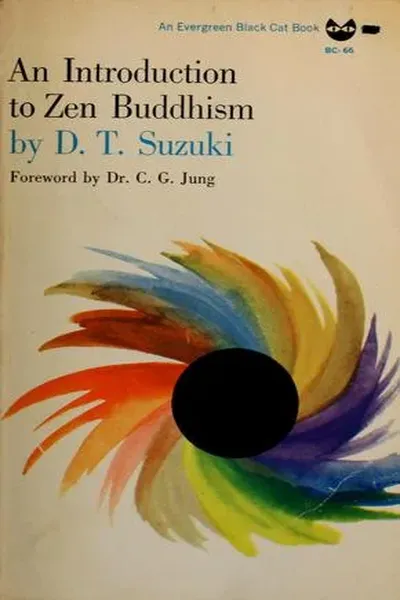





More Free Occult Philosophy Books
View all →