Living the Law of Attraction
 83
83

Living the Law of Attraction
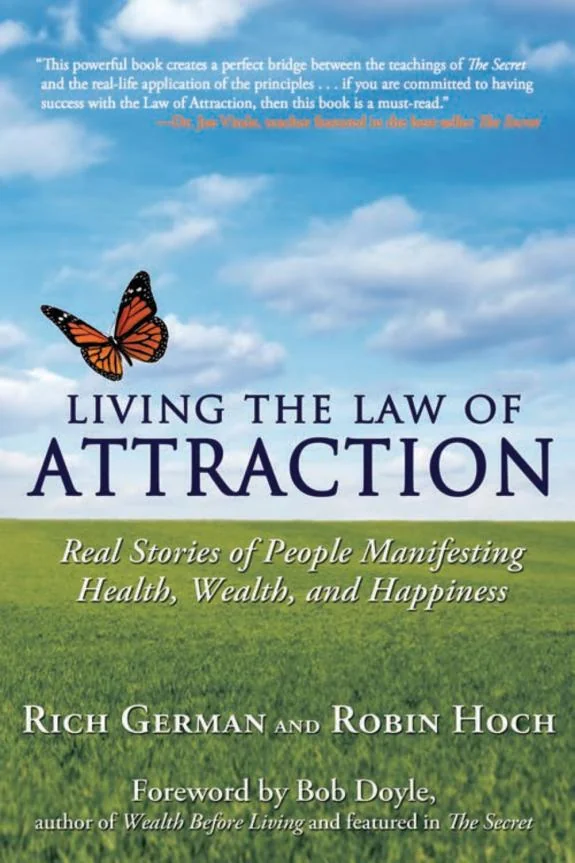
Rich German and Robin Hoch’s "Living the Law of Attraction" attempts to demystify the often-vague principles of manifestation, offering a structured approach to personal creation. The book’s strength lies in its directness; it avoids overly spiritual jargon, opting instead for pragmatic advice on aligning one’s internal state with external desires. The chapter on "Emotional Alignment," for instance, provides concrete techniques for cultivating feelings of already having achieved one's goals, a crucial step often glossed over. However, the work occasionally falters in its pacing, sometimes feeling repetitive as it circles back to core tenets without introducing significant new layers. While it references the foundational ideas of New Thought, it could have benefited from deeper engagement with historical esoteric lineages that explored similar concepts centuries prior. Despite this, the book serves as a capable, if not revolutionary, guide for those seeking to actively implement the Law of Attraction in their daily lives. It is a functional manual for the aspiring manifestor.
📝 Description
83
Living the Law of Attraction, published in 2011, details active manifestation beyond mere wishful thinking.
Rich German and Robin Hoch's 2011 book, Living the Law of Attraction, frames manifestation as an active process. It moves past theoretical discussions to give readers concrete steps for shaping their reality. The authors explain that consciously creating desired outcomes requires aligning thoughts, emotions, and actions. The book focuses on understanding the energetic principles that influence creation and using them for personal growth and achieving goals.
This guide is for individuals who feel stuck or unfulfilled, sensing their present situation does not match their potential. It suits those open to metaphysical ideas and committed to self-reflection and practice. Readers who have tried the Law of Attraction without consistent success may find its approach beneficial. It is relevant for anyone interested in personal development, spirituality, and applying universal laws for real-world improvements.
Published in 2011, this book emerged during a period of renewed interest in manifestation, spurred by works like "The Secret." It engages with the New Thought tradition, a spiritual movement emphasizing the power of the mind and belief to influence material reality. The authors align with figures who channel spiritual guidance or advocate for self-empowerment through inner work. The book seeks to offer a more detailed, usable framework within this ongoing discourse on spiritual technologies and personal empowerment.
💡 Why Read This Book?
• You will learn specific techniques for "Emotional Alignment," a core concept detailed in Chapter 4, which offers practical methods to cultivate feelings congruent with your desired outcomes, going beyond mere positive thinking. • Readers will gain an understanding of "Inspired Action" as presented in Chapter 7, learning to discern intuitive nudges from mere wishful thinking, a distinction vital for effective manifestation distinct from generic self-help. • The book provides a framework for identifying and transforming "Subconscious Limiting Beliefs" (discussed throughout), offering exercises to reprogram ingrained patterns that hinder manifestation, which is a more active approach than passively accepting circumstances.
⭐ Reader Reviews
Honest opinions from readers who have explored this book.
❓ Frequently Asked Questions
When was "Living the Law of Attraction" first published?
The book "Living the Law of Attraction" by Rich German and Robin Hoch was first published on October 5, 2011, positioning it within the early 2010s wave of interest in manifestation techniques.
What is the core philosophy behind the Law of Attraction as presented in this book?
The book presents the Law of Attraction as the principle that like attracts like, meaning our dominant thoughts and emotions create our reality by attracting corresponding experiences and circumstances.
Does the book offer practical exercises for readers?
Yes, "Living the Law of Attraction" includes practical exercises and techniques designed to help readers apply the principles of manifestation to their daily lives, focusing on intention, visualization, and emotional alignment.
Who are the authors, Rich German and Robin Hoch?
Rich German and Robin Hoch are the co-authors of "Living the Law of Attraction." They have collaborated on works exploring personal development and the application of universal laws.
How does this book differ from other Law of Attraction books published around the same time?
While sharing core principles, this book aims for a more structured, actionable approach, emphasizing practical application and the integration of concepts like 'inspired action' and 'emotional alignment' into daily practice.
Is "Living the Law of Attraction" suitable for beginners to the Law of Attraction?
Yes, the book is generally considered accessible to beginners, breaking down complex ideas into understandable steps and providing actionable guidance for those new to the concept.
🔮 Key Themes & Symbolism
Energetic Principles of Attraction
The book posits that the universe operates on principles of energetic resonance, a concept echoed in various esoteric traditions. Thoughts and emotions are presented as distinct energetic frequencies that broadcast into the cosmos. According to German and Hoch, these frequencies attract experiences and circumstances that vibrate at a similar level. This means cultivating positive, high-vibrational states is crucial for attracting desired outcomes, while dwelling on negative emotions or fears can inadvertently draw unwanted situations. The work encourages readers to become conscious broadcasters of their desired reality.
Intentionality and Visualization
Central to the book's methodology is the power of focused intention and vivid visualization. It argues that clarity in what one desires is the first step in the manifestation process. The authors guide readers through techniques to create detailed mental imagery of their goals as if they have already been achieved. This practice is not just about daydreaming; it's about imprinting a clear energetic blueprint onto the subconscious and the universal field, thereby aligning oneself with the desired future. The emphasis is on emotional engagement during visualization.
Emotional Alignment and Belief Systems
A key differentiator in "Living the Law of Attraction" is its focus on emotional alignment. The book explains that simply wanting something intellectually is insufficient; one must also feel as though it is already real. It addresses how deeply ingrained subconscious beliefs can sabotage manifestation efforts by creating energetic dissonance. Readers are encouraged to identify and reframe limiting beliefs that contradict their desires. Achieving emotional congruence with one's goals is presented as the bridge between intention and tangible reality, requiring ongoing self-awareness and practice.
Inspired Action vs. Forceful Effort
The book distinguishes between forceful, ego-driven action and 'inspired action' that arises from a state of alignment. While effort is necessary, the authors suggest that true manifestation involves recognizing and acting upon intuitive nudges and opportunities that flow naturally from a place of inner knowing. This 'inspired action' feels effortless and guided, rather than a struggle against resistance. It’s about co-creating with the universe, taking steps that feel right and move you closer to your goals, rather than pushing relentlessly based on fear or doubt.
💬 Memorable Quotes
Direct passages from the work, attributed to the author.
“Clarity of intention is the first step; emotional alignment is the bridge.”
— This highlights the book's emphasis on both setting clear goals and cultivating the corresponding emotional state, presenting the latter as essential for manifesting the former.
“Don't just wish for it, feel it as if it's already yours.”
— This actionable advice stresses the importance of embodying the feeling of already having achieved one's desires, a key technique for aligning energetic frequencies.
“Subconscious beliefs act as hidden filters, shaping what you attract.”
— This interpretation points to the book's exploration of how underlying beliefs can either support or undermine conscious manifestation efforts, necessitating self-inquiry.
💡 Key Ideas
Editorial paraphrase of the work's core concepts — not direct quotes.
Your dominant thoughts and feelings are the magnets that draw your experiences.
This quote captures the core principle of the Law of Attraction as presented: that our internal state directly influences our external reality through a process of energetic attraction.
Inspired action flows naturally when you are in vibrational harmony with your desires.
This paraphrased concept differentiates between forced effort and guided action, suggesting that aligned individuals receive intuitive prompts for effective steps toward their goals.
🌙 Esoteric Significance
Tradition
The work draws heavily from the New Thought movement, which itself is a modern esoteric tradition rooted in 19th-century American spiritualism and influenced by Hermeticism and Eastern philosophies. It aligns with the New Thought tenet that a divine intelligence or universal consciousness responds to human thought and belief. While not explicitly referencing Hermetic principles like "As Above, So Below," its core message of thought shaping reality echoes these concepts. It departs from more ritualistic or ceremonial traditions by focusing on psychological and energetic alignment accessible through personal practice.
Symbolism
While "Living the Law of Attraction" is less reliant on overt symbolism than some esoteric texts, the concept of 'vibration' itself functions symbolically. It represents the energetic signature of thoughts and emotions, akin to the Hermetic idea of correspondence or the Kabbalistic concept of emanations. The 'magnet' metaphor used to describe how desires are attracted also serves as a potent symbol for energetic polarity and attraction, reflecting a universal law of seeking like unto like.
Modern Relevance
The principles articulated in "Living the Law of Attraction" continue to find relevance in contemporary wellness culture, coaching, and self-help movements. Thinkers and practitioners in fields like positive psychology, manifestation coaching, and even aspects of quantum consciousness exploration echo its core tenets. Modern iterations often integrate these ideas with mindfulness, neuroscience, and practical goal-setting strategies, demonstrating the enduring appeal of conscious creation and personal empowerment frameworks first popularized in the early 21st century.
👥 Who Should Read This Book
• Individuals new to the Law of Attraction seeking a practical, step-by-step guide to understanding and applying its principles in their lives. • Those who have encountered manifestation techniques before but struggled with consistent results, looking for actionable strategies to improve their practice. • Personal development enthusiasts interested in exploring the connection between mindset, emotion, and tangible life outcomes within a metaphysical framework.
📜 Historical Context
Published in October 2011, "Living the Law of Attraction" emerged during a period of significant public engagement with manifestation principles, largely fueled by the cultural phenomenon of "The Secret" (2006). This era saw a proliferation of self-help and spirituality books aiming to empower individuals through mental and energetic techniques. The work entered a discourse already populated by figures like Esther Hicks, whose channeled teachings on Abraham-Hicks were widely influential. While building on the New Thought tradition, German and Hoch's book sought to offer a more grounded, step-by-step approach compared to some of its more abstract predecessors. It engaged with a burgeoning online community dedicated to Law of Attraction practices, contributing to the ongoing conversation about personal empowerment and conscious creation in the early digital age.
📔 Journal Prompts
Reflect on a specific desire and the dominant emotions currently associated with it.
Analyze a recent experience: what dominant thoughts or feelings might have attracted it?
Identify one subconscious limiting belief that contradicts a major goal.
Describe an 'inspired action' you recently took and how it felt different from forced effort.
Visualize a desired outcome with intense emotional engagement, as detailed in Chapter 3.
🗂️ Glossary
Law of Attraction
The principle that like attracts like; dominant thoughts, feelings, and beliefs energetically draw corresponding experiences and circumstances into one's reality.
Vibration
The energetic frequency emitted by thoughts, emotions, and beliefs, which influences what one attracts from the universe.
Emotional Alignment
Cultivating the feeling and emotional state of already having achieved one's desires, creating energetic congruence for manifestation.
Inspired Action
Taking steps guided by intuition and inner knowing that feel natural and aligned with one's goals, rather than forced or driven by resistance.
Subconscious Beliefs
Deeply held assumptions and convictions stored in the subconscious mind that can either support or hinder the manifestation process.
Visualization
The mental practice of creating vivid, detailed imagery of desired outcomes as if they have already occurred, engaging emotions to imprint the intention.
Intention
A clear, focused statement of desire or purpose, considered the foundational element for directing the Law of Attraction.
This book appears in 1 collection
🔮 Readers Also Liked
Browse all →









From the “Law of Attraction” Collection
View all →









More Free Occult Philosophy Books
View all →