Ancient Egypt 39,000 BCE

 80
80

Ancient Egypt 39,000 BCE
Edward F. Malkowski’s *Ancient Egypt 39,000 BCE* is not for the faint of heart or the rigidly orthodox. It boldly asserts that the foundations of Egyptian civilization were laid not by the dynastic rulers we know, but by a far more ancient, sophisticated culture. Malkowski’s strength lies in his relentless pursuit of anomalies, connecting geological data with esoteric interpretations of mythology. He compellingly argues for a re-evaluation of Egyptian origins, particularly concerning the Sphinx's weathering patterns, suggesting water erosion indicative of a much earlier, wetter climate than the dynastic period allows. However, the book sometimes strains credulity by relying heavily on speculative leaps and a selective interpretation of evidence. While the possibility of an older civilization is tantalizing, the causal links presented between disparate phenomena can feel tenuous. The work is best approached not as definitive history, but as a provocative challenge to established paradigms. It functions as an extended thought experiment, pushing readers to question the accepted narrative of human antiquity.
📝 Description
80
Edward F. Malkowski's book posits ancient Egyptian civilization began around 39,000 BCE.
Edward F. Malkowski's Ancient Egypt 39,000 BCE challenges conventional historical timelines by proposing a pre-dynastic era for Egyptian civilization that extends back tens of thousands of years before commonly accepted dates. Malkowski suggests that advanced societies and complex cultural practices existed in Egypt millennia prior to the formation of the Old Kingdom. The book argues that the foundations of Egyptian religion, monumental architecture, and cultural identity are linked to a much older, possibly Atlantean, past.
The author draws upon geological evidence and astronomical alignments, reinterpreting archaeological findings to support a vastly expanded chronology. He connects Egyptian iconography and myths to theories of global cataclysms and the influence of a lost, technologically advanced progenitor civilization. This perspective places the origins of Egyptian culture within a 'lost epoch' that profoundly shaped subsequent human development. The work is intended for readers seeking alternative historical narratives and those interested in esoteric interpretations of ancient civilizations and potential lost high cultures.
This work is situated within the broader tradition of alternative history and archaeoastronomy that gained traction in the late 20th and early 21st centuries. It follows thinkers who questioned established chronologies and sought hidden meanings in ancient monuments and myths. Malkowski's approach aligns with esoteric interpretations that posit advanced, forgotten civilizations predating recorded history, often linking them to spiritual traditions or cataclysmic events. His focus on a deep past and potential global influences places it within a lineage of thought exploring non-mainstream understandings of human origins and cultural development.
💡 Why Read This Book?
• Gain an alternative perspective on the origins of Egyptian civilization, exploring Malkowski's hypothesis that advanced cultures existed millennia before 3000 BCE, challenging the established timeline. • Understand the author's interpretation of geological evidence, such as the water erosion theory applied to the Sphinx, to question conventional archaeological dating methods. • Explore the potential connections Malkowski draws between Egyptian mythology and the concept of a lost, advanced progenitor race, offering a unique esoteric lens on ancient history.
⭐ Reader Reviews
Honest opinions from readers who have explored this book.
❓ Frequently Asked Questions
What is the main argument of 'Ancient Egypt 39,000 BCE'?
The book's central thesis is that ancient Egyptian civilization originated around 39,000 BCE, far earlier than conventional archaeology suggests, positing a highly advanced precursor culture.
What evidence does Malkowski use to support his early dating of Egypt?
Malkowski examines geological data, particularly water erosion patterns on the Sphinx, and reinterprets astronomical alignments and ancient myths to support a much older timeline.
How does this book relate to other theories about ancient civilizations?
It aligns with alternative history narratives that propose advanced pre-dynastic or Atlantean civilizations, challenging mainstream Egyptology and archaeology.
Who is Edward F. Malkowski?
Edward F. Malkowski is an author known for his work in alternative history and esoteric interpretations of ancient civilizations, particularly Egypt.
What is the significance of the year 39,000 BCE in the book's title?
The year 39,000 BCE is presented as the proposed starting point for a highly advanced Egyptian civilization, pushing back its origins by tens of thousands of years.
Is 'Ancient Egypt 39,000 BCE' considered mainstream history?
No, the book presents a highly speculative and fringe theory that stands in direct opposition to the consensus of mainstream archaeological and historical scholarship.
🔮 Key Themes & Symbolism
Pre-Dynastic Civilization
Malkowski posits a sophisticated civilization flourishing in Egypt long before the commonly accepted dynastic period, potentially dating back to 39,000 BCE. This challenges the archaeological consensus which places the rise of Egyptian civilization around 3100 BCE. The work explores evidence suggesting advanced knowledge of architecture, astronomy, and possibly even global cataclysm survival among these hypothetical proto-Egyptians.
Sphinx and Giza Anomalies
A significant portion of the book focuses on reinterpreting the geological evidence at Giza, particularly the weathering patterns of the Great Sphinx. Malkowski argues that the vertical fissures indicate prolonged exposure to rainfall, suggesting an origin during a much wetter climatic period, predating the established Old Kingdom by millennia. This interpretation is central to his proposed timeline.
Lost Progenitor Race
The book connects the proposed ancient Egyptian civilization to the concept of a lost progenitor race, a common theme in esoteric and fringe historical theories. Malkowski suggests that remnants of this advanced civilization influenced subsequent human cultures, including the dynastic Egyptians, leaving behind clues in mythology, megalithic structures, and symbolic language.
Esoteric Chronology
Malkowski constructs an esoteric chronology that diverges sharply from standard historical timelines. By integrating geological data, astronomical observations, and symbolic interpretations of myths, he proposes a cyclical view of history with advanced epochs rising and falling. This approach prioritizes symbolic and archetypal understandings over purely empirical archaeological findings.
💬 Memorable Quotes
Direct passages from the work, attributed to the author.
“The weathering on the Sphinx and its enclosure walls is clearly indicative of rainfall, not wind and sand erosion.”
— This statement expresses Malkowski's core argument regarding the Sphinx's age. He uses this observation to challenge the conventional timeline, suggesting a much earlier origin during a period when Egypt experienced significant rainfall.
“Megalithic structures around the world share common design principles suggesting a shared, ancient origin.”
— This represents Malkowski's view on global ancient sites, linking them to a potential progenitor culture. It suggests a unified, ancient source for monumental architecture, extending beyond Egypt.
“The Great Pyramid's alignment with Thuban may indicate an astronomical focus from a much earlier epoch.”
— This highlights Malkowski's use of archaeoastronomy. He proposes that alignments, like the pyramid's connection to the star Thuban (then the North Star), point to construction dates far earlier than commonly accepted.
💡 Key Ideas
Editorial paraphrase of the work's core concepts — not direct quotes.
Conventional Egyptology has consistently underestimated the age of Egyptian civilization.
This paraphrase reflects the author's critical stance towards mainstream archaeology. Malkowski believes established academic frameworks are insufficient to grasp the true antiquity and complexity of early Egyptian culture.
Egyptian mythology contains traces of a civilization that survived a great cataclysm.
This paraphrase points to Malkowski's interpretation of Egyptian myths as historical records of a lost civilization. He suggests these stories preserve memories of advanced societies facing and surviving global disasters.
🌙 Esoteric Significance
Tradition
Malkowski's work draws heavily from the esoteric tradition of 'lost civilizations' and ancient wisdom, often associated with Theosophy and Atlantean legends popularized by figures like Helena Blavatsky. It fits within a lineage of thinkers who seek hidden, deeper meanings behind conventional historical accounts, positing a cyclical view of human development with advanced epochs preceding our own. While not strictly Hermetic or Gnostic, it shares their inclination towards uncovering ancient, forgotten knowledge.
Symbolism
Key symbols explored include the Sphinx, interpreted not merely as a pharaoh's likeness but as a marker of immense antiquity and a evidence of a lost epoch. The pyramids themselves are analyzed for their astronomical alignments, suggesting a purpose beyond tombs, perhaps as cosmic calendars or energy conduits tied to celestial events. Hieroglyphs are viewed as more than writing, potentially encoding deeper spiritual or historical truths from a forgotten age.
Modern Relevance
Contemporary thinkers in alternative history, archaeoastronomy, and ancient astronaut theories continue to reference Malkowski's arguments, particularly his re-evaluation of the Sphinx's age and the concept of a progenitor race. Online communities dedicated to exploring pre-diluvian civilizations and questioning mainstream narratives frequently cite his work as foundational to understanding these alternative chronologies.
👥 Who Should Read This Book
• Readers interested in alternative timelines and challenging conventional archaeological narratives about ancient Egypt. • Students of esoteric history and ancient mysteries seeking unconventional interpretations of historical evidence and mythology. • Skeptics of mainstream history looking for detailed arguments, however speculative, that question established chronologies and theories about early human civilization.
📜 Historical Context
Edward F. Malkowski's *Ancient Egypt 39,000 BCE*, first published in 2010, emerged within a fertile ground of alternative history and archaeoastronomy that gained traction in the late 20th century. Authors like Graham Hancock, with *Fingerprints of the Gods* (1995), had already popularized the idea of advanced ancient civilizations predating recorded history. Malkowski’s work specifically engaged with geological interpretations, most notably the Sphinx water erosion hypothesis proposed by geologist Robert Schoch in the early 1990s, which suggested a much older date for the Sphinx based on rainfall patterns. While mainstream Egyptology, represented by figures like Zahi Hawass, vehemently rejected such theories, Malkowski’s book contributed to a growing public interest in questioning orthodox timelines. The academic reception was largely dismissive, positioning his work as fringe speculation rather than scholarly inquiry, a common fate for theories challenging established paradigms in fields like archaeology and ancient history.
📔 Journal Prompts
The Sphinx's water erosion patterns: what implications arise from considering it older than dynastic Egypt?
Reflect on the concept of a 'progenitor race' and its potential influence on subsequent human cultures.
Analyze the astronomical alignments discussed in relation to Egyptian monumental architecture.
Consider the symbolic meaning of the Great Pyramid beyond its function as a tomb.
How might re-dating ancient sites alter our understanding of human societal development?
🗂️ Glossary
Dynastic Period
The period of ancient Egyptian history ruled by successive dynasties of pharaohs, conventionally beginning around 3100 BCE with the unification of Upper and Lower Egypt.
Sphinx Water Erosion Hypothesis
The theory, notably advanced by geologist Robert Schoch, suggesting that the weathering patterns on the Great Sphinx indicate erosion by rainfall, implying construction during a much earlier, wetter climatic period.
Archaeoastronomy
The interdisciplinary study of how ancient peoples understood astronomical phenomena and how those phenomena influenced their cultures, architecture, and calendars.
Progenitor Race
In esoteric and alternative history contexts, a hypothetical highly advanced ancient civilization considered the ancestor or source of later human cultures.
Megalithic Structures
Large structures built from massive stones, such as Stonehenge or the pyramids of Egypt, often associated with ancient advanced civilizations.
Thuban
A star in the constellation Draco, which served as the North Star around 3000 BCE and even earlier, relevant to astronomical alignment theories concerning the Great Pyramid.
Pre-Dynastic Egypt
The period in Egyptian history before the first dynasty, conventionally dated from c. 6000 BCE to c. 3100 BCE, characterized by early settlements and cultural development.
🔮 Readers Also Liked
Browse all →









More by Edward F. Malkowski
All books →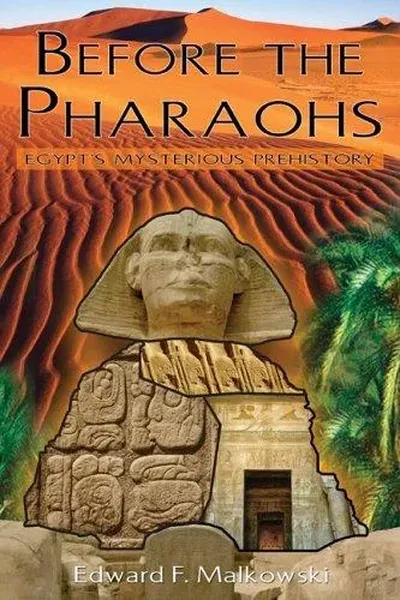
More Free Occult Philosophy Books
View all →